

Lithium battery storage projects fail on safety planning, not capacity
Lithium battery storage projects rarely fail because of insufficient capacity; they fail when safety planning is treated as a late-stage checkbox. For project managers and engineering leads, the real challenge lies in fire protection design, site risk assessment, thermal runaway response, and compliance coordination from day one. This article examines why safety strategy—not scale alone—determines whether energy storage projects move forward, stay compliant, and deliver long-term operational value.
Why project teams should use a safety-first checklist for Lithium battery storage
For most utility, commercial, and industrial energy projects, capacity calculations are straightforward compared with safety planning. A project team can estimate load shifting, backup duration, or peak shaving needs in days, but unresolved safety issues can delay a Lithium battery storage project for 3 to 9 months. That is why a checklist-based approach is more practical than a theory-heavy review. It helps decision-makers see what must be confirmed before procurement, before construction, and before commissioning.
Project managers also work across multiple interfaces: EPC contractors, fire engineers, battery suppliers, local authorities, insurers, and operations teams. In that environment, risk is rarely caused by one missing device. It usually comes from coordination gaps such as unclear shutdown logic, incompatible ventilation assumptions, or a site layout that limits emergency access. A clear Lithium battery storage checklist reduces hidden handoff risks and gives engineering leads a practical basis for scope control.
Another reason to start with a checklist is that safety planning affects budget earlier than many teams expect. Fire suppression, gas detection, separation distances, blast relief concepts, monitoring architecture, and civil modifications can materially change the total installed cost. In many projects, safety-related scope adjustments can shift capex by 8% to 20%, especially when retrofits are involved. If these items are discovered after equipment ordering, schedule compression and redesign costs typically follow.
First questions to answer before capacity becomes the headline
- What is the installation context: stand-alone container, indoor battery room, rooftop support area, or mixed-use industrial site?
- Which risk assumptions are already fixed by local fire codes, insurer requirements, landlord constraints, or utility interconnection rules?
- How quickly can a thermal event be detected, isolated, communicated, and responded to within the first 30 to 120 seconds?
- Is the design team validating normal operation only, or also abnormal states such as off-gas release, cooling failure, and emergency shutdown?
These questions frame the project correctly. A Lithium battery storage system that looks ideal on a one-line diagram may become unsuitable if the site cannot support ventilation paths, emergency clearances, or responder access. In practice, safety viability should be treated as a go/no-go screen before detailed capacity optimization.
A useful rule for early-stage planning
If the project team cannot clearly define detection, isolation, suppression, and evacuation logic by the 30% design stage, the Lithium battery storage plan is not ready for equipment finalization. That rule is simple, but it prevents a common error: locking in the battery block while leaving the safety envelope undefined.
Core checklist: what must be confirmed in every Lithium battery storage project
The most effective review method is to sort risks into a few operational categories rather than discuss safety in abstract terms. Project leaders should check site conditions, battery architecture, fire and gas strategy, control system response, and compliance ownership. The goal is not to predict every failure mode but to ensure that each major hazard has a documented control path.
The table below can be used as a pre-bid or pre-approval screening tool. It is especially useful when comparing multiple vendors or when a project is moving from concept design into FEED or detailed engineering. For Lithium battery storage, this kind of matrix often reveals missing work packages earlier than a standard technical datasheet review.
This matrix shows why project failure is often organizational rather than purely technical. A Lithium battery storage system can have advanced battery management and still be non-approvable if the surrounding infrastructure does not support emergency operations. For engineering leads, the key action is to assign an owner to each checklist line and define the review gate for closure, such as concept, 60% design, factory acceptance, or site commissioning.
Execution checklist for project managers
- Confirm the authority having jurisdiction review path and expected documentation set within the first 2 to 4 weeks.
- Freeze site constraints before final battery block sizing, especially for indoor and retrofit locations.
- Request abnormal-condition narratives from suppliers, not just nominal performance data.
- Map alarm points to actual operator actions, including after-hours response and remote supervision.
- Review maintainability, replacement access, and emergency egress at the same time as electrical design.
These steps improve procurement quality because they shift the conversation from “How many MWh can fit?” to “Which Lithium battery storage solution remains safe, approvable, and maintainable under real site conditions?” That is the question that protects schedule and lifecycle value.
How site conditions change the safety plan: indoor, outdoor, retrofit, and industrial sites
Not all Lithium battery storage projects carry the same hazard profile. A 2 MWh installation inside a manufacturing campus can face more complex safety planning than a larger outdoor system on a dedicated utility parcel. The difference usually comes from exposure, occupancy, ventilation limitations, and emergency response access. That is why project managers should avoid copying one design basis from another site type.
Indoor installations often demand the most coordination because off-gas management, room pressure behavior, cable penetrations, fire separation, and human occupancy overlap in one envelope. Outdoor containerized systems may simplify building integration, but they still require review of weather resilience, perimeter spacing, runoff control, and firefighter approach paths. Retrofit locations add another layer, since existing civil and electrical infrastructure can restrict safe placement options.
The practical lesson is that a Lithium battery storage safety plan must be site-specific by design. A standard product package is only the starting point. Final suitability depends on local heat loads, ambient temperature ranges, access geometry, and the surrounding process environment over a 10- to 20-year operating horizon.
Site-type comparison checklist
Before detailed design review, teams should align on which site factors drive the highest planning effort. The table below provides a practical comparison for common deployment contexts in Lithium battery storage programs.
The comparison highlights a common mistake: selecting a Lithium battery storage package based on energy density first and fitting the site around it later. In reality, the site context often determines which enclosure type, segmentation approach, and emergency controls are acceptable. When that order is reversed, redesign becomes expensive and approval timelines tend to slip.
Priority checks by scenario
- For indoor projects, verify air movement assumptions, room zoning, and isolation logic before civil drawings are frozen.
- For outdoor projects, confirm safe access arcs, standoff areas, and monitoring continuity during power or communications interruptions.
- For retrofits, inspect actual field conditions early; as-built drawings alone are often insufficient for Lithium battery storage integration.
Common failure points that delay approval, procurement, and commissioning
Safety planning problems usually appear at the interfaces between disciplines. Mechanical, electrical, controls, and compliance teams may each complete their own scope, yet the Lithium battery storage project still stalls because no one validated event response end to end. A typical example is a gas detection specification that does not align with the ventilation control sequence or emergency notification path.
Another recurring problem is relying too heavily on generic supplier documentation. Standard submittals may describe enclosure ratings, monitoring features, or shutdown capabilities, but project approval often depends on how those features are implemented at the actual site. If the team has not translated product information into local fire strategy, operating procedures, and authority review language, the approval package can remain incomplete for weeks or months.
Commissioning failures also deserve attention. Even when hardware is correctly installed, a Lithium battery storage project can be exposed if alarm thresholds, communication routing, emergency drills, and operator responsibilities are not tested as a coordinated sequence. In many sites, the most vulnerable period is the first 30 days after energization, when the system is live but operational routines are still immature.
High-risk omissions to catch early
- No documented response matrix linking BMS alarms, SCADA alerts, local sirens, and operator actions.
- Unclear ownership of code interpretation, especially when local rules interact with international standards and insurer guidance.
- Incomplete review of maintenance activities such as module replacement, lockout procedures, and post-event inspection steps.
- Emergency access routes blocked by fencing, cable trenches, adjacent equipment, or poor turning geometry.
- Assumption that one suppression concept fits every Lithium battery storage chemistry, enclosure, and site type.
Practical warning signs during project review
If a project team discusses MWh, round-trip efficiency, and revenue model in detail but cannot explain emergency isolation sequence within 5 minutes, the planning balance is wrong. If supplier proposals vary widely on ventilation, gas monitoring, or compartment design, the owner should pause and clarify the design basis rather than compare pricing only. These are early warning signs that the Lithium battery storage scope is not yet aligned.
Teams should also watch for compressed approval milestones. When permit, insurer review, and detailed design are stacked into the same 4- to 6-week window, safety comments tend to arrive too late to avoid rework. A more resilient schedule builds in structured review gates and document closure points before long-lead procurement is locked.
An execution roadmap for safer Lithium battery storage delivery
Project managers do not need a perfect design on day one, but they do need a disciplined sequence. The most reliable Lithium battery storage projects move from risk framing to site validation, then into design basis confirmation, equipment matching, authority review, and integrated commissioning. This structure keeps safety planning visible instead of burying it under procurement pressure.
A practical roadmap also makes vendor conversations more productive. Instead of asking only for price and delivery, teams can request enclosure segmentation logic, alarm hierarchy, abnormal-event assumptions, inspection requirements, and field support expectations. For international trade and cross-border sourcing environments, this is especially important because design language, compliance expectations, and handover quality may vary across regions.
For organizations evaluating suppliers or market options, access to industry intelligence can shorten early-stage risk screening. Monitoring changes in battery enclosure practices, project delivery trends, and regional compliance expectations helps buyers avoid mismatches before technical clarification starts. In the Lithium battery storage market, informed sourcing is often a safety advantage, not just a commercial one.
Recommended phase-by-phase action list
- Weeks 1 to 2: define project intent, site type, occupancy context, and required review stakeholders.
- Weeks 2 to 6: complete site risk screening, emergency access review, and preliminary compliance gap analysis.
- Weeks 4 to 8: align supplier proposals with the site-specific safety design basis, not just energy targets.
- Before procurement release: freeze the alarm-response matrix, isolation philosophy, and fire protection integration logic.
- Before commissioning: test detection, communication, shutdown, responder interface, and operating procedures as one system.
Why informed industry support matters
GTIIN and TradeVantage support global project stakeholders by aggregating market signals, supplier developments, and industrial intelligence across more than 50 sectors. For project managers handling Lithium battery storage planning, that broader view matters when comparing sourcing regions, delivery models, and technical positioning. Better information helps teams challenge assumptions early, benchmark proposals realistically, and identify which suppliers are aligned with project-grade documentation expectations.
In cross-border procurement, a strong information partner also helps reduce friction between commercial and engineering teams. When sourcing decisions must balance timeline, compliance readiness, technical suitability, and brand exposure for supply chain participants, access to structured market intelligence becomes a practical project tool rather than a passive news feed.
Why choose us for your next Lithium battery storage sourcing and planning conversation
If your team is comparing Lithium battery storage solutions, evaluating international suppliers, or trying to understand which safety questions should be raised before RFQ release, we can help you move faster with clearer information. Our platform connects market intelligence, sector coverage, and global trade visibility in a way that supports both engineering judgment and commercial decision-making.
You can contact us to discuss practical topics such as parameter confirmation, supplier screening, product selection logic, estimated delivery windows, documentation expectations, regional market trends, and customized promotion opportunities for foreign trade enterprises. If your priorities include compliance alignment, project positioning, quotation communication, or identifying the right manufacturers for a specific site scenario, we can help structure those conversations efficiently.
For project managers and engineering leads, the right next step is not simply asking how much capacity is available. It is confirming which Lithium battery storage approach fits your site, your timeline, and your safety obligations from the beginning. Contact us to explore tailored market insights, sourcing options, and industry intelligence that support safer and more bankable project delivery.
Recommended News
 Medical diagnostic equipment buying mistakes often start with workflowMedical diagnostic equipment buying mistakes often begin with workflow gaps. Learn how to compare systems, uncover hidden costs, and choose suppliers that fit real clinical operations.
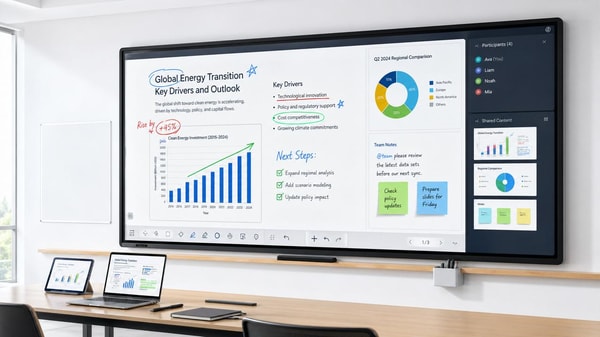
 Interactive whiteboards are improving, but teacher adoption is unevenInteractive whiteboards are improving fast, but teacher adoption remains uneven. Explore what drives classroom success, ROI, and smarter edtech implementation.
 Portable oxygen concentrators: what noise levels feel acceptable?Portable oxygen concentrators: discover what noise levels feel acceptable for sleep, travel, work, and home use, with practical guidance to choose a quieter, more comfortable model.
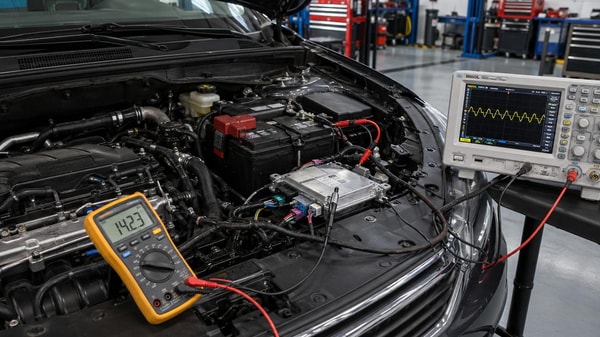
 Car electronics failures often start with power instabilityCar electronics issues often begin with hidden power instability. Learn how voltage drops, ripple, and weak grounds cause faults—and how smarter diagnostics cut repair time and repeat failures.
 Telemedicine hardware works best when setup friction is lowTelemedicine hardware works best with low setup friction. Discover how faster deployment, easier operation, and scenario-based selection improve care efficiency and service quality.
 Are light-weighting vehicle materials worth the repair tradeoff?Light-weighting vehicle materials: Are efficiency gains worth higher repair costs? Explore lifecycle impact, EV value, downtime risks, and smarter sourcing decisions.
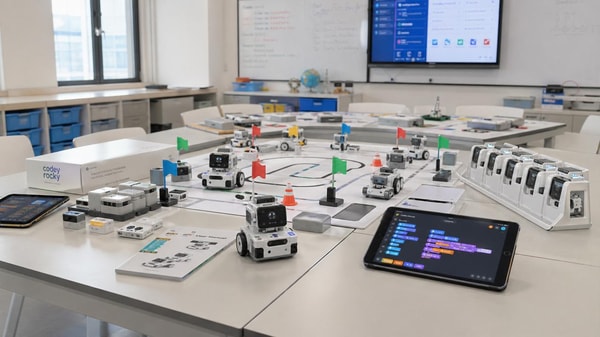
 Educational robots in class: novelty or lasting value?Educational robots are moving beyond classroom novelty. Discover how they create lasting value through STEM learning, scalability, and smarter school purchasing decisions.
 Biodegradable plastics fail when disposal assumptions are wrongBiodegradable plastics can fail when real disposal systems do not match design assumptions. Learn the compliance, contamination, and claim risks before they damage trust.
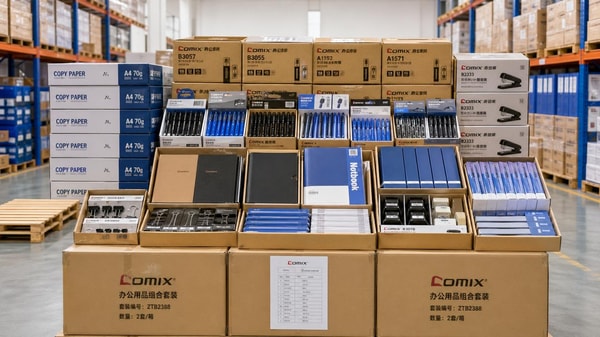
 Office stationery wholesale margins depend on boring detailsOffice stationery wholesale margins are won in the details—packaging, MOQ, freight, and SKU rotation. Learn how distributors protect profit and reduce hidden cost leakage.
 Carbon capture materials are improving, but durability still mattersCarbon capture materials are improving, but durability still decides ROI. Explore cycle stability, regeneration resilience, and supplier evaluation factors for reliable industrial deployment.
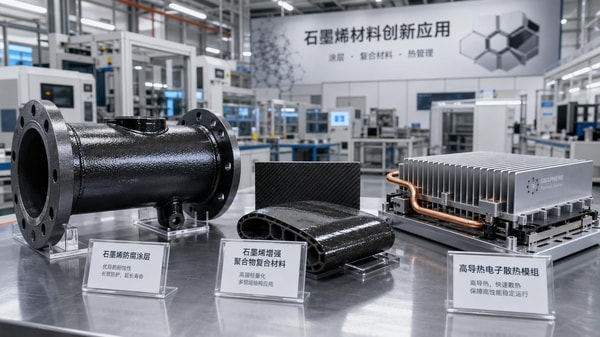
 Which graphene applications in industry are moving beyond pilots?Graphene applications in industry are moving beyond pilots fastest in coatings, composites, thermal management, sensors, and energy storage. See where commercialization is gaining traction.
 Precision farming drones need better data, not just better flight timePrecision farming drones deliver more value through accurate maps, crop insights, and faster decisions than longer flight time alone. See how better data improves farm efficiency.
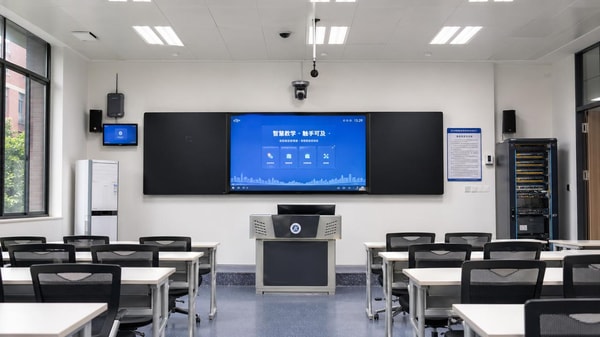
 Smart classroom solutions often disappoint for one simple reasonSmart classroom solutions often fail when complexity is ignored. Discover how project leaders can improve adoption, scalability, ROI, and long-term classroom performance.
 Organic fertilizers: when higher cost brings better soil resultsOrganic fertilizers may cost more, but they can improve soil structure, moisture retention, and long-term plant health. Learn when the higher price delivers better garden results.
 Agri-PV systems can raise land efficiency, but not everywhereAgri-PV systems can improve land efficiency, but only in the right conditions. Explore where they work, key risks, and how to evaluate profitable deployment.
 Smart home devices wholesale gets risky when standards do not matchSmart home devices wholesale becomes risky when standards, protocols, and certifications do not align. Learn how to reduce sourcing errors, control costs, and protect buyer trust.
 Wearable technology users quit when comfort is overlookedWearable technology users quit when comfort is ignored. Discover the checklist for fit, weight, skin safety, and long-term wear to choose devices that improve adoption and user satisfaction.
 Next-gen wireless charging still faces a heat management gapNext-gen wireless charging still faces a critical heat management gap. Explore how thermal risks affect efficiency, safety, lifecycle, and product readiness.
 Foldable screen technology looks mature until repair costs appearFoldable screen technology looks premium and practical, but are repair costs too high? Discover the real tradeoff between innovation, durability, and long-term value before you buy.
 Plant-based protein processing bottlenecks start after extractionPlant-based protein processing bottlenecks often begin after extraction. Discover downstream risks, supplier evaluation tips, and cost-saving insights for better sourcing decisions.
 Photovoltaic solar panels lose value when degradation is underestimatedPhotovoltaic solar panels can lose value fast when degradation is underestimated. Learn how realistic modeling protects ROI, asset valuation, and smarter solar investment decisions.















Popular Tags
Global Trade Insights & Industry
Our mission is to empower global exporters and importers with data-driven insights that foster strategic growth.
Search News
Popular Tags
Industry Overview
The global commercial kitchen equipment market is projected to reach $112 billion by 2027. Driven by urbanization, the rise of e-commerce food delivery, and strict hygiene regulations.