

US CPSC Recalls 237,000 China-Made LED Desk Lamps
On April 18, 2026, the U.S. Consumer Product Safety Commission (CPSC) issued an urgent recall (Recall ID: 26-142) for 237,000 LED dimmable desk lamps manufactured in China. This action directly impacts exporters, OEM/ODM manufacturers, importers, and distributors engaged in lighting product trade between China and the U.S., particularly those handling low-voltage indoor lighting with adjustable bases. The recall signals heightened regulatory scrutiny of electrical safety compliance and structural stability — two non-negotiable requirements for market access in North America.
Event Overview
The U.S. Consumer Product Safety Commission (CPSC) announced an emergency recall on April 18, 2026, under Recall ID 26-142. A total of 237,000 LED dimmable desk lamps — produced by Chinese OEM manufacturers and sold in the U.S. under private labels — are affected. The CPSC identified two critical defects: absence of UL 153 certification and unstable base design leading to tipping, which may cause short circuits in the LED driver board and subsequent fire hazard. All affected units have been prohibited from importation and sale in the United States.
Industries Affected
Direct Trading Enterprises (Exporters & Importers)
These entities face immediate shipment holds, customs detention risk, and potential liability for non-compliant consignments already in transit or warehoused. The recall reinforces that UL certification is not optional for U.S.-bound lighting products — it is a mandatory gatekeeping requirement enforced at the port of entry.
Contract Manufacturing Firms (OEM/ODM Lighting Factories)
Manufacturers supplying similar LED desk lamp designs — especially those with weighted but narrow-base configurations — must verify whether their current production models meet UL 153 structural and electrical safety criteria. Design validation is now inseparable from certification readiness.
Distribution & Branding Companies (U.S. Distributors & Private Labelers)
Firms managing private-label lighting portfolios are exposed to brand reputation damage and recall coordination obligations. The CPSC notice explicitly names the U.S. distributor as responsible for consumer notification and remedy fulfillment — underscoring shared accountability across the supply chain.
Supply Chain Service Providers (Testing Labs, Certification Bodies, Customs Brokers)
Third-party service providers may see increased demand for pre-shipment UL 153 verification, tilt-stability testing, and documentation audits. However, this reflects reactive demand rather than systemic capacity expansion — service lead times and cost structures may tighten in the near term.
What Relevant Enterprises Should Monitor and Do Now
Track official updates from CPSC and UL
Follow CPSC recall bulletins and UL’s published interpretations of Section 9.5 (stability) and Section 14 (driver circuit protection) in UL 153. No new amendments have been issued, but enforcement emphasis has demonstrably shifted toward integrated mechanical-electrical risk assessment.
Prioritize UL 153 review for all LED desk lamp SKUs bound for North America
Do not assume prior certification covers current models — even minor changes in base geometry, weight distribution, or driver board layout may invalidate existing reports. Re-evaluate each SKU against UL 153’s 2025 edition requirements, including the 10° tilt test and thermal cutoff validation.
Distinguish between regulatory signal and operational impact
This recall targets one specific product configuration — not all LED desk lamps. It does not indicate a broad suspension of imports or revision of UL 153 itself. However, it confirms that CPSC is actively cross-referencing structural instability with electrical failure modes during risk assessment — a method likely to be applied to future cases.
Prepare technical documentation and supplier alignment now
Gather existing UL reports, stability test records, and BOM-level driver board specifications for all active North America–bound LED lamp lines. Initiate internal alignment with OEM partners on design freeze protocols and certification ownership — especially where UL listing appears under the U.S. brand holder’s name but testing was conducted using factory-submitted samples.
Editorial Perspective / Industry Observation
From industry perspective, this recall is less about isolated product failure and more about a tightening convergence of mechanical and electrical safety expectations in U.S. lighting regulation. Analysis来看, CPSC’s dual-grounded rationale — citing both certification gap and physical instability — suggests regulators are moving beyond checklist-based compliance toward system-level hazard analysis. Observation来看, the timing (post-2025 UL 153 update cycle) and specificity (driver board short-circuit ignition pathway) indicate this is a targeted enforcement action, not a sweeping policy shift — yet it serves as a high-visibility signal to manufacturers relying on legacy designs or fragmented compliance workflows. Current more appropriate understanding is that this represents an enforcement inflection point, not a new standard.
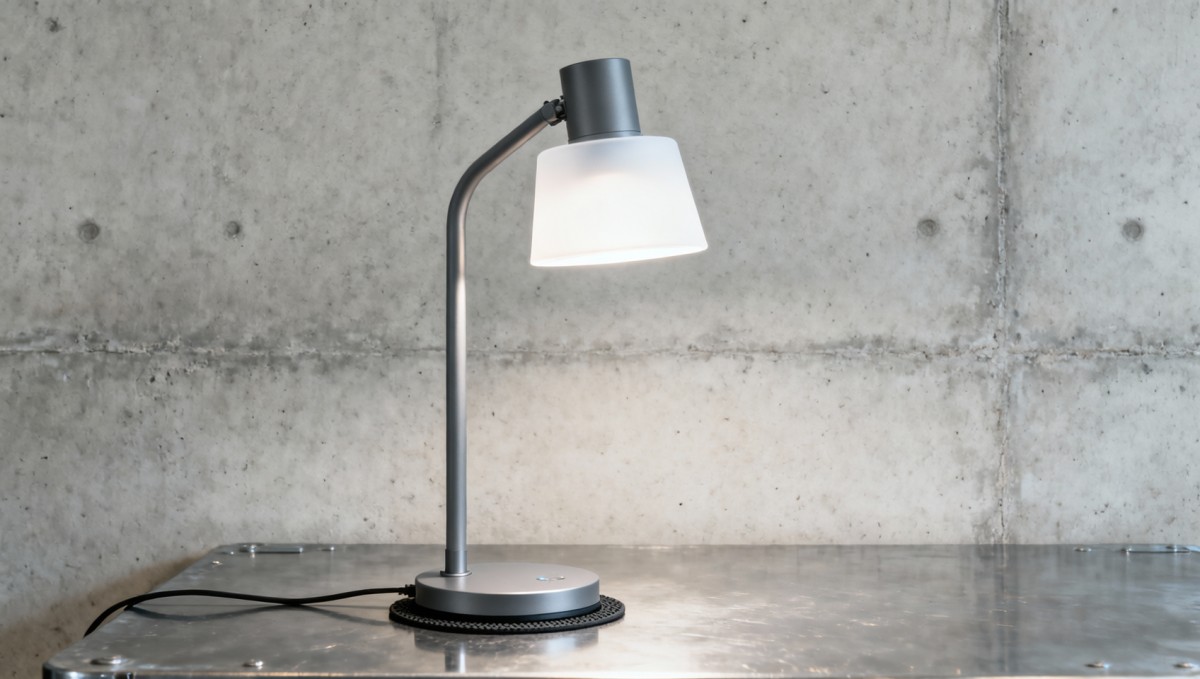
In summary, the CPSC’s April 2026 recall underscores that UL 153 compliance is now a prerequisite — not a differentiator — for LED desk lamps entering the U.S. market. Structural integrity and electrical safety cannot be treated as separate validation items; they are interdependent risk factors under active regulatory review. For stakeholders, the event is best understood not as a one-off incident, but as confirmation that holistic product safety assurance — spanning design, certification, and supply chain governance — has become the baseline expectation for North American market access.
Source: U.S. Consumer Product Safety Commission (CPSC) Recall Notice 26-142, issued April 18, 2026. Further developments regarding enforcement scope or updated guidance remain under observation.
Recommended News
 Mexico Enforces NOM-019-SCFI-2026 EMC Certification for Auto Electronics from May 2026Mexico enforces NOM-019-SCFI-2026 EMC certification for auto electronics from May 2026 — mandatory local testing, stricter standards, and urgent compliance action required.
 Global Port Congestion Eases, but Red Sea Rerouting PersistsRed Sea rerouting persists amid easing port congestion—Shanghai–Rotterdam freight rates surge 4.2% to $5,280/TEU. Critical insights for exporters, importers & logistics leaders.
 RCEP Green Packaging Mutual Recognition Starts June 2026RCEP Green Packaging Mutual Recognition starts June 2026 — streamline exports to Australia, NZ, Japan & SK with GB/T 37572-2025 certification. Save time & costs!
 FDA AI Diagnostic Device Rules: ABIA Required from Q3 2026FDA AI diagnostic device rules now require ABIA reports from Q3 2026 — essential for 510(k)/De Novo submissions. Stay compliant, avoid delays & secure U.S. market access.
 Vietnam Suspends SASO Mutual Recognition for Chinese Irrigation EquipmentVietnam suspends SASO mutual recognition for Chinese irrigation equipment—sprinkler systems, drip controllers & irrigation systems now require local QUATEST 3 testing. Act now to avoid 12-week delays & 35% cost hikes.
") TÜV Rheinland Updates CE Certification for Industrial Robot Drives (2026 Q3)TÜV Rheinland’s 2026 Q3 CE certification update for industrial robot drives mandates PLd safety + EN 61800-3 EMC — act now to avoid EU market delays.
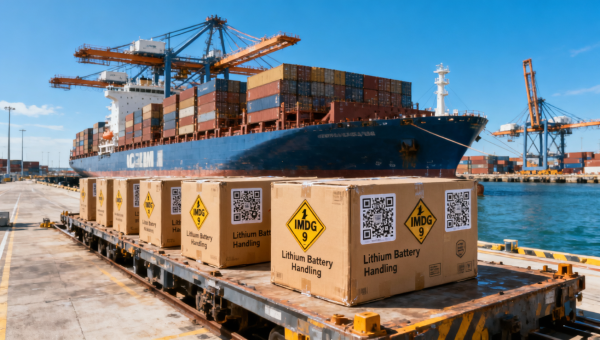
TÜV Rheinland Updates CE Certification for Industrial Robot Drives (2026 Q3)TÜV Rheinland’s 2026 Q3 CE certification update for industrial robot drives mandates PLd safety + EN 61800-3 EMC — act now to avoid EU market delays. IMDG Code Amendment 41-24 Takes Effect for Lithium Battery Sea FreightIMDG Code Amendment 41-24 is live: New QR labels, bilingual handling tags & SOC disclosure required for UN3480 lithium battery sea freight—act now to avoid delays.
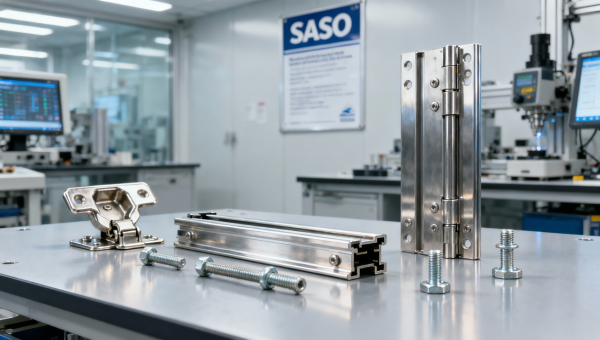
 SASO SABER Phase II: Digital Type Test Reports Required for Building Hardware from Jun 2026SASO SABER Phase II requires digital type test reports & unique product IDs for building hardware exports to Saudi Arabia — effective June 2026. Act now to ensure compliance and avoid customs delays.
 CPSC Updates 16 CFR Part 1236: New Suffocation Test for Children's Sleep Sacks Effective July 2026CPSC Updates 16 CFR Part 1236: New suffocation test for children's sleep sacks takes effect July 2026 — ensure compliance, avoid delays & protect your U.S. market access.
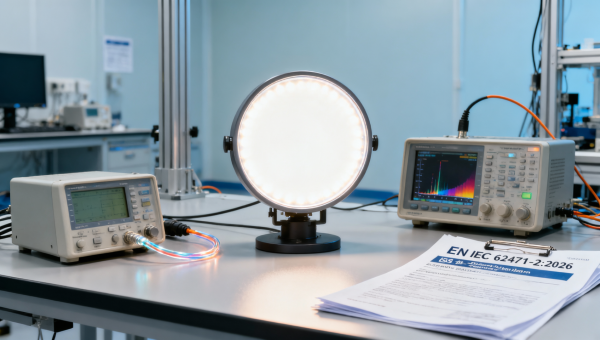
 EN IEC 62471-2:2026 Effective Oct 2026 for EU LED Lighting ExportsEN IEC 62471-2:2026 mandates full-spectrum photobiological safety testing (200–3000 nm) for all EU-bound LED lighting — effective 1 Oct 2026. Act now to secure CE marking & avoid market access delays.
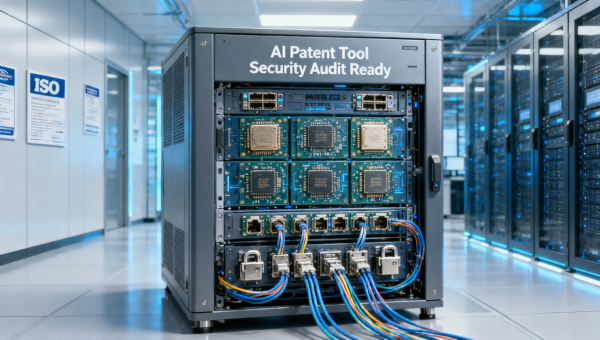
 AI Patent Tools Security Flaw Triggers Compliance ReviewAI Patent Tools security flaw exposed—triggering urgent compliance reviews for medical device, semiconductor & AI firms. Act now to secure submissions.
 Lithium Carbonate Price Rebound Pressures Battery CostsLithium carbonate price rebound in April 2026 pressures battery costs—impacting procurement, EV manufacturing & EU energy storage compliance. Key insights inside.
 AI+New Materials Summit at Canton Fair ClosesAI+New Materials Summit at Canton Fair closes—key insights for AI testing instruments, optical metrology & ISO/IEC 17025 compliance. Discover what Tier 1 auto buyers and TÜV/JIS labs really want.
 Sodium-Ion Battery Mass Production Accelerates for Energy StorageSodium-ion battery mass production accelerates in 2026 — lower-cost, UL 9540A-certified energy storage for solar exporters and off-grid markets.
 GMCC & Welling Showcase R290-Ready Compressors at CIFF 2026R290-ready compressors from GMCC & Welling—ultra-low noise (≤22 dB), high IPLV, EU F-Gas III & US DOE 2026 compliant. See why HVAC exporters must act now.
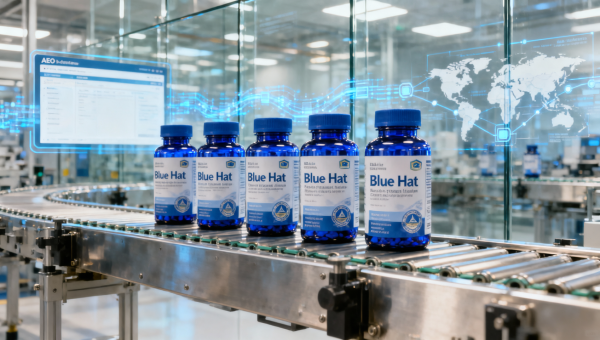
 Dongfang Select's Blue Hat Supplements Go Global with TraceabilityBlue Hat supplements with blockchain traceability—Dongfang Select’s global launch sets a new standard for trusted health & beauty exports.
 China’s New Green Design Guidelines Mandate LCA for Export Packaging & Building MaterialsChina’s new Green Design Guidelines mandate LCA for export packaging & building materials—key for EU, Korea, Canada market access. Act now to secure green procurement eligibility & tariff benefits.
 Semiconductor Supply Chain Price Hikes Extend Lead TimesSemiconductor supply chain price hikes hit MCUs, power ICs & automotive sensors—lead times now stretch 16–20 weeks. Act now to secure A-BOM readiness and local packaging capacity.
 Wuxi E-Bike Cluster Seeks Global Market at Canton FairWuxi e-bike cluster (Yadea, Aima, Tailg) targets global markets at Canton Fair—UL2849, IEC62133 & UN38.3 compliance is now key for LATAM entry.
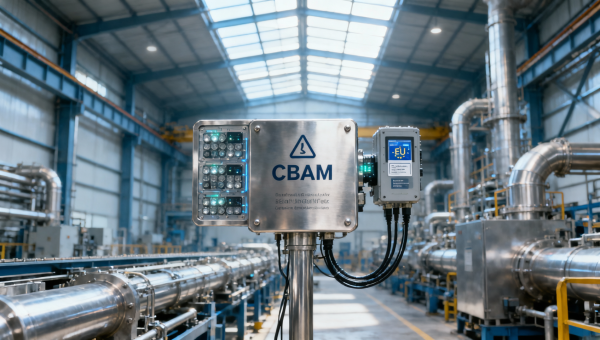
 EU CBAM Enters Enforcement Phase on Jan 1, 2026EU CBAM enforcement starts Jan 1, 2026 — critical for exporters of iron, steel, aluminium, cement, fertilizers, electricity & hydrogen to the EU. Act now.
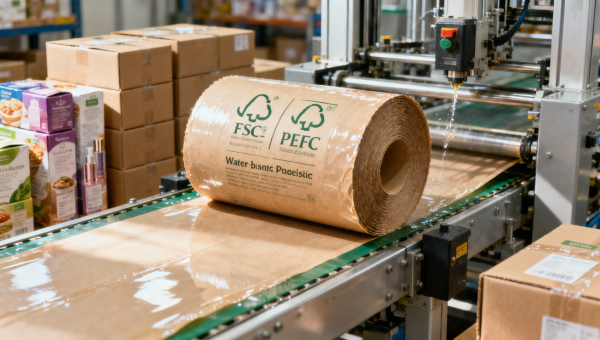
 2026 Jan–Feb Paper Industry Profits +6.1%; Green Packaging Export Premium EmergesGreen packaging export premium drives +6.1% paper industry profits in Jan–Feb 2026 — discover how FSC/PEFC certification and water-based processes boost margins for eco-friendly, food & cosmetics packaging exporters.






Popular Tags
Global Trade Insights & Industry
Our mission is to empower global exporters and importers with data-driven insights that foster strategic growth.
Search News
Popular Tags
Industry Overview
The global commercial kitchen equipment market is projected to reach $112 billion by 2027. Driven by urbanization, the rise of e-commerce food delivery, and strict hygiene regulations.