

Activewear OEM mistakes that lead to fit and fabric complaints
Even experienced buyers can face costly setbacks when an Activewear OEM overlooks fit consistency, fabric performance, or production controls. For quality and safety managers, these mistakes often surface as customer complaints, returns, and brand trust issues. This article explores the most common OEM errors behind fit and fabric problems, helping sourcing teams identify warning signs early and improve product reliability before goods reach the market.
Why do Activewear OEM projects fail at fit and fabric control?
In activewear sourcing, complaints rarely start with a single visible defect. They often begin upstream, inside pattern grading, fabric approval, trim compatibility, or weak process discipline. When an Activewear OEM treats development as a speed exercise rather than a controlled system, quality teams end up managing the fallout after goods ship.
For quality control and safety managers, the risk is broader than aesthetics. Poor fit can trigger size inconsistency claims, while unstable fabrics may cause seam failure, opacity issues, color migration, skin comfort complaints, or unsafe garment performance during exercise. In international trade, these issues also affect claims handling, replenishment timing, and supplier scorecards.
Across global supply chains, TradeVantage and GTIIN observe a recurring pattern: buyers often focus on price, MOQ, and lead time first, while technical review of fit blocks, stretch recovery, and testing protocols receives less attention. That gap is where many Activewear OEM mistakes start.
- Fit complaints emerge when the supplier uses inconsistent base patterns, poor grading logic, or unverified size tolerances across production lines.
- Fabric complaints arise when stretch, compression, pilling resistance, opacity, or dimensional stability are approved from lab swatches but not validated in bulk conditions.
- Safety-related concerns increase when chemical compliance, colorfastness, needle control, or trim attachment checks are treated as paperwork instead of live controls.
Common root causes quality teams should flag early
An experienced Activewear OEM should manage fabric behavior and garment engineering together. If those functions are separated without strong review gates, small deviations multiply quickly. A 2% difference in stretch recovery or a slight change in GSM can alter fit, support, and wearer comfort across the full size range.
Which Activewear OEM mistakes most often lead to customer complaints?
The most expensive mistakes are not always dramatic. Many are routine shortcuts that seem manageable during sampling but become serious after bulk production. The table below helps quality teams connect common Activewear OEM mistakes with likely field complaints and control priorities.
This pattern matters because activewear is performance-led apparel. End users do not separate fit from fabric. If compression is uneven, if a bra strap cuts into the shoulder, or if leggings become sheer, the complaint targets the product as a whole. That is why an Activewear OEM must be assessed on integrated development capability, not only production volume.
The hidden cost of sample-stage optimism
Many quality teams receive a strong salesman sample, then assume bulk output will match it. That assumption is risky. Sample rooms often use more experienced operators, limited fabric lots, and slower sewing speeds. Bulk lines introduce variation in tension, cutting relaxation, marker efficiency, and operator technique. Unless the Activewear OEM has locked these controls, complaint rates can rise sharply after launch.
How should quality managers evaluate fit risk before bulk production?
Fit risk should be reviewed as a measurable sourcing issue, not a subjective styling issue. For an Activewear OEM, strong fit management means consistent blocks, size grading logic, movement-based evaluation, and tolerance alignment between technical packs and factory standards.
Fit checkpoints that reduce returns
- Approve at least two or three key sizes, not only the sample size, especially for leggings, sports bras, compression tops, and plus-size ranges.
- Check garments in static and dynamic positions. Standing measurements alone do not reveal waistband slip, armhole cutting, bust support loss, or crotch strain.
- Compare graded measurements with fabric stretch direction. A technically correct pattern can still fail if the fabric recovery profile differs from development assumptions.
- Review tolerance policy by critical points of measure, not by one blanket tolerance. Waist, hip, inseam, rise, and underbust often need different control levels.
One frequent Activewear OEM mistake is treating fit comments as styling feedback rather than risk data. If wearers report tightness in the armhole, bounce in the chest, or twisting side seams, those comments point to engineering issues. Quality teams should document them as pre-bulk corrective actions, not optional refinements.
Fit evaluation matrix for sourcing and QC teams
The following table can support pre-production review when comparing an Activewear OEM across suppliers or production sites.
A structured fit matrix is especially useful for importers handling multiple markets. Regional size expectations differ, and a capable Activewear OEM should understand that a compression fit in one market may be judged as restrictive in another. GTIIN’s market intelligence value lies in helping sourcing teams read these demand differences before production commitments are made.
What fabric-related mistakes create the most serious performance complaints?
Fabric issues in activewear are rarely limited to hand feel. They affect coverage, moisture behavior, odor retention, abrasion performance, and long-term dimensional stability. A weak Activewear OEM may approve a fabric because it looks correct on a hanger, while overlooking its behavior under heat, sweat, motion, and repeated laundering.
High-risk fabric failures to watch
- Insufficient opacity under extension, especially for light shades or brushed constructions used in leggings and fitted shorts.
- Weak recovery that causes knees to bag out, waistband edges to flare, or support panels to lose hold after several wears.
- Pilling and surface abrasion on high-contact areas such as inner thigh, underarm, and waistband zones.
- Shade inconsistency between panels or production lots, which becomes more visible on complex cut-and-sew styles.
- Shrinkage or torque after washing, causing side seam twisting, inseam distortion, or reduced garment length.
Quality and safety managers should also separate marketing claims from testable performance. Terms like quick-dry, four-way stretch, or sculpting support are meaningful only if the Activewear OEM can define how the fabric and finished garment are being checked. Without measurable criteria, claims become complaint triggers.
Suggested fabric control points before final approval
When evaluating an Activewear OEM, the following checkpoints help move discussion from generic quality promises to real risk control.
These checks are especially important when suppliers propose substitute fabrics to protect lead time or cost targets. A substitute that appears similar in composition may still behave differently in heat setting, sewing, recovery, and wear. That is a common source of avoidable Activewear OEM complaints.
How can procurement teams compare one Activewear OEM with another?
Supplier comparison should go beyond quoted price. In activewear, the lowest initial cost can become the highest landed cost once rework, claims, markdowns, and emergency air shipments are included. Procurement teams need a decision model that reflects quality risk.
A practical comparison framework
- Development discipline: Does the Activewear OEM document pattern revisions, sample comments, and pre-production approvals clearly?
- Material transparency: Can the supplier explain fabric sourcing, lot control, and substitution rules without vague language?
- Testing readiness: Are bulk fabric and finished garment tests integrated into the timeline, or left until shipment pressure builds?
- Line capability: Does the factory have experience with flatlock, coverstitch, bonded seams, elastic application, and compression-sensitive construction?
- Corrective action speed: When issues appear, does the supplier provide root-cause analysis or only quick promises?
This comparison approach is valuable in cross-border sourcing because not all factories describe capability in the same way. TradeVantage’s role as an industry intelligence platform is to help global buyers frame better questions, compare suppliers on evidence, and reduce information asymmetry across markets.
What standards and compliance checks should safety managers prioritize?
Activewear may not always be treated as a high-risk product category, but safety managers know that chemical, physical, and labeling issues can still create major exposure. A responsible Activewear OEM should support compliance planning early rather than after final packing.
Core compliance areas to review
- Restricted substance management for dyes, prints, finishes, and elastics, especially when sourcing for multiple regions with different expectations.
- Colorfastness performance for washing, perspiration, and rubbing, because activewear is exposed to sweat and frequent laundering.
- Physical safety checks on trims, bonded elements, and seam durability to reduce breakage or skin irritation risk during wear.
- Care labeling accuracy, fiber content declaration, and size labeling consistency, which are often overlooked but directly tied to consumer complaints and regulatory exposure.
No single checklist fits every market, but quality managers should expect an Activewear OEM to explain testing scope, sample timing, and documentation flow clearly. If a supplier waits until final inspection to discuss compliance, that is a process weakness, not a scheduling issue.
Procurement guide: what should you ask before placing the order?
A strong sourcing conversation with an Activewear OEM should expose process maturity before the PO is confirmed. The right questions can prevent months of avoidable complaint handling.
Pre-order question checklist
- Which sample size and which additional sizes will be approved for fit before bulk?
- What bulk fabric tests will be repeated after lot booking, and what tolerances trigger escalation?
- How are shade variation, panel matching, and fabric relaxation managed in cutting?
- What seam types and thread specifications are used for high-stretch areas, and how were they validated?
- How does the Activewear OEM handle approved material changes if timing or sourcing pressure affects the original plan?
- At which stage can the buyer review pre-production samples, pilot run output, and final packaging details?
For busy quality and safety teams, these questions create a repeatable supplier onboarding standard. They are also useful when comparing existing suppliers against new factories in different sourcing regions.
FAQ: common sourcing questions about Activewear OEM quality risk
How do I know if an Activewear OEM can control fit across all sizes?
Ask for the grading logic, critical points of measure, and evidence of multi-size fit approval. If the supplier can only discuss the sample size, the fit risk is still high. Dynamic fitting on at least key sizes is more reliable than static measurement review alone.
What fabric complaint is most commonly missed before shipment?
Opacity under stretch is one of the most commonly missed issues, especially for leggings and fitted bottoms. Bulk fabric may pass visual review in a relaxed state but fail during movement. Recovery loss after repeated wear is another frequent complaint that sample-stage checks may not fully capture.
Should quality teams accept substitute fabrics if lead time is tight?
Only after revalidation. A substitute with similar composition can still differ in stretch modulus, hand feel, shrinkage, opacity, and seam behavior. For activewear, substitution without a technical review is one of the fastest ways to create returns and claim negotiations.
What is the biggest mistake when evaluating an Activewear OEM on price?
Treating price as isolated from process control. If a lower quote depends on lighter testing, weaker development support, or flexible material substitution, the apparent savings may disappear through rework, complaint settlements, expedited logistics, or reputational damage.
Why choose us for supplier intelligence and sourcing decision support?
For buyers, exporters, and importers navigating Activewear OEM risks, GTIIN and TradeVantage provide more than surface-level market content. Our strength lies in connecting industrial intelligence, global trade visibility, and practical sourcing context across sectors. That helps quality and safety teams move faster on the questions that matter: supplier capability, market expectations, material risk, and communication clarity.
If your team is reviewing an Activewear OEM, you can consult us on supplier comparison logic, fit and fabric evaluation priorities, lead-time risk signals, compliance planning considerations, and market-facing quality expectations. We also support discussions around sample review focus points, quotation context, production communication gaps, and data-backed sourcing research for cross-border trade decisions.
Contact us if you need clearer decision support on parameter confirmation, supplier selection, delivery timeline assessment, customization feasibility, certification-related documentation flow, sample-stage review priorities, or quotation benchmarking. In a market where small process errors can become large complaint costs, better information is a practical advantage.
Recommended News
 China’s First Embodied AI Robot Export Liability Insurance Launched in GuangxiEmbodied AI Robot Export Liability Insurance launched in Guangxi—China’s first insurer-backed solution for EU/Japan-bound industrial & service robots. Boost compliance, trust & tenders now.
 Morocco: 4th Top African Recipient of EU Energy Aid, Boosting China’s PV & Storage ExportsMorocco’s EU energy aid boost unlocks opportunities for Chinese PV mounting structures & containerized energy storage exports—act now to leverage new regulatory advantages.
 Industrial Robot Controller Thermal Gel: China's Export-Ready Heat Dissipation SolutionIndustrial Robot Controller Thermal Gel: China’s export-ready, TÜV-certified heat dissipation solution (8.5 W/mK) for robotics in SEA & Mexico.
 ADB Raises Vietnam’s 2026 GDP Forecast to 7.2% on Sino-Vietnam Supply Chain IntegrationADB raises Vietnam’s 2026 GDP forecast to 7.2% amid deepening Sino-Vietnam supply chain integration in electronics, solar PV, and lithium battery PACK production — key insight for OEMs, exporters & integrators.
 First National SME Service Demonstration Platforms AnnouncedFirst National SME Service Demonstration Platforms announced—16 specialize in REACH, UKCA, UL certification & rapid factory audits for exporters.
 U.S. Natural Gas Inventory Growth Below Forecast: Impact on Plastic Export CostsU.S. natural gas inventory growth missed forecast—impacting plastic export costs globally. Learn how rising TTF prices affect PP/PE resin costs, margins & supply chain strategy for exporters.
 EN 62368-1:2026 Enforced in EU: Thermal Runaway Protection for Wearables & Smart Home DevicesEN 62368-1:2026 is now mandatory in the EU—learn how thermal runaway protection impacts wearables, smart home devices & EV accessories.
 Q1 2026 Industrial Profits Up 15.5%: Supply Chain Cost Stability ConfirmedQ1 2026 Industrial Profits Up 15.5% — supply chain cost stability confirmed for global procurement, contract manufacturing & OEM teams.
") MIIT Releases Service Trade Standardization Plan (2026–2030)MIIT's 2026–2030 Service Trade Standardization Plan boosts AI-driven digital services—remote QA, cloud maintenance, intelligent warehouse SaaS—for global export competitiveness.
MIIT Releases Service Trade Standardization Plan (2026–2030)MIIT's 2026–2030 Service Trade Standardization Plan boosts AI-driven digital services—remote QA, cloud maintenance, intelligent warehouse SaaS—for global export competitiveness. WeChat Pay Integrates QR Codes from 5 Countries for B2B Cross-Border SettlementWeChat Pay integrates QR codes from South Korea, Sri Lanka, Thailand, Malaysia & Singapore — enabling faster, cheaper B2B cross-border settlement for global buyers and Chinese suppliers.
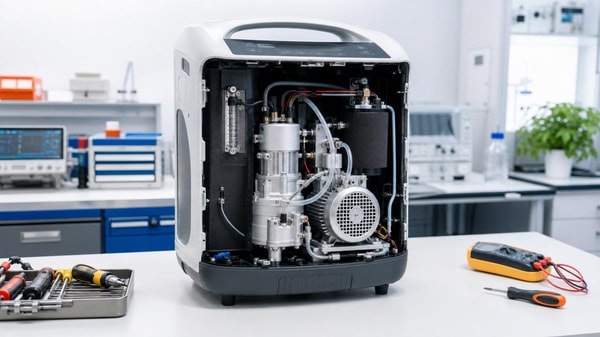
 Portable oxygen concentrators get noisy over time for several reasonsPortable oxygen concentrators get noisy over time due to dust, wear, loose parts, and aging compressors. Learn key causes, inspection priorities, and service tips to prevent failures.
 Interactive whiteboards: what schools regret not checking earlyInteractive whiteboards can boost learning, but schools often regret missing key checks on compatibility, durability, training, and support. Discover how to buy smarter.
 Medical diagnostic equipment downtime usually starts with this oversightMedical diagnostic equipment downtime often starts with one overlooked maintenance gap. Learn the warning signs, hidden costs, and smart service strategies to improve uptime.
 Eco-friendly building materials: where certification changes the decisionEco-friendly building materials now win or lose on certification. Learn how verified standards reduce sourcing risk, support compliance, and improve procurement decisions.
 Ergonomic workspace design mistakes that still cause daily strainErgonomic workspace design mistakes can silently cause daily strain, fatigue, and lower productivity. Discover practical fixes to improve comfort, focus, and workstation performance.
 Outdoor garden supplies that wear out too fast in summer heatOutdoor garden supplies can fail fast in extreme summer heat. Discover which items wear out first, what materials last longer, and how to buy smarter for durable, cost-saving performance.
 Sustainable home decor: how to spot green claims with substanceSustainable home decor explained: learn how to spot credible green claims, avoid greenwashing, compare materials and certifications, and choose stylish, healthier pieces with real impact.
 Modern office furniture trends that improve layout flexibilityModern office furniture trends are transforming flexible workplace design. Explore modular, mobile, ergonomic, and acoustic solutions that boost productivity and smarter space planning.
 Smart street lighting works best when control systems are not overlookedSmart street lighting succeeds when control systems come first. Learn how better monitoring, dimming, and integration improve ROI, maintenance efficiency, and long-term project performance.
 What solid-state battery breakthroughs are still years from market?Solid-state battery breakthroughs sound transformative, but which ones are still years from market? Explore the technical, cost, and scaling barriers shaping real adoption timelines.
 Commercial LED lighting retrofits: when is payback slower than planned?Commercial LED lighting payback can slip when costs, runtime, rebates, and controls are misjudged. Learn the hidden risks and review steps that protect ROI before approval.




















Popular Tags
Global Trade Insights & Industry
Our mission is to empower global exporters and importers with data-driven insights that foster strategic growth.
Search News
Popular Tags
Industry Overview
The global commercial kitchen equipment market is projected to reach $112 billion by 2027. Driven by urbanization, the rise of e-commerce food delivery, and strict hygiene regulations.