

What makes a wholesale fashion apparel supplier reliable long term?
A reliable Wholesale fashion apparel supplier does more than offer competitive prices—it delivers consistent quality, stable lead times, transparent communication, and the flexibility to adapt as your business grows. For distributors, agents, and wholesalers, choosing the right long-term partner can reduce risk, protect margins, and strengthen market competitiveness. Understanding the key signs of supplier reliability is essential for building a resilient and profitable apparel supply chain.
Why a checklist-based approach matters before you commit
For distributors and agents, supplier selection is rarely a one-order decision. A Wholesale fashion apparel partner affects inventory planning, customer satisfaction, pricing stability, returns management, and even your reputation in local markets. That is why a checklist works better than relying on a trade show impression, a polished catalog, or a low initial quote.
A structured review helps you compare suppliers using the same standards: production consistency, communication quality, compliance, financial resilience, and operational flexibility. It also reduces one of the biggest risks in fashion sourcing: choosing a vendor that performs well in sampling but struggles once order volume increases.
If your goal is long-term growth, the right Wholesale fashion apparel supplier should be evaluated not only on product appeal, but also on whether it can support replenishment cycles, changing seasonal demand, and market-specific customization without creating hidden costs.
Start with this core reliability checklist
Before discussing price in detail, prioritize the following checks. These are the factors most likely to determine whether a Wholesale fashion apparel supplier remains dependable over time.
- Consistent product quality: Ask for repeat samples from different production batches, not just one showroom piece. Long-term reliability means fabric weight, color accuracy, stitching, sizing, trims, and finishing remain stable across orders.
- Stable lead times: A strong supplier should provide realistic production schedules and shipping windows. Reliability is not about promising the fastest turnaround, but about meeting agreed deadlines consistently.
- Clear communication: Delayed replies, vague answers, or inconsistent order updates usually become bigger problems later. A dependable supplier gives timely responses, documented confirmations, and early warnings when issues arise.
- Transparent pricing structure: You should understand what is included in the quote: fabric, trims, packaging, labeling, freight terms, development fees, and possible surcharges. Hidden costs often turn a low quote into a weak long-term deal.
- Scalable production capacity: The supplier should handle both current order volume and future growth. Many apparel factories perform well on smaller test runs but fail during peak seasons or large replenishment orders.
- Compliance and documentation: For many markets, reliable Wholesale fashion apparel sourcing requires proof of social compliance, quality control procedures, material traceability, and labeling accuracy.
- Problem-solving ability: Every supply chain faces issues. The difference is whether the supplier has a process for corrections, replacements, quality claims, and root-cause analysis.
- Commercial stability: A long-term supplier should show signs of business continuity, such as stable export history, recurring clients, organized documentation, and realistic payment terms.
How to judge quality consistency beyond the sample stage
One of the most common sourcing mistakes is approving a supplier based on a strong initial sample while ignoring bulk production control. In Wholesale fashion apparel, quality consistency is what protects repeat sales and reduces return rates.
Use a practical review process. Check whether the supplier can provide measurement specifications, fabric composition reports, shrinkage expectations, color fastness information, and packaging standards. Ask how in-line inspection and final inspection are handled. A factory or trading partner that cannot explain its quality checkpoints clearly is usually relying on reactive fixes instead of process control.
Also look at defect management. Reliable suppliers do not claim that defects never happen. Instead, they define acceptable quality levels, document issues, and offer a clear procedure for replacement, credit, or corrective action. This is especially important for seasonal apparel, where late dispute handling can wipe out the selling window.
Quality questions worth asking early
- Can you provide bulk production references for similar categories?
- What is your inspection workflow before shipment?
- How do you control size tolerance across runs?
- What happens if fabric or sewing defects exceed the agreed standard?
- Can you maintain the same fabric source for repeat orders?
Lead time reliability is more valuable than aggressive promises
For wholesalers and distributors, inventory timing can matter as much as product quality. A Wholesale fashion apparel supplier that misses delivery windows can trigger stockouts, markdowns, and damaged retail relationships. That is why you should test reliability through scheduling behavior, not only quoted lead times.
Ask whether lead times change by order size, fabric availability, embroidery or printing complexity, and peak season congestion. Reliable suppliers explain critical path steps: material booking, sampling approval, production start, inspection, packing, and shipment release. They do not simply say “25 days” without explaining what that timeline depends on.
A useful sign of maturity is the ability to offer milestone updates. For example, a supplier that confirms fabric in-house dates, cutting completion, and final inspection timing is far more dependable than one that communicates only when asked repeatedly.
Use this table to compare long-term supplier reliability
What distributors, agents, and wholesalers should check differently
Not every buyer evaluates a Wholesale fashion apparel supplier in the same way. Your business model changes the priority of each check.
For distributors
Distributors should focus on consistency, replenishment speed, and packaging readiness. If you serve retail channels repeatedly, the supplier must support stable color continuity, dependable restock timing, barcode or label compliance, and carton standards that reduce warehouse friction.
For agents
Agents need strong communication and issue transparency because they sit between factory and buyer. The best supplier for an agent is one that shares accurate progress, accepts third-party inspection, and documents changes in writing. This lowers relationship risk on both sides.
For wholesalers
Wholesalers typically need margin protection and assortment flexibility. That makes MOQ structure, style turnover speed, private labeling support, and the ability to test trend-led products in moderate quantities especially important. A reliable Wholesale fashion apparel partner should balance fashion responsiveness with operational discipline.
Commonly overlooked risks that damage long-term cooperation
Many sourcing relationships fail not because the supplier is completely incapable, but because buyers overlook operational details early on. The following risks deserve attention before scaling orders.
- Material substitution without approval: Even small changes in fabric blend, trim quality, or dye lot can alter fit, feel, and customer acceptance.
- Weak repeat-order planning: Some suppliers can launch styles but struggle to reproduce them months later due to unavailable materials or poor record keeping.
- Unclear Incoterms and shipping responsibility: Freight delays, customs issues, or port charges often create disputes when responsibilities were never defined precisely.
- Overdependence on one merchandiser: If all coordination depends on one person, communication breaks down quickly when staff changes occur.
- No policy for claims and after-sales support: Long-term reliability includes what happens after goods arrive, not only before shipment.
A practical due diligence process before signing a long-term deal
To reduce risk, use a phased evaluation instead of moving directly from first contact to large order placement. This approach helps you confirm whether the Wholesale fashion apparel supplier can perform under normal business conditions.
- Initial screening: Review product range, export experience, core markets, certifications, and communication speed.
- Sample validation: Test workmanship, fit consistency, packaging, and response to revision requests.
- Commercial review: Confirm MOQ, payment terms, lead times, price validity period, and cost inclusions.
- Trial order: Place a manageable order that reflects real operating conditions, not a symbolic micro-order.
- Performance scorecard: Rate the supplier on quality, delivery, communication, document accuracy, and issue handling.
- Scale carefully: Increase volume only after repeat performance is proven across at least two or three order cycles.
How market intelligence strengthens supplier decisions
A strong sourcing decision should not rely only on direct supplier claims. It should also be supported by wider industry visibility. This is where B2B information platforms and trade intelligence tools add value. Tracking apparel manufacturing shifts, labor conditions, raw material trends, regional export performance, and buyer demand changes helps you judge whether a supplier’s promises are realistic in the broader market context.
For example, if cotton costs are rising, port congestion is increasing, or a production region is facing policy changes, a trustworthy Wholesale fashion apparel supplier should already be communicating likely effects on price or lead time. Reliable partners do not isolate you from market reality; they help you prepare for it.
For distributors and agents operating internationally, using industry intelligence sources such as GTIIN and high-authority trade content platforms can support better benchmarking, partner discovery, and long-term risk awareness. This improves not only supplier selection, but also your ability to negotiate from an informed position.
FAQ: key questions buyers often ask
Is the lowest-price supplier ever the most reliable option?
Sometimes, but rarely over the long term. In Wholesale fashion apparel, low quotes can hide weaker fabrics, inconsistent workmanship, slower communication, or unstable delivery. Total value matters more than the opening price.
How many trial orders should be placed before deeper cooperation?
Ideally, more than one. Reliability should be tested across different styles, timelines, or replenishment cycles. One successful shipment is a positive sign, but not enough evidence for long-term dependence.
What documents should be prepared before negotiations?
Prepare target product specifications, expected volumes, quality standards, labeling requirements, packaging details, target price range, delivery windows, and preferred trade terms. The clearer your requirements, the easier it is to identify a reliable Wholesale fashion apparel partner.
Final action guide for choosing a long-term partner
A reliable Wholesale fashion apparel supplier should be judged through evidence, not assumptions. Prioritize quality consistency, realistic lead times, transparent communication, scalable capacity, and clear issue resolution. Use a checklist, compare suppliers side by side, and validate performance through trial orders before committing larger volumes.
If you are moving toward a deeper sourcing partnership, the next step is to prepare a structured supplier discussion. Confirm product specs, expected annual volume, customization needs, compliance requirements, replenishment frequency, shipping terms, claim handling rules, and target launch dates. These questions will quickly reveal whether a Wholesale fashion apparel supplier is suitable for short-term transactions only, or truly reliable for long-term growth.
Recommended News
 China’s First Embodied AI Robot Export Liability Insurance Launched in GuangxiEmbodied AI Robot Export Liability Insurance launched in Guangxi—China’s first insurer-backed solution for EU/Japan-bound industrial & service robots. Boost compliance, trust & tenders now.
 Morocco: 4th Top African Recipient of EU Energy Aid, Boosting China’s PV & Storage ExportsMorocco’s EU energy aid boost unlocks opportunities for Chinese PV mounting structures & containerized energy storage exports—act now to leverage new regulatory advantages.
 Industrial Robot Controller Thermal Gel: China's Export-Ready Heat Dissipation SolutionIndustrial Robot Controller Thermal Gel: China’s export-ready, TÜV-certified heat dissipation solution (8.5 W/mK) for robotics in SEA & Mexico.
 ADB Raises Vietnam’s 2026 GDP Forecast to 7.2% on Sino-Vietnam Supply Chain IntegrationADB raises Vietnam’s 2026 GDP forecast to 7.2% amid deepening Sino-Vietnam supply chain integration in electronics, solar PV, and lithium battery PACK production — key insight for OEMs, exporters & integrators.
 First National SME Service Demonstration Platforms AnnouncedFirst National SME Service Demonstration Platforms announced—16 specialize in REACH, UKCA, UL certification & rapid factory audits for exporters.
 U.S. Natural Gas Inventory Growth Below Forecast: Impact on Plastic Export CostsU.S. natural gas inventory growth missed forecast—impacting plastic export costs globally. Learn how rising TTF prices affect PP/PE resin costs, margins & supply chain strategy for exporters.
 EN 62368-1:2026 Enforced in EU: Thermal Runaway Protection for Wearables & Smart Home DevicesEN 62368-1:2026 is now mandatory in the EU—learn how thermal runaway protection impacts wearables, smart home devices & EV accessories.
 Q1 2026 Industrial Profits Up 15.5%: Supply Chain Cost Stability ConfirmedQ1 2026 Industrial Profits Up 15.5% — supply chain cost stability confirmed for global procurement, contract manufacturing & OEM teams.
") MIIT Releases Service Trade Standardization Plan (2026–2030)MIIT's 2026–2030 Service Trade Standardization Plan boosts AI-driven digital services—remote QA, cloud maintenance, intelligent warehouse SaaS—for global export competitiveness.
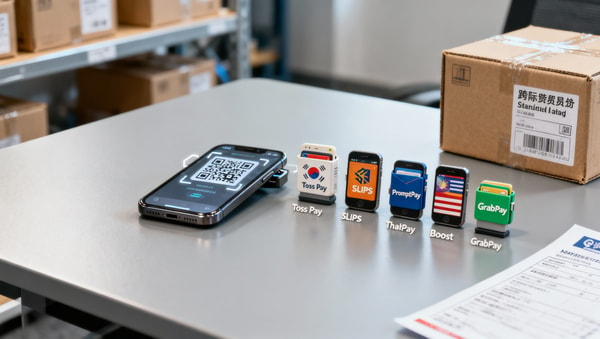
MIIT Releases Service Trade Standardization Plan (2026–2030)MIIT's 2026–2030 Service Trade Standardization Plan boosts AI-driven digital services—remote QA, cloud maintenance, intelligent warehouse SaaS—for global export competitiveness. WeChat Pay Integrates QR Codes from 5 Countries for B2B Cross-Border SettlementWeChat Pay integrates QR codes from South Korea, Sri Lanka, Thailand, Malaysia & Singapore — enabling faster, cheaper B2B cross-border settlement for global buyers and Chinese suppliers.
 Portable oxygen concentrators get noisy over time for several reasonsPortable oxygen concentrators get noisy over time due to dust, wear, loose parts, and aging compressors. Learn key causes, inspection priorities, and service tips to prevent failures.
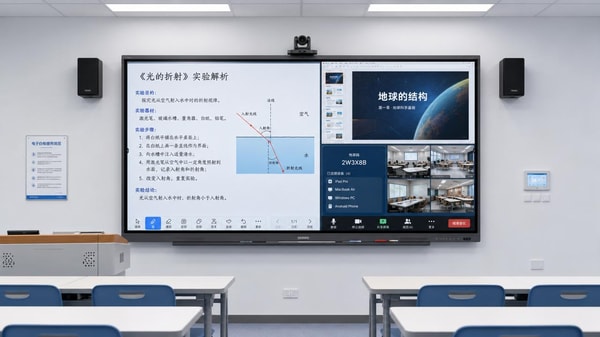
 Interactive whiteboards: what schools regret not checking earlyInteractive whiteboards can boost learning, but schools often regret missing key checks on compatibility, durability, training, and support. Discover how to buy smarter.
 Medical diagnostic equipment downtime usually starts with this oversightMedical diagnostic equipment downtime often starts with one overlooked maintenance gap. Learn the warning signs, hidden costs, and smart service strategies to improve uptime.
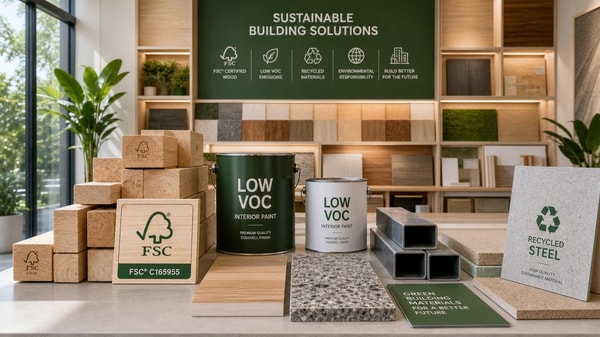
 Eco-friendly building materials: where certification changes the decisionEco-friendly building materials now win or lose on certification. Learn how verified standards reduce sourcing risk, support compliance, and improve procurement decisions.
 Ergonomic workspace design mistakes that still cause daily strainErgonomic workspace design mistakes can silently cause daily strain, fatigue, and lower productivity. Discover practical fixes to improve comfort, focus, and workstation performance.
 Outdoor garden supplies that wear out too fast in summer heatOutdoor garden supplies can fail fast in extreme summer heat. Discover which items wear out first, what materials last longer, and how to buy smarter for durable, cost-saving performance.
 Sustainable home decor: how to spot green claims with substanceSustainable home decor explained: learn how to spot credible green claims, avoid greenwashing, compare materials and certifications, and choose stylish, healthier pieces with real impact.
 Modern office furniture trends that improve layout flexibilityModern office furniture trends are transforming flexible workplace design. Explore modular, mobile, ergonomic, and acoustic solutions that boost productivity and smarter space planning.
 Smart street lighting works best when control systems are not overlookedSmart street lighting succeeds when control systems come first. Learn how better monitoring, dimming, and integration improve ROI, maintenance efficiency, and long-term project performance.
 What solid-state battery breakthroughs are still years from market?Solid-state battery breakthroughs sound transformative, but which ones are still years from market? Explore the technical, cost, and scaling barriers shaping real adoption timelines.
 Commercial LED lighting retrofits: when is payback slower than planned?Commercial LED lighting payback can slip when costs, runtime, rebates, and controls are misjudged. Learn the hidden risks and review steps that protect ROI before approval.


















Popular Tags
Global Trade Insights & Industry
Our mission is to empower global exporters and importers with data-driven insights that foster strategic growth.
Search News
Popular Tags
Industry Overview
The global commercial kitchen equipment market is projected to reach $112 billion by 2027. Driven by urbanization, the rise of e-commerce food delivery, and strict hygiene regulations.