

What Living Room Decor Ideas Work in Small Spaces?
In small spaces, smart living room decor ideas can do more than improve aesthetics—they can support functionality, comfort, and even product evaluation for buyers and decision-makers. From versatile layouts to smart home automation devices and practical home improvement tools, the right choices help maximize every square foot. This guide explores space-saving solutions with a market-aware lens, offering useful insights for users, sourcing teams, and business professionals alike.
What makes living room decor ideas effective in small spaces?
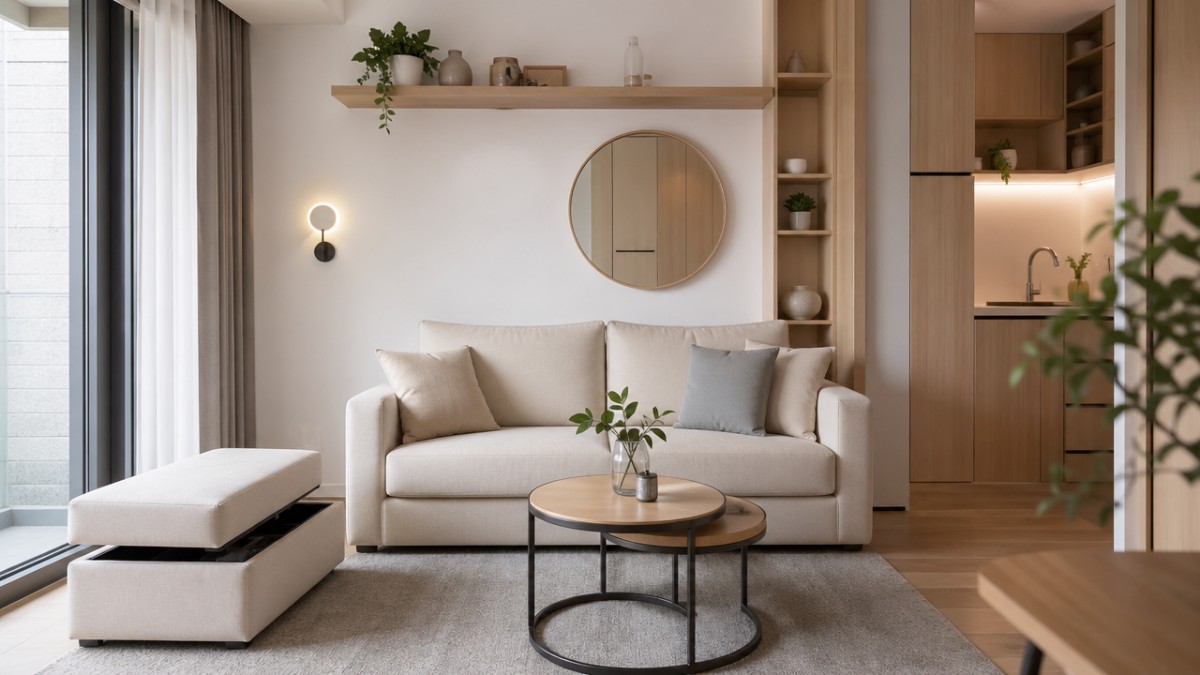
The best living room decor ideas for small spaces are not simply about buying smaller furniture. They combine scale, storage, circulation, and visual clarity. In most compact apartments, studios, or short-stay units, the workable planning zone is often between 10 m² and 20 m², which means every item must justify its footprint. For users and operators, this affects comfort. For sourcing teams and project managers, it affects product suitability, installation sequencing, and replacement cost.
A practical small-space strategy usually starts with three priorities: keeping at least 60–90 cm of walking clearance, selecting multi-use pieces, and controlling visual clutter. These are not only design choices but also purchasing criteria. Technical evaluators may focus on dimensions, weight, and mounting requirements, while business decision-makers often look at lifecycle value, maintenance frequency, and compatibility with different room layouts across multiple projects.
For distributors, importers, and procurement teams, compact living room decor also reflects broader market demand. Urban housing density, rental turnover, and the popularity of modular interiors have increased interest in foldable seating, wall-mounted lighting, narrow-profile storage, and smart home accessories. In this environment, decor decisions are closely linked to SKU efficiency, shipping volume, and after-sales simplicity.
TradeVantage supports this kind of evaluation by connecting product trends, supplier visibility, and sector updates across global markets. Instead of reviewing small living room decor only as a style topic, buyers can compare solution categories, monitor sourcing patterns, and identify which product combinations are gaining traction in export-oriented home improvement and consumer goods channels.
Core criteria that usually decide success
- Footprint efficiency: choose furniture and accessories that provide at least 2 functions, such as seating plus storage or lighting plus charging.
- Installation practicality: wall-mounted pieces should match common surface conditions and standard fixing methods to reduce rework.
- Operational durability: in rental or commercial use, prioritize finishes that tolerate frequent cleaning and light impact.
- Visual balance: keep the number of dominant decor elements limited, often 3–5 key pieces per compact room, to avoid crowding.
Which small living room decor ideas work best by use scenario?
Not all small spaces behave the same way. A 12 m² studio living area, a serviced apartment lounge, and a compact family room each require different decor logic. This is important for project owners, wholesalers, and technical reviewers because the same sofa, shelf, or lighting system may perform well in one layout but fail in another due to access, power points, or user behavior.
Scenario-based planning helps reduce mismatched sourcing. For example, a rental-oriented project may need quick-install decor with low replacement cost and neutral styling. A premium urban residence may justify smarter lighting controls, cleaner cable management, and higher-grade accent materials. In both cases, selecting the right decor ideas for small spaces depends on room function over visual trends.
The table below compares common small-space living room scenarios from a sourcing and application perspective. It is especially useful for procurement managers, agents, and distributors who need to align decor choices with user type, maintenance expectations, and turnover speed.
This comparison shows that the same category of living room decor ideas can serve very different procurement goals. A project with high tenant turnover may value spare-part availability within 2–4 weeks, while an owner-occupied project may prioritize visual coherence and longer use cycles. Matching decor to operating context is often more important than following a general style trend.
How to apply decor ideas by room behavior
High-use everyday rooms
In rooms used 6–12 hours per day, seating comfort, cleanability, and storage access matter more than decorative complexity. Choose washable covers, rounded coffee tables, and shelves that do not obstruct movement. For quality control teams, material inspection should include finish consistency, fastener stability, and surface wipe resistance.
Presentation-led rooms
When the room supports meetings, digital calls, or client visits, decor should create depth without overloading the background. A mirror, two light layers, and one statement texture often work better than many small objects. This approach also reduces breakage risk and simplifies inventory planning for multi-unit rollouts.
Temporary occupancy rooms
For hospitality and rental scenarios, decor must install quickly and withstand repeated handling. Lightweight framed art, battery-supported smart devices, and stackable side furniture can shorten setup time to 1–2 days per unit, depending on room condition and labor availability.
How should buyers compare furniture, lighting, and smart accessories?
A common mistake in small living room planning is evaluating products in isolation. Buyers may choose a compact sofa because of dimensions alone, then discover it blocks a cabinet door or conflicts with floor lamp placement. The better method is to compare decor categories as a system: seating, table surfaces, lighting, wall use, and storage should function together within one movement pattern.
For technical assessors and procurement teams, a cross-category comparison reduces hidden costs. It also improves communication with suppliers because requirements become specific: seat depth range, foldability, lumen output, cable routing, or mounting tolerance. In global sourcing, this level of detail is useful when reviewing quotations from multiple regions with different product conventions.
The table below highlights typical decor categories used in small spaces and the decision points that matter most. It can support vendor shortlisting, private-label planning, or distributor catalog development.
These comparisons help buyers move from “looks good” to “fits the project.” For example, a compact modular sofa may cost more upfront than a basic fixed unit, but if it ships in smaller cartons and passes through elevators more easily, it can reduce handling risk and installation delays. In many projects, that operational advantage matters as much as the item price.
Three decision layers procurement teams should use
- Functional fit: does the item solve at least one real space problem such as storage, flexible seating, or lighting coverage?
- Operational fit: can it be delivered, assembled, cleaned, and replaced within the project’s normal service window, often 7–15 days for standard replenishment?
- Commercial fit: does it support the target price band, margin expectation, and repeat-order potential in the intended market?
Why this matters for international trade
Cross-border home decor trade is influenced by packaging dimensions, MOQ structure, compliance labeling, and seasonality. TradeVantage helps businesses track these changes through industry intelligence, allowing exporters and importers to spot which small-space living room decor ideas are moving from niche demand into broader buyer adoption.
What should procurement teams check before sourcing small-space decor?
When sourcing living room decor ideas for small spaces, the biggest risk is not style mismatch but requirement mismatch. A visually suitable item may fail because of carton size, hardware quality, wall-fixing limits, or inconsistent finish. For procurement professionals, quality teams, and project leaders, pre-purchase checks should cover dimensions, materials, installation method, and service support in a structured sequence.
Lead time is another practical factor. Standard decor items may be available within 2–6 weeks depending on supplier location and order volume, while customized colors, branded packaging, or modified hardware can add 1–3 more weeks. This matters when the room is part of a property launch, showroom update, or seasonal retail cycle.
For technical and commercial review, buyers should also verify whether products align with general market expectations around labeling, user instructions, and safe installation. Although specific certification needs vary by destination and product category, importers should not assume that domestic-market packaging automatically works for export channels.
A practical 5-point sourcing checklist
- Confirm usable dimensions, not catalog dimensions only. Include door clearance, extension range, and assembled depth.
- Review material and surface details for the actual use case, especially if cleaning frequency is weekly or daily.
- Check hardware packs, mounting instructions, and replacement part availability before large-volume orders.
- Ask for packaging data, sample timing, and estimated replenishment cycle, especially where multiple SKUs will be combined.
- Clarify destination compliance needs such as labeling, language requirements, or electrical compatibility for smart accessories.
In many sourcing programs, sample evaluation takes 7–10 days, while final specification alignment can take another 1–2 weeks. Compressing this process often leads to avoidable issues later, such as wall-mount failures, unstable table mechanisms, or inconsistent upholstery shades between batches. A disciplined review sequence saves more than it slows.
Common blind spots in small-space projects
Teams frequently overlook power access for smart lighting, cleaning clearance under low furniture, and carton movement through elevators or stairwells. They may also underestimate how strongly mirror placement, rug size, and light color temperature affect perceived room width. These details shape user satisfaction even when the core furniture is technically acceptable.
How can businesses balance cost, flexibility, and long-term value?
Cost control in small living room decor is not about choosing the cheapest item in each category. It is about reducing wasted volume, limiting replacement frequency, and selecting pieces that stay useful across layout changes. For example, a stackable side table or modular shelf can often be reused in 2–3 room formats, which improves total value even if unit price is higher than a fixed alternative.
A smart cost strategy usually divides purchases into three layers: anchor pieces, flexible accessories, and fast-refresh decor. Anchor pieces include the sofa, main lighting, and primary storage. Flexible accessories include mirrors, tables, and smart plugs. Fast-refresh decor includes cushions, framed prints, and small textiles that can change with seasons or market positioning without major reinvestment.
This layered approach is useful for distributors and commercial buyers because it separates long-cycle assets from trend-sensitive items. It also supports better negotiations with suppliers by identifying which categories require durability and which can stay open for seasonal updates or alternative sourcing regions.
Where substitutions make sense
- Replace bulky floor lamps with wall sconces or clip-on lighting to save 0.3–0.6 m² of practical floor use.
- Swap one large coffee table for 2 nesting tables to improve movement flexibility during meetings or cleaning.
- Use mirror-led wall decor instead of deep shelving when the goal is visual expansion rather than storage.
- Select smart bulbs over complex rewiring when the project needs better ambiance without extended installation work.
Value beyond purchase price
Long-term value includes spare-part access, assembly time, packaging density, and the ability to integrate new accessories later. In export and import programs, these factors often influence margin stability more than the initial ex-works quotation. TradeVantage helps businesses assess such variables through market coverage, product visibility, and trend mapping across the home, lifestyle, and related consumer sectors.
FAQ: what do buyers and users ask most about small-space living room decor?
Search intent around living room decor ideas for small spaces often comes from practical uncertainty. End users want rooms that feel larger. Procurement teams want reliable specifications. Decision-makers want scalable solutions that can be deployed across multiple units or markets. The questions below address these needs directly.
How many major furniture pieces should a small living room have?
In many compact layouts, 3–5 major pieces are enough: primary seating, one table solution, one storage element, one main light, and optionally one accent chair or bench. Going beyond that often reduces circulation and makes the room feel fragmented. The exact number depends on room size, but restraint usually improves both function and appearance.
Are smart home accessories useful in a small living room?
Yes, when they solve a specific problem. Smart bulbs, motion sensors, or voice controls can reduce the need for extra switches and help users adjust lighting zones without adding bulky hardware. Buyers should still check voltage, platform compatibility, and reset procedures before bulk ordering, especially for cross-border distribution.
What is the most common sourcing mistake?
The most common mistake is approving items from photos and dimensions alone. In small spaces, a difference of 5–10 cm can change movement flow, cleaning access, or visual balance. Buyers should request assembly data, carton sizes, hardware details, and close-up material views before final confirmation.
Which decor items offer fast visual improvement with low disruption?
Mirrors, layered lighting, compact rugs, wall art, and closed storage units usually deliver the fastest impact. They improve depth, brightness, and tidiness without major installation complexity. In many refresh projects, these categories can be sourced and installed within 1–3 weeks if specifications are already clear.
Why work with TradeVantage when evaluating small-space decor opportunities?
Small-space living room decor is no longer just a consumer style topic. It sits at the intersection of urban housing trends, modular product development, smart home adoption, and international sourcing strategy. Businesses that understand these links can make better product decisions, reduce mismatch risk, and improve market timing.
TradeVantage helps exporters, importers, sourcing teams, and channel partners navigate this landscape with real-time updates, deep-dive market analysis, and cross-sector industrial intelligence. That means you can assess not only what decor ideas look appealing, but also which categories are commercially active, operationally practical, and suitable for broader market positioning.
If you are reviewing living room decor ideas for small spaces for catalog expansion, supplier screening, content-led brand exposure, or procurement planning, we can support more targeted decisions. Typical consultation topics include product selection logic, delivery cycle expectations, customization options, packaging considerations, smart accessory compatibility, and market visibility opportunities for international trade businesses.
Contact TradeVantage to discuss sourcing parameters, decor category comparisons, lead-time planning, compliance questions, sample support, or quotation communication. Whether you are validating a small pilot order or preparing a larger multi-market launch, our platform helps turn fragmented information into clearer action.
Recommended News
 IMDG Code 41-24 Enforces UN3480 Class 9 Labeling for Lithium Battery Sea FreightIMDG Code 41-24 mandates UN3480 lithium battery sea freight to display durable Class 9 labels from April 27, 2026—avoid delays & port rejections.
 ESS Key Component Prices Drop ~80%: Quality & Compliance RiseESS key component prices dropped ~80%—but quality & compliance demands surged. Discover how UL 9540A, AS/NZS 5139, and certified BMS/inverters now define market access.
 Mexico NOM-019-SCFI-2026 Effective July 2026: EMC Certification Mandatory for Auto ElectronicsMexico NOM-019-SCFI-2026 mandates EMC certification for auto electronics from July 2026 — ensure compliance now to avoid supply chain disruption & customs delays.
 Red Sea Rerouting Normalized, ECA Surcharge Hits $1,850/TEURed Sea rerouting normalized: ECA surcharge hits $1,850/TEU — 47% of total freight cost. Impacting hand tools, building materials & furniture exporters to Europe. Act now.
 RCEP Green Packaging Mutual Recognition Takes EffectRCEP Green Packaging Mutual Recognition is live—GB/T 37537-2025–certified packaging now enjoys fast-track clearance in Australia, NZ, Japan & Korea. Save time, cut costs, and boost export efficiency.
 Vietnam Suspends SASO Mutual Recognition for Chinese Irrigation EquipmentVietnam suspends SASO mutual recognition for Chinese irrigation equipment—drip tapes, PE fittings, auto valves now require VINAQ-IR certification. Act now to avoid delays & customs hold.
 Key Energy Storage Equipment Prices Drop ~80% in ChinaKey energy storage equipment prices in China dropped ~80% — PCS, BMS & liquid cooling units. Discover implications for compliance, margins & standards enforcement.
") China Releases Green Design Guidelines for Industrial Products (2026)China's 2026 Green Design Guidelines for industrial products—covering PV modules, lithium batteries & smart appliances—link eco-design to green factory certification and export tax rebates starting 2027.
China Releases Green Design Guidelines for Industrial Products (2026)China's 2026 Green Design Guidelines for industrial products—covering PV modules, lithium batteries & smart appliances—link eco-design to green factory certification and export tax rebates starting 2027. Mexico NOM-019-SCFI-2026 Effective: Automotive Electronics Require New EMC CertificationMexico NOM-019-SCFI-2026 is live: Automotive electronics (infotainment, ADAS, domain controllers) now require mandatory EMC certification by July 31, 2026 — act now to avoid customs delays.
 Red Sea Detour Premium Rises to $1,850/TEU Amid Port Congestion ReliefRed Sea Detour Premium hits $1,850/TEU — now 43% of FE–NE freight rates. Discover why this structural surcharge demands urgent supply chain action.
 TÜV Rheinland Updates PLd Certification: EMC Immunity Now Mandatory for Servo DrivesTÜV Rheinland now mandates EN IEC 61000-6-2:2024 EMC immunity testing for PLd certification of servo drives—act before May 26, 2026 to avoid EU market delays.
 RCEP Green Packaging Mutual Recognition Effective Apr 26, 2026RCEP Green Packaging Mutual Recognition takes effect Apr 26, 2026—unlock faster customs clearance & cost savings for eco-friendly packaging exporters to AU, NZ, JP, KR.
 FDA Final Rule: AI Diagnostic Devices Must Submit Bias Impact ReportsFDA mandates AI diagnostic devices submit third-party-verified bias impact reports—key for 510(k)/De Novo submissions. Act now to ensure compliance & market access.
 Vietnam Suspends SASO Mutual Recognition for Chinese Irrigation EquipmentVietnam suspends SASO mutual recognition for Chinese irrigation equipment—urgent QCVN certification now required for drip tapes, sprinklers, valves & smart controllers.
 SABER Phase II Launch: Building Hardware Must Submit Digital Type Test Reports & PIDSABER Phase II now requires digital type test reports & PID for building hardware — fasteners, door/window, bathroom fixtures. Avoid port rejection: ensure PID-bound compliance before shipment.
 IMDG Code 41-24 Enforced: UN3480 Lithium Batteries Require Class 9 LabelsUN3480 lithium batteries now require ISO 7225-compliant Class 9 labels under IMDG Code 41-24 — enforceable globally from 26 April 2026. Act now to avoid shipment delays!
 How Does a Water Treatment Plant Cut Operating Risks?Water treatment plant insights on a business intelligence platform: cut downtime, compliance, and cost risks with smarter sourcing on an online trade platform.
 What Living Room Decor Ideas Work in Small Spaces?Living room decor ideas for small spaces: compare home improvement tools and smart home automation devices to create stylish, efficient rooms with sourcing insights and buyer-ready tips.
 Which Home Improvement Tools Do You Really Need First?Home improvement tools guide: discover the first essentials to buy, compare smart home automation devices and online trade platform sourcing tips, and make safer, smarter purchases.
 How to Compare an Online Trade Platform Before Signing Up?Compare an online trade platform with confidence—evaluate data quality, supplier trust, market insights, and search tools for smarter sourcing across cement price, MRI scanners cost, and more.
 Which Smart Home Automation Devices Are Easiest to Use?Smart home automation devices made simple: compare easy-to-use smart home automation devices, home improvement tools integration, and buyer tips from a business intelligence platform.


















Popular Tags
Global Trade Insights & Industry
Our mission is to empower global exporters and importers with data-driven insights that foster strategic growth.
Search News
Popular Tags
Industry Overview
The global commercial kitchen equipment market is projected to reach $112 billion by 2027. Driven by urbanization, the rise of e-commerce food delivery, and strict hygiene regulations.