

How Does a Water Treatment Plant Cut Operating Risks?
For operators, buyers, and decision-makers, understanding how a water treatment plant reduces operating risks is essential to safer, more profitable performance. On a business intelligence platform and online trade platform like GTIIN, this topic connects technical reliability, compliance, and cost control with wider market signals—from Cement price trends to MRI scanners cost and even smart home automation devices—helping global businesses make faster, better-informed industrial decisions.
Why does a water treatment plant matter so much for operating risk?
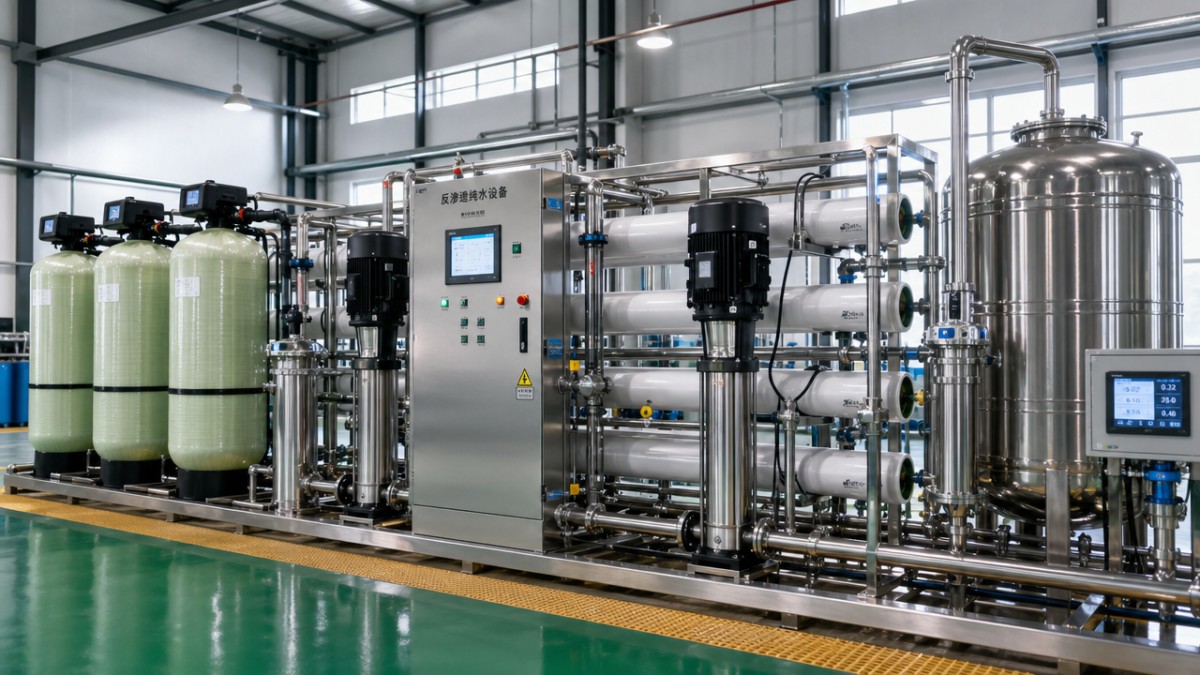
A water treatment plant cuts operating risks by making water quality more predictable, equipment life more stable, and regulatory exposure easier to control. In industrial and commercial settings, untreated or poorly treated water can trigger scaling, corrosion, microbial growth, process shutdowns, product defects, and discharge violations. These are not isolated technical issues. They directly affect maintenance budgets, production continuity, insurance exposure, and procurement decisions.
For operators and technical evaluators, the core value is process stability over continuous operating cycles such as 8-hour, 16-hour, or 24/7 production windows. For procurement and business teams, the value lies in reducing unplanned costs across chemicals, spare parts, labor hours, and downtime. For safety and quality managers, a treatment plant creates traceability through sampling routines, alarm points, and documented control limits.
In a cross-sector environment, water treatment is also linked to broader supply chain risk. A buyer comparing suppliers across regions may see large differences in feedwater quality, utility costs, local discharge rules, and replacement lead times of 2–8 weeks for membranes, valves, or dosing pumps. That is why risk reduction should be assessed as a system issue rather than a single equipment purchase.
GTIIN and TradeVantage are valuable in this context because water treatment decisions rarely happen in isolation. Companies often need to compare plant design logic with market movements, regional sourcing conditions, and industrial demand signals. Access to structured B2B intelligence helps decision-makers connect technical plant risk with commercial timing, supplier visibility, and project feasibility.
The main risk categories a plant is designed to reduce
- Water quality risk: unstable turbidity, hardness, conductivity, pH, or microbial load that can damage boilers, cooling systems, process lines, or finished products.
- Operational risk: unplanned shutdowns caused by fouled membranes, blocked filters, failed dosing control, or insufficient storage during peak consumption periods.
- Compliance risk: missed discharge limits, incomplete logging, or weak sampling discipline that can create audit findings, shipment delays, or penalties.
- Financial risk: excessive chemical use, repeat service calls, shortened equipment life, and emergency procurement at premium cost.
Which plant functions reduce risk first: pretreatment, core treatment, or monitoring?
A reliable water treatment plant reduces risk in layers. The first layer is pretreatment, which usually includes screening, sediment removal, media filtration, and cartridge protection. Its role is simple but critical: remove suspended solids and protect downstream assets. If pretreatment is undersized or bypassed, membranes foul faster, pressure drop rises, and maintenance intervals may shrink from monthly to weekly.
The second layer is core treatment, selected according to the water source and end use. Common process trains include softening, activated carbon, ultrafiltration, reverse osmosis, deionization, and disinfection. The risk reduction effect depends on the target parameter. For example, softening mainly addresses scale risk, while reverse osmosis controls dissolved solids and supports high-purity applications.
The third layer is monitoring and control. This is where many projects either become stable or remain vulnerable. Online instruments for pH, conductivity, turbidity, flow, residual disinfectant, and differential pressure create early warning signals. Even a basic 4-step alarm logic—normal, attention, action, shutdown—can lower response time and reduce the chance of unnoticed drift.
For project managers, the practical question is not whether each layer matters, but how well they are integrated. A strong design links source variability, storage capacity, operator skill level, and maintenance access. In many facilities, risk is reduced less by adding complex technology and more by matching the treatment train to realistic operating conditions.
How different functions address different risks
The table below helps technical and procurement teams compare major plant functions against the operational risks they primarily reduce. This is useful during early specification, supplier review, and retrofit planning.
This comparison shows why one technology cannot solve every operating risk. A plant that performs well on dissolved solids but weakly on pretreatment or sanitation may still cause shutdowns. The most resilient water treatment plant is usually the one that balances multiple risk controls rather than maximizing a single performance claim.
A practical 4-step risk control sequence
- Characterize the water source through baseline sampling across at least 2–4 operating conditions, such as seasonal shifts or production peaks.
- Define acceptance ranges for key parameters including turbidity, hardness, conductivity, pH, and microbial indicators where relevant.
- Select treatment stages that match both quality targets and operator capability, avoiding unnecessary complexity.
- Install monitoring, logging, and maintenance routines with clear responsibilities by shift, week, and month.
How should buyers and engineers evaluate a water treatment plant before purchase?
A good procurement process looks beyond capital cost. Buyers should evaluate whether the water treatment plant can maintain stable output under variable feedwater, utility conditions, and operator practices. In many projects, the plant that appears cheaper on day one becomes more expensive after 6–12 months due to frequent membrane cleaning, emergency spare orders, or poor automation.
For technical evaluators, three questions are essential. First, what is the raw water profile and how often does it change? Second, what water quality is required at the point of use? Third, how much downtime can the operation tolerate? These answers determine whether the plant should prioritize redundancy, buffer storage, modular expansion, or simpler controls.
For procurement teams and commercial reviewers, supplier transparency matters just as much as hardware. Clarify the consumables list, recommended maintenance cycle, typical spare parts lead time, operator training scope, and service response expectations. A water treatment plant should be evaluated as a lifecycle solution, not a shipment item.
GTIIN supports this stage by helping users compare supplier exposure, industry coverage, and market context across regions. On an online trade platform, this wider visibility is useful for shortlisting partners, validating application claims, and understanding whether proposed delivery windows or component sourcing assumptions are realistic.
A procurement checklist for lower operating risk
The table below summarizes practical evaluation points for a water treatment plant purchase. It is especially useful for mixed teams that include operations, engineering, quality, and sourcing stakeholders.
The checklist highlights a common mistake: choosing only by nominal capacity. A plant rated for the required flow is not necessarily safe in practice. Decision-makers should also review redundancy logic, storage hours, maintenance accessibility, and whether local teams can manage the plant without constant specialist intervention.
Five questions to ask before approving a supplier
- What feedwater assumptions were used, and do they reflect dry season, wet season, and peak-load conditions?
- Which parts are consumables, and what are the typical replacement intervals and lead times?
- How many operator actions are required per shift, and what happens if one step is missed?
- What alarms trigger manual response, and which actions are automatic?
- What commissioning and acceptance steps are included over the first 7–15 days of operation?
What compliance, cost, and implementation factors are often underestimated?
Many operating risks come from underestimating implementation details rather than choosing the wrong core technology. Water treatment projects often need site preparation, drainage planning, chemical storage rules, electrical integration, and operator training. If these are postponed until installation, project delays and unsafe workarounds become more likely. Even a compact skid system may still require 2–4 weeks of coordinated site readiness.
Compliance is another area where assumptions create risk. Depending on the application, a facility may need documented sampling routines, safe chemical handling procedures, wastewater discharge control, and maintenance traceability. While exact obligations vary by country and industry, buyers should expect to align the plant with internal quality systems and common operational safety practices rather than treat compliance as a supplier-only issue.
Cost evaluation should also move beyond equipment price. Typical lifecycle cost drivers include energy, chemical dosing, pretreatment media, membrane cleaning, instrument calibration, wastewater disposal, and labor. In some cases, a slightly higher initial investment reduces operating risk because it lowers intervention frequency from daily correction to weekly review, or from frequent emergency service to planned preventive maintenance every quarter.
This is where market intelligence becomes commercially useful. TradeVantage helps companies monitor supply conditions and category signals across industries, which supports better timing for procurement, vendor outreach, and localization strategy. For exporters, distributors, and project-based sellers, visibility into related industrial sectors can improve partner selection and reduce sourcing uncertainty around auxiliary components.
Common implementation mistakes that increase plant risk
- Sizing only for average flow and ignoring demand peaks, cleaning cycles, or future expansion over the next 12–24 months.
- Installing sophisticated controls without matching operator training, local spare support, or calibration discipline.
- Treating commissioning as a one-day handover instead of a staged process with tuning, verification, and documented acceptance points.
- Ignoring reject water management, sludge handling, or chemical storage constraints during early planning.
A practical implementation sequence
A lower-risk implementation usually follows 5 stages: source analysis, engineering review, site preparation, commissioning, and stabilization. The stabilization stage is especially important because performance during the first 2–6 weeks often reveals whether alarm thresholds, chemical dosing, and maintenance routines are realistic for the actual site conditions.
For project leaders, handover should include a documented list of daily, weekly, and monthly tasks; spare inventory recommendations; and escalation contacts. Without this structure, even a technically capable water treatment plant may fail to reduce operating risk in real production environments.
FAQ: what do buyers, operators, and decision-makers ask most often?
In practice, water treatment plant decisions involve repeated questions from operations, sourcing, quality, and management teams. The answers below focus on realistic purchasing and risk-control concerns rather than broad theory.
How does a water treatment plant reduce downtime?
It reduces downtime by controlling the water conditions that commonly damage equipment or disrupt process consistency. Stable pretreatment, controlled hardness, managed dissolved solids, and alarm-based monitoring help prevent scaling, clogging, corrosion, and microbial problems. In practical terms, this means fewer emergency interventions and more planned service intervals, often organized by shift, week, or quarter instead of after failure.
Which applications benefit most from stronger risk control?
Applications with continuous production, sensitive heat exchange, membrane-based processing, product-contact water, or strict discharge expectations usually benefit the most. Examples include manufacturing utilities, boiler feed support, cooling systems, process rinsing, and facilities with variable municipal or groundwater supply. The higher the cost of interruption, the greater the value of a stable water treatment plant.
What should procurement prioritize if budget is limited?
When budget is tight, prioritize fit-for-purpose pretreatment, essential instrumentation, maintainable design, and realistic operating support. It is usually better to buy a simpler, well-matched system with clear spare availability than a more advanced configuration that local teams cannot maintain. Focus on the 3 core cost drivers: consumables, labor time, and downtime exposure.
How long does delivery and startup usually take?
Timing varies by scope, localization, and component sourcing, but many projects should separate equipment lead time from site readiness and commissioning. A practical evaluation often includes supplier production lead time, 1–3 weeks for pre-install coordination, and a staged startup period that may run several days to a few weeks depending on process complexity. Buyers should request a milestone-based schedule instead of a single promised date.
Why consult GTIIN and TradeVantage when evaluating water treatment plant options?
A water treatment plant purchase is rarely just an engineering choice. It sits at the intersection of supply chain timing, regional supplier access, compliance expectations, and lifecycle cost control. GTIIN helps businesses connect these factors through structured B2B information, cross-sector trend tracking, and a broad view of industrial demand signals across more than 50 sectors.
For information researchers and business evaluators, the benefit is faster market validation. For procurement teams, it supports supplier discovery and more informed comparison. For distributors and agents, it offers a stronger route to partner visibility and sector relevance. For exporters, the platform improves brand exposure and strengthens digital trust signals in international trade environments where discoverability matters.
If your team is comparing water treatment plant solutions, GTIIN and TradeVantage can support the decision process with category intelligence, supplier visibility, and market context that goes beyond a single quotation. This is especially useful when your project involves multiple stakeholders, tight delivery windows, or uncertainty around regional sourcing conditions.
Contact us to discuss the points that matter most before you commit: target water quality parameters, plant selection logic, expected delivery window, operating risk priorities, documentation needs, supplier exposure, and market-facing promotion opportunities. Whether you need help shortlisting options, aligning technical and commercial criteria, or improving global visibility for your offering, the conversation can start with concrete requirements instead of generic sales language.
Recommended News
 China-France Nuclear Cooperation Advances at Beijing ExpoChina-France nuclear cooperation advances: mutual recognition for nuclear-grade seals, cables & radiation monitors boosts export readiness for suppliers targeting EU and BRI projects.
 Vietnam’s 4 Provinces Seek AI Tourism Tech in NanningAI tourism tech in demand: Vietnam’s 4 provinces seek AI-guided terminals, multilingual interpretation, AI-CCTV & smart ticketing in Nanning—key opportunity for B2G exporters.
 Q1 2026 China Power Market Trading Up 25.6%: Smart Meters, Storage Export Demand RisesSmart meters, energy storage exports surge as China’s Q1 2026 power market trading jumps 25.6% — key signal for global manufacturers & channel partners.
 China First Country with 5M+ Active Invention PatentsChina first country with 5M+ active invention patents—key for buyers in AI, solar, lithium battery & energy storage. Discover IP implications for sourcing, compliance & supplier vetting.
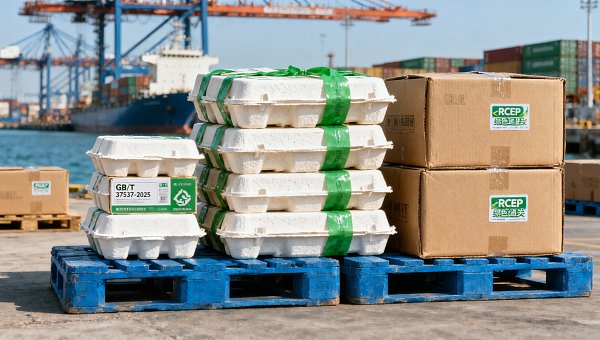
![]() RCEP Green Packaging Mutual Recognition: China Food Packaging Exempt from Testing in AU/NZ/JP/KRRCEP Green Packaging Mutual Recognition now exempts China's food packaging from retesting in AU/NZ/JP/KR — faster clearance, 30% cost savings, and streamlined exports for brands & manufacturers.
RCEP Green Packaging Mutual Recognition: China Food Packaging Exempt from Testing in AU/NZ/JP/KRRCEP Green Packaging Mutual Recognition now exempts China's food packaging from retesting in AU/NZ/JP/KR — faster clearance, 30% cost savings, and streamlined exports for brands & manufacturers. Shenneng Etorkeqi Green Ammonia Project: Deionized Water Station OperationalShenneng Etorkeqi Green Ammonia Project’s deionized water station is now operational—ISO 8502-3 compliant, fully integrated, and a key milestone for global green hydrogen developers and exporters.
 China Launches 'Model-Data Resonance' Initiative for AI+Manufacturing InteroperabilityModel-Data Resonance initiative boosts AI+manufacturing interoperability—learn how GB/T XXXX–2026 aligns with VDI 2182 & ISA-95 for smoother global factory deployments.
 China’s First Embodied AI Robot Insurance Launched in GuangxiChina’s first embodied AI robot insurance launched in Guangxi—key for robotics exporters, AI hardware makers & global compliance teams. CE-recognized, EU/UK/AU-ready.
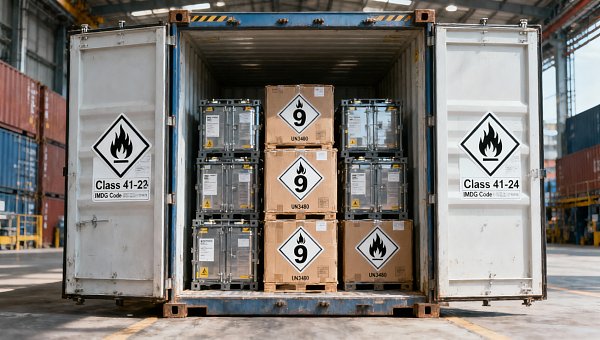
 IMDG Code 41-24 Enforced: UN3480 Lithium Battery Labeling Now MandatoryIMDG Code 41-24 is now mandatory: UN3480 lithium battery labeling, documentation & packaging rules are enforced globally as of 28 April 2026 — avoid port rejections!
 State Grid’s $680M Embodied AI Procurement Signals Export OpportunityEmbodied AI, IEC 61850 & IEC 62443: State Grid’s $680M procurement unlocks export opportunities for compliant industrial robots and smart vision systems in emerging markets.
 IMDG Code 41-24 Enforces UN3480 Class 9 Labeling for Lithium Battery Sea FreightIMDG Code 41-24 mandates UN3480 lithium battery sea freight to display durable Class 9 labels from April 27, 2026—avoid delays & port rejections.
 ESS Key Component Prices Drop ~80%: Quality & Compliance RiseESS key component prices dropped ~80%—but quality & compliance demands surged. Discover how UL 9540A, AS/NZS 5139, and certified BMS/inverters now define market access.
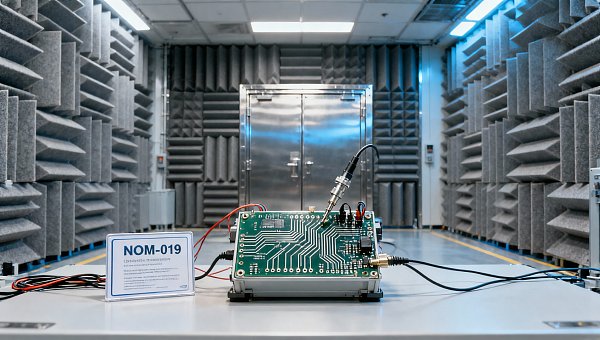
 Mexico NOM-019-SCFI-2026 Effective July 2026: EMC Certification Mandatory for Auto ElectronicsMexico NOM-019-SCFI-2026 mandates EMC certification for auto electronics from July 2026 — ensure compliance now to avoid supply chain disruption & customs delays.
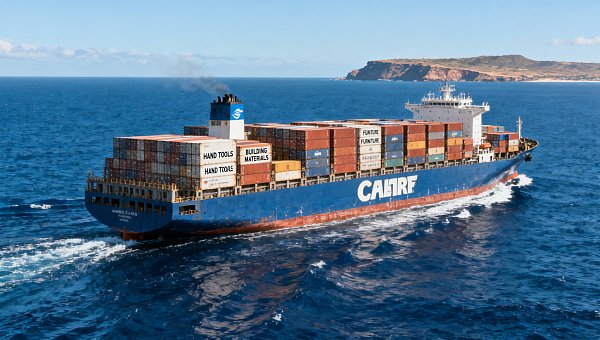
 Red Sea Rerouting Normalized, ECA Surcharge Hits $1,850/TEURed Sea rerouting normalized: ECA surcharge hits $1,850/TEU — 47% of total freight cost. Impacting hand tools, building materials & furniture exporters to Europe. Act now.
 RCEP Green Packaging Mutual Recognition Takes EffectRCEP Green Packaging Mutual Recognition is live—GB/T 37537-2025–certified packaging now enjoys fast-track clearance in Australia, NZ, Japan & Korea. Save time, cut costs, and boost export efficiency.
 Vietnam Suspends SASO Mutual Recognition for Chinese Irrigation EquipmentVietnam suspends SASO mutual recognition for Chinese irrigation equipment—drip tapes, PE fittings, auto valves now require VINAQ-IR certification. Act now to avoid delays & customs hold.
 Key Energy Storage Equipment Prices Drop ~80% in ChinaKey energy storage equipment prices in China dropped ~80% — PCS, BMS & liquid cooling units. Discover implications for compliance, margins & standards enforcement.
") China Releases Green Design Guidelines for Industrial Products (2026)China's 2026 Green Design Guidelines for industrial products—covering PV modules, lithium batteries & smart appliances—link eco-design to green factory certification and export tax rebates starting 2027.
China Releases Green Design Guidelines for Industrial Products (2026)China's 2026 Green Design Guidelines for industrial products—covering PV modules, lithium batteries & smart appliances—link eco-design to green factory certification and export tax rebates starting 2027. Mexico NOM-019-SCFI-2026 Effective: Automotive Electronics Require New EMC CertificationMexico NOM-019-SCFI-2026 is live: Automotive electronics (infotainment, ADAS, domain controllers) now require mandatory EMC certification by July 31, 2026 — act now to avoid customs delays.
 Red Sea Detour Premium Rises to $1,850/TEU Amid Port Congestion ReliefRed Sea Detour Premium hits $1,850/TEU — now 43% of FE–NE freight rates. Discover why this structural surcharge demands urgent supply chain action.
 TÜV Rheinland Updates PLd Certification: EMC Immunity Now Mandatory for Servo DrivesTÜV Rheinland now mandates EN IEC 61000-6-2:2024 EMC immunity testing for PLd certification of servo drives—act before May 26, 2026 to avoid EU market delays.









Popular Tags
Global Trade Insights & Industry
Our mission is to empower global exporters and importers with data-driven insights that foster strategic growth.
Search News
Popular Tags
Industry Overview
The global commercial kitchen equipment market is projected to reach $112 billion by 2027. Driven by urbanization, the rise of e-commerce food delivery, and strict hygiene regulations.