

Lithium battery storage projects often miss one maintenance cost
Many Lithium battery storage projects look compelling in an investment memo because the visible numbers are easy to model: equipment cost, installation, expected charge-discharge cycles, demand charge savings, and possible grid services revenue. What often gets underestimated is a maintenance-related cost that does not always appear clearly in early financial reviews: the ongoing expense of preserving thermal stability and system performance over the asset’s life.
For financial approvers, this is not a minor technical footnote. It can materially change project IRR, payback timing, warranty compliance, and operational risk. In practice, the “hidden” maintenance cost is rarely one line item. It is the combined cost of thermal management service, battery health diagnostics, software monitoring, periodic balancing, safety inspections, replacement of auxiliary components, and the labor needed to keep the system operating within warranty conditions.
The key judgment is straightforward: a Lithium battery storage project can still be financially attractive, but only if the maintenance model is treated as a lifecycle cost rather than an afterthought. Approvers who ask the right questions early usually avoid optimistic projections that later turn into margin erosion, unplanned downtime, or shortened battery life.
What financial approvers are really trying to find out
When someone searches for this topic, the real intent is usually not to learn basic battery theory. It is to understand which cost is being missed, how large it can become, and how to test whether a project proposal is understating long-term operating expense.
For CFOs, finance managers, procurement leaders, and investment committee members, the core concern is practical: “Will this project still deliver the promised return after the full maintenance burden is included?” A second concern follows closely behind: “If the proposal is missing this cost, what other assumptions may also be too optimistic?”
That is why generic discussion about energy transition benefits is less useful here than a disciplined review of total cost of ownership. Financial decision-makers need clarity on maintenance categories, frequency, ownership of service obligations, impact on degradation, and consequences of poor upkeep on warranties and cash flow.
The maintenance cost most often missed is not just repair—it is performance preservation
Many project models include a basic annual O&M allowance, but they treat maintenance as if it were similar to routine upkeep on conventional electrical equipment. That is where the mistake begins. In Lithium battery storage systems, value depends heavily on maintaining battery health, thermal conditions, control accuracy, and safe operating limits over thousands of cycles.
The overlooked cost is best described as lifecycle performance maintenance. It includes all the recurring actions required to preserve usable capacity, efficiency, response speed, safety compliance, and warranty eligibility. This goes beyond fixing something after failure. It is about preventing the system from drifting into a less profitable and higher-risk state.
In financial terms, this matters because battery economics are highly sensitive to degradation. If poor maintenance causes accelerated capacity fade, rising internal resistance, uneven cell behavior, or thermal stress, the project may produce less usable energy, lower savings, and shorter revenue duration than originally forecast.
That means maintenance is not only an operating expense. It is a lever that influences revenue realization, asset life, and residual value. For a finance approver, that makes it strategically important rather than merely technical.
Why thermal management is the cost center that quietly changes the economics
Among all maintenance categories, thermal management is one of the most frequently underestimated. Lithium battery storage systems are highly sensitive to temperature. Cells that operate outside optimal thermal ranges degrade faster, become less efficient, and face elevated safety risk. As a result, cooling and thermal regulation systems are not optional support equipment; they are central to the investment case.
Thermal management costs appear in several forms. First is preventive maintenance of cooling equipment itself, including fans, pumps, filters, refrigerant systems, heat exchangers, and sensors. Second is monitoring and diagnostics, which ensure temperatures remain balanced across racks, modules, and operating periods. Third is energy consumption: cooling draws power, and that parasitic load reduces net project returns.
There is also the cost of thermal-related service interventions. If site conditions, enclosure design, dust, humidity, ventilation, or cycling intensity create hotspots, the operator may need more frequent inspections, recalibration, airflow adjustments, or replacement of stressed components. These costs do not always show up clearly in vendor headline pricing, yet they can accumulate over years.
For financial reviewers, the most important point is this: underfunded thermal management can create a double penalty. It raises operating expense later while simultaneously reducing battery performance and useful life. That combination can damage project economics far more than a slightly higher upfront maintenance budget would have.
What is usually left out of early project spreadsheets
Project proposals often present maintenance as a simple annual percentage of capex. That approach is convenient, but it can hide important details. A more realistic model for Lithium battery storage should separate maintenance into specific cost buckets.
One bucket is routine inspection and preventive service. This includes visual inspections, connection checks, torque verification, cleaning, environmental checks, firmware updates, safety testing, and calibration of monitoring equipment. Another is battery management system support, covering software updates, data analysis, fault detection, and communications troubleshooting.
A third bucket is thermal system upkeep, which deserves its own line item because cooling equipment has wear parts, service intervals, and efficiency impacts. A fourth is auxiliary component replacement, such as HVAC parts, contactors, sensors, breakers, control boards, and communication modules. These may not dominate year one costs, but they can become material over the system’s life.
A fifth bucket is performance testing and balancing. Periodic diagnostics help identify module imbalance, abnormal degradation, or hidden faults before they reduce availability. Finally, there is corrective maintenance and downtime risk. Even if failure rates are low, the cost of dispatching qualified technicians, obtaining replacement parts, and losing operating time should be reflected in contingency planning.
If these categories are compressed into one small O&M assumption, the financial model may look cleaner, but it is less credible. For approval-stage diligence, granularity matters.
How missed maintenance costs affect ROI, IRR, and payback
For finance teams, the biggest mistake is to see maintenance purely as a modest annual cost increase. In reality, the effect is nonlinear because maintenance quality interacts with system performance. A small omission in annual service budgeting can produce a much larger impact on project returns if it leads to faster degradation or lower uptime.
Consider the mechanics. If net usable capacity declines faster than planned, the system captures fewer arbitrage opportunities, reduces less peak demand, or underdelivers contracted services. If cooling systems consume more power than expected or operate inefficiently, net energy benefit falls. If preventive work is delayed and the system experiences outages, revenue and savings are interrupted.
The consequence is that IRR may fall from both sides: costs rise while revenue realization weakens. Payback stretches not because the original technology case was wrong, but because the lifecycle operating assumption was incomplete. This is especially important for projects with tight return thresholds, external financing, or board-level scrutiny.
Financial approvers should therefore test not only the base-case return but also a maintenance-stress scenario. If a project only works under a very light service-cost assumption, it may be less resilient than the proposal suggests.
The warranty link: poor maintenance can turn into uncovered financial risk
Another reason this issue matters is warranties. Many Lithium battery storage suppliers provide performance or product warranties subject to operating conditions, service intervals, environmental compliance, and documented maintenance. If the owner or operator does not follow those requirements, warranty claims may be disputed or limited.
That creates a hidden financial exposure. Teams sometimes assume that major battery issues will be covered, but the practical enforceability of a warranty often depends on documented adherence to maintenance protocols. If logs are incomplete, thermal excursions were not addressed, or service responsibilities were ambiguous, cost recovery may become difficult.
For approvers, the right question is not simply “What is the warranty term?” It is “What maintenance actions are required to keep the warranty fully valid, who is responsible for them, and what evidence must be retained?” This distinction can materially affect risk-adjusted return.
A strong proposal should show that the maintenance budget aligns with warranty conditions. If it does not, then the model may be benefiting from risk protection that is not truly secured in practice.
How to evaluate a Lithium battery storage proposal more rigorously
Financial approvers do not need to become battery engineers, but they do need a sharper checklist. The first step is to ask for a lifecycle O&M schedule rather than a single annual placeholder. This should include labor, software, remote monitoring, thermal system service, spare parts, testing intervals, and expected replacement of auxiliary components.
The second step is to request the assumptions behind degradation and availability. If the project model assumes strong performance retention, it should also explain the maintenance conditions required to achieve it. A high-performance forecast paired with a low-detail maintenance plan is a red flag.
Third, ask whether the site environment changes maintenance intensity. Ambient heat, humidity, dust, poor ventilation, grid instability, and aggressive cycling patterns can all increase service needs. A generic benchmark may not reflect the actual operating context.
Fourth, review the service model. Is maintenance covered by a long-term service agreement, partially outsourced, or expected to be managed in-house? Who bears emergency response cost? Are spare parts stocked locally? What is the expected response time for faults? These details influence both cost and downtime exposure.
Fifth, analyze parasitic load carefully. Cooling systems, controls, and monitoring consume energy. Even if these loads appear small in percentage terms, they reduce net project benefit year after year. They should be visible in the financial model, not absorbed into broad assumptions.
Finally, compare proposals on a normalized lifecycle basis rather than capex alone. A lower upfront price can be misleading if it comes with higher maintenance complexity, weaker monitoring, less robust thermal design, or more owner-side obligations.
Questions finance teams should ask before approving budget
A disciplined approval process often comes down to better questions. Here are the questions that most directly expose hidden maintenance risk in Lithium battery storage projects.
What is the full 10- to 15-year maintenance cost by category, not just as a percent of capex? Which items are fixed, and which are variable based on cycling or site conditions? What thermal management service is required, how often, and by whom?
What annual parasitic energy consumption is expected from HVAC or cooling systems, and how sensitive is that to climate or load profile? What assumptions were used for battery degradation, and how does the maintenance plan support those assumptions?
Which components are expected to be replaced before end of project life? What is the expected cost of sensors, control elements, contactors, cooling parts, or communication hardware? Are software licensing, remote diagnostics, and cybersecurity updates included?
What conditions must be met to preserve warranty coverage? Who owns recordkeeping and compliance? What is the financial effect if availability drops below forecast for even a limited period? Has a downside case been modeled with higher maintenance cost and slightly faster degradation?
These questions do more than challenge vendors. They help align technical assumptions with financial accountability.
Where the real value lies: not lower maintenance, but predictable maintenance
It is tempting to treat the hidden cost issue as a reason to avoid battery storage. That would be the wrong conclusion. The better conclusion is that successful projects are usually the ones that make maintenance visible, budgeted, and contractually clear from the start.
For financial approvers, the goal is not the lowest maintenance estimate. It is the most credible lifecycle cost profile. Predictability is often more valuable than aggressive assumptions. A slightly higher but well-defined O&M budget can support a more reliable business case than a cheaper model with unpriced service exposure.
This is particularly true in organizations where capital projects compete for internal approval. Transparent maintenance assumptions improve comparability, strengthen governance, and reduce the chance of post-approval surprises. They also make it easier to negotiate service contracts, performance guarantees, and responsibility boundaries with suppliers.
Conclusion
The maintenance cost most often missed in Lithium battery storage projects is not a single hidden invoice. It is the broader, recurring cost of preserving thermal stability, battery health, system efficiency, and warranty-compliant performance over time. When that cost is simplified or understated, projected returns can look stronger than they really are.
For financial approvers, the practical takeaway is clear: review battery storage proposals through a lifecycle lens. Separate maintenance categories, test degradation assumptions, examine thermal management requirements, and verify the link between service plans and warranty protection. A project that remains attractive after those adjustments is far more likely to deliver durable value.
In other words, the smartest approval decision is not based on the cleanest spreadsheet. It is based on the most realistic one.
Recommended News
 China’s First Embodied AI Robot Export Liability Insurance Launched in GuangxiEmbodied AI Robot Export Liability Insurance launched in Guangxi—China’s first insurer-backed solution for EU/Japan-bound industrial & service robots. Boost compliance, trust & tenders now.
 Morocco: 4th Top African Recipient of EU Energy Aid, Boosting China’s PV & Storage ExportsMorocco’s EU energy aid boost unlocks opportunities for Chinese PV mounting structures & containerized energy storage exports—act now to leverage new regulatory advantages.
 Industrial Robot Controller Thermal Gel: China's Export-Ready Heat Dissipation SolutionIndustrial Robot Controller Thermal Gel: China’s export-ready, TÜV-certified heat dissipation solution (8.5 W/mK) for robotics in SEA & Mexico.
 ADB Raises Vietnam’s 2026 GDP Forecast to 7.2% on Sino-Vietnam Supply Chain IntegrationADB raises Vietnam’s 2026 GDP forecast to 7.2% amid deepening Sino-Vietnam supply chain integration in electronics, solar PV, and lithium battery PACK production — key insight for OEMs, exporters & integrators.
 First National SME Service Demonstration Platforms AnnouncedFirst National SME Service Demonstration Platforms announced—16 specialize in REACH, UKCA, UL certification & rapid factory audits for exporters.
 U.S. Natural Gas Inventory Growth Below Forecast: Impact on Plastic Export CostsU.S. natural gas inventory growth missed forecast—impacting plastic export costs globally. Learn how rising TTF prices affect PP/PE resin costs, margins & supply chain strategy for exporters.
 EN 62368-1:2026 Enforced in EU: Thermal Runaway Protection for Wearables & Smart Home DevicesEN 62368-1:2026 is now mandatory in the EU—learn how thermal runaway protection impacts wearables, smart home devices & EV accessories.
 Q1 2026 Industrial Profits Up 15.5%: Supply Chain Cost Stability ConfirmedQ1 2026 Industrial Profits Up 15.5% — supply chain cost stability confirmed for global procurement, contract manufacturing & OEM teams.
") MIIT Releases Service Trade Standardization Plan (2026–2030)MIIT's 2026–2030 Service Trade Standardization Plan boosts AI-driven digital services—remote QA, cloud maintenance, intelligent warehouse SaaS—for global export competitiveness.
MIIT Releases Service Trade Standardization Plan (2026–2030)MIIT's 2026–2030 Service Trade Standardization Plan boosts AI-driven digital services—remote QA, cloud maintenance, intelligent warehouse SaaS—for global export competitiveness. WeChat Pay Integrates QR Codes from 5 Countries for B2B Cross-Border SettlementWeChat Pay integrates QR codes from South Korea, Sri Lanka, Thailand, Malaysia & Singapore — enabling faster, cheaper B2B cross-border settlement for global buyers and Chinese suppliers.
 Portable oxygen concentrators get noisy over time for several reasonsPortable oxygen concentrators get noisy over time due to dust, wear, loose parts, and aging compressors. Learn key causes, inspection priorities, and service tips to prevent failures.
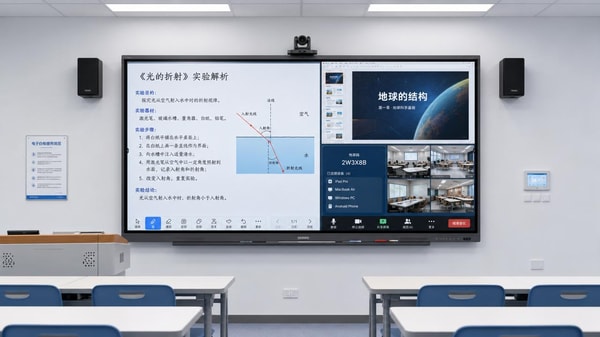
 Interactive whiteboards: what schools regret not checking earlyInteractive whiteboards can boost learning, but schools often regret missing key checks on compatibility, durability, training, and support. Discover how to buy smarter.
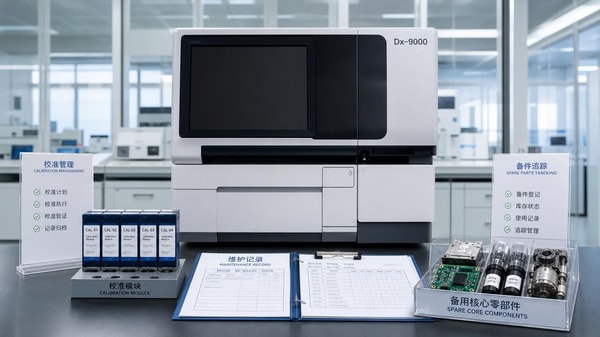
 Medical diagnostic equipment downtime usually starts with this oversightMedical diagnostic equipment downtime often starts with one overlooked maintenance gap. Learn the warning signs, hidden costs, and smart service strategies to improve uptime.
 Eco-friendly building materials: where certification changes the decisionEco-friendly building materials now win or lose on certification. Learn how verified standards reduce sourcing risk, support compliance, and improve procurement decisions.
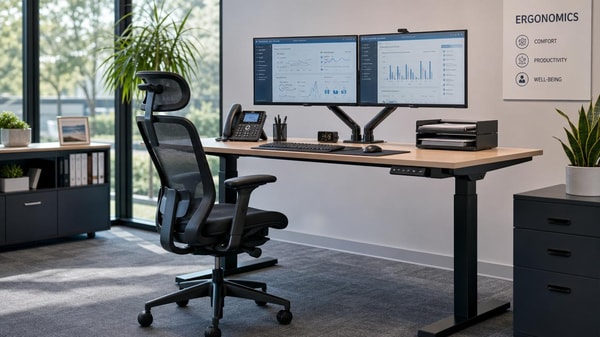
 Ergonomic workspace design mistakes that still cause daily strainErgonomic workspace design mistakes can silently cause daily strain, fatigue, and lower productivity. Discover practical fixes to improve comfort, focus, and workstation performance.
 Outdoor garden supplies that wear out too fast in summer heatOutdoor garden supplies can fail fast in extreme summer heat. Discover which items wear out first, what materials last longer, and how to buy smarter for durable, cost-saving performance.
 Sustainable home decor: how to spot green claims with substanceSustainable home decor explained: learn how to spot credible green claims, avoid greenwashing, compare materials and certifications, and choose stylish, healthier pieces with real impact.
 Modern office furniture trends that improve layout flexibilityModern office furniture trends are transforming flexible workplace design. Explore modular, mobile, ergonomic, and acoustic solutions that boost productivity and smarter space planning.
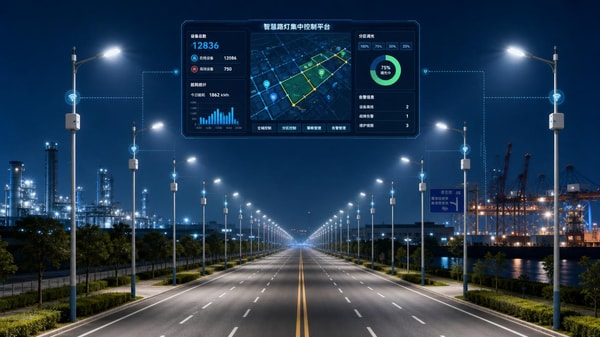
 Smart street lighting works best when control systems are not overlookedSmart street lighting succeeds when control systems come first. Learn how better monitoring, dimming, and integration improve ROI, maintenance efficiency, and long-term project performance.
 What solid-state battery breakthroughs are still years from market?Solid-state battery breakthroughs sound transformative, but which ones are still years from market? Explore the technical, cost, and scaling barriers shaping real adoption timelines.
 Commercial LED lighting retrofits: when is payback slower than planned?Commercial LED lighting payback can slip when costs, runtime, rebates, and controls are misjudged. Learn the hidden risks and review steps that protect ROI before approval.








Popular Tags
Global Trade Insights & Industry
Our mission is to empower global exporters and importers with data-driven insights that foster strategic growth.
Search News
Popular Tags
Industry Overview
The global commercial kitchen equipment market is projected to reach $112 billion by 2027. Driven by urbanization, the rise of e-commerce food delivery, and strict hygiene regulations.