

3D Printing Price: What Are You Really Paying For?
3D printing price is rarely just a number on a quote—it reflects materials, design complexity, machine time, finishing, and supplier reliability. For buyers, distributors, and market researchers using an online trade platform, understanding these cost drivers is essential for smarter sourcing decisions. This guide breaks down what you are really paying for and how to evaluate value beyond the initial price tag.
In B2B purchasing, a low quote can hide expensive revisions, unstable quality, long lead times, or weak after-sales support. A higher quote may include tighter tolerances, better surface finish, certified materials, or more dependable production planning. That is why procurement teams and channel partners should compare 3D printing price in the context of total delivered value, not unit cost alone.
For companies tracking suppliers across global trade networks, pricing analysis also supports risk control. It helps identify whether a supplier is optimized for prototyping, short-run production, spare parts, or display models. It also improves communication with engineering, sales, and sourcing teams when specifications need to balance cost, performance, and delivery speed.
What Makes Up a 3D Printing Price
A 3D printing price is typically built from 5 core elements: material cost, machine time, labor input, post-processing, and quality control. In many standard projects, machine time and labor together can account for 40%–70% of the total quote, while material may range from 15%–40% depending on the process and part geometry.
Material selection is often the first driver buyers notice. PLA and ABS usually sit at the lower end for visual prototypes, while nylon, TPU, resin, stainless steel, aluminum, or engineering-grade polymers raise the price because they require different process conditions, handling methods, and finishing steps. A part made in basic filament is not priced the same way as one built in SLS nylon or metal powder.
Design complexity also changes cost quickly. Internal channels, thin walls below 1 mm, supports, lattice structures, and tight tolerances such as ±0.1 mm to ±0.3 mm can increase print setup time and failure risk. Even if two parts weigh the same, the one with more supports, overhangs, or surface-sensitive details will often cost more.
Another overlooked element is post-processing. Sanding, dyeing, painting, vapor smoothing, polishing, support removal, heat treatment, and dimensional inspection can add 10%–50% to the final 3D printing price. For distributors and purchasing managers, these steps matter because they directly affect whether parts are presentation-ready, assembly-ready, or end-use ready.
Typical Cost Components by Production Stage
The table below shows how common cost elements are usually distributed in a commercial quote. Actual ratios vary by process, part size, and order quantity, but this structure helps buyers understand where the money goes.
The key takeaway is simple: if a quote does not clearly break out these elements, buyers may struggle to compare suppliers fairly. On a B2B sourcing platform, transparency around print method, finish level, and inspection scope is often a stronger indicator of long-term value than the lowest upfront price.
A practical buyer checklist
- Ask whether the quote includes file review, support removal, finishing, and packaging.
- Confirm tolerance expectations, such as ±0.2 mm for prototypes or tighter standards for fit-critical parts.
- Check if the price assumes 1 unit, 10 units, or a batch of 50–100 units.
- Review whether shipping, customs handling, or export labeling are quoted separately.
How Printing Technology Changes the Final Cost
The same CAD file can produce very different pricing depending on the chosen technology. FDM is often suitable for low-cost concept models and jigs, SLA for detailed surfaces and presentation parts, SLS for durable nylon components without support structures, and metal printing for high-value industrial applications. The 3D printing price changes because each process uses different equipment, throughput, consumables, and finishing methods.
For example, a visual prototype produced through FDM may be economical for early-stage validation, especially when layer height of 0.15–0.3 mm is acceptable. If the same part requires smoother surfaces, fine detail, or mold-like appearance, SLA may be preferred, but resin handling, washing, and curing will increase labor and material costs. SLS often costs more than FDM per unit, yet it can become efficient in small batches because multiple parts can be nested into one build volume.
Buyers also need to distinguish prototyping economics from production economics. A part that is cheap to print once may be expensive to print 200 times if orientation, support removal, and finishing are labor-intensive. In contrast, a process with a higher single-part quote may offer a better total cost across 20–200 units due to more stable repeatability and lower manual work.
This is why sourcing teams should compare technologies against business use, not just visible print quality. Sales samples, spare parts, functional testing parts, and end-use housings each have different cost-performance thresholds. A smart procurement approach maps the print method to target volume, mechanical requirement, and acceptable lead time.
Process Comparison for Commercial Buyers
The following comparison helps importers, distributors, and product evaluators match process type with likely cost behavior and sourcing application.
A useful sourcing principle is to compare at least 3 process options before locking a decision. In many procurement cases, moving from an appearance-grade SLA part to an FDM or SLS alternative can reduce cost by 15%–35% if the design intent allows it. Conversely, choosing too cheap a process for a customer-facing sample may hurt sales presentations and rework budgets.
Questions to ask suppliers before comparing quotes
- Which process was used and why does it fit the requested application?
- What layer thickness, material grade, and expected tolerance are included?
- Does the quote assume manual finishing or raw print condition?
- Can the same part be optimized for a batch of 10, 50, or 100 units?
Hidden Costs Buyers Often Miss
A quote may look competitive until hidden costs appear after the order is placed. Common gaps include design correction, failed print reruns, finish upgrades, dimensional verification, custom packaging, export paperwork, and schedule acceleration. These items do not always show in headline pricing, but they influence the true 3D printing price paid by the buyer over a 2-week to 6-week sourcing cycle.
One frequent issue is file readiness. If a supplier receives a model with non-manifold surfaces, wall thickness below process limits, or unsupported overhangs, engineering time will be added. Some providers include basic file checks at no extra charge, while others charge separately after review. For procurement teams handling multiple SKUs, this can materially affect project cost and scheduling.
Lead time compression is another major factor. A standard production slot might be 5–10 business days, while urgent service within 24–72 hours often carries a premium. For time-sensitive launches or replacement parts, paying more may be justified. But buyers should know whether the premium includes guaranteed dispatch, priority finishing, and inspection, or only faster machine allocation.
Logistics also matter more than many first-time buyers expect. A lightweight but fragile print may require foam protection, multi-layer packaging, or climate-conscious transport for certain resins. For cross-border buyers using industrial information platforms, freight mode, incoterms, and damage risk can shift total landed cost more than the print itself on small orders.
Common Hidden Cost Areas in B2B Orders
Before approving a purchase order, buyers should review the following hidden cost areas. This is especially useful when comparing suppliers from different regions or service models.
When suppliers provide clear scope definitions, buyers can estimate total cost of ownership more accurately. This is especially valuable for distributors and sourcing analysts who need to compare not just print quotes, but service reliability across multiple vendors listed on trade platforms.
Red flags in low-price quotations
- No mention of finish condition, tolerance, or support removal.
- No stated lead time window, only a rough promise.
- No clarification on failed print replacement or defect handling.
- No packaging scope for international shipment or resale distribution.
How to Evaluate Value Beyond the Initial Quote
For serious B2B buyers, the right question is not “Which supplier offers the cheapest 3D printing price?” but “Which supplier offers the best balance of cost, repeatability, and delivery reliability for my use case?” The answer depends on the intended application, expected order frequency, and downstream business impact.
A distributor preparing sales samples may prioritize appearance consistency and color finish over minimum cost. A procurement team replacing low-volume spare parts may value fast turnaround and dimensional fit. A market research team comparing supplier ecosystems may focus on process range, response speed within 24 hours, and clarity of technical communication. In all 3 cases, value is measured differently.
It is useful to score suppliers across 4 to 6 criteria instead of ranking them by quote only. Typical criteria include process fit, unit economics at target volume, quoted lead time, communication quality, defect response, and ability to support repeat orders. This approach is especially effective on B2B information portals where buyers may screen multiple vendors across regions before shortlisting.
Another smart practice is to request a pilot order. Testing 3 to 5 parts with clear acceptance criteria often reveals more than a spreadsheet comparison. It shows whether the supplier can control finish consistency, packaging quality, and schedule discipline. For importers and commercial evaluators, this reduces the risk of scaling up with the wrong partner.
A Practical Supplier Evaluation Matrix
The matrix below provides a simple framework for comparing service providers beyond the visible quote. Buyers can assign scores from 1 to 5 for each item and weight them based on project goals.
The strongest suppliers usually perform well across several dimensions, not just price. For trade professionals working through GTIIN and TradeVantage-style information channels, this kind of structured screening helps turn broad market data into better sourcing decisions and stronger long-term supply relationships.
Recommended evaluation steps
- Define the part purpose: visual model, fit test, functional part, or end-use item.
- Set 4–6 decision criteria and assign internal weightings.
- Request comparable quotes from at least 3 suppliers.
- Validate with a pilot order before confirming repeat volume.
Frequently Asked Buyer Questions About 3D Printing Price
How can I reduce 3D printing price without sacrificing function?
Start with geometry optimization. Reducing unnecessary support, thick walls, and oversized solid sections can lower material use and machine time. In many projects, adjusting wall thickness, orientation, or infill strategy can reduce cost by 10%–25% without changing core performance. Also ask whether another process is more efficient for your volume range.
What order quantity makes 3D printing economical?
There is no single threshold, but 3D printing is commonly most competitive from 1 unit to low hundreds, especially for customized parts, short runs, or parts with complex geometry. Once volume rises into several hundreds or thousands, buyers should compare against tooling-based methods. However, for spare parts and specialized B2B applications, additive manufacturing can remain viable for longer.
Why do two suppliers quote very different prices for the same file?
The difference usually comes from assumptions. One supplier may quote raw parts with basic cleanup, while another includes premium finishing, tighter tolerances, inspection, and better packaging. Machine type, operator skill, region, production load, and material source also affect pricing. Always compare quote scope line by line.
What should importers and distributors verify before placing an order?
Verify 6 basics: process type, material grade, finish level, tolerance range, lead time, and packaging scope. If the parts will be resold or shown to customers, also confirm appearance consistency across the batch. For international orders, make sure transit protection and shipment terms are stated clearly before payment.
Understanding 3D printing price means looking beyond the number on the quote and identifying the real cost structure behind materials, machine time, finishing, lead time, and supplier reliability. For information researchers, procurement teams, distributors, and commercial evaluators, that perspective leads to better sourcing decisions, fewer hidden costs, and stronger supplier comparisons.
When you use trusted industrial intelligence platforms to compare suppliers, pricing becomes more meaningful because it is measured against application fit, delivery performance, and commercial transparency. If you want to evaluate 3D printing opportunities more effectively across global markets, connect with GTIIN and explore TradeVantage for deeper market insights, supplier visibility, and tailored sourcing support. Contact us today to discuss your requirements, request a customized sourcing approach, or learn more about practical solutions for global B2B trade.
Recommended News
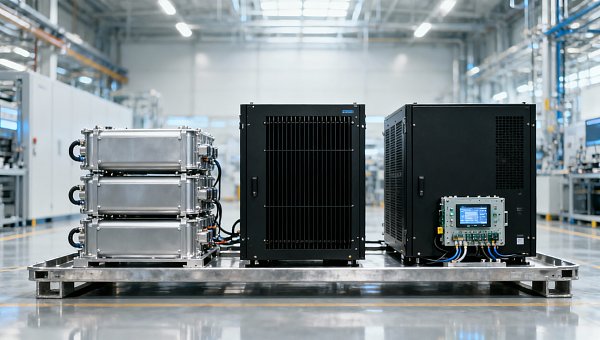
 Key Energy Storage Equipment Prices Drop ~80% in ChinaKey energy storage equipment prices in China dropped ~80% — PCS, BMS & liquid cooling units. Discover implications for compliance, margins & standards enforcement.
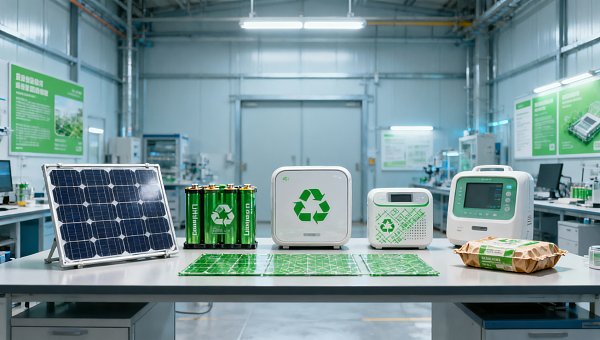
") China Releases Green Design Guidelines for Industrial Products (2026)China's 2026 Green Design Guidelines for industrial products—covering PV modules, lithium batteries & smart appliances—link eco-design to green factory certification and export tax rebates starting 2027.
China Releases Green Design Guidelines for Industrial Products (2026)China's 2026 Green Design Guidelines for industrial products—covering PV modules, lithium batteries & smart appliances—link eco-design to green factory certification and export tax rebates starting 2027. Mexico NOM-019-SCFI-2026 Effective: Automotive Electronics Require New EMC CertificationMexico NOM-019-SCFI-2026 is live: Automotive electronics (infotainment, ADAS, domain controllers) now require mandatory EMC certification by July 31, 2026 — act now to avoid customs delays.
 Red Sea Detour Premium Rises to $1,850/TEU Amid Port Congestion ReliefRed Sea Detour Premium hits $1,850/TEU — now 43% of FE–NE freight rates. Discover why this structural surcharge demands urgent supply chain action.
 TÜV Rheinland Updates PLd Certification: EMC Immunity Now Mandatory for Servo DrivesTÜV Rheinland now mandates EN IEC 61000-6-2:2024 EMC immunity testing for PLd certification of servo drives—act before May 26, 2026 to avoid EU market delays.
 RCEP Green Packaging Mutual Recognition Effective Apr 26, 2026RCEP Green Packaging Mutual Recognition takes effect Apr 26, 2026—unlock faster customs clearance & cost savings for eco-friendly packaging exporters to AU, NZ, JP, KR.
 FDA Final Rule: AI Diagnostic Devices Must Submit Bias Impact ReportsFDA mandates AI diagnostic devices submit third-party-verified bias impact reports—key for 510(k)/De Novo submissions. Act now to ensure compliance & market access.
 Vietnam Suspends SASO Mutual Recognition for Chinese Irrigation EquipmentVietnam suspends SASO mutual recognition for Chinese irrigation equipment—urgent QCVN certification now required for drip tapes, sprinklers, valves & smart controllers.
 SABER Phase II Launch: Building Hardware Must Submit Digital Type Test Reports & PIDSABER Phase II now requires digital type test reports & PID for building hardware — fasteners, door/window, bathroom fixtures. Avoid port rejection: ensure PID-bound compliance before shipment.
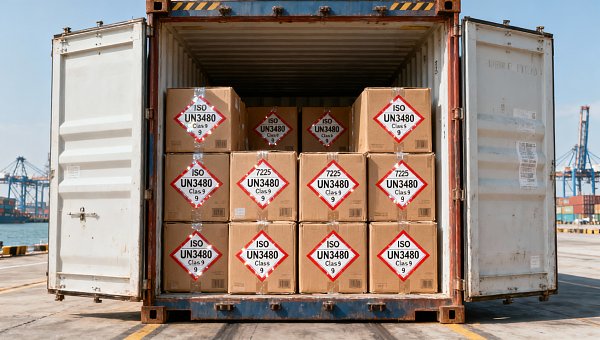
 IMDG Code 41-24 Enforced: UN3480 Lithium Batteries Require Class 9 LabelsUN3480 lithium batteries now require ISO 7225-compliant Class 9 labels under IMDG Code 41-24 — enforceable globally from 26 April 2026. Act now to avoid shipment delays!
 What Makes Sustainable Fashion Brands Worth Buying?Sustainable fashion brands deliver transparency, quality, and lower risk. See how a business intelligence platform helps buyers verify value, avoid greenwashing, and source smarter.
 How to Choose a Business Intelligence Platform in 2026?Business intelligence platform selection in 2026: compare data coverage, pricing insights, online trade platform signals, Cement price trends, and MRI scanners cost to choose smarter, faster.
 IMDG Code 41-24 Enforces UN3480 Class 9 Labeling for Lithium Battery Sea FreightIMDG Code 41-24 mandates UN3480 Class 9 labeling for lithium battery sea freight—avoid auto-rejection by DHL, Kuehne+Nagel & Sinotrans. Act now.
 ESS Key Equipment Prices Drop ~80%: Quality & Compliance RiseESS key equipment prices dropped ~80%—but quality & compliance are now critical. Discover how UL 9540A and IEC 62933-5-2 standards reshape global market access.
") China Releases Green Design Guide for Industrial Products (2026)China's new Green Design Guide (2026) offers 126 actionable solutions for solar, batteries & robotics—key for EU ESG compliance and export readiness.
China Releases Green Design Guide for Industrial Products (2026)China's new Green Design Guide (2026) offers 126 actionable solutions for solar, batteries & robotics—key for EU ESG compliance and export readiness. Vietnam Suspends SASO Mutual Recognition for Chinese Irrigation EquipmentVietnam suspends SASO mutual recognition for Chinese irrigation equipment—impacting spray controllers, fertigation systems & PE pipes. Act now to meet new local testing mandates.
 Mexico NOM-019-SCFI-2026 Effective: Automotive EMC Certification RequiredMexico NOM-019-SCFI-2026 is live: Automotive EMC certification now mandatory for all car electronics entering Mexico—avoid customs rejection. Act now!
 Red Sea Rerouting Now Normalized: Asia-Europe Freight Premium at $1,850/TEURed Sea rerouting is now normalized—Asia-Europe freight premium holds at $1,850/TEU. Critical for CNC, solar PV & EV accessory exporters. Read the strategic implications.
 SABER Phase II Launch: Building Hardware Must Submit Digital Type Test Reports & UPIDSABER Phase II is live: Building hardware exporters must now submit digital type test reports & UPID—avoid Jeddah port delays. Act now!
 FDA Final Rule: AI Diagnostic Devices Require Bias Assessment for US MarketFDA mandates bias assessment for AI diagnostic devices—key for portable ultrasound, dermatoscopes & fundus analyzers entering the US market. Act now to comply.
 RCEP Green Packaging Mutual Recognition Takes EffectRCEP Green Packaging Mutual Recognition is live: Chinese GB/T 37650–2023-certified packaging now bypasses retesting in Australia, NZ, Japan & SK — save time and costs.
















Popular Tags
Global Trade Insights & Industry
Our mission is to empower global exporters and importers with data-driven insights that foster strategic growth.
Search News
Popular Tags
Industry Overview
The global commercial kitchen equipment market is projected to reach $112 billion by 2027. Driven by urbanization, the rise of e-commerce food delivery, and strict hygiene regulations.