

3D Printing vs CNC Machines: Which Fits Better?
From rapid prototyping to full-scale production, the choice between 3D printing and CNC machines affects cost, precision, speed, and sourcing strategy. For buyers, distributors, and market researchers across sectors such as Scaffolding, car maintenance, interior design, lawn mowers, car batteries, radiators, and even MRI scanners, understanding which process fits better can uncover stronger supplier decisions and sharper competitive insights.
Why this comparison matters in cross-industry sourcing
For B2B buyers, the debate around 3D printing vs CNC machines is not only technical. It directly influences quotation accuracy, supplier qualification, product launch timing, and after-sales risk. In cross-industry procurement, one wrong process choice can turn a 7–15 day sample cycle into a 3–5 week correction loop, especially when tolerances, material behavior, and finish requirements were not defined at the start.
3D printing is often preferred for fast design validation, low-volume customization, and complex internal geometries. CNC machining is usually selected for tighter tolerances, broader production-grade material options, and more stable repeatability across medium to high volumes. That said, neither process is universally better. The right fit depends on part function, target quantity, compliance expectations, and the buyer’s real budget structure.
This matters even more in mixed categories. A distributor sourcing custom brackets for scaffolding, replacement housings for car maintenance tools, precision aluminum parts for radiators, or medical equipment enclosures may face very different process logic in each case. One sourcing framework cannot be copied from one sector to another without adjustment.
For information researchers and commercial evaluators, the stronger question is not “Which is better?” but “Which process reduces risk at this stage?” In many projects, the answer changes across the product lifecycle: early prototypes may be 3D printed, pilot batches may combine both methods, and mature production may shift to CNC or another process entirely.
- Use 3D printing when geometry changes frequently, order quantity is low, or tooling avoidance matters more than surface perfection.
- Use CNC machining when dimensional consistency, structural performance, and production material equivalence are procurement priorities.
- Compare both when the project has 2 stages or more, such as prototype validation first and production transfer later.
3D printing vs CNC machines: what changes in performance, cost, and lead time?
Buyers usually compare these two processes through four lenses: geometry freedom, dimensional accuracy, cost per unit, and delivery speed. The problem is that these factors do not move in the same direction. A part that is faster to make by 3D printing may still be more expensive after post-processing. A CNC part that looks costlier at the quotation stage may become cheaper once order volume reaches a stable monthly level.
A practical rule is to separate prototype economics from production economics. In low quantities such as 1–20 pieces, 3D printing often removes setup cost and reduces design iteration friction. In batches above 50–200 pieces, CNC machining may gain an advantage because repeatability, machining cycle planning, and finishing workflows become easier to standardize.
Tolerance is another key dividing line. Depending on machine type, material, and part size, CNC machining is commonly used for tighter dimensional control, while 3D printing performance can vary more significantly by process category such as FDM, SLA, SLS, or metal additive methods. Buyers should request tolerance ranges by critical feature, not by general brochure language.
The table below gives a procurement-focused comparison. These are not universal promises; they are typical decision references that help commercial teams align engineering expectations with sourcing reality.
The strongest takeaway is that cost should be judged by project stage, not by unit price alone. If your team expects 3 design revisions in 2 weeks, 3D printing may save more total time and coordination effort. If your part must match production-grade aluminum, stainless steel, POM, or other engineering materials with repeatable dimensions, CNC machining often becomes the safer commercial choice.
Where buyers misread “fast” and “cheap”
A common misconception is that 3D printing is always faster and CNC is always more expensive. In reality, a printed part with support removal, curing, infiltration, sanding, coating, and rework can lose its speed advantage. On the other side, a CNC part with simple geometry and a standard material can move efficiently once the drawing is clean and inspection points are agreed.
Another mistake is ignoring hidden cost categories. Buyers should include at least 5 elements in evaluation: setup time, material waste or utilization, post-processing, inspection, and rejection risk. This broader cost view is especially useful for distributors and agents comparing several suppliers across different countries.
Which process fits better by application scenario?
Application context is where the 3D printing vs CNC machines decision becomes clear. The same buyer may need one process for concept verification and another for commercial stock. In sectors tied to maintenance, infrastructure, interiors, automotive aftermarket, and industrial devices, the functional role of the part matters more than the popularity of the technology.
For scaffolding-related accessories or fixture concepts, 3D printing can help teams validate fit, assembly direction, and ergonomic handling before committing to production engineering. But if the final part bears load, interfaces with fasteners, or must withstand repeated site use, CNC machining or another production method is usually the stronger reference path for mechanical confirmation.
In car maintenance and spare-part ecosystems, the decision often depends on whether the item is cosmetic, functional, or safety-adjacent. A dashboard clip prototype or a custom tool holder may work well with 3D printing in small quantities. A shaft adapter, heat-sensitive bracket, or sealing surface generally requires the tighter control and material predictability associated with CNC machining.
Interior design components follow a different pattern. Decorative models, display mockups, and one-off installation references often benefit from 3D printing because visual communication matters more than exact production material. Yet for premium hardware, exposed metal details, or repeatable custom fittings across 30–100 sites, CNC machining may provide better consistency and finishing control.
Scenario-based selection guide
The table below helps procurement teams map process choice to business use. It is particularly useful when commercial stakeholders, technical reviewers, and sourcing teams use different decision criteria.
This scenario view reduces a major sourcing error: selecting a process based on machine type instead of business purpose. If the goal is customer validation, quick concept proof may be enough. If the goal is commercial launch, process capability, material traceability, and inspection discipline should carry more weight.
A useful hybrid path for many B2B projects
Many cross-industry suppliers now use a 2-step or 3-step route. First, 3D printing supports rapid concept review. Second, CNC machining creates engineering samples for dimensional and functional checks. Third, the buyer confirms whether long-term production should stay with CNC, move to molding, casting, sheet fabrication, or another process based on annual volume and cost targets.
This staged approach works well when distributors need to test demand before carrying stock, or when evaluators need to compare several regional suppliers without committing to full-scale orders too early.
What should procurement teams check before choosing 3D printing or CNC?
A strong procurement decision starts with the drawing package, not the machine list. Whether you source 3D printing or CNC machining, suppliers need the same commercial clarity: quantity range, intended use, material expectation, critical dimensions, cosmetic standard, and required lead time. Missing any of these can distort pricing by 15%–40% in practical quotation comparisons because suppliers must add risk buffers.
Buyers should also distinguish between visual sample approval and functional sample approval. A printed sample may be enough for customer presentation or internal design review. It may not be enough for final stress, heat, wear, or fluid contact validation. CNC samples often carry more value when downstream approval depends on assembly fit and repeatable physical behavior.
For commercial evaluators, supplier capability should be reviewed in 4 layers: process fit, material control, inspection process, and communication speed. A supplier that owns both 3D printing and CNC resources, or has clear coordination with qualified partners, can often give better stage-based advice than a supplier pushing only one process.
Procurement teams can use the checklist below during RFQ review, technical alignment, and supplier interviews.
- Define the order stage: concept sample, engineering sample, pilot batch, or repeat production. This single step often changes the right answer.
- Mark 3 classes of features on the drawing: critical dimensions, assembly surfaces, and cosmetic areas. Do not leave all tolerances “general.”
- Confirm material intent: appearance-only equivalent, engineering-grade equivalent, or exact production material requirement.
- Ask for lead time by stage: file review, sample production, finishing, inspection, and shipment. A single total number is not enough.
- Check post-processing assumptions such as anodizing, painting, polishing, support removal, tapping, or assembly inserts.
- Clarify acceptance criteria, especially if the part will be resold by distributors or integrated into regulated equipment.
When the product touches sectors like medical devices, automotive service tools, thermal systems, or structural accessories, procurement teams should also verify documentation discipline. Even when no specific certification is mandated for the part itself, traceable material declarations, dimensional inspection records, and revision control can strongly reduce dispute risk.
Common sourcing risks that delay orders
The most frequent delay is not machine capacity. It is unclear expectation transfer. A buyer requests “production quality” without defining whether that means Ra target, dimensional range, color consistency, thread accuracy, or packaging requirements. This is where many low-cost quotations later become expensive corrections.
A second risk is assuming any CAD file is production-ready. Files may require draft review, wall-thickness adjustment, corner-radius changes, or tolerance rationalization. For both 3D printing and CNC machining, early manufacturability review can prevent one or two full revision rounds.
Cost, alternatives, and compliance: how to avoid the wrong long-term decision
The cost discussion around 3D printing vs CNC machines should not stop at the first quotation. Buyers need to ask what happens if annual demand moves from 30 pieces to 300 pieces, or if a prototype becomes a distributor stock item across 3 regional markets. The economically correct process in month one may no longer be the right process by quarter three.
CNC machining often competes not only with 3D printing but also with casting, molding, sheet metal fabrication, and extrusion-based strategies depending on geometry and volume. 3D printing, meanwhile, can be a bridge process that reduces early investment while market demand is still uncertain. This makes it especially useful in cross-border trade where SKU volatility can be high.
Compliance and documentation should be judged by end-use risk. For general industrial parts, buyers often request material identification, dimensional inspection, and packaging conformity. For sectors adjacent to medical systems, electrical housings, or automotive replacement use, the review may also include biocompatibility relevance, flame behavior context, pressure performance, or application-specific declarations depending on the part’s role.
The table below helps teams compare process choice with future transition logic, not just today’s price.
For most B2B buyers, the smarter long-term decision is to build a process roadmap. Start by asking what the part needs now, what it may need in the next 6–12 months, and what documentation customers or customs channels may request later. This is especially important for agents and distributors who sell into multiple regions with different market expectations.
Trend insight for global sourcing teams
Across many sectors, procurement teams are no longer evaluating 3D printing and CNC machining as isolated technologies. They are comparing them as tools inside a flexible sourcing strategy. The trend is toward hybrid workflows, faster design-to-quote cycles, and more emphasis on digital files, revision traceability, and multi-country supplier responsiveness.
That shift is why market intelligence matters. When buyers track supplier capabilities, regional manufacturing changes, and process adoption patterns across 50+ sectors, they can make stronger timing decisions instead of reacting only to price sheets.
FAQ: practical questions buyers ask before selecting a process
Is 3D printing always better for prototypes?
Not always. It is often better for fast shape validation, especially within 2–7 days, but not necessarily for engineering confirmation. If the prototype must test real fit, thread quality, heat behavior, or load-bearing performance, CNC machining may give a more reliable preview of production behavior.
A good buyer question is this: “Do I need a visual prototype or a functional prototype?” That distinction prevents many sourcing errors and helps suppliers quote the correct process from the start.
When does CNC become more cost-effective than 3D printing?
CNC machining often becomes more cost-effective when geometry is not overly complex, materials are standard, and demand moves into repeatable batches such as 20–200 pieces or more. The exact break point depends on size, finish, and inspection needs, but the principle is simple: as consistency matters more, CNC often gains economic strength.
Buyers should compare total delivered cost, including finishing and rejection risk, instead of comparing only base unit price.
What should distributors and agents request from suppliers?
At minimum, request process recommendation by quantity, material option list, tolerance proposal for critical features, post-processing plan, and stage-by-stage lead time. If resale is involved, also ask about packaging, labeling, revision marking, and sample approval sequence.
These details support smoother customer communication and reduce the risk of approving a sample that cannot be repeated in commercial supply.
Can one project use both 3D printing and CNC machining?
Yes, and many projects should. A common 3-stage route is printed concept model, CNC engineering sample, then scaled production through CNC or another volume process. This hybrid method is especially useful when teams need speed in the first 1–2 weeks but still require reliable technical validation before launch.
For sourcing teams, this approach also spreads budget more efficiently because it avoids over-investing before product-market fit is clear.
Why work with us when evaluating 3D printing vs CNC machines?
For global buyers, the challenge is rarely a lack of supplier names. The challenge is filtering noise, comparing capabilities across countries, and understanding how process choice affects commercial outcomes. GTIIN and TradeVantage support that need through real-time B2B information aggregation, industrial trend tracking, and cross-sector market intelligence built for exporters, importers, procurement teams, and channel partners.
When you evaluate 3D printing vs CNC machines through our platform perspective, you gain more than a technical comparison. You gain visibility into sourcing patterns, supplier positioning, regional production signals, and decision frameworks that help reduce trial-and-error purchasing. This is particularly valuable in fragmented industries where one buyer may need to compare several categories at once.
If you are assessing a new product, reviewing existing suppliers, or planning a category expansion, we can help you focus the conversation around the points that matter most: parameter confirmation, process selection, sample strategy, lead time expectations, customization feasibility, documentation needs, and quotation communication.
Contact us to discuss your project scope, target quantity, material expectations, delivery window, and market positioning. Whether you need a sourcing comparison for one part or a broader intelligence view across multiple industrial sectors, we can help you narrow options faster and build a more defensible procurement decision.
- Need help confirming whether 3D printing or CNC machining fits your sample stage, pilot run, or repeat order?
- Want to compare likely lead times such as 2–7 days for concept samples versus 5–15 days for machined validation parts?
- Need guidance on material matching, tolerance priorities, documentation requests, or alternative process migration?
- Looking for stronger supplier screening and market-backed insights before requesting quotes?
Recommended News
 US CPSC Updates Child Sleep Sack Standard Effective July 2026US CPSC updates child sleep sack standard with new DSST test—mandatory for all U.S.-bound infant sleep sacks from July 2026. Act now to ensure compliance and market access.
 Red Sea Rerouting Pushes Asia-Europe Freight Premium to $1,850/TEURed Sea rerouting pushes Asia-Europe freight premium to $1,850/TEU—impacting importers, manufacturers & logistics providers. Act now to reassess costs, lead times & contracts.
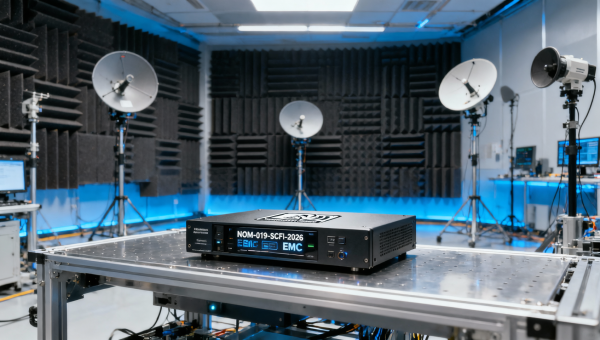
 Mexico NOM-019-SCFI-2026 Effective May 1, 2026: EMC Certification Mandatory for Auto ElectronicsNOM-019-SCFI-2026 EMC certification is now mandatory for auto electronics in Mexico—effective May 1, 2026. Ensure compliance for infotainment, ADAS, OBD-II & more.
") TÜV Rheinland Updates CE Requirements for Servo Drives (PLd + EMC Class 3)TÜV Rheinland updates CE requirements for servo drives: PLd + EMC Class 3 joint validation mandatory from Q3 2026. Act now to avoid delays, rejections, or compliance risks.
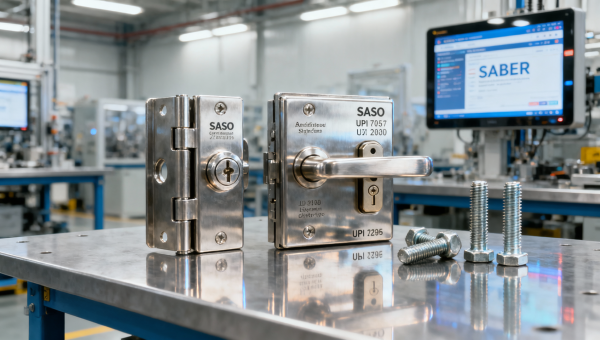
TÜV Rheinland Updates CE Requirements for Servo Drives (PLd + EMC Class 3)TÜV Rheinland updates CE requirements for servo drives: PLd + EMC Class 3 joint validation mandatory from Q3 2026. Act now to avoid delays, rejections, or compliance risks. SABER Phase II Launch: Building Hardware Must Submit Digital e-CoC & UPISABER Phase II mandates digital e-CoC & UPI for building hardware imports to Saudi Arabia—act now to ensure customs clearance and market access.
 FDA AI Diagnostic Device Draft Rules: Bias Assessment for ImportsFDA AI diagnostic device draft rules mandate bias assessment for imports — discover how algorithmic fairness impacts 510(k)/De Novo submissions and what to do now.
 RCEP Green Packaging Mutual Recognition Starts June 1, 2026RCEP Green Packaging Mutual Recognition starts June 1, 2026 — unlock faster exports to Australia, NZ, Japan & Korea with GB/T 37572-2025 certification.
 Vietnam Suspends SASO Mutual Recognition for Chinese Irrigation EquipmentVietnam suspends SASO mutual recognition for Chinese irrigation equipment—impacting exporters, testers & suppliers. Act now to avoid 6–8 week delays & 35% cost hikes.
 IMDG Code 41-24 Enforces UN3480 Class 9 Labeling for Li-ion Battery Sea FreightIMDG Code 41-24 enforces UN3480 Class 9 labeling for Li-ion battery sea freight—learn mandatory QR labels, compliance actions & port enforcement risks.
 EU CBAM Enters Enforcement Phase on April 1, 2026EU CBAM enforcement starts April 1, 2026 — critical for Chinese battery materials, construction profiles & industrial coatings exporters. Act now to avoid customs delays.
 Mexico Enforces NOM-019-SCFI-2026 EMC Certification for Auto Electronics from May 2026Mexico enforces NOM-019-SCFI-2026 EMC certification for auto electronics from May 2026 — mandatory local testing, stricter standards, and urgent compliance action required.
 Global Port Congestion Eases, but Red Sea Rerouting PersistsRed Sea rerouting persists amid easing port congestion—Shanghai–Rotterdam freight rates surge 4.2% to $5,280/TEU. Critical insights for exporters, importers & logistics leaders.
 RCEP Green Packaging Mutual Recognition Starts June 2026RCEP Green Packaging Mutual Recognition starts June 2026 — streamline exports to Australia, NZ, Japan & SK with GB/T 37572-2025 certification. Save time & costs!
 FDA AI Diagnostic Device Rules: ABIA Required from Q3 2026FDA AI diagnostic device rules now require ABIA reports from Q3 2026 — essential for 510(k)/De Novo submissions. Stay compliant, avoid delays & secure U.S. market access.
 Vietnam Suspends SASO Mutual Recognition for Chinese Irrigation EquipmentVietnam suspends SASO mutual recognition for Chinese irrigation equipment—sprinkler systems, drip controllers & irrigation systems now require local QUATEST 3 testing. Act now to avoid 12-week delays & 35% cost hikes.
") TÜV Rheinland Updates CE Certification for Industrial Robot Drives (2026 Q3)TÜV Rheinland’s 2026 Q3 CE certification update for industrial robot drives mandates PLd safety + EN 61800-3 EMC — act now to avoid EU market delays.
TÜV Rheinland Updates CE Certification for Industrial Robot Drives (2026 Q3)TÜV Rheinland’s 2026 Q3 CE certification update for industrial robot drives mandates PLd safety + EN 61800-3 EMC — act now to avoid EU market delays. IMDG Code Amendment 41-24 Takes Effect for Lithium Battery Sea FreightIMDG Code Amendment 41-24 is live: New QR labels, bilingual handling tags & SOC disclosure required for UN3480 lithium battery sea freight—act now to avoid delays.
 SASO SABER Phase II: Digital Type Test Reports Required for Building Hardware from Jun 2026SASO SABER Phase II requires digital type test reports & unique product IDs for building hardware exports to Saudi Arabia — effective June 2026. Act now to ensure compliance and avoid customs delays.
 CPSC Updates 16 CFR Part 1236: New Suffocation Test for Children's Sleep Sacks Effective July 2026CPSC Updates 16 CFR Part 1236: New suffocation test for children's sleep sacks takes effect July 2026 — ensure compliance, avoid delays & protect your U.S. market access.
 EN IEC 62471-2:2026 Effective Oct 2026 for EU LED Lighting ExportsEN IEC 62471-2:2026 mandates full-spectrum photobiological safety testing (200–3000 nm) for all EU-bound LED lighting — effective 1 Oct 2026. Act now to secure CE marking & avoid market access delays.
 AI Patent Tools Security Flaw Triggers Compliance ReviewAI Patent Tools security flaw exposed—triggering urgent compliance reviews for medical device, semiconductor & AI firms. Act now to secure submissions.

















Popular Tags
Global Trade Insights & Industry
Our mission is to empower global exporters and importers with data-driven insights that foster strategic growth.
Search News
Popular Tags
Industry Overview
The global commercial kitchen equipment market is projected to reach $112 billion by 2027. Driven by urbanization, the rise of e-commerce food delivery, and strict hygiene regulations.