

CNC Machines Cost: Buy New or Refurbished?
When evaluating CNC machines cost, buyers often ask whether a new model or a refurbished option delivers better long-term value. For procurement teams, distributors, and market researchers, the answer depends on production goals, supplier reliability, and total CNC machining cost. This guide compares pricing, performance, maintenance, and sourcing factors to help you make a smarter investment decision in today’s competitive manufacturing landscape.
If you need a short answer first: buy new when uptime, precision stability, warranty coverage, and long-term automation readiness matter most. Buy refurbished when budget discipline, faster payback, and acceptable operational risk are the priority—but only if the machine is rebuilt by a credible supplier with documented inspection, replacement history, and service support. For most business buyers, the real decision is not simply new versus used; it is which option produces the lowest total cost per productive hour.
What buyers are really trying to decide when comparing CNC machines cost
The search intent behind “CNC Machines Cost: Buy New or Refurbished?” is highly practical. Readers are usually not looking for a generic price range alone. They want to know which option is financially smarter for their production plan, sourcing model, and risk tolerance.
For procurement teams, business evaluators, distributors, and industrial researchers, the key questions are usually these:
- How much does a new CNC machine cost versus a refurbished one in real purchasing scenarios?
- What hidden costs affect the final CNC machining cost over several years?
- How much risk comes with older equipment?
- Will a refurbished machine reduce capital expenditure without damaging output quality?
- What should be checked before buying from an overseas or domestic supplier?
- Which option makes more sense for resale, distribution, or business expansion?
That is why the most useful comparison is not headline price alone. Buyers need a framework covering acquisition cost, maintenance exposure, parts availability, training, downtime, energy efficiency, and resale value.
New vs refurbished CNC machines: the biggest cost differences
The upfront price gap is the first reason many companies consider refurbished equipment. A new CNC machine typically costs significantly more because it includes the latest control systems, original manufacturer warranty, higher precision assurance, and often better automation compatibility. A refurbished CNC machine can cost 30% to 60% less than a new equivalent, depending on machine type, age, brand, rebuild depth, and tooling package.
Typical cost drivers include:
- Machine category: CNC lathes, vertical machining centers, horizontal machining centers, 5-axis machines, and Swiss-type machines all have different pricing structures.
- Brand and origin: Premium Japanese, German, and US brands usually retain higher value in both new and refurbished markets.
- Control system: FANUC, Siemens, Mitsubishi, and Heidenhain configurations affect both price and serviceability.
- Size and travel range: Larger work envelopes and heavier-duty machines raise cost quickly.
- Refurbishment level: Cosmetic cleanup is not the same as full spindle rebuild, ball screw replacement, geometry correction, and electrical renewal.
In many cases, refurbished equipment looks attractive because the initial purchase price is lower. But buyers should separate three terms clearly:
- Used: sold as-is, often with limited testing
- Refurbished: cleaned, repaired, and partially restored
- Rebuilt/remanufactured: extensively restored to a much higher standard, often with major components replaced
This distinction has a major impact on long-term CNC machines cost.
When buying new makes better business sense
A new machine is usually the better choice when production reliability directly affects delivery commitments, quality compliance, or customer retention. For manufacturers running high-utilization operations, a lower risk of unexpected downtime can justify the higher acquisition cost.
Buying new is often the right decision in these situations:
- You need maximum uptime: high-volume production environments cannot easily absorb breakdown delays.
- You need advanced features: modern CNC machines support automation cells, data connectivity, tool monitoring, and smarter production management.
- You work in tight-tolerance sectors: aerospace, medical, precision automotive, and electronics often benefit from the consistency of new systems.
- You want stronger warranty protection: OEM support reduces uncertainty in the first years of ownership.
- You are planning long asset life: a new machine may provide a longer productive cycle before major overhaul is needed.
For distributors and resellers, new equipment also offers branding advantages. It is easier to position a new machine around performance, technical support, and future readiness. That can matter if your customer base values low risk more than low capex.
When a refurbished CNC machine delivers better value
A refurbished machine can be the smarter investment if the buyer’s priority is shortening payback period without sacrificing acceptable output quality. This is especially relevant for small-to-mid-sized factories, expanding workshops, distributors building inventory options, or buyers entering a new product category.
Refurbished machines are often a good fit when:
- Budget is limited but capacity is urgently needed
- The intended work does not require the latest automation features
- The machine will be used for secondary operations, prototyping, or moderate-volume production
- A proven older model has strong parts availability and known maintenance history
- The supplier provides test reports, accuracy checks, and after-sales support
Many buyers find that a well-refurbished machine from a trusted source can deliver a better return than a low-end new machine with weaker support or lower rigidity. In other words, refurbished does not always mean compromised. In some cases, a premium older model can outperform an entry-level new alternative.
The hidden costs that change the real CNC machining cost
This is where the decision becomes more strategic. The actual CNC machining cost is shaped by much more than invoice price. A cheaper machine can become more expensive if downtime, scrap, maintenance, or integration issues are high.
Key hidden costs include:
- Installation and commissioning: rigging, power setup, calibration, and operator training add to total cost.
- Tooling and fixtures: buyers often underestimate these setup costs.
- Software and controls compatibility: older machines may require adaptation for current workflows.
- Spare parts availability: older control boards, servo systems, or spindle components may be hard to source.
- Downtime risk: unplanned stoppages can quickly erase savings from lower purchase price.
- Energy consumption: newer machines can offer better efficiency.
- Quality loss and scrap: inconsistent performance raises real manufacturing cost.
- Service response time: delayed support affects production schedules and customer commitments.
A practical purchasing method is to calculate three-year or five-year total cost of ownership rather than comparing purchase prices alone. This is especially important for buyers evaluating international sourcing options.
How to evaluate a refurbished CNC machine before you buy
If you are considering refurbished equipment, due diligence matters more than negotiation. A low price is not a bargain if the machine lacks geometry stability, service records, or support access.
Buyers should request the following:
- Machine serial number and manufacturing year
- Full refurbishment scope with details on what was repaired, replaced, or recalibrated
- Spindle condition report
- Ball screw, guideway, and backlash measurements
- Axis repeatability and positioning accuracy test data
- Controller and electrical cabinet inspection records
- Live video test or factory acceptance run
- Available warranty terms and service commitments
- Parts support and lead times
It is also wise to ask whether the refurbishment was done by the OEM, an authorized service partner, or an independent dealer. The answer affects risk considerably. Reputable sellers can usually provide measurable proof of machine condition, not just general statements such as “good working order.”
What procurement teams and business evaluators should compare side by side
For serious sourcing decisions, a side-by-side evaluation table is more useful than broad claims. A simple scoring system can make decisions faster and easier to defend internally.
Compare new and refurbished CNC machines across these factors:
- Initial purchase price
- Expected annual maintenance cost
- Warranty coverage
- Expected uptime
- Precision consistency
- Parts availability
- Automation and software compatibility
- Operator training requirements
- Delivery lead time
- Residual value after 3–5 years
This approach is especially useful for distributors, agents, and sourcing managers who need to present a rational procurement case to owners, finance teams, or international partners.
Supplier quality matters as much as machine condition
One of the biggest mistakes buyers make is focusing only on machine specifications while ignoring supplier credibility. In the CNC equipment market, supplier quality often determines whether the purchase becomes a productive asset or a costly problem.
A strong supplier should offer:
- Transparent technical documentation
- Inspection reports and testing evidence
- Clear warranty terms
- Training or startup support
- Responsive communication
- Spare parts access
- References from previous buyers
For cross-border transactions, buyers should also confirm export packing standards, logistics coordination, customs documentation, voltage compatibility, and local service arrangements. A lower machine price can lose its advantage quickly if delivery damage, installation delays, or support gaps occur.
Which option is better for distributors, dealers, and international trade professionals?
For channel partners and trade-focused businesses, the right choice depends on customer segmentation. New machines are easier to market to buyers seeking advanced capability, financing support, and long-term reliability. Refurbished machines can open opportunities in price-sensitive markets, emerging manufacturing regions, and workshops scaling production in phases.
From a commercial standpoint:
- New machines support premium positioning, stronger manufacturer alignment, and better long-term account development.
- Refurbished machines support faster turnover, broader customer access, and attractive entry-level offerings.
Some distributors use a hybrid model: new machines for strategic accounts and refurbished inventory for cost-driven buyers. This can widen market coverage while improving conversion rates across different demand profiles.
Final verdict: should you buy a new or refurbished CNC machine?
There is no universal answer, but there is a clear decision logic. If your operation depends on precision stability, digital integration, high uptime, and lower operating uncertainty, a new CNC machine is usually worth the higher upfront investment. If your goal is to expand capacity at lower capex and you can verify the machine’s condition, serviceability, and supplier reliability, a refurbished CNC machine can deliver excellent value.
The most important point is this: evaluate CNC machines cost as total business cost, not just purchase price. Buyers who compare lifecycle cost, maintenance exposure, support quality, and production fit usually make better decisions than those who focus only on the initial quote.
For procurement teams, market researchers, and industrial distributors, the smartest investment is the one that matches your real production target, acceptable risk level, and support ecosystem. That is what turns a CNC machine from a capital expense into a competitive advantage.
Recommended News
 US CPSC Updates Child Sleep Sack Standard Effective July 2026US CPSC updates child sleep sack standard with new DSST test—mandatory for all U.S.-bound infant sleep sacks from July 2026. Act now to ensure compliance and market access.
 Red Sea Rerouting Pushes Asia-Europe Freight Premium to $1,850/TEURed Sea rerouting pushes Asia-Europe freight premium to $1,850/TEU—impacting importers, manufacturers & logistics providers. Act now to reassess costs, lead times & contracts.
 Mexico NOM-019-SCFI-2026 Effective May 1, 2026: EMC Certification Mandatory for Auto ElectronicsNOM-019-SCFI-2026 EMC certification is now mandatory for auto electronics in Mexico—effective May 1, 2026. Ensure compliance for infotainment, ADAS, OBD-II & more.
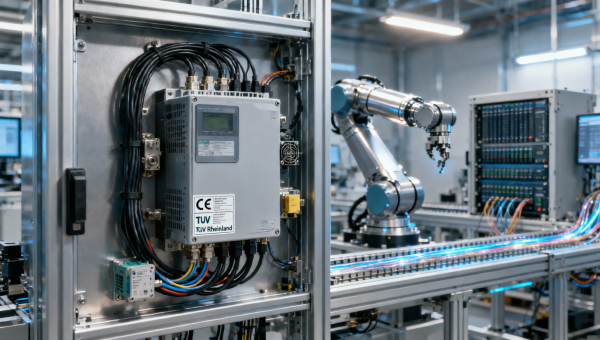
") TÜV Rheinland Updates CE Requirements for Servo Drives (PLd + EMC Class 3)TÜV Rheinland updates CE requirements for servo drives: PLd + EMC Class 3 joint validation mandatory from Q3 2026. Act now to avoid delays, rejections, or compliance risks.
TÜV Rheinland Updates CE Requirements for Servo Drives (PLd + EMC Class 3)TÜV Rheinland updates CE requirements for servo drives: PLd + EMC Class 3 joint validation mandatory from Q3 2026. Act now to avoid delays, rejections, or compliance risks. SABER Phase II Launch: Building Hardware Must Submit Digital e-CoC & UPISABER Phase II mandates digital e-CoC & UPI for building hardware imports to Saudi Arabia—act now to ensure customs clearance and market access.
 FDA AI Diagnostic Device Draft Rules: Bias Assessment for ImportsFDA AI diagnostic device draft rules mandate bias assessment for imports — discover how algorithmic fairness impacts 510(k)/De Novo submissions and what to do now.
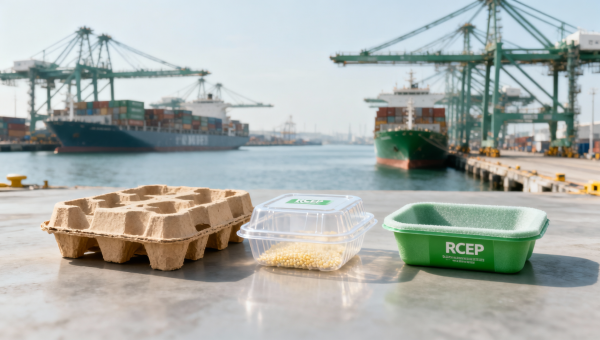
 RCEP Green Packaging Mutual Recognition Starts June 1, 2026RCEP Green Packaging Mutual Recognition starts June 1, 2026 — unlock faster exports to Australia, NZ, Japan & Korea with GB/T 37572-2025 certification.
 Vietnam Suspends SASO Mutual Recognition for Chinese Irrigation EquipmentVietnam suspends SASO mutual recognition for Chinese irrigation equipment—impacting exporters, testers & suppliers. Act now to avoid 6–8 week delays & 35% cost hikes.
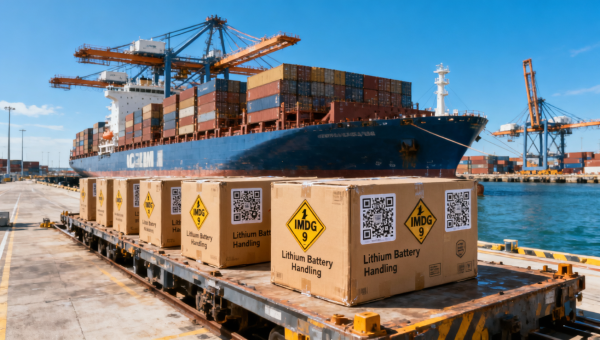
 IMDG Code 41-24 Enforces UN3480 Class 9 Labeling for Li-ion Battery Sea FreightIMDG Code 41-24 enforces UN3480 Class 9 labeling for Li-ion battery sea freight—learn mandatory QR labels, compliance actions & port enforcement risks.
 EU CBAM Enters Enforcement Phase on April 1, 2026EU CBAM enforcement starts April 1, 2026 — critical for Chinese battery materials, construction profiles & industrial coatings exporters. Act now to avoid customs delays.
 Mexico Enforces NOM-019-SCFI-2026 EMC Certification for Auto Electronics from May 2026Mexico enforces NOM-019-SCFI-2026 EMC certification for auto electronics from May 2026 — mandatory local testing, stricter standards, and urgent compliance action required.
 Global Port Congestion Eases, but Red Sea Rerouting PersistsRed Sea rerouting persists amid easing port congestion—Shanghai–Rotterdam freight rates surge 4.2% to $5,280/TEU. Critical insights for exporters, importers & logistics leaders.
 RCEP Green Packaging Mutual Recognition Starts June 2026RCEP Green Packaging Mutual Recognition starts June 2026 — streamline exports to Australia, NZ, Japan & SK with GB/T 37572-2025 certification. Save time & costs!
 FDA AI Diagnostic Device Rules: ABIA Required from Q3 2026FDA AI diagnostic device rules now require ABIA reports from Q3 2026 — essential for 510(k)/De Novo submissions. Stay compliant, avoid delays & secure U.S. market access.
 Vietnam Suspends SASO Mutual Recognition for Chinese Irrigation EquipmentVietnam suspends SASO mutual recognition for Chinese irrigation equipment—sprinkler systems, drip controllers & irrigation systems now require local QUATEST 3 testing. Act now to avoid 12-week delays & 35% cost hikes.
") TÜV Rheinland Updates CE Certification for Industrial Robot Drives (2026 Q3)TÜV Rheinland’s 2026 Q3 CE certification update for industrial robot drives mandates PLd safety + EN 61800-3 EMC — act now to avoid EU market delays.
TÜV Rheinland Updates CE Certification for Industrial Robot Drives (2026 Q3)TÜV Rheinland’s 2026 Q3 CE certification update for industrial robot drives mandates PLd safety + EN 61800-3 EMC — act now to avoid EU market delays. IMDG Code Amendment 41-24 Takes Effect for Lithium Battery Sea FreightIMDG Code Amendment 41-24 is live: New QR labels, bilingual handling tags & SOC disclosure required for UN3480 lithium battery sea freight—act now to avoid delays.
 SASO SABER Phase II: Digital Type Test Reports Required for Building Hardware from Jun 2026SASO SABER Phase II requires digital type test reports & unique product IDs for building hardware exports to Saudi Arabia — effective June 2026. Act now to ensure compliance and avoid customs delays.
 CPSC Updates 16 CFR Part 1236: New Suffocation Test for Children's Sleep Sacks Effective July 2026CPSC Updates 16 CFR Part 1236: New suffocation test for children's sleep sacks takes effect July 2026 — ensure compliance, avoid delays & protect your U.S. market access.
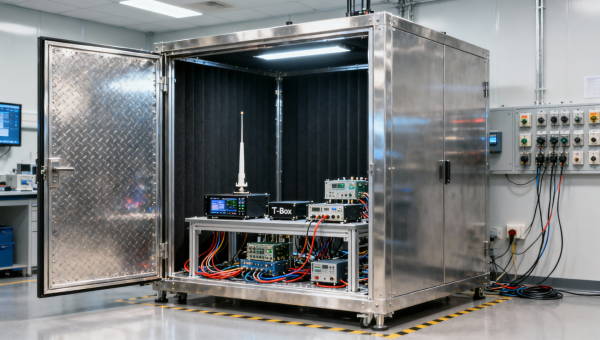
 EN IEC 62471-2:2026 Effective Oct 2026 for EU LED Lighting ExportsEN IEC 62471-2:2026 mandates full-spectrum photobiological safety testing (200–3000 nm) for all EU-bound LED lighting — effective 1 Oct 2026. Act now to secure CE marking & avoid market access delays.
 AI Patent Tools Security Flaw Triggers Compliance ReviewAI Patent Tools security flaw exposed—triggering urgent compliance reviews for medical device, semiconductor & AI firms. Act now to secure submissions.












Popular Tags
Global Trade Insights & Industry
Our mission is to empower global exporters and importers with data-driven insights that foster strategic growth.
Search News
Popular Tags
Industry Overview
The global commercial kitchen equipment market is projected to reach $112 billion by 2027. Driven by urbanization, the rise of e-commerce food delivery, and strict hygiene regulations.