

CNC Machines Cost: What Impacts Total Investment?
Understanding CNC machines cost requires looking beyond the sticker price. From machine size, automation level, and CNC machining cost to tooling, installation, training, and long-term maintenance, total investment can vary widely. For buyers comparing a CNC machines manufacturer or CNC machining manufacturer, this guide explains the key cost drivers and helps procurement teams make smarter, data-backed decisions.
For sourcing teams, distributors, and business evaluators, the real question is not only how much a CNC machine costs today, but how much value and operational stability it can deliver over 3 to 7 years. A lower entry price may still lead to higher downtime, expensive consumables, or slow support response. In cross-border procurement, those hidden variables often determine whether a project achieves its expected return.
In global manufacturing and industrial supply chains, CNC equipment is purchased for precision, repeatability, and output consistency. Yet the cost model differs significantly between a compact 3-axis machining center and a large-format, automated production cell. Understanding the full investment framework helps buyers compare offers more accurately and negotiate with greater confidence.
Base Machine Price: The Starting Point, Not the Full Budget
The first number most buyers see is the machine quotation, but that figure only reflects the base platform. A small entry-level CNC machine for light-duty work may start in the lower five-figure range, while a high-rigidity vertical machining center, horizontal machine, or multi-axis solution can quickly move into the six-figure range. Travel size, spindle speed, axis configuration, and frame construction all influence the base price.
A 3-axis machine is usually the most accessible option for general metalworking and repeat production. However, when the part geometry requires compound angles, fewer setups, or tighter tolerances, 4-axis and 5-axis machines become attractive despite their higher investment. In many procurement reviews, the key trade-off is not purchase price alone, but the balance between equipment cost and part throughput.
Machine origin also affects pricing. Equipment from established industrial regions may carry a premium because of stronger component ecosystems, brand reputation, or after-sales infrastructure. On the other hand, cost-competitive suppliers can offer attractive pricing, but buyers should confirm component traceability, service lead times, and control system support before comparing quotations line by line.
Another major variable is machine specification depth. Two machines with similar work envelopes can differ substantially in cost if one includes linear guides, a higher-torque spindle, a larger tool magazine, chip conveyor, coolant-through-spindle, or probing systems. Procurement teams should request a clear configuration sheet rather than relying on headline model names.
Key machine-level cost drivers
- Axis count: 3-axis is generally lower cost than 4-axis or 5-axis systems.
- Work envelope: Larger X, Y, and Z travel increases frame size and structural cost.
- Spindle performance: A 10,000 rpm spindle differs in value and application from a 20,000 rpm unit.
- Control brand and software functions: Advanced control options can add measurable cost.
- Construction level: Heavy-duty castings and thermal stability often justify a higher capital outlay.
The table below shows how common CNC machine categories differ in cost logic and procurement considerations. These are general market ranges used for comparison planning rather than fixed quotations.
The main takeaway is that the base machine price is only a partial indicator of total CNC machines cost. Buyers should compare machine classes by production objective, tolerance expectation, and planned utilization rate, not just by the lowest quoted figure.
Tooling, Fixtures, and Software Can Reshape the Investment
Once the machine platform is selected, tooling and setup infrastructure often become the next major cost block. Tool holders, cutting tools, vises, chucks, collets, clamps, pallets, and custom fixtures can add 10% to 30% to the initial project budget depending on part complexity. For buyers who focus only on the machine quote, this is where budget overruns frequently begin.
For repetitive production, custom fixturing may deliver a strong return because it reduces setup time and supports consistent part positioning. However, in high-mix, low-volume operations, flexible workholding may be the more efficient path. A distributor or sourcing manager should therefore align fixturing cost with the production model instead of purchasing a fixed setup that limits future use.
Software is another underestimated expense. CAD/CAM licenses, post-processor customization, simulation tools, and shop-floor connectivity can add substantial cost over a 12-month period. In some cases, annual software subscriptions and updates become recurring operating expenses rather than one-time project costs.
If a buyer works with a CNC machining manufacturer instead of operating in-house equipment, some of these costs are embedded in piece-part pricing rather than capital expenditure. That distinction matters for business evaluation teams deciding between direct investment and outsourced CNC machining cost models.
Hidden setup costs buyers should check
- Initial tool package for roughing, finishing, drilling, and tapping.
- Fixture design time and trial runs, especially for irregular parts.
- CAM programming licenses and post-processor adaptation.
- Spare holders, wear items, and safety stock for continuous operation.
The following comparison helps procurement teams estimate which non-machine items most often influence first-year spending.
For many projects, non-machine items explain why two buyers of similar CNC equipment may see a 15% to 35% difference in actual launch cost. That is why a complete sourcing plan should list all production-enabling items in a separate cost sheet.
Installation, Training, and Commissioning Costs Often Determine Ramp-Up Speed
After purchase, the machine still needs to be transported, positioned, connected, tested, and approved for production. Freight, insurance, customs handling, inland delivery, rigging, and site preparation can be significant, especially for international procurement. Heavy machines may require reinforced flooring, power upgrades, compressed air lines, or coolant management infrastructure before installation can begin.
A typical commissioning cycle may take 3 to 10 days depending on machine complexity and site readiness. If the facility is not prepared, those days can extend into 2 to 4 weeks. Delays at this stage affect launch schedules, labor planning, and expected revenue from new capacity. For business evaluators, slow ramp-up is not a minor inconvenience; it is a measurable financial factor.
Training is equally important. Even a well-built machine underperforms when operators are unfamiliar with the control system, preventive maintenance routines, or safe tooling practices. Basic operator training may take 2 to 5 days, while advanced programming and process optimization can require several additional sessions over the first 30 to 90 days of use.
When comparing a CNC machines manufacturer, ask whether installation support is included, partially included, or billed separately. Some suppliers quote an attractive machine price but exclude travel expenses, startup assistance, and application engineering. Those items should be clarified before contract signing.
A practical 5-step ramp-up checklist
- Confirm power, foundation, and space requirements at least 2 weeks before delivery.
- Review shipping scope, unloading method, and local transport responsibilities.
- Schedule commissioning personnel and assign internal operators in advance.
- Test first parts using representative materials and tolerance targets.
- Document maintenance intervals, alarm codes, and spare parts list from day one.
Common commissioning risks
Three issues appear repeatedly in industrial procurement: underestimating utility requirements, treating training as optional, and accepting vague installation scope. Each of these can increase the effective CNC machines cost even if the invoice amount does not change. A machine that arrives on time but sits idle for 14 days due to site issues is already generating avoidable cost.
For cross-border buyers, it is also useful to define response timing. A support SLA of 24 to 48 hours for remote diagnostics and 3 to 7 working days for critical service visits can materially reduce operational uncertainty during the first quarter after installation.
Operating Cost Over 3 to 7 Years: Maintenance, Downtime, and Utilization
Long-term CNC machining cost is shaped less by initial purchase price and more by how reliably the machine produces sellable parts. Maintenance, spare parts, lubrication, coolant management, calibration, tool wear, and unscheduled downtime all affect the real cost per hour. A lower-cost machine with unstable accuracy can become more expensive than a premium option within 12 to 24 months of production.
Utilization rate is one of the most important metrics. If a machine runs only 20 hours per week, the capital cost per productive hour is much higher than for a machine running 60 to 80 hours per week. Buyers should calculate expected workload, changeover frequency, and staffing coverage before deciding whether advanced automation is justified.
Preventive maintenance generally costs less than reactive repair. Routine checks may be scheduled daily, weekly, monthly, and every 6 to 12 months depending on the machine design. Missed maintenance can lead to spindle damage, coolant contamination, axis wear, or poor surface finish, all of which impact both output and part quality.
Spare parts availability is another strategic factor. If a replacement sensor, drive component, or spindle-related part requires an 8 to 12 week lead time, the downtime cost can exceed the value of the part itself. Procurement teams should ask whether critical parts are regionally stocked and whether alternative components are available.
How buyers can reduce long-term operating risk
- Track machine utilization, scrap rate, and setup time from the first month.
- Maintain a preventive service calendar with operator sign-off records.
- Keep a minimum stock of fast-moving consumables and selected critical spares.
- Review support quality at 90-day intervals during the first year.
The table below summarizes how common operating factors influence total investment after the machine enters production.
For distributors and industrial buyers, the strongest investment cases usually come from stable utilization, predictable maintenance, and short support lead times. These factors often matter more than a small difference in initial machine price.
Comparing Suppliers: What to Ask a CNC Machines Manufacturer or CNC Machining Manufacturer
Supplier comparison should go beyond catalog specifications. Whether you are buying equipment from a CNC machines manufacturer or evaluating outsourced capacity from a CNC machining manufacturer, the decision should include technical fit, support quality, delivery reliability, and lifecycle transparency. In B2B procurement, poor documentation and weak service are recurring cost amplifiers.
A strong supplier evaluation process usually covers at least 4 dimensions: machine capability, commercial terms, support resources, and risk control. For example, delivery lead times may range from 4 to 16 weeks depending on standard configuration, optional accessories, and shipping route. Warranty terms may also vary, so buyers should confirm what is covered and for how long.
Commercial clarity matters. Ask whether the quotation includes commissioning, operator training, manuals, electrical diagrams, parameter backup procedures, and recommended spare parts. If these items are omitted, the “lower” offer may create more total cost during implementation and early operation.
For outsourced machining, the cost model changes. Buyers should compare not only unit price, but also setup charges, minimum order quantities, sampling lead time, tolerance capability, and material sourcing responsibility. In some cases, outsourcing reduces capital burden; in others, owning the machine makes more sense for recurring demand and process control.
Supplier due diligence questions
- What is the standard lead time for the quoted machine and options package?
- Which major components are used, and what is the spare parts strategy?
- Is remote troubleshooting available within 24 to 48 hours?
- What training scope is included for operators, programmers, and maintenance staff?
- Can the supplier provide a full commissioning and acceptance checklist?
Typical procurement mistake
One of the most common mistakes is comparing two CNC offers as if they were equivalent because the travel size looks similar. In reality, spindle torque, control functionality, service availability, and included accessories can create a 20% to 40% difference in usable production value. The smarter approach is to compare delivered capability, not just model labels.
For market researchers and sourcing professionals using industrial intelligence platforms, supplier evaluation becomes stronger when pricing review is combined with delivery risk analysis, regional manufacturing trends, and support network visibility. That wider perspective is especially important in international trade decisions.
FAQ and Budgeting Framework for Smarter CNC Investment Decisions
A practical CNC investment decision should combine capital expense, first-year setup cost, and 3-year operating assumptions. Buyers who build a simple total-cost model usually make better decisions than those who focus only on the purchase quote. A useful framework is to separate the budget into 3 layers: machine, launch, and operating cost.
In many industrial buying cases, that means assigning one budget line for the machine and options, one for installation and tooling, and one for maintenance, software, and support. This approach gives procurement teams a more realistic approval case and reduces the chance of hidden spending after delivery.
Below are several frequently asked questions that reflect real search intent from procurement specialists, dealers, and business evaluation teams.
How do I estimate total CNC machines cost accurately?
Start with the machine quote, then add tooling, fixtures, software, freight, installation, training, and first-year maintenance. A practical estimate often includes a 10% to 25% buffer for launch-stage variables, especially when the machine is imported or customized.
When is outsourcing CNC machining more cost-effective than buying a machine?
Outsourcing is often more efficient when order volume is inconsistent, part designs change frequently, or internal programming and maintenance resources are limited. Buying equipment becomes more attractive when demand is recurring, quality control must stay in-house, and projected utilization supports long-term payback over 24 to 48 months.
What lead time should buyers expect?
Standard machines may ship in 4 to 8 weeks, while customized configurations or larger systems can take 10 to 16 weeks or longer. Import clearance, inland transport, and site readiness can add another 1 to 3 weeks before production starts.
Which metrics matter most after installation?
Track productive hours, setup time, scrap rate, maintenance events, and on-time support response. These 5 indicators provide a practical picture of whether the initial investment is translating into stable output and controllable CNC machining cost.
CNC machines cost is best understood as a total investment decision, not a single purchase number. Machine type, tooling, software, installation, training, maintenance, and supplier support all shape the final business result. For information researchers, procurement teams, and channel partners, a structured comparison model can reduce risk and improve negotiating power.
GTIIN and TradeVantage support global buyers with industry intelligence, supply chain visibility, and market-focused content that helps turn complex sourcing questions into clearer decisions. If you are evaluating CNC equipment, suppliers, or outsourced machining options, contact us to explore tailored market insights, compare sourcing pathways, and learn more solutions for smarter industrial procurement.
Recommended News
 US CPSC Updates Child Sleep Sack Standard Effective July 2026US CPSC updates child sleep sack standard with new DSST test—mandatory for all U.S.-bound infant sleep sacks from July 2026. Act now to ensure compliance and market access.
 Red Sea Rerouting Pushes Asia-Europe Freight Premium to $1,850/TEURed Sea rerouting pushes Asia-Europe freight premium to $1,850/TEU—impacting importers, manufacturers & logistics providers. Act now to reassess costs, lead times & contracts.
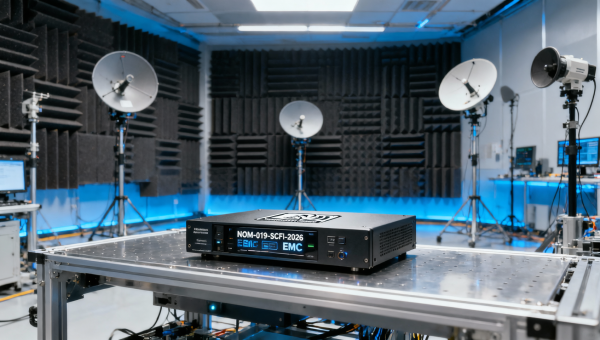
 Mexico NOM-019-SCFI-2026 Effective May 1, 2026: EMC Certification Mandatory for Auto ElectronicsNOM-019-SCFI-2026 EMC certification is now mandatory for auto electronics in Mexico—effective May 1, 2026. Ensure compliance for infotainment, ADAS, OBD-II & more.
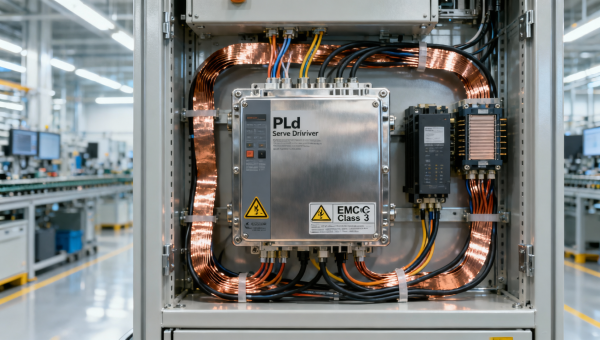
") TÜV Rheinland Updates CE Requirements for Servo Drives (PLd + EMC Class 3)TÜV Rheinland updates CE requirements for servo drives: PLd + EMC Class 3 joint validation mandatory from Q3 2026. Act now to avoid delays, rejections, or compliance risks.
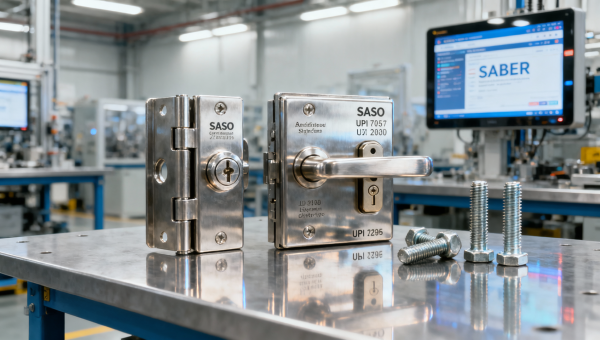
TÜV Rheinland Updates CE Requirements for Servo Drives (PLd + EMC Class 3)TÜV Rheinland updates CE requirements for servo drives: PLd + EMC Class 3 joint validation mandatory from Q3 2026. Act now to avoid delays, rejections, or compliance risks. SABER Phase II Launch: Building Hardware Must Submit Digital e-CoC & UPISABER Phase II mandates digital e-CoC & UPI for building hardware imports to Saudi Arabia—act now to ensure customs clearance and market access.
 FDA AI Diagnostic Device Draft Rules: Bias Assessment for ImportsFDA AI diagnostic device draft rules mandate bias assessment for imports — discover how algorithmic fairness impacts 510(k)/De Novo submissions and what to do now.
 RCEP Green Packaging Mutual Recognition Starts June 1, 2026RCEP Green Packaging Mutual Recognition starts June 1, 2026 — unlock faster exports to Australia, NZ, Japan & Korea with GB/T 37572-2025 certification.
 Vietnam Suspends SASO Mutual Recognition for Chinese Irrigation EquipmentVietnam suspends SASO mutual recognition for Chinese irrigation equipment—impacting exporters, testers & suppliers. Act now to avoid 6–8 week delays & 35% cost hikes.
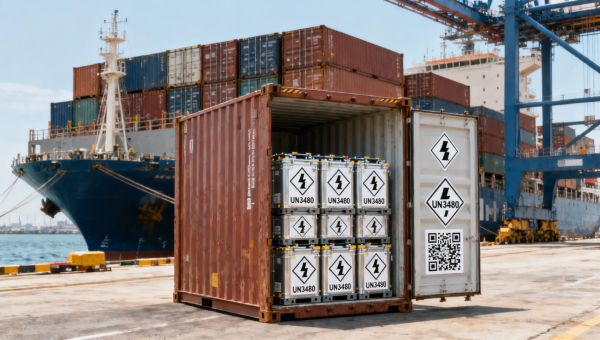
 IMDG Code 41-24 Enforces UN3480 Class 9 Labeling for Li-ion Battery Sea FreightIMDG Code 41-24 enforces UN3480 Class 9 labeling for Li-ion battery sea freight—learn mandatory QR labels, compliance actions & port enforcement risks.
 EU CBAM Enters Enforcement Phase on April 1, 2026EU CBAM enforcement starts April 1, 2026 — critical for Chinese battery materials, construction profiles & industrial coatings exporters. Act now to avoid customs delays.
 Mexico Enforces NOM-019-SCFI-2026 EMC Certification for Auto Electronics from May 2026Mexico enforces NOM-019-SCFI-2026 EMC certification for auto electronics from May 2026 — mandatory local testing, stricter standards, and urgent compliance action required.
 Global Port Congestion Eases, but Red Sea Rerouting PersistsRed Sea rerouting persists amid easing port congestion—Shanghai–Rotterdam freight rates surge 4.2% to $5,280/TEU. Critical insights for exporters, importers & logistics leaders.
 RCEP Green Packaging Mutual Recognition Starts June 2026RCEP Green Packaging Mutual Recognition starts June 2026 — streamline exports to Australia, NZ, Japan & SK with GB/T 37572-2025 certification. Save time & costs!
 FDA AI Diagnostic Device Rules: ABIA Required from Q3 2026FDA AI diagnostic device rules now require ABIA reports from Q3 2026 — essential for 510(k)/De Novo submissions. Stay compliant, avoid delays & secure U.S. market access.
 Vietnam Suspends SASO Mutual Recognition for Chinese Irrigation EquipmentVietnam suspends SASO mutual recognition for Chinese irrigation equipment—sprinkler systems, drip controllers & irrigation systems now require local QUATEST 3 testing. Act now to avoid 12-week delays & 35% cost hikes.
") TÜV Rheinland Updates CE Certification for Industrial Robot Drives (2026 Q3)TÜV Rheinland’s 2026 Q3 CE certification update for industrial robot drives mandates PLd safety + EN 61800-3 EMC — act now to avoid EU market delays.
TÜV Rheinland Updates CE Certification for Industrial Robot Drives (2026 Q3)TÜV Rheinland’s 2026 Q3 CE certification update for industrial robot drives mandates PLd safety + EN 61800-3 EMC — act now to avoid EU market delays. IMDG Code Amendment 41-24 Takes Effect for Lithium Battery Sea FreightIMDG Code Amendment 41-24 is live: New QR labels, bilingual handling tags & SOC disclosure required for UN3480 lithium battery sea freight—act now to avoid delays.
 SASO SABER Phase II: Digital Type Test Reports Required for Building Hardware from Jun 2026SASO SABER Phase II requires digital type test reports & unique product IDs for building hardware exports to Saudi Arabia — effective June 2026. Act now to ensure compliance and avoid customs delays.
 CPSC Updates 16 CFR Part 1236: New Suffocation Test for Children's Sleep Sacks Effective July 2026CPSC Updates 16 CFR Part 1236: New suffocation test for children's sleep sacks takes effect July 2026 — ensure compliance, avoid delays & protect your U.S. market access.
 EN IEC 62471-2:2026 Effective Oct 2026 for EU LED Lighting ExportsEN IEC 62471-2:2026 mandates full-spectrum photobiological safety testing (200–3000 nm) for all EU-bound LED lighting — effective 1 Oct 2026. Act now to secure CE marking & avoid market access delays.
 AI Patent Tools Security Flaw Triggers Compliance ReviewAI Patent Tools security flaw exposed—triggering urgent compliance reviews for medical device, semiconductor & AI firms. Act now to secure submissions.












Popular Tags
Global Trade Insights & Industry
Our mission is to empower global exporters and importers with data-driven insights that foster strategic growth.
Search News
Popular Tags
Industry Overview
The global commercial kitchen equipment market is projected to reach $112 billion by 2027. Driven by urbanization, the rise of e-commerce food delivery, and strict hygiene regulations.