

Sheet Metal Bending Mistakes to Avoid
Avoiding common sheet metal bending errors is critical for cost control, precision, and production efficiency. From choosing the right sheet metal gauge to preventing cracks, springback, and tooling issues, understanding the basics can improve results in everything from sheet metal ductwork to custom industrial parts. This guide highlights the most frequent mistakes and shows how manufacturers and buyers can make smarter, more reliable fabrication decisions.
Why sheet metal bending mistakes create bigger sourcing and production risks than expected
In global B2B supply chains, sheet metal bending is often treated as a routine fabrication step. In practice, it is one of the most sensitive stages for dimensional accuracy, downstream assembly fit, coating quality, and cost control. A minor error in bend allowance, inside radius, or tooling setup can affect not only one part, but an entire batch across 100, 1,000, or even 10,000 units.
For information researchers, procurement teams, business evaluators, and distributors, the real issue is not just technical failure. It is commercial uncertainty. Rework can extend lead time by 3–7 days for simple parts and 2–4 weeks for customized assemblies, especially when material needs to be reordered or tooling must be adjusted. That delay can disrupt contract schedules, installation dates, and inventory plans.
Common bending mistakes also increase hidden costs. Scrap rates rise when cracks appear near the bend line, when holes deform because they are positioned too close to the bend, or when springback causes angle deviation beyond the acceptable tolerance range. In many industrial applications, a bend angle tolerance of around ±0.5° to ±1° and linear tolerance of ±0.2 mm to ±0.8 mm may already matter for fit-up and repeatability.
For cross-border buyers, these risks become harder to evaluate because quotations may look similar while process capability differs greatly. This is where market intelligence and supplier comparison matter. GTIIN and TradeVantage support buyers by connecting fabrication topics with broader industrial signals, supplier visibility, and procurement-oriented content that helps decision-makers identify whether a supplier understands manufacturability, not just pricing.
What typically goes wrong in real orders
- Incorrect material selection, such as using a grade with limited ductility for tight bend geometry.
- Poor bend sequence planning, causing part interference or distorted dimensions after multiple operations.
- Inadequate tooling match between sheet thickness, V-die opening, punch radius, and target angle.
- Insufficient drawing review, especially around hole-to-bend distance, relief design, and grain direction.
When these issues are identified early, buyers can avoid repeated quotation rounds and reduce the risk of approving parts that are technically difficult or commercially unstable. That is especially important in sectors where sheet metal components are integrated into enclosures, brackets, HVAC ductwork, cabinets, machinery covers, and light structural frames.
Which sheet metal bending mistakes are most common, and why do they happen?
The most common sheet metal bending mistakes usually come from a mismatch between design intent and fabrication reality. Engineers may specify sharp bends, tight flange spacing, or complex feature placement without fully accounting for material behavior. Buyers then receive attractive prices without realizing that the drawing itself may create a high rejection risk during production.
Mistakes often begin with gauge selection. A thinner sheet can reduce weight and cost, but it may also become more vulnerable to distortion, waviness, or inconsistent angles if the part has long flanges or multiple bends. A thicker sheet improves rigidity, yet it demands more press force and may require a larger minimum inside bend radius. These trade-offs must be balanced before production starts.
Another frequent issue is ignoring springback. Materials such as stainless steel and some high-strength alloys tend to recover more after bending than mild steel. If the machine setup, tooling compensation, or bend deduction is not adjusted, the finished angle may drift outside specification. In repeat orders, even a 1°–2° angle gap can cause assembly difficulty and customer complaints.
Cracking is also a major problem, especially when the inside radius is too small for the selected material, when bending occurs across an unfavorable grain direction, or when surface coatings and previous processing have weakened the bend zone. This is why suppliers should review both mechanical properties and forming direction before confirming manufacturability.
High-frequency bending mistakes buyers should screen for
The table below helps procurement and sourcing teams identify the most frequent sheet metal bending mistakes, their practical consequences, and the checks that should be included during RFQ review or supplier qualification.
Recommended News
 US CPSC Updates Child Sleep Sack Standard Effective July 2026US CPSC updates child sleep sack standard with new DSST test—mandatory for all U.S.-bound infant sleep sacks from July 2026. Act now to ensure compliance and market access.
 Red Sea Rerouting Pushes Asia-Europe Freight Premium to $1,850/TEURed Sea rerouting pushes Asia-Europe freight premium to $1,850/TEU—impacting importers, manufacturers & logistics providers. Act now to reassess costs, lead times & contracts.
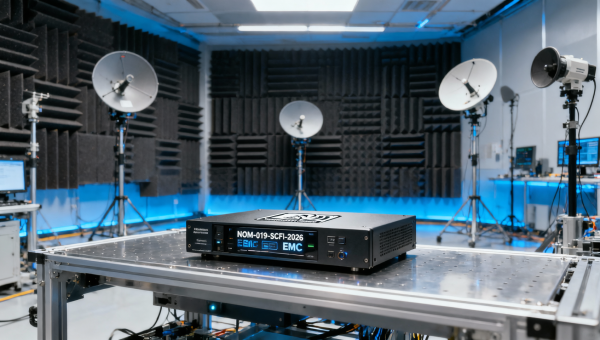
 Mexico NOM-019-SCFI-2026 Effective May 1, 2026: EMC Certification Mandatory for Auto ElectronicsNOM-019-SCFI-2026 EMC certification is now mandatory for auto electronics in Mexico—effective May 1, 2026. Ensure compliance for infotainment, ADAS, OBD-II & more.
") TÜV Rheinland Updates CE Requirements for Servo Drives (PLd + EMC Class 3)TÜV Rheinland updates CE requirements for servo drives: PLd + EMC Class 3 joint validation mandatory from Q3 2026. Act now to avoid delays, rejections, or compliance risks.
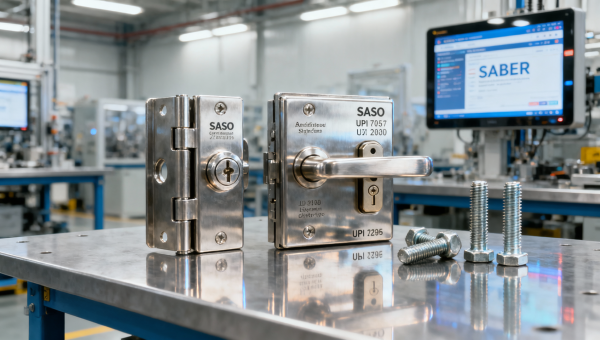
TÜV Rheinland Updates CE Requirements for Servo Drives (PLd + EMC Class 3)TÜV Rheinland updates CE requirements for servo drives: PLd + EMC Class 3 joint validation mandatory from Q3 2026. Act now to avoid delays, rejections, or compliance risks. SABER Phase II Launch: Building Hardware Must Submit Digital e-CoC & UPISABER Phase II mandates digital e-CoC & UPI for building hardware imports to Saudi Arabia—act now to ensure customs clearance and market access.
 FDA AI Diagnostic Device Draft Rules: Bias Assessment for ImportsFDA AI diagnostic device draft rules mandate bias assessment for imports — discover how algorithmic fairness impacts 510(k)/De Novo submissions and what to do now.
 RCEP Green Packaging Mutual Recognition Starts June 1, 2026RCEP Green Packaging Mutual Recognition starts June 1, 2026 — unlock faster exports to Australia, NZ, Japan & Korea with GB/T 37572-2025 certification.
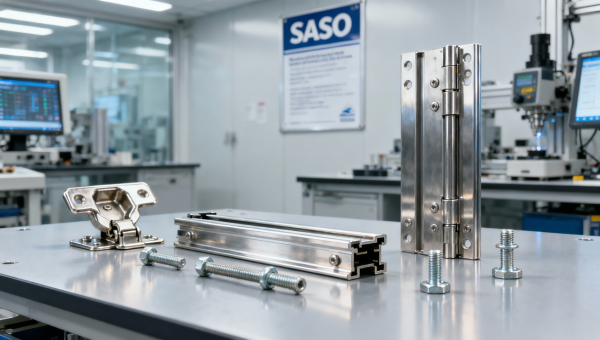
 Vietnam Suspends SASO Mutual Recognition for Chinese Irrigation EquipmentVietnam suspends SASO mutual recognition for Chinese irrigation equipment—impacting exporters, testers & suppliers. Act now to avoid 6–8 week delays & 35% cost hikes.
 IMDG Code 41-24 Enforces UN3480 Class 9 Labeling for Li-ion Battery Sea FreightIMDG Code 41-24 enforces UN3480 Class 9 labeling for Li-ion battery sea freight—learn mandatory QR labels, compliance actions & port enforcement risks.
 EU CBAM Enters Enforcement Phase on April 1, 2026EU CBAM enforcement starts April 1, 2026 — critical for Chinese battery materials, construction profiles & industrial coatings exporters. Act now to avoid customs delays.
 Mexico Enforces NOM-019-SCFI-2026 EMC Certification for Auto Electronics from May 2026Mexico enforces NOM-019-SCFI-2026 EMC certification for auto electronics from May 2026 — mandatory local testing, stricter standards, and urgent compliance action required.
 Global Port Congestion Eases, but Red Sea Rerouting PersistsRed Sea rerouting persists amid easing port congestion—Shanghai–Rotterdam freight rates surge 4.2% to $5,280/TEU. Critical insights for exporters, importers & logistics leaders.
 RCEP Green Packaging Mutual Recognition Starts June 2026RCEP Green Packaging Mutual Recognition starts June 2026 — streamline exports to Australia, NZ, Japan & SK with GB/T 37572-2025 certification. Save time & costs!
 FDA AI Diagnostic Device Rules: ABIA Required from Q3 2026FDA AI diagnostic device rules now require ABIA reports from Q3 2026 — essential for 510(k)/De Novo submissions. Stay compliant, avoid delays & secure U.S. market access.
 Vietnam Suspends SASO Mutual Recognition for Chinese Irrigation EquipmentVietnam suspends SASO mutual recognition for Chinese irrigation equipment—sprinkler systems, drip controllers & irrigation systems now require local QUATEST 3 testing. Act now to avoid 12-week delays & 35% cost hikes.
") TÜV Rheinland Updates CE Certification for Industrial Robot Drives (2026 Q3)TÜV Rheinland’s 2026 Q3 CE certification update for industrial robot drives mandates PLd safety + EN 61800-3 EMC — act now to avoid EU market delays.
TÜV Rheinland Updates CE Certification for Industrial Robot Drives (2026 Q3)TÜV Rheinland’s 2026 Q3 CE certification update for industrial robot drives mandates PLd safety + EN 61800-3 EMC — act now to avoid EU market delays. IMDG Code Amendment 41-24 Takes Effect for Lithium Battery Sea FreightIMDG Code Amendment 41-24 is live: New QR labels, bilingual handling tags & SOC disclosure required for UN3480 lithium battery sea freight—act now to avoid delays.
 SASO SABER Phase II: Digital Type Test Reports Required for Building Hardware from Jun 2026SASO SABER Phase II requires digital type test reports & unique product IDs for building hardware exports to Saudi Arabia — effective June 2026. Act now to ensure compliance and avoid customs delays.
 CPSC Updates 16 CFR Part 1236: New Suffocation Test for Children's Sleep Sacks Effective July 2026CPSC Updates 16 CFR Part 1236: New suffocation test for children's sleep sacks takes effect July 2026 — ensure compliance, avoid delays & protect your U.S. market access.
 EN IEC 62471-2:2026 Effective Oct 2026 for EU LED Lighting ExportsEN IEC 62471-2:2026 mandates full-spectrum photobiological safety testing (200–3000 nm) for all EU-bound LED lighting — effective 1 Oct 2026. Act now to secure CE marking & avoid market access delays.
 AI Patent Tools Security Flaw Triggers Compliance ReviewAI Patent Tools security flaw exposed—triggering urgent compliance reviews for medical device, semiconductor & AI firms. Act now to secure submissions.

















Popular Tags
Global Trade Insights & Industry
Our mission is to empower global exporters and importers with data-driven insights that foster strategic growth.
Search News
Popular Tags
Industry Overview
The global commercial kitchen equipment market is projected to reach $112 billion by 2027. Driven by urbanization, the rise of e-commerce food delivery, and strict hygiene regulations.