

How to compare office stationery wholesale offers beyond unit price
When evaluating Office stationery wholesale offers, unit price is only the starting point. Procurement professionals also need to compare product consistency, lead times, minimum order quantities, customization options, logistics reliability, and supplier service quality. A smarter comparison helps reduce hidden costs, improve supply continuity, and secure better long-term value from every wholesale purchasing decision.
Why a checklist approach works better than a price-only comparison
For buyers handling Office stationery wholesale, a low quoted price can look attractive but still create higher total cost after delivery, inspection, storage, and replenishment. Procurement teams often face hidden variables such as uneven paper quality, packaging damage, delayed shipments, and inconsistent labeling. These issues affect user satisfaction, internal administration, and reorder efficiency.
A checklist-based review helps standardize supplier comparison. Instead of reacting to sales claims, buyers can rank offers using measurable criteria. This is especially useful when comparing multiple vendors across regions, when managing recurring purchases for offices, schools, distributors, or corporate supply chains, and when seeking reliable long-term Office stationery wholesale partners rather than one-time bargains.
Start with these priority checks before reviewing any offer
Before comparing detailed quotations, procurement professionals should first confirm whether each supplier is commercially and operationally suitable. This initial filter saves time and prevents weak offers from advancing too far in the process.
- Confirm product scope: Check whether the supplier covers your full stationery basket, such as pens, notebooks, files, paper, markers, staplers, and desk accessories.
- Verify supply stability: Ask how long the supplier has supported wholesale clients and whether production or sourcing capacity can handle seasonal peaks.
- Review market fit: Ensure the offered specifications, packaging language, compliance markings, and branding options match your market requirements.
- Check response quality: A supplier that answers clearly, quickly, and consistently during quotation usually performs better after the order is placed.
- Compare trading terms: Look at payment conditions, Incoterms, sample policy, replacement policy, and claims handling before focusing on price.
This early screening is essential in Office stationery wholesale because stationery lines often involve many SKUs with different quality levels. A vendor that looks competitive on one item may be less efficient across the full program.
Core checklist: how to compare Office stationery wholesale offers beyond unit price
1. Product quality consistency
Consistency matters more than a single good sample. Buyers should ask whether the same ink flow, paper thickness, adhesive strength, plastic finish, and color accuracy can be maintained across batches. In Office stationery wholesale, quality variation creates complaints, return costs, and inventory write-downs. Request batch photos, specification sheets, and sample comparison from previous production runs when possible.
2. Total landed cost
A lower ex-factory or FOB price does not always mean lower procurement cost. Compare freight, export packing, palletization, labeling, customs documentation, insurance, and local delivery. Also include costs from defects, urgent replenishment, and higher safety stock caused by unreliable suppliers. The right Office stationery wholesale decision should be based on total landed cost, not headline unit cost alone.
3. Minimum order quantity and assortment flexibility
MOQ directly affects cash flow and inventory risk. Some wholesalers offer attractive prices but require very large quantities per color, design, or SKU. That may not suit buyers who need mixed cartons or frequent replenishment. Assess whether the supplier allows assortment combinations, trial orders, and partial customization. Flexible MOQs are often more valuable than small price reductions.
4. Lead time reliability
Quoted lead time is only meaningful if it is achieved consistently. Ask for average production time, peak-season lead time, on-time shipment rate, and contingency plans for raw material shortages. In Office stationery wholesale, delays can disrupt school seasons, promotional campaigns, corporate onboarding kits, and retail restocking schedules.
5. Packaging performance
Packaging is more than appearance. It influences product protection, shelf readiness, counting efficiency, and freight utilization. Check carton strength, inner pack arrangement, barcode placement, retail display suitability, and damage resistance. Weak packaging can erase savings through breakage, counting errors, and warehouse handling issues.
6. Customization and branding support
Many buyers in Office stationery wholesale need logo printing, private label packaging, color matching, or promotional bundling. Compare setup cost, artwork process, proof approval timeline, printing quality control, and reorder consistency. A supplier with stronger customization capability may create greater long-term value than one with the cheapest standard item.
7. Service responsiveness and problem resolution
A wholesale relationship is tested when problems appear. Evaluate how the supplier manages claims, missing cartons, mixed SKUs, or defective goods. Useful indicators include response time, clarity of escalation path, willingness to provide evidence, and speed of corrective action. Strong after-sales support reduces operational friction and protects procurement performance.
Use this practical comparison table during supplier review
To make Office stationery wholesale evaluation more objective, buyers can score each offer against weighted criteria. The exact weighting depends on your business model, but the structure below is a practical starting point.
Different purchasing scenarios require different emphasis
Not every buyer should evaluate Office stationery wholesale offers in the same way. The right comparison method depends on your operating model and demand pattern.
For corporate procurement teams
Prioritize supply continuity, standardized quality, invoicing accuracy, and internal user satisfaction. A slightly higher-cost supplier may be preferable if it reduces emergency purchases and administrative exceptions.
For distributors and resellers
Focus on assortment breadth, branded and private label options, packaging efficiency, and reorder speed. In resale environments, sell-through potential and category flexibility matter as much as purchase price.
For promotional or seasonal buyers
Lead time certainty, artwork approval speed, and packaging presentation become critical. Missing a seasonal delivery window can cost more than any savings gained from low-priced Office stationery wholesale sourcing.
Commonly overlooked cost drivers and risk reminders
Many procurement losses come from items that were not included in the first quote comparison. These are the areas buyers most often underestimate.
- Sample quality differs from production quality. Always confirm final production standards in writing.
- The cheapest supplier may consolidate poorly, increasing freight per unit.
- Low-cost items can have higher defect or breakage rates, especially in plastic and mechanical stationery.
- Unclear carton labeling creates warehouse delays and receiving errors.
- Limited payment flexibility can weaken cash management even if pricing is good.
- Poor communication during peak season often signals future service problems.
Execution tips: how to run a smarter Office stationery wholesale comparison process
A disciplined process improves results more than simply requesting more quotations. Buyers should organize supplier evaluation in a way that reveals operational differences early.
- Prepare a unified inquiry sheet with exact specifications, expected annual volume, packaging needs, and delivery terms.
- Request quotations in the same structure so prices, MOQs, lead times, and notes can be compared line by line.
- Ask for references, sample timelines, and evidence of similar export or wholesale projects.
- Run a small trial order if the supplier is new, especially for mixed-SKU Office stationery wholesale programs.
- Build a scorecard that combines cost, service, quality, and risk instead of allowing price to dominate the final choice.
FAQ for procurement teams comparing wholesale offers
Is the lowest Office stationery wholesale quote ever the best option?
Not necessarily. If the offer comes with high MOQ, long replenishment cycles, weak packaging, or unstable quality, the total business cost may be higher over time.
What should be checked first after receiving multiple quotations?
Check whether the offers are truly comparable in specification, pack size, branding scope, and delivery terms. Price comparisons are misleading when the commercial basis is inconsistent.
How many suppliers should be shortlisted?
For most Office stationery wholesale projects, two to four strong candidates are enough for meaningful comparison. Too many options can slow decision-making without improving sourcing quality.
Final decision guide and next-step questions
The strongest Office stationery wholesale offer is usually the one that balances predictable quality, practical MOQ, dependable lead time, efficient packaging, and responsive service at a competitive total cost. Procurement teams should treat unit price as a starting metric, not the final decision rule.
If you need to move from quotation review to supplier confirmation, prioritize these questions in your next discussion: What are the exact production and replenishment timelines? Which quality checkpoints are documented? How are defect claims handled? Can mixed assortments or private label programs be supported? What logistics options are available for urgent or scheduled delivery? These questions reveal whether a supplier can support long-term performance, not just a short-term transaction.
For procurement professionals seeking better sourcing outcomes, a structured Office stationery wholesale comparison process delivers more than savings. It improves reliability, reduces hidden costs, and creates a stronger foundation for scalable purchasing decisions in competitive global supply chains.
Recommended News
 China’s First Embodied AI Robot Export Liability Insurance Launched in GuangxiEmbodied AI Robot Export Liability Insurance launched in Guangxi—China’s first insurer-backed solution for EU/Japan-bound industrial & service robots. Boost compliance, trust & tenders now.
 Morocco: 4th Top African Recipient of EU Energy Aid, Boosting China’s PV & Storage ExportsMorocco’s EU energy aid boost unlocks opportunities for Chinese PV mounting structures & containerized energy storage exports—act now to leverage new regulatory advantages.
 Industrial Robot Controller Thermal Gel: China's Export-Ready Heat Dissipation SolutionIndustrial Robot Controller Thermal Gel: China’s export-ready, TÜV-certified heat dissipation solution (8.5 W/mK) for robotics in SEA & Mexico.
 ADB Raises Vietnam’s 2026 GDP Forecast to 7.2% on Sino-Vietnam Supply Chain IntegrationADB raises Vietnam’s 2026 GDP forecast to 7.2% amid deepening Sino-Vietnam supply chain integration in electronics, solar PV, and lithium battery PACK production — key insight for OEMs, exporters & integrators.
 First National SME Service Demonstration Platforms AnnouncedFirst National SME Service Demonstration Platforms announced—16 specialize in REACH, UKCA, UL certification & rapid factory audits for exporters.
 U.S. Natural Gas Inventory Growth Below Forecast: Impact on Plastic Export CostsU.S. natural gas inventory growth missed forecast—impacting plastic export costs globally. Learn how rising TTF prices affect PP/PE resin costs, margins & supply chain strategy for exporters.
 EN 62368-1:2026 Enforced in EU: Thermal Runaway Protection for Wearables & Smart Home DevicesEN 62368-1:2026 is now mandatory in the EU—learn how thermal runaway protection impacts wearables, smart home devices & EV accessories.
 Q1 2026 Industrial Profits Up 15.5%: Supply Chain Cost Stability ConfirmedQ1 2026 Industrial Profits Up 15.5% — supply chain cost stability confirmed for global procurement, contract manufacturing & OEM teams.
") MIIT Releases Service Trade Standardization Plan (2026–2030)MIIT's 2026–2030 Service Trade Standardization Plan boosts AI-driven digital services—remote QA, cloud maintenance, intelligent warehouse SaaS—for global export competitiveness.
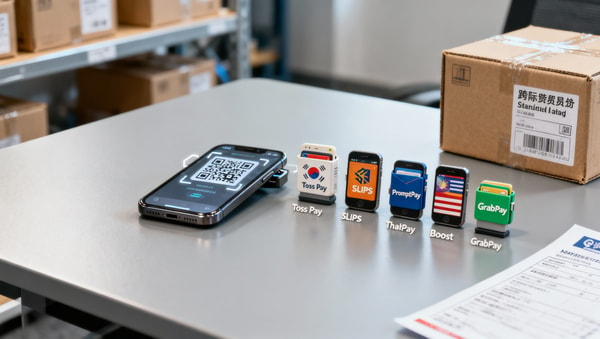
MIIT Releases Service Trade Standardization Plan (2026–2030)MIIT's 2026–2030 Service Trade Standardization Plan boosts AI-driven digital services—remote QA, cloud maintenance, intelligent warehouse SaaS—for global export competitiveness. WeChat Pay Integrates QR Codes from 5 Countries for B2B Cross-Border SettlementWeChat Pay integrates QR codes from South Korea, Sri Lanka, Thailand, Malaysia & Singapore — enabling faster, cheaper B2B cross-border settlement for global buyers and Chinese suppliers.
 Portable oxygen concentrators get noisy over time for several reasonsPortable oxygen concentrators get noisy over time due to dust, wear, loose parts, and aging compressors. Learn key causes, inspection priorities, and service tips to prevent failures.
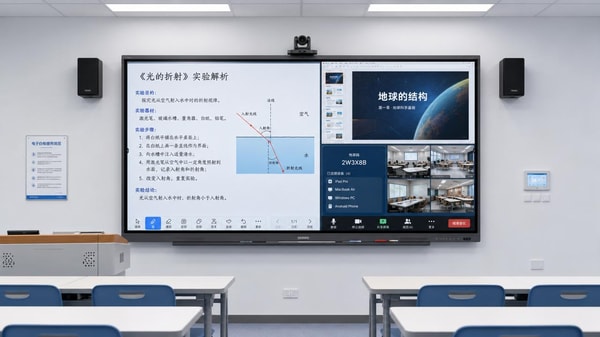
 Interactive whiteboards: what schools regret not checking earlyInteractive whiteboards can boost learning, but schools often regret missing key checks on compatibility, durability, training, and support. Discover how to buy smarter.
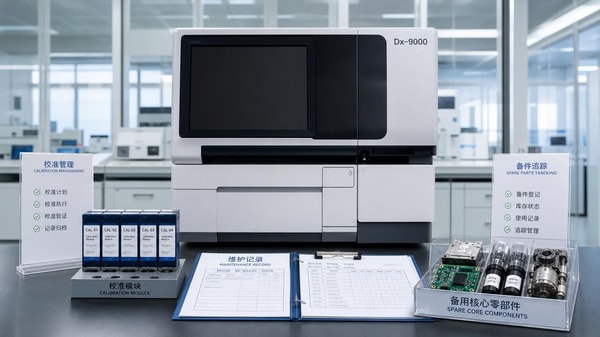
 Medical diagnostic equipment downtime usually starts with this oversightMedical diagnostic equipment downtime often starts with one overlooked maintenance gap. Learn the warning signs, hidden costs, and smart service strategies to improve uptime.
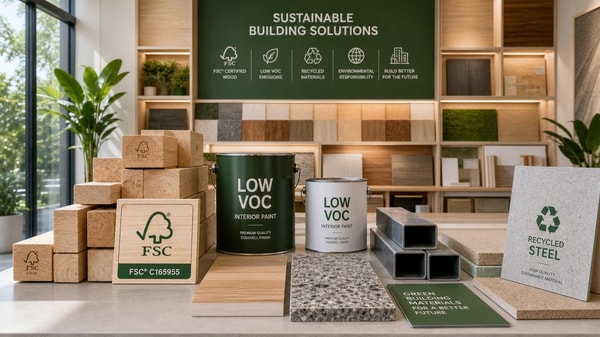
 Eco-friendly building materials: where certification changes the decisionEco-friendly building materials now win or lose on certification. Learn how verified standards reduce sourcing risk, support compliance, and improve procurement decisions.
 Ergonomic workspace design mistakes that still cause daily strainErgonomic workspace design mistakes can silently cause daily strain, fatigue, and lower productivity. Discover practical fixes to improve comfort, focus, and workstation performance.
 Outdoor garden supplies that wear out too fast in summer heatOutdoor garden supplies can fail fast in extreme summer heat. Discover which items wear out first, what materials last longer, and how to buy smarter for durable, cost-saving performance.
 Sustainable home decor: how to spot green claims with substanceSustainable home decor explained: learn how to spot credible green claims, avoid greenwashing, compare materials and certifications, and choose stylish, healthier pieces with real impact.
 Modern office furniture trends that improve layout flexibilityModern office furniture trends are transforming flexible workplace design. Explore modular, mobile, ergonomic, and acoustic solutions that boost productivity and smarter space planning.
 Smart street lighting works best when control systems are not overlookedSmart street lighting succeeds when control systems come first. Learn how better monitoring, dimming, and integration improve ROI, maintenance efficiency, and long-term project performance.
 What solid-state battery breakthroughs are still years from market?Solid-state battery breakthroughs sound transformative, but which ones are still years from market? Explore the technical, cost, and scaling barriers shaping real adoption timelines.
 Commercial LED lighting retrofits: when is payback slower than planned?Commercial LED lighting payback can slip when costs, runtime, rebates, and controls are misjudged. Learn the hidden risks and review steps that protect ROI before approval.
















Popular Tags
Global Trade Insights & Industry
Our mission is to empower global exporters and importers with data-driven insights that foster strategic growth.
Search News
Popular Tags
Industry Overview
The global commercial kitchen equipment market is projected to reach $112 billion by 2027. Driven by urbanization, the rise of e-commerce food delivery, and strict hygiene regulations.