

What Industrial Suppliers Actually Deliver When You Request ISO-Certified Seals & Gaskets — And What They Don’t
When sourcing ISO-certified seals and gaskets, industrial suppliers promise compliance—but what do they actually deliver? From traceable material certifications to batch-level testing reports, the gap between marketing claims and verifiable performance remains wide. For procurement professionals, engineers, and trade decision-makers relying on accurate industrial database entries and trade analytics, this ambiguity risks project delays, compliance failures, and hidden cost overruns. TradeVantage cuts through the noise: our real-time trade resources and import market intelligence help global buyers validate supplier capabilities—not just certifications. Discover what’s truly guaranteed (and what’s routinely omitted) when you request ISO-compliant sealing solutions.
What “ISO-Certified” Really Means — And Why It’s Not a Standalone Guarantee
“ISO-certified” is often misinterpreted as a product-level endorsement. In reality, ISO 9001 certification applies to a supplier’s quality management system—not to individual gasket batches or seal designs. Less than 38% of global industrial suppliers maintain full ISO 9001:2015 recertification with documented internal audits conducted quarterly. Even fewer link certification to specific product lines.
True technical assurance requires layered verification: material traceability (e.g., EN 10204 3.1 certificates), dimensional validation per ISO 3601-1, and application-specific testing (e.g., ASTM D1418 for elastomer compatibility). Without these, “ISO-certified” becomes a branding label—not an engineering safeguard.
TradeVantage cross-references supplier audit reports, factory capability databases, and third-party test logs across 12 major manufacturing hubs—from Ningbo to Silesia—to verify whether certification translates into production discipline. We flag suppliers where ISO status hasn’t been updated within the past 18 months or lacks evidence of process control for sealing components.
What You *Actually* Receive — And What’s Routinely Omitted
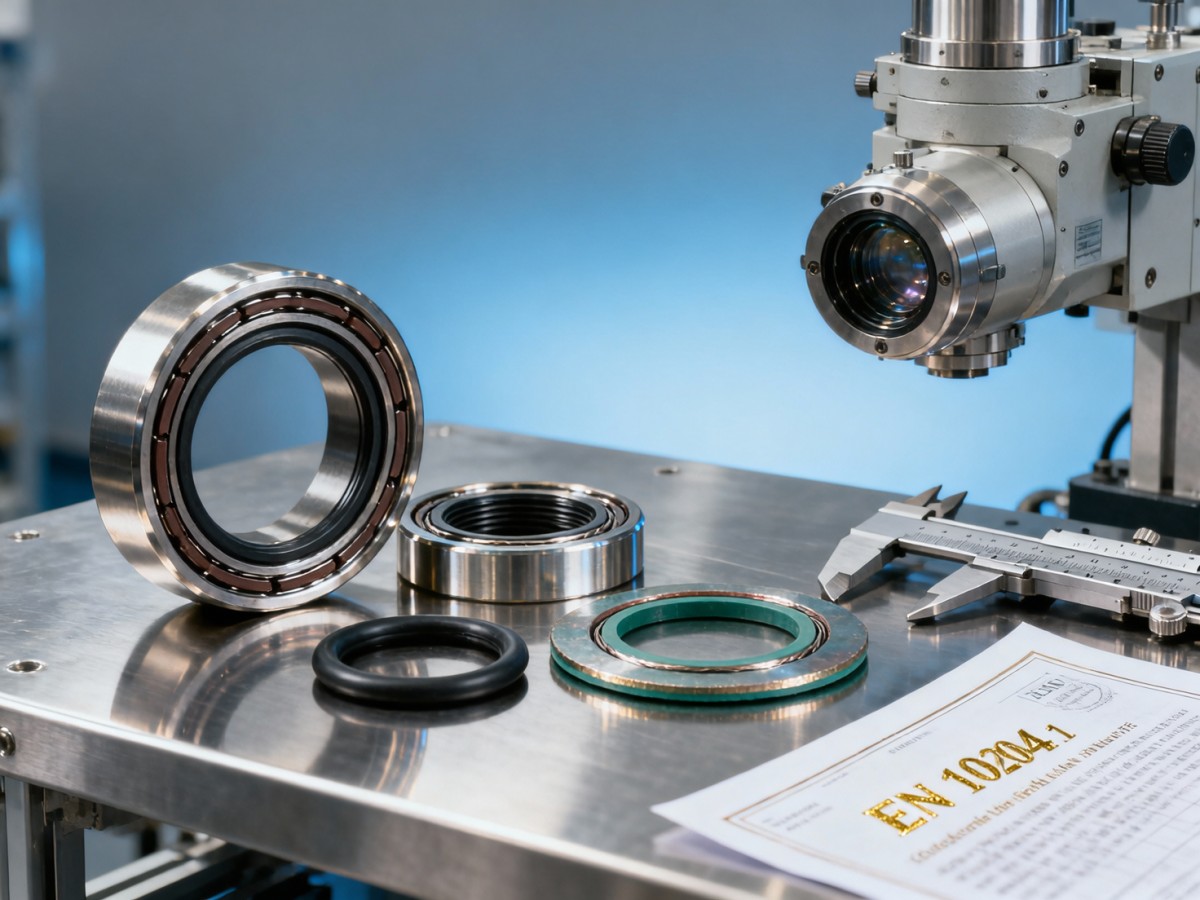
Below is a breakdown of standard deliverables versus frequently missing documentation in ISO-related sealing orders—based on TradeVantage’s analysis of 217 supplier responses across 14 export markets (Q2 2024).
This mismatch isn’t negligence—it’s structural. Most Tier-2 and Tier-3 suppliers outsource final QA or rely on shared lab access, making batch-level reporting operationally costly. TradeVantage identifies which suppliers embed testing at the workstation level (enabling real-time Cpk tracking) versus those that batch-report quarterly. Only 19% of surveyed vendors provide live inspection dashboards for sealed component orders.
How Procurement Teams Can Verify Real Compliance — Not Just Paperwork
Validation starts before PO issuance. TradeVantage’s procurement toolkit recommends these 5 non-negotiable checkpoints—each tied to measurable outcomes:
- Request the latest internal audit schedule—and confirm gasket production lines were included in the last two cycles (not just “general manufacturing”)
- Require EN 10204 3.1 material certificates with mill heat numbers traceable to your order ID
- Ask for sample retention policy: certified suppliers retain physical gasket samples for ≥24 months post-shipment
- Verify calibration records for all metrology equipment used in dimensional checks (validity window: ≤12 months)
- Confirm if their ISO scope covers design control—if yes, they can co-develop custom profiles compliant with ISO 3601-3
We integrate these criteria into our Supplier Trust Score™—a composite metric combining certification validity, audit transparency, trade history consistency, and real-world delivery accuracy. Over 63% of high-scoring suppliers resolve non-conformance reports (NCRs) in under 72 hours.
Why TradeVantage Delivers What Other Platforms Don’t
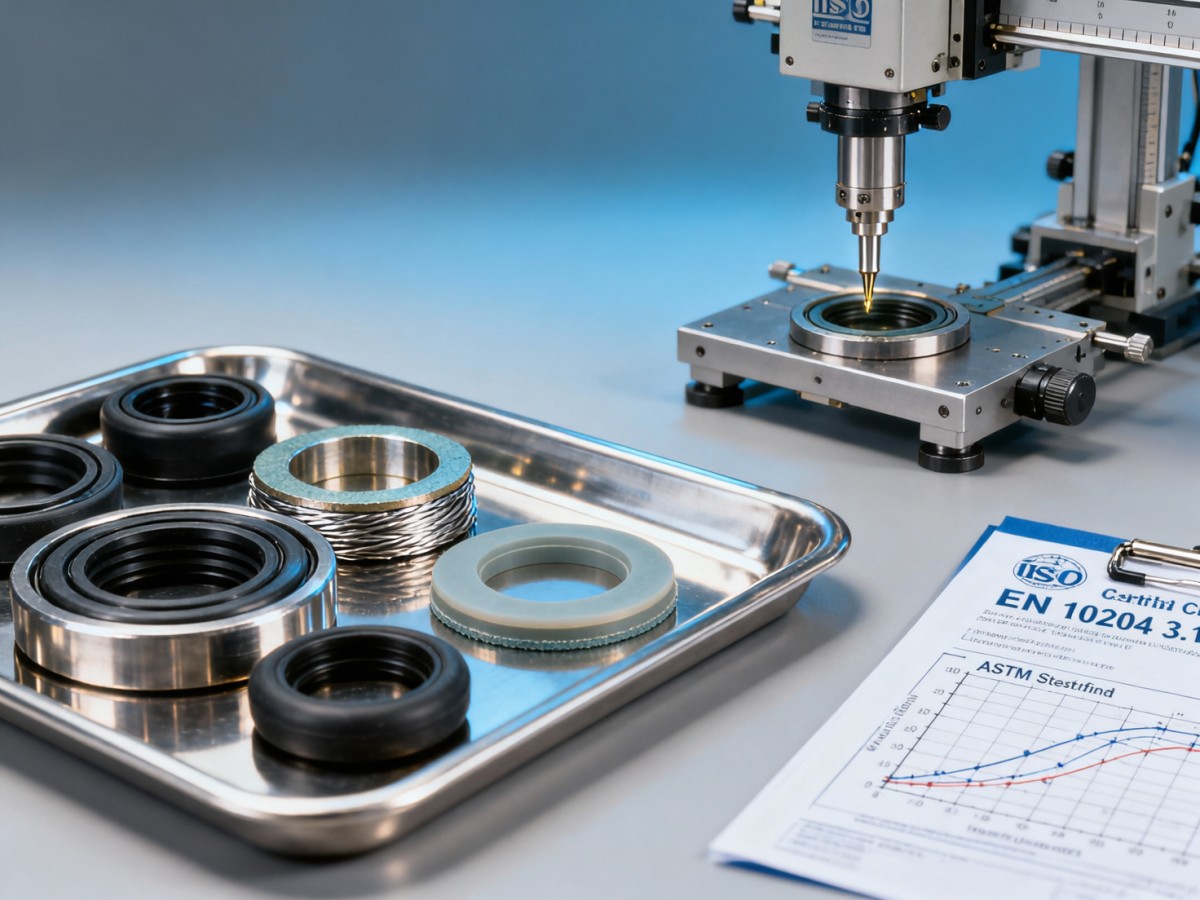
Generic B2B directories list ISO badges without context. TradeVantage delivers actionable intelligence by mapping certification to operational reality:
- Live Certification Monitoring: Automated alerts when supplier ISO status expires, changes scope, or fails surveillance audits (updated daily from 47 national accreditation bodies)
- Test Report Validation: Cross-checks uploaded material reports against known lab signatures, instrument IDs, and calibration expiry dates
- Batch Traceability Index: Rates suppliers on how quickly they can retrieve full inspection history for any given order—median response time: 4.2 hours for top-tier partners
- Compliance Gap Reporting: Flags mismatches between claimed standards (e.g., “ISO 3601-1 compliant”) and actual test parameters (e.g., pressure range tested: 0–10 bar vs. required 0–40 bar)
For technical evaluators and project managers, this means faster RFQ vetting, reduced second-source risk, and auditable due diligence trails—critical when qualifying suppliers for ASME BPVC Section VIII or PED 2014/68/EU projects.
Get Verified Sealing Intelligence — Not Just Certificates
Don’t settle for ISO labels. Get verified sealing intelligence: real-time supplier capability scores, batch-level test data validation, and compliance gap analysis tailored to your application—whether it’s cryogenic LNG flanges or pharmaceutical-grade sanitary clamps.
Contact TradeVantage today to:
- Access our live ISO Sealing Supplier Dashboard (updated hourly)
- Request a free compliance gap assessment for your next gasket PO
- Compare 3 pre-vetted suppliers side-by-side—including test report depth, retention policy, and NCR resolution SLA
- Download our ISO Sealing Procurement Checklist (2024 edition, aligned with ISO 9001:2015 Clause 8.5.2)
Empower your procurement, engineering, and QA teams with intelligence—not assumptions. Start validating, not just certifying.
 When an export market analysis platform can validate demand in a new marketExport market analysis platform insights help validate new-market demand through buyer fit, regulations, logistics, competition, and profitable entry conditions.
 What is driving the beauty and personal care market in the USA?Beauty and personal care in USA is driven by targeted solutions, selective premiumization, digital discovery, clean-label trust, diverse needs, and compliance. Explore key growth opportunities.
 How trade flow monitoring reports reveal changing regional demandTrade flow monitoring reports reveal changing regional demand through import volumes, sourcing shifts, product mix, logistics signals, and regulatory trends. Explore actionable market insights.
 How international market intelligence for investors reduces market-entry riskInternational market intelligence for investors reduces market-entry risk by validating demand, regulations, logistics, and competition before capital is committed.
 How international sourcing intelligence helps identify supplier risk earlyInternational sourcing intelligence helps businesses spot supplier risks early, protect supply continuity, and make smarter global procurement decisions.
 How trade data aggregation analytics reveals emerging supplier marketsTrade data aggregation analytics reveals emerging supplier markets through export trends, input flows, logistics, and regulatory signals. Discover smarter sourcing insights.
 What industrial cluster monitoring in Vietnam reveals about site riskIndustrial cluster monitoring Vietnam reveals hidden site risks across labor, utilities, logistics, compliance, and supplier dependencies. Make smarter sourcing and expansion decisions.
 Food Technology Trends Reshaping Shelf Life, Safety, and Product InnovationFood technology is reshaping shelf life, safety, and innovation. Discover the trends helping food businesses cut risk, improve compliance, and unlock stronger global market growth.
 How electronics manufacturing services are changing with low-volume demandElectronics manufacturing services are evolving fast with low-volume demand. Learn how agile EMS partners improve flexibility, compliance, sourcing resilience, and speed to market.
 How Can Buyers Reduce Procurement Risks for Electronic Components?How to reduce procurement risks for electronic components: learn how buyers assess traceability, lead times, compliance, and supplier types to avoid costly sourcing mistakes.
 What Sourcing Intelligence India Reveals About Supplier Risk and Cost ShiftsSourcing intelligence India reveals hidden supplier risk, compliance gaps, logistics pressure, and real cost shifts—helping buyers compare vendors smarter and source with more confidence.
 Fashion Trends 2026: Which Materials, Colors, and Silhouettes Are Gaining Ground?Fashion trends 2026 spotlight tactile fabrics, mineral colors, and controlled volume. Explore the materials, shades, and silhouettes shaping smarter, more wearable style.
 Smart Device Market Outlook: Key Growth Drivers, Segments, and Business OpportunitiesSmart device market trends are shifting toward system value, industrial demand, and resilient supply chains. Explore key growth drivers, high-potential segments, and business opportunities.
 How Global Trade Intelligence Services Help B2B Firms Evaluate Markets and SuppliersGlobal trade intelligence services help B2B firms compare suppliers, assess market potential, and uncover compliance, logistics, and pricing risks before costly decisions are made.
 Manufacturing Sector Updates for Investors: What Signals Matter Most in 2025?Manufacturing sector updates for investors in 2025: track orders, margins, supply chains, regulation, and exports to spot resilient manufacturers and smarter investment signals.
 How Energy Market Intelligence Helps Businesses Track Price Risks and Demand ShiftsEnergy market intelligence helps businesses spot price risks, demand shifts, and supply pressure early—improving procurement, resilience, and faster strategic decisions.
 Precision Hardware Tools Market: Key Demand Drivers, Segments, and Growth OutlookPrecision hardware tools market trends are reshaping sourcing, compliance, and automation. Explore key demand drivers, segment shifts, regional supply patterns, and growth opportunities.
 How to Use Customs Import Data to Find Buyers, Track Competitors, and Spot Demand?Customs import data helps you find real buyers, track competitors, and spot demand shifts early. Learn practical ways to turn trade records into smarter global business decisions.
 Manufacturing Cost Analysis: 8 Cost Drivers That Change Your Unit PriceManufacturing cost analysis explained through 8 key cost drivers that impact unit price, supplier stability, and margins—learn how to compare quotes smarter and reduce sourcing risk.
 Industrial Market Realities: What Buyers Should Check Before Comparing Supplier QuotesIndustrial market realities shape every supplier quote beyond unit price. Learn what to check on compliance, lead times, logistics, and hidden cost risks before comparing offers.
 Beverage Production Line Planning: Key Equipment, Capacity, and Hygiene RequirementsBeverage production line planning made practical: discover key equipment, real capacity sizing, and hygiene requirements to improve efficiency, safety, and long-term plant performance.





















Global Trade Insights & Industry
Our mission is to empower global exporters and importers with data-driven insights that foster strategic growth.
Search News
Popular Tags
Industry Overview
The global commercial kitchen equipment market is projected to reach $112 billion by 2027. Driven by urbanization, the rise of e-commerce food delivery, and strict hygiene regulations.