

IMDG Code 41-24 Enforced: UN3480 Lithium Battery Labeling Now Mandatory
As of 28 April 2026, the International Maritime Organization (IMO) has globally enforced the latest edition of the International Maritime Dangerous Goods Code (IMDG Code 41-24), introducing mandatory new labeling, documentation, and packaging requirements for lithium-ion batteries classified under UN3480. This development directly affects exporters and supply chain operators in lithium battery manufacturing, electric vehicle (EV) accessories, and portable power bank sectors — particularly those engaged in cross-border maritime shipments.
Event Overview
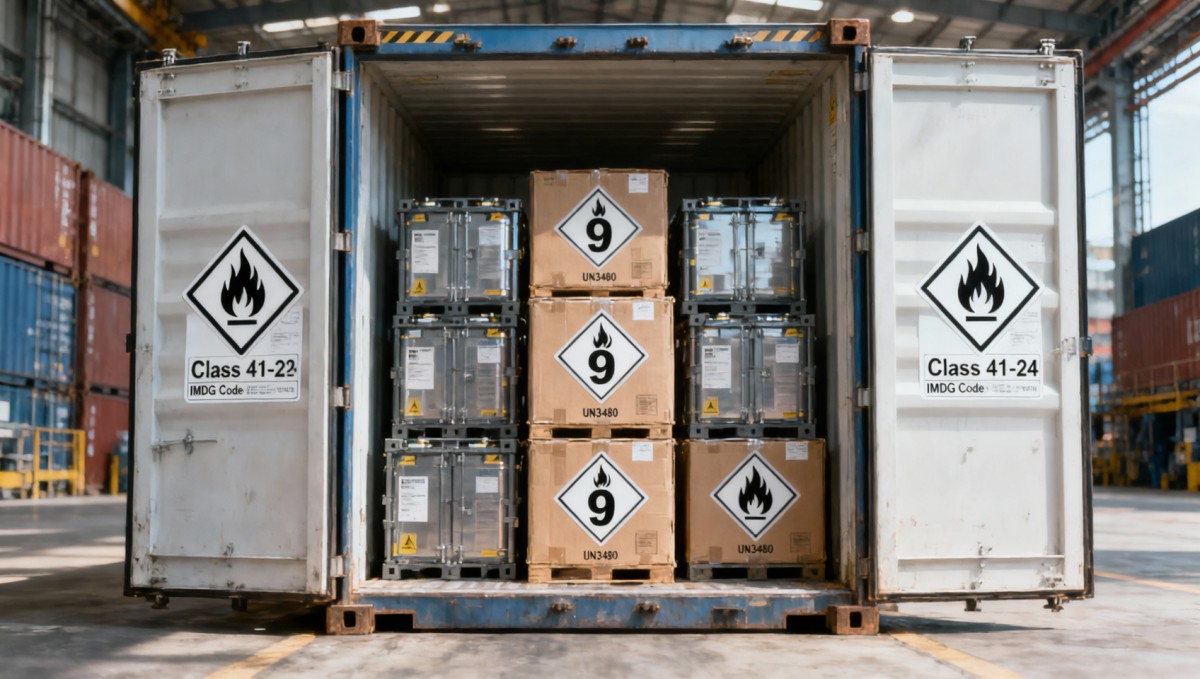
The IMO’s IMDG Code 41-24 entered into full mandatory force on 28 April 2026. Under this update, all consignments of lithium-ion batteries (UN3480) transported by sea must display the revised Class 9 hazard diamond label. Concurrently, shipping documents, packaging certificates, and Safety Data Sheets (SDS) must reflect the updated classification and handling instructions. Non-compliant cargo faces rejection or detention at major international ports including Rotterdam, Los Angeles, and Singapore.
Industries Affected
Direct Exporters & Trading Companies
These entities are directly responsible for ensuring regulatory compliance at point of shipment. The requirement to apply new labels and revise documentation applies before vessel loading — meaning delays may occur if internal processes lack alignment with IMDG 41-24 specifications. Impact manifests as increased pre-shipment verification time, potential customs hold-ups, and added administrative burden across multiple trade lanes.
Lithium Battery & Power Bank Manufacturers
Manufacturers supplying finished goods for export must now integrate label design, print validation, and SDS revision into their production and quality control workflows. Since UN3480 applies to cells, batteries, and equipment containing them, even assembled EV accessories or branded power banks fall under scope — requiring consistent labeling across SKUs and batches.
Supply Chain & Logistics Service Providers
Fulfillment centers, freight forwarders, and third-party logistics (3PL) providers handling UN3480 cargo must verify label authenticity, confirm document completeness, and ensure warehouse storage meets updated segregation rules. Their liability exposure increases where non-conforming shipments originate from upstream partners but pass through their facilities prior to port handover.
What Enterprises and Practitioners Should Focus On Now
Verify label design and printing against the official IMDG 41-24 Class 9 specification
Confirm that the diamond-shaped label includes correct symbol, border width, color contrast (white background, black symbol and text), and minimum dimensions per Chapter 5.2.2.2. Pre-approved label templates from national competent authorities (e.g., U.S. PHMSA, UK MCA) should be referenced — not generic online sources.
Update SDS, transport documents, and packaging declarations ahead of shipment scheduling
Shipping instructions, commercial invoices, and dangerous goods declarations must explicitly reference IMDG Code 41-24 (not earlier editions). Packaging test reports and manufacturer declarations must also cite the current version. Relying on legacy documentation templates risks rejection during port authority review.
Conduct internal readiness checks for high-volume UN3480 SKUs
Prioritize verification for top-exported items — especially standalone lithium batteries (e.g., 18650 cells), integrated EV components (e.g., BMS modules), and consumer-facing power banks. Assess whether existing labeling systems (e.g., thermal printers, ERP-integrated label software) support rapid rollout of compliant labels without rework.
Engage early with carriers and terminal operators on documentation expectations
Some ocean carriers and terminal authorities have issued supplementary guidance beyond IMO minimums (e.g., digital submission windows, bilingual label requirements). Confirming these operational details in advance helps avoid last-minute corrections or demurrage charges.
Editorial Perspective / Industry Observation
Observably, the enforcement of IMDG Code 41-24 marks a shift from transitional flexibility to strict regulatory accountability for UN3480 shipments. Analysis shows this is less a technical update than a compliance hardening measure — emphasizing traceability, standardization, and enforcement consistency across jurisdictions. From an industry perspective, it functions primarily as a signal of tightening global oversight on lithium battery logistics, rather than an isolated rule change. Current implementation patterns suggest port authorities are applying scrutiny uniformly, making adherence non-negotiable for uninterrupted maritime access. Continuous monitoring of national interpretations — particularly in key markets like the EU, U.S., and ASEAN — remains essential, as minor deviations in local enforcement may emerge post-enforcement.
Conclusion: The mandatory application of IMDG Code 41-24 represents a structural inflection point for lithium battery exporters — not merely a paperwork update, but a foundational requirement for market access via sea freight. It is best understood not as a temporary compliance hurdle, but as the new baseline for safe, legal, and efficient movement of UN3480 goods across international maritime networks.
Source: International Maritime Organization (IMO) – Official IMDG Code 41-24 Implementation Notice (effective 28 April 2026).
Note: National variations in enforcement timing or interpretation (e.g., grace periods, digital reporting mandates) remain under observation and are not confirmed in available public documentation.
Recommended News
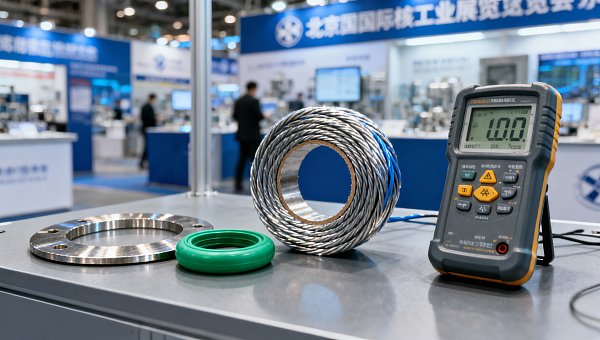
 China-France Nuclear Cooperation Advances at Beijing ExpoChina-France nuclear cooperation advances: mutual recognition for nuclear-grade seals, cables & radiation monitors boosts export readiness for suppliers targeting EU and BRI projects.
 Vietnam’s 4 Provinces Seek AI Tourism Tech in NanningAI tourism tech in demand: Vietnam’s 4 provinces seek AI-guided terminals, multilingual interpretation, AI-CCTV & smart ticketing in Nanning—key opportunity for B2G exporters.
 Q1 2026 China Power Market Trading Up 25.6%: Smart Meters, Storage Export Demand RisesSmart meters, energy storage exports surge as China’s Q1 2026 power market trading jumps 25.6% — key signal for global manufacturers & channel partners.
 China First Country with 5M+ Active Invention PatentsChina first country with 5M+ active invention patents—key for buyers in AI, solar, lithium battery & energy storage. Discover IP implications for sourcing, compliance & supplier vetting.
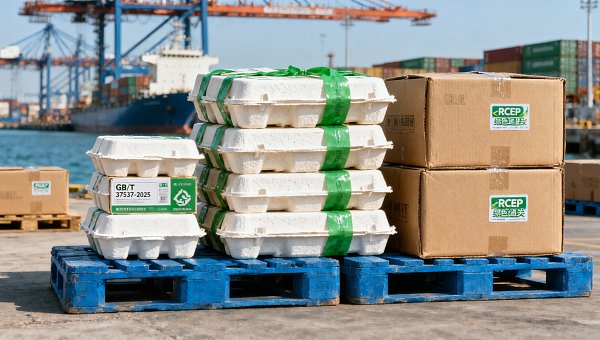
![]() RCEP Green Packaging Mutual Recognition: China Food Packaging Exempt from Testing in AU/NZ/JP/KRRCEP Green Packaging Mutual Recognition now exempts China's food packaging from retesting in AU/NZ/JP/KR — faster clearance, 30% cost savings, and streamlined exports for brands & manufacturers.
RCEP Green Packaging Mutual Recognition: China Food Packaging Exempt from Testing in AU/NZ/JP/KRRCEP Green Packaging Mutual Recognition now exempts China's food packaging from retesting in AU/NZ/JP/KR — faster clearance, 30% cost savings, and streamlined exports for brands & manufacturers. Shenneng Etorkeqi Green Ammonia Project: Deionized Water Station OperationalShenneng Etorkeqi Green Ammonia Project’s deionized water station is now operational—ISO 8502-3 compliant, fully integrated, and a key milestone for global green hydrogen developers and exporters.
 China Launches 'Model-Data Resonance' Initiative for AI+Manufacturing InteroperabilityModel-Data Resonance initiative boosts AI+manufacturing interoperability—learn how GB/T XXXX–2026 aligns with VDI 2182 & ISA-95 for smoother global factory deployments.
 China’s First Embodied AI Robot Insurance Launched in GuangxiChina’s first embodied AI robot insurance launched in Guangxi—key for robotics exporters, AI hardware makers & global compliance teams. CE-recognized, EU/UK/AU-ready.
 IMDG Code 41-24 Enforced: UN3480 Lithium Battery Labeling Now MandatoryIMDG Code 41-24 is now mandatory: UN3480 lithium battery labeling, documentation & packaging rules are enforced globally as of 28 April 2026 — avoid port rejections!
 State Grid’s $680M Embodied AI Procurement Signals Export OpportunityEmbodied AI, IEC 61850 & IEC 62443: State Grid’s $680M procurement unlocks export opportunities for compliant industrial robots and smart vision systems in emerging markets.
 IMDG Code 41-24 Enforces UN3480 Class 9 Labeling for Lithium Battery Sea FreightIMDG Code 41-24 mandates UN3480 lithium battery sea freight to display durable Class 9 labels from April 27, 2026—avoid delays & port rejections.
 ESS Key Component Prices Drop ~80%: Quality & Compliance RiseESS key component prices dropped ~80%—but quality & compliance demands surged. Discover how UL 9540A, AS/NZS 5139, and certified BMS/inverters now define market access.
 Mexico NOM-019-SCFI-2026 Effective July 2026: EMC Certification Mandatory for Auto ElectronicsMexico NOM-019-SCFI-2026 mandates EMC certification for auto electronics from July 2026 — ensure compliance now to avoid supply chain disruption & customs delays.
 Red Sea Rerouting Normalized, ECA Surcharge Hits $1,850/TEURed Sea rerouting normalized: ECA surcharge hits $1,850/TEU — 47% of total freight cost. Impacting hand tools, building materials & furniture exporters to Europe. Act now.
 RCEP Green Packaging Mutual Recognition Takes EffectRCEP Green Packaging Mutual Recognition is live—GB/T 37537-2025–certified packaging now enjoys fast-track clearance in Australia, NZ, Japan & Korea. Save time, cut costs, and boost export efficiency.
 Vietnam Suspends SASO Mutual Recognition for Chinese Irrigation EquipmentVietnam suspends SASO mutual recognition for Chinese irrigation equipment—drip tapes, PE fittings, auto valves now require VINAQ-IR certification. Act now to avoid delays & customs hold.
 Key Energy Storage Equipment Prices Drop ~80% in ChinaKey energy storage equipment prices in China dropped ~80% — PCS, BMS & liquid cooling units. Discover implications for compliance, margins & standards enforcement.
") China Releases Green Design Guidelines for Industrial Products (2026)China's 2026 Green Design Guidelines for industrial products—covering PV modules, lithium batteries & smart appliances—link eco-design to green factory certification and export tax rebates starting 2027.
China Releases Green Design Guidelines for Industrial Products (2026)China's 2026 Green Design Guidelines for industrial products—covering PV modules, lithium batteries & smart appliances—link eco-design to green factory certification and export tax rebates starting 2027. Mexico NOM-019-SCFI-2026 Effective: Automotive Electronics Require New EMC CertificationMexico NOM-019-SCFI-2026 is live: Automotive electronics (infotainment, ADAS, domain controllers) now require mandatory EMC certification by July 31, 2026 — act now to avoid customs delays.
 Red Sea Detour Premium Rises to $1,850/TEU Amid Port Congestion ReliefRed Sea Detour Premium hits $1,850/TEU — now 43% of FE–NE freight rates. Discover why this structural surcharge demands urgent supply chain action.
 TÜV Rheinland Updates PLd Certification: EMC Immunity Now Mandatory for Servo DrivesTÜV Rheinland now mandates EN IEC 61000-6-2:2024 EMC immunity testing for PLd certification of servo drives—act before May 26, 2026 to avoid EU market delays.

















Popular Tags
Global Trade Insights & Industry
Our mission is to empower global exporters and importers with data-driven insights that foster strategic growth.
Search News
Popular Tags
Industry Overview
The global commercial kitchen equipment market is projected to reach $112 billion by 2027. Driven by urbanization, the rise of e-commerce food delivery, and strict hygiene regulations.