

Vietnam’s 4 Provinces Seek AI Tourism Tech in Nanning
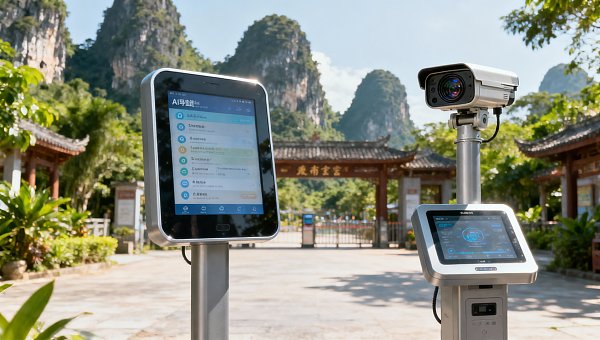
On April 8, 2026, a joint cultural and tourism delegation from Vietnam’s Quang Ninh, Hai Phong, Hanoi, and Ho Chi Minh City visited Nanning, Guangxi, to conduct procurement对接 for AI-powered tourism infrastructure—including AI-guided terminals, multilingual intelligent interpretation systems, AI-enhanced CCTV surveillance for scenic areas, and smart ticketing kiosks. This initiative signals emerging opportunities for enterprises in the Smart Home, AI Applications, and CCTV Systems sectors—particularly those engaged in cross-border B2G supply chains with Southeast Asian governments.
Event Overview
On April 8, 2026, representatives from the cultural and tourism authorities of Quang Ninh Province, Hai Phong City, Hanoi, and Ho Chi Minh City traveled to Nanning, China, to hold procurement discussions with Guangxi-based suppliers. The targeted equipment includes AI-guided terminals, multilingual intelligent interpretation systems, AI-integrated CCTV systems for scenic area security, and smart ticketing terminals. According to publicly reported information, this engagement forms part of Vietnam’s national ‘Digital Tourism Corridor’ development plan, and marks the first regional bulk procurement channel for Chinese AI tourism solutions formally endorsed by Vietnamese provincial-level governments.
Impact on Specific Industry Segments
Direct Exporters (B2G Equipment Suppliers)
Companies exporting AI-enabled hardware—especially those certified for public-sector deployment in China and familiar with Vietnamese regulatory alignment pathways—face early-mover access to a government-backed pilot procurement framework. Impact manifests primarily in tender readiness: documentation requirements (e.g., bilingual technical specifications, cybersecurity compliance statements), localization support capacity (e.g., Vietnamese language UI, maintenance SLAs), and lead-time responsiveness for pilot installations.
AI Software & Integration Providers
Firms offering multilingual NLP engines, real-time voice translation APIs, or AI video analytics modules may see downstream demand via system integrators contracted under this initiative. Impact centers on interoperability: compatibility with hardware platforms specified in the procurement scope (e.g., Android-based terminals, ONVIF-compliant CCTV feeds), and ability to deliver Vietnamese-language training data or pre-tuned models for heritage site contexts.
Supply Chain & Localization Service Providers
Logistics operators, customs brokers, and after-sales service networks covering the China–Vietnam land border (especially Dongxing–Mong Cai corridor) are likely to experience increased volume for certified equipment shipments. Impact is operational: need for familiarity with Vietnam’s Decree No. 15/2023/ND-CP on ICT product registration, and capability to manage dual-labeling (Chinese/Vietnamese) and localized warranty documentation.
What Relevant Enterprises or Practitioners Should Focus On Now
Monitor official procurement timelines and eligibility criteria
While the delegation’s visit confirms intent, no formal tender announcement or budget allocation has been published. Enterprises should track updates from Vietnam’s Ministry of Culture, Sports and Tourism and provincial People’s Committees—particularly any forthcoming calls for pre-qualification or vendor registration portals.
Verify alignment with defined equipment categories—not just AI branding
The scope explicitly names AI-guided terminals, multilingual interpretation systems, AI-CCTV, and smart ticketing terminals. Vendors should assess whether their offerings meet functional definitions (e.g., offline-capable speech synthesis, facial recognition for crowd flow analytics, QR/NFC-based entry validation), not merely generic ‘AI’ labels.
Distinguish between policy signal and near-term revenue opportunity
This is a regional government coordination exercise—not yet a signed contract or funding commitment. Revenue impact remains contingent on subsequent steps: feasibility studies, budget approvals, and integration testing. Companies should treat this as a strategic alignment milestone, not an immediate sales trigger.
Prepare for localized technical and commercial documentation
Vietnamese public procurement increasingly requires Vietnamese-language technical dossiers, cybersecurity self-declarations, and local representative appointment letters. Firms lacking in-house Vietnamese localization capacity should identify vetted partners ahead of potential RFP releases.
Editorial Perspective / Industry Observation
Observably, this event functions less as an immediate market opening and more as a structural signal: Vietnam’s provincial authorities are actively mapping foreign-sourced digital infrastructure into nationally coordinated tourism modernization plans. Analysis shows that such delegation-led procurement dialogues—especially when involving multiple provinces simultaneously—often precede standardized technical specifications and shared vendor evaluation frameworks. From an industry perspective, it reflects a shift from ad-hoc tech adoption toward systematic, cross-jurisdictional digital corridor planning. Current relevance lies not in short-term orders, but in the precedent set for how ASEAN governments may now engage with Chinese AI hardware ecosystems—not as standalone products, but as interoperable components within sovereign digital infrastructure roadmaps.
Conclusion
This event marks the first confirmed instance of Vietnamese provincial governments jointly pursuing Chinese AI tourism hardware through a coordinated, cross-border procurement dialogue. It does not represent a finalized contract or guaranteed volume—but rather a formalized entry point into Vietnam’s public-sector digital tourism modernization pipeline. For industry stakeholders, it is best understood as a procedural milestone indicating growing institutional receptivity—not yet a commercial inflection point.
Information Source
Primary source: Official delegation itinerary and scope statement released by Guangxi Zhuang Autonomous Region Department of Culture and Tourism (April 2026).
Note: Tender documents, budget details, and implementation timelines remain unannounced and are subject to ongoing observation.
Recommended News
 China-France Nuclear Cooperation Advances at Beijing ExpoChina-France nuclear cooperation advances: mutual recognition for nuclear-grade seals, cables & radiation monitors boosts export readiness for suppliers targeting EU and BRI projects.
 Vietnam’s 4 Provinces Seek AI Tourism Tech in NanningAI tourism tech in demand: Vietnam’s 4 provinces seek AI-guided terminals, multilingual interpretation, AI-CCTV & smart ticketing in Nanning—key opportunity for B2G exporters.
 Q1 2026 China Power Market Trading Up 25.6%: Smart Meters, Storage Export Demand RisesSmart meters, energy storage exports surge as China’s Q1 2026 power market trading jumps 25.6% — key signal for global manufacturers & channel partners.
 China First Country with 5M+ Active Invention PatentsChina first country with 5M+ active invention patents—key for buyers in AI, solar, lithium battery & energy storage. Discover IP implications for sourcing, compliance & supplier vetting.
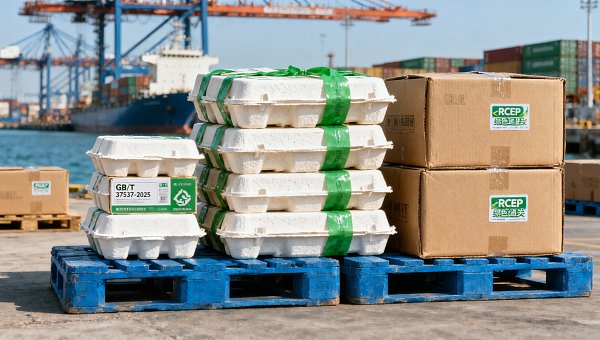
![]() RCEP Green Packaging Mutual Recognition: China Food Packaging Exempt from Testing in AU/NZ/JP/KRRCEP Green Packaging Mutual Recognition now exempts China's food packaging from retesting in AU/NZ/JP/KR — faster clearance, 30% cost savings, and streamlined exports for brands & manufacturers.
RCEP Green Packaging Mutual Recognition: China Food Packaging Exempt from Testing in AU/NZ/JP/KRRCEP Green Packaging Mutual Recognition now exempts China's food packaging from retesting in AU/NZ/JP/KR — faster clearance, 30% cost savings, and streamlined exports for brands & manufacturers. Shenneng Etorkeqi Green Ammonia Project: Deionized Water Station OperationalShenneng Etorkeqi Green Ammonia Project’s deionized water station is now operational—ISO 8502-3 compliant, fully integrated, and a key milestone for global green hydrogen developers and exporters.
 China Launches 'Model-Data Resonance' Initiative for AI+Manufacturing InteroperabilityModel-Data Resonance initiative boosts AI+manufacturing interoperability—learn how GB/T XXXX–2026 aligns with VDI 2182 & ISA-95 for smoother global factory deployments.
 China’s First Embodied AI Robot Insurance Launched in GuangxiChina’s first embodied AI robot insurance launched in Guangxi—key for robotics exporters, AI hardware makers & global compliance teams. CE-recognized, EU/UK/AU-ready.
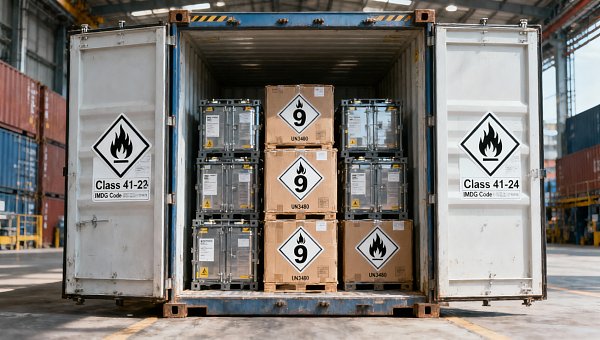
 IMDG Code 41-24 Enforced: UN3480 Lithium Battery Labeling Now MandatoryIMDG Code 41-24 is now mandatory: UN3480 lithium battery labeling, documentation & packaging rules are enforced globally as of 28 April 2026 — avoid port rejections!
 State Grid’s $680M Embodied AI Procurement Signals Export OpportunityEmbodied AI, IEC 61850 & IEC 62443: State Grid’s $680M procurement unlocks export opportunities for compliant industrial robots and smart vision systems in emerging markets.
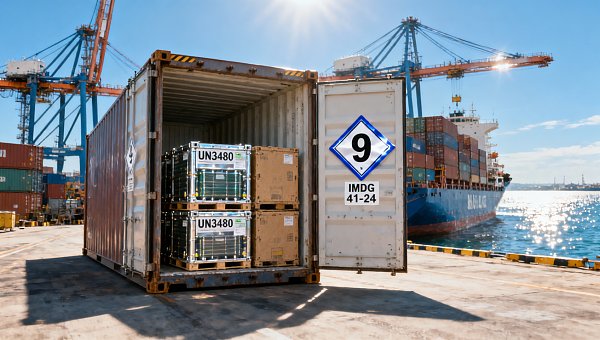
 IMDG Code 41-24 Enforces UN3480 Class 9 Labeling for Lithium Battery Sea FreightIMDG Code 41-24 mandates UN3480 lithium battery sea freight to display durable Class 9 labels from April 27, 2026—avoid delays & port rejections.
 ESS Key Component Prices Drop ~80%: Quality & Compliance RiseESS key component prices dropped ~80%—but quality & compliance demands surged. Discover how UL 9540A, AS/NZS 5139, and certified BMS/inverters now define market access.
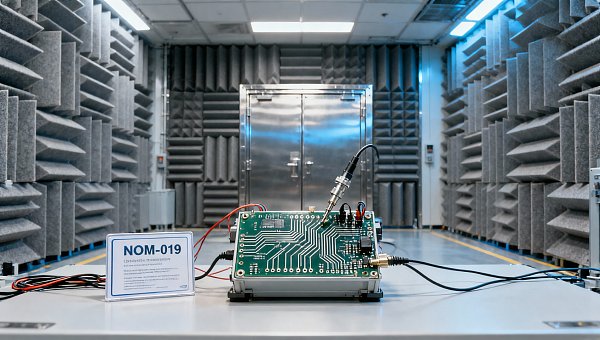
 Mexico NOM-019-SCFI-2026 Effective July 2026: EMC Certification Mandatory for Auto ElectronicsMexico NOM-019-SCFI-2026 mandates EMC certification for auto electronics from July 2026 — ensure compliance now to avoid supply chain disruption & customs delays.
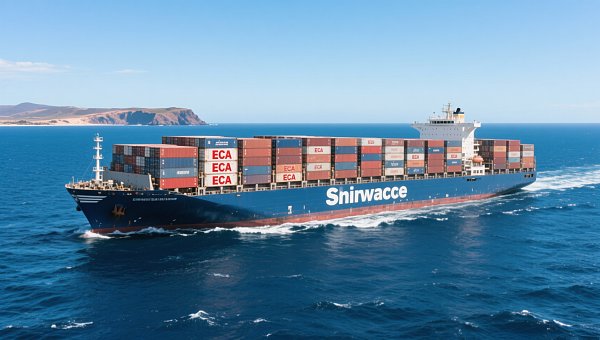
 Red Sea Rerouting Normalized, ECA Surcharge Hits $1,850/TEURed Sea rerouting normalized: ECA surcharge hits $1,850/TEU — 47% of total freight cost. Impacting hand tools, building materials & furniture exporters to Europe. Act now.
 RCEP Green Packaging Mutual Recognition Takes EffectRCEP Green Packaging Mutual Recognition is live—GB/T 37537-2025–certified packaging now enjoys fast-track clearance in Australia, NZ, Japan & Korea. Save time, cut costs, and boost export efficiency.
 Vietnam Suspends SASO Mutual Recognition for Chinese Irrigation EquipmentVietnam suspends SASO mutual recognition for Chinese irrigation equipment—drip tapes, PE fittings, auto valves now require VINAQ-IR certification. Act now to avoid delays & customs hold.
 Key Energy Storage Equipment Prices Drop ~80% in ChinaKey energy storage equipment prices in China dropped ~80% — PCS, BMS & liquid cooling units. Discover implications for compliance, margins & standards enforcement.
") China Releases Green Design Guidelines for Industrial Products (2026)China's 2026 Green Design Guidelines for industrial products—covering PV modules, lithium batteries & smart appliances—link eco-design to green factory certification and export tax rebates starting 2027.
China Releases Green Design Guidelines for Industrial Products (2026)China's 2026 Green Design Guidelines for industrial products—covering PV modules, lithium batteries & smart appliances—link eco-design to green factory certification and export tax rebates starting 2027. Mexico NOM-019-SCFI-2026 Effective: Automotive Electronics Require New EMC CertificationMexico NOM-019-SCFI-2026 is live: Automotive electronics (infotainment, ADAS, domain controllers) now require mandatory EMC certification by July 31, 2026 — act now to avoid customs delays.
 Red Sea Detour Premium Rises to $1,850/TEU Amid Port Congestion ReliefRed Sea Detour Premium hits $1,850/TEU — now 43% of FE–NE freight rates. Discover why this structural surcharge demands urgent supply chain action.
 TÜV Rheinland Updates PLd Certification: EMC Immunity Now Mandatory for Servo DrivesTÜV Rheinland now mandates EN IEC 61000-6-2:2024 EMC immunity testing for PLd certification of servo drives—act before May 26, 2026 to avoid EU market delays.














Popular Tags
Global Trade Insights & Industry
Our mission is to empower global exporters and importers with data-driven insights that foster strategic growth.
Search News
Popular Tags
Industry Overview
The global commercial kitchen equipment market is projected to reach $112 billion by 2027. Driven by urbanization, the rise of e-commerce food delivery, and strict hygiene regulations.