

State Grid’s $680M Embodied AI Procurement Signals Export Opportunity
China State Grid has announced a RMB 6.8 billion (approx. USD 680 million) procurement plan for embodied intelligent devices—primarily AI-powered industrial robots—for deployment in substation inspection and distribution room operations starting in 2026. This initiative is expected to accelerate technical validation and large-scale deployment of domestic industrial robots in highly regulated sectors including power, energy, and infrastructure. For international stakeholders—especially suppliers of IEC 61850- and IEC 62443-compliant CCTV systems, industrial robots, and smart factory solutions—the move signals growing readiness for export to emerging markets such as Southeast Asia, the Middle East, and Latin America.
Event Overview
China State Grid disclosed its intention to allocate RMB 6.8 billion for embodied intelligent equipment procurement in 2026. The stated application scope includes substation patrol and distribution room operation & maintenance. No further implementation timeline, vendor selection criteria, or tender schedule has been publicly released as of the latest available information.
Industries Affected by Segment
Direct Exporters of Industrial Robots and Smart Vision Systems
This group includes manufacturers and integrators whose products are certified to IEC 61850 (for power automation communication) and IEC 62443 (for industrial cybersecurity). The procurement validates that Chinese-made embodied AI systems have met stringent operational and safety requirements typical of critical infrastructure. As a result, overseas buyers in emerging markets may treat these certifications—and the associated field deployments—as de facto evidence of reliability and interoperability.
Suppliers of Embedded Components and Cybersecurity Modules
Firms providing hardware-level components—such as real-time vision processors, secure boot modules, or time-synchronized edge controllers—may see increased demand. Because the State Grid procurement emphasizes compliance with IEC 62443, component-level security features (e.g., hardware-rooted attestation, secure firmware update mechanisms) become differentiators—not just software add-ons.
System Integrators Serving Energy Infrastructure Projects
Integrators active in power transmission, microgrid deployment, or smart substation EPC projects—particularly those with regional presence in ASEAN, GCC, or Andean countries—may encounter new bid opportunities. The State Grid rollout serves as a reference case study; clients in similar regulatory environments may request comparable architecture documentation, test reports, or third-party certification records.
What Relevant Enterprises or Practitioners Should Focus On
Monitor official tender announcements and technical specification releases
The RMB 6.8 billion figure reflects an allocation—not yet a finalized procurement pipeline. Stakeholders should track China State Grid’s official procurement platform and provincial grid subsidiaries’ notices for actual bidding documents, which will define required certifications, interface protocols (e.g., GOOSE, MMS), and data governance expectations.
Verify alignment with IEC 61850 and IEC 62443 editions referenced in grid tenders
IEC standards evolve; not all versions carry equal weight in utility procurement. Current State Grid technical guidelines reference IEC 61850-7-4 Ed. 3.0 and IEC 62443-3-3 Ed. 2.0. Exporters should confirm whether their existing product certifications match these specific editions—and whether gap assessments or retesting are needed before market entry.
Distinguish between policy signal and commercial readiness
Analysis shows this procurement is best understood as a high-credibility technical endorsement—not immediate export volume. It lowers perceived risk for overseas utilities but does not guarantee orders. Companies should avoid overestimating near-term revenue impact and instead prioritize documentation readiness (e.g., bilingual test reports, configuration manuals aligned with IEC 61850 SCL schema).
Prepare for interoperability validation workflows common in utility deployments
Observably, State Grid projects require rigorous system-level testing—including conformance, interoperability, and cybersecurity penetration tests—often conducted at national labs like NARI or China Electric Power Research Institute. Exporters targeting analogous markets should pre-engage local test labs or accreditors familiar with IEC 61850/62443 validation frameworks.
Editorial Perspective / Industry Observation
This announcement is less about immediate procurement volume and more about institutional validation. From an industry perspective, it marks the first large-scale, state-backed deployment mandate where embodied AI devices must satisfy both functional autonomy (e.g., navigation, defect recognition) and domain-specific compliance (e.g., real-time control messaging, cyber-resilience). It is currently best interpreted as a strong signal—not yet a transactional catalyst. Continued attention is warranted because subsequent phases (e.g., provincial grid rollouts, technical white papers, or post-deployment performance metrics) may reveal scalability thresholds, failure modes, or integration bottlenecks relevant to global adoption.

Conclusion: The RMB 6.8 billion embodied AI procurement by China State Grid does not represent a new export channel in itself—but rather a benchmarking milestone. It confirms that certain categories of Chinese AI robotics have progressed beyond lab demonstration into mission-critical infrastructure use. For international stakeholders, the value lies not in replicating the procurement model, but in treating it as a publicly observable stress test for real-world reliability, compliance depth, and ecosystem maturity. A measured, documentation- and standard-aligned response remains more appropriate than reactive market expansion.
Information Sources:
– Official announcement from State Grid Corporation of China (publicly reported, no direct URL provided);
– IEC 61850 and IEC 62443 standard documentation (IEC official publications);
Note: Tender timelines, vendor lists, and technical specifications remain pending official release and are subject to ongoing observation.
Recommended News
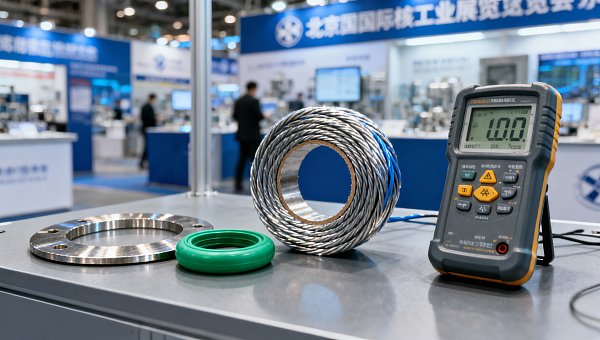
 China-France Nuclear Cooperation Advances at Beijing ExpoChina-France nuclear cooperation advances: mutual recognition for nuclear-grade seals, cables & radiation monitors boosts export readiness for suppliers targeting EU and BRI projects.
 Vietnam’s 4 Provinces Seek AI Tourism Tech in NanningAI tourism tech in demand: Vietnam’s 4 provinces seek AI-guided terminals, multilingual interpretation, AI-CCTV & smart ticketing in Nanning—key opportunity for B2G exporters.
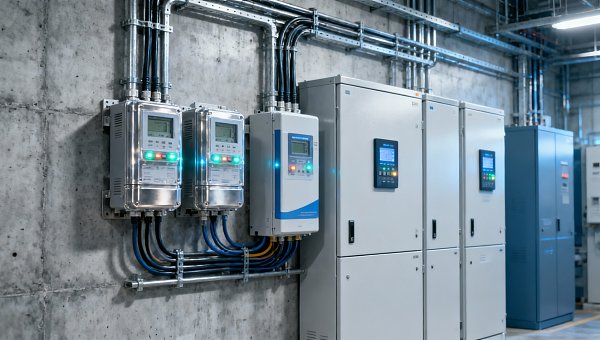
 Q1 2026 China Power Market Trading Up 25.6%: Smart Meters, Storage Export Demand RisesSmart meters, energy storage exports surge as China’s Q1 2026 power market trading jumps 25.6% — key signal for global manufacturers & channel partners.
 China First Country with 5M+ Active Invention PatentsChina first country with 5M+ active invention patents—key for buyers in AI, solar, lithium battery & energy storage. Discover IP implications for sourcing, compliance & supplier vetting.
![]() RCEP Green Packaging Mutual Recognition: China Food Packaging Exempt from Testing in AU/NZ/JP/KRRCEP Green Packaging Mutual Recognition now exempts China's food packaging from retesting in AU/NZ/JP/KR — faster clearance, 30% cost savings, and streamlined exports for brands & manufacturers.
RCEP Green Packaging Mutual Recognition: China Food Packaging Exempt from Testing in AU/NZ/JP/KRRCEP Green Packaging Mutual Recognition now exempts China's food packaging from retesting in AU/NZ/JP/KR — faster clearance, 30% cost savings, and streamlined exports for brands & manufacturers. Shenneng Etorkeqi Green Ammonia Project: Deionized Water Station OperationalShenneng Etorkeqi Green Ammonia Project’s deionized water station is now operational—ISO 8502-3 compliant, fully integrated, and a key milestone for global green hydrogen developers and exporters.
 China Launches 'Model-Data Resonance' Initiative for AI+Manufacturing InteroperabilityModel-Data Resonance initiative boosts AI+manufacturing interoperability—learn how GB/T XXXX–2026 aligns with VDI 2182 & ISA-95 for smoother global factory deployments.
 China’s First Embodied AI Robot Insurance Launched in GuangxiChina’s first embodied AI robot insurance launched in Guangxi—key for robotics exporters, AI hardware makers & global compliance teams. CE-recognized, EU/UK/AU-ready.
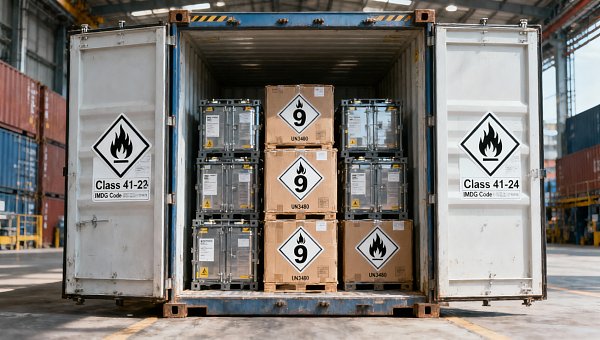
 IMDG Code 41-24 Enforced: UN3480 Lithium Battery Labeling Now MandatoryIMDG Code 41-24 is now mandatory: UN3480 lithium battery labeling, documentation & packaging rules are enforced globally as of 28 April 2026 — avoid port rejections!
 State Grid’s $680M Embodied AI Procurement Signals Export OpportunityEmbodied AI, IEC 61850 & IEC 62443: State Grid’s $680M procurement unlocks export opportunities for compliant industrial robots and smart vision systems in emerging markets.
 IMDG Code 41-24 Enforces UN3480 Class 9 Labeling for Lithium Battery Sea FreightIMDG Code 41-24 mandates UN3480 lithium battery sea freight to display durable Class 9 labels from April 27, 2026—avoid delays & port rejections.
 ESS Key Component Prices Drop ~80%: Quality & Compliance RiseESS key component prices dropped ~80%—but quality & compliance demands surged. Discover how UL 9540A, AS/NZS 5139, and certified BMS/inverters now define market access.
 Mexico NOM-019-SCFI-2026 Effective July 2026: EMC Certification Mandatory for Auto ElectronicsMexico NOM-019-SCFI-2026 mandates EMC certification for auto electronics from July 2026 — ensure compliance now to avoid supply chain disruption & customs delays.
 Red Sea Rerouting Normalized, ECA Surcharge Hits $1,850/TEURed Sea rerouting normalized: ECA surcharge hits $1,850/TEU — 47% of total freight cost. Impacting hand tools, building materials & furniture exporters to Europe. Act now.
 RCEP Green Packaging Mutual Recognition Takes EffectRCEP Green Packaging Mutual Recognition is live—GB/T 37537-2025–certified packaging now enjoys fast-track clearance in Australia, NZ, Japan & Korea. Save time, cut costs, and boost export efficiency.
 Vietnam Suspends SASO Mutual Recognition for Chinese Irrigation EquipmentVietnam suspends SASO mutual recognition for Chinese irrigation equipment—drip tapes, PE fittings, auto valves now require VINAQ-IR certification. Act now to avoid delays & customs hold.
 Key Energy Storage Equipment Prices Drop ~80% in ChinaKey energy storage equipment prices in China dropped ~80% — PCS, BMS & liquid cooling units. Discover implications for compliance, margins & standards enforcement.
") China Releases Green Design Guidelines for Industrial Products (2026)China's 2026 Green Design Guidelines for industrial products—covering PV modules, lithium batteries & smart appliances—link eco-design to green factory certification and export tax rebates starting 2027.
China Releases Green Design Guidelines for Industrial Products (2026)China's 2026 Green Design Guidelines for industrial products—covering PV modules, lithium batteries & smart appliances—link eco-design to green factory certification and export tax rebates starting 2027. Mexico NOM-019-SCFI-2026 Effective: Automotive Electronics Require New EMC CertificationMexico NOM-019-SCFI-2026 is live: Automotive electronics (infotainment, ADAS, domain controllers) now require mandatory EMC certification by July 31, 2026 — act now to avoid customs delays.
 Red Sea Detour Premium Rises to $1,850/TEU Amid Port Congestion ReliefRed Sea Detour Premium hits $1,850/TEU — now 43% of FE–NE freight rates. Discover why this structural surcharge demands urgent supply chain action.
 TÜV Rheinland Updates PLd Certification: EMC Immunity Now Mandatory for Servo DrivesTÜV Rheinland now mandates EN IEC 61000-6-2:2024 EMC immunity testing for PLd certification of servo drives—act before May 26, 2026 to avoid EU market delays.









Popular Tags
Global Trade Insights & Industry
Our mission is to empower global exporters and importers with data-driven insights that foster strategic growth.
Search News
Popular Tags
Industry Overview
The global commercial kitchen equipment market is projected to reach $112 billion by 2027. Driven by urbanization, the rise of e-commerce food delivery, and strict hygiene regulations.