

China Launches 'Model-Data Resonance' Initiative for AI+Manufacturing Interoperability
On April 24, 2026, China’s Ministry of Industry and Information Technology (MIIT) and the National Data Administration jointly launched the ‘Model-Data Resonance’ special action — a coordinated effort to accelerate standardization of data interfaces between industrial AI models and core manufacturing systems. This initiative directly impacts Smart Factory integrators, CNC machining OEMs, and industrial coatings equipment providers by reducing integration time and cost for overseas digital factory deployments.
Event Overview
On April 24, 2026, MIIT and the National Data Administration initiated the ‘Model-Data Resonance’ action. The first phase focuses on developing a national standard (GB/T XXXX–2026) specifying data interfaces for 12 categories of industrial AI models with MES and SCADA systems. Concurrently, the standard is being aligned with Germany’s VDI 2182 and the U.S. ISA-95 standards.
Industries Affected
Smart Factory System Integrators
These firms deploy end-to-end digital production solutions for global clients. Because GB/T XXXX–2026 defines standardized data exchange protocols between AI models and legacy control systems, integrators will face reduced engineering effort when adapting Chinese-made AI modules for European or North American facilities — especially where VDI 2182 or ISA-95 compliance is contractually required.
CNC Machining Equipment OEMs
OEMs supplying machine tools with embedded AI capabilities (e.g., predictive maintenance, adaptive control) rely on seamless integration into customers’ MES environments. Standardized interfaces lower validation overhead and shorten time-to-deployment in export markets — particularly where buyers mandate interoperability with existing plant-level systems.
Industrial Coatings Equipment Manufacturers
Suppliers of automated coating lines — often deployed in automotive and aerospace plants — must ensure real-time process data (e.g., viscosity, temperature, spray parameters) can be ingested by central SCADA platforms. GB/T XXXX–2026 alignment with VDI 2182/ISA-95 reduces custom middleware development for German or U.S.-based Tier 1 customers.
What Enterprises and Practitioners Should Monitor and Do Now
Track official publication and implementation timelines for GB/T XXXX–2026
The national standard number (GB/T XXXX–2026) remains provisional. Stakeholders should monitor announcements from the Standardization Administration of China (SAC) for the final designation, effective date, and conformance testing requirements — as these determine when certification or vendor qualification may become mandatory.
Assess interface compatibility for current and upcoming export product lines
Manufacturers exporting to EU or U.S. markets should map their existing MES/SCADA integration architecture against VDI 2182 (for Germany/Austria) and ISA-95 Part 1 & 2 (for North America). Early gap analysis helps prioritize retrofitting or documentation updates ahead of formal adoption cycles.
Distinguish between policy signaling and near-term operational impact
While the ‘Model-Data Resonance’ action signals strategic intent, GB/T XXXX–2026 is not yet mandatory. Its influence will grow gradually — first via government procurement preferences, then through industry consortia adoption (e.g., China Machinery Industry Federation), and eventually via OEM sourcing requirements. Immediate compliance is not required, but technical readiness should be advanced incrementally.
Prepare technical documentation and test reports for cross-standard alignment
Export-oriented vendors should begin compiling interface specification sheets, data schema definitions, and interoperability test logs — especially those demonstrating mapping between GB/T XXXX–2026-defined fields and equivalent VDI 2182/ISA-95 objects. These materials support faster customer validation and reduce pre-sale engineering friction.
Editorial Perspective / Industry Observation
Observably, this initiative is less about immediate regulatory enforcement and more about infrastructure-level coordination: it seeks to align China’s domestic AI-for-manufacturing ecosystem with internationally recognized automation frameworks. Analysis shows that its primary value lies in de-risking interoperability — not replacing existing standards, but bridging them. From an industry perspective, it functions as a signal of maturing technical governance in China’s industrial AI sector, rather than a binding compliance milestone. Continued observation is warranted on how quickly downstream adopters (e.g., automotive OEMs, semiconductor fabs) reference GB/T XXXX–2026 in RFPs or supplier qualification checklists.

Conclusion
The ‘Model-Data Resonance’ action marks a structured step toward reducing technical fragmentation in global AI-enabled manufacturing deployments. It does not alter current export rules or certification pathways, but it does shift the baseline for interoperability expectations — especially for Chinese-origin equipment targeting digitally mature factories abroad. Currently, it is best understood as an enabler-in-development: valuable for strategic planning and technical preparation, but not yet a determinant of market access.
Information Sources
Primary source: Joint announcement by the Ministry of Industry and Information Technology (MIIT) and the National Data Administration of China, issued April 24, 2026.
Noted for ongoing observation: Final designation and publication status of GB/T XXXX–2026 by the Standardization Administration of China (SAC); adoption signals from multinational manufacturers’ procurement or engineering departments.
Recommended News
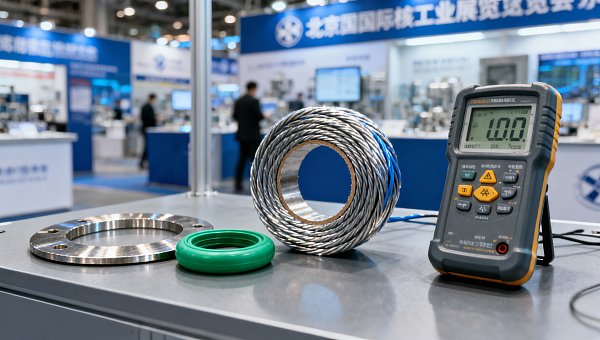
 China-France Nuclear Cooperation Advances at Beijing ExpoChina-France nuclear cooperation advances: mutual recognition for nuclear-grade seals, cables & radiation monitors boosts export readiness for suppliers targeting EU and BRI projects.
 Vietnam’s 4 Provinces Seek AI Tourism Tech in NanningAI tourism tech in demand: Vietnam’s 4 provinces seek AI-guided terminals, multilingual interpretation, AI-CCTV & smart ticketing in Nanning—key opportunity for B2G exporters.
 Q1 2026 China Power Market Trading Up 25.6%: Smart Meters, Storage Export Demand RisesSmart meters, energy storage exports surge as China’s Q1 2026 power market trading jumps 25.6% — key signal for global manufacturers & channel partners.
 China First Country with 5M+ Active Invention PatentsChina first country with 5M+ active invention patents—key for buyers in AI, solar, lithium battery & energy storage. Discover IP implications for sourcing, compliance & supplier vetting.
![]() RCEP Green Packaging Mutual Recognition: China Food Packaging Exempt from Testing in AU/NZ/JP/KRRCEP Green Packaging Mutual Recognition now exempts China's food packaging from retesting in AU/NZ/JP/KR — faster clearance, 30% cost savings, and streamlined exports for brands & manufacturers.
RCEP Green Packaging Mutual Recognition: China Food Packaging Exempt from Testing in AU/NZ/JP/KRRCEP Green Packaging Mutual Recognition now exempts China's food packaging from retesting in AU/NZ/JP/KR — faster clearance, 30% cost savings, and streamlined exports for brands & manufacturers. Shenneng Etorkeqi Green Ammonia Project: Deionized Water Station OperationalShenneng Etorkeqi Green Ammonia Project’s deionized water station is now operational—ISO 8502-3 compliant, fully integrated, and a key milestone for global green hydrogen developers and exporters.
 China Launches 'Model-Data Resonance' Initiative for AI+Manufacturing InteroperabilityModel-Data Resonance initiative boosts AI+manufacturing interoperability—learn how GB/T XXXX–2026 aligns with VDI 2182 & ISA-95 for smoother global factory deployments.
 China’s First Embodied AI Robot Insurance Launched in GuangxiChina’s first embodied AI robot insurance launched in Guangxi—key for robotics exporters, AI hardware makers & global compliance teams. CE-recognized, EU/UK/AU-ready.
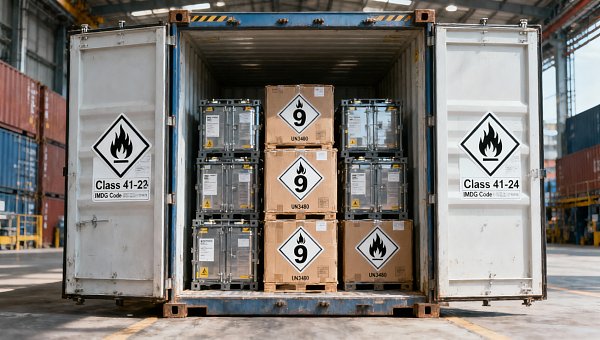
 IMDG Code 41-24 Enforced: UN3480 Lithium Battery Labeling Now MandatoryIMDG Code 41-24 is now mandatory: UN3480 lithium battery labeling, documentation & packaging rules are enforced globally as of 28 April 2026 — avoid port rejections!
 State Grid’s $680M Embodied AI Procurement Signals Export OpportunityEmbodied AI, IEC 61850 & IEC 62443: State Grid’s $680M procurement unlocks export opportunities for compliant industrial robots and smart vision systems in emerging markets.
 IMDG Code 41-24 Enforces UN3480 Class 9 Labeling for Lithium Battery Sea FreightIMDG Code 41-24 mandates UN3480 lithium battery sea freight to display durable Class 9 labels from April 27, 2026—avoid delays & port rejections.
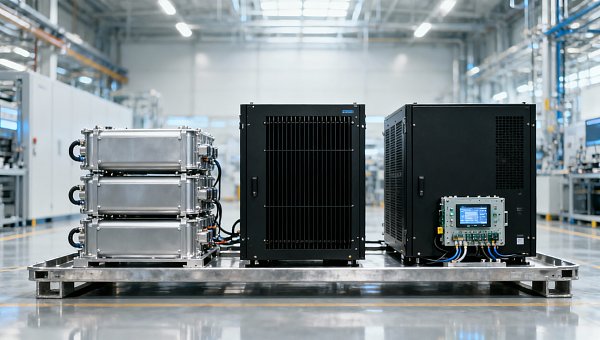
 ESS Key Component Prices Drop ~80%: Quality & Compliance RiseESS key component prices dropped ~80%—but quality & compliance demands surged. Discover how UL 9540A, AS/NZS 5139, and certified BMS/inverters now define market access.
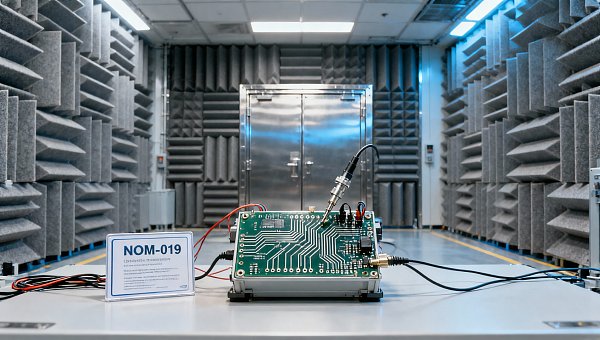
 Mexico NOM-019-SCFI-2026 Effective July 2026: EMC Certification Mandatory for Auto ElectronicsMexico NOM-019-SCFI-2026 mandates EMC certification for auto electronics from July 2026 — ensure compliance now to avoid supply chain disruption & customs delays.
 Red Sea Rerouting Normalized, ECA Surcharge Hits $1,850/TEURed Sea rerouting normalized: ECA surcharge hits $1,850/TEU — 47% of total freight cost. Impacting hand tools, building materials & furniture exporters to Europe. Act now.
 RCEP Green Packaging Mutual Recognition Takes EffectRCEP Green Packaging Mutual Recognition is live—GB/T 37537-2025–certified packaging now enjoys fast-track clearance in Australia, NZ, Japan & Korea. Save time, cut costs, and boost export efficiency.
 Vietnam Suspends SASO Mutual Recognition for Chinese Irrigation EquipmentVietnam suspends SASO mutual recognition for Chinese irrigation equipment—drip tapes, PE fittings, auto valves now require VINAQ-IR certification. Act now to avoid delays & customs hold.
 Key Energy Storage Equipment Prices Drop ~80% in ChinaKey energy storage equipment prices in China dropped ~80% — PCS, BMS & liquid cooling units. Discover implications for compliance, margins & standards enforcement.
") China Releases Green Design Guidelines for Industrial Products (2026)China's 2026 Green Design Guidelines for industrial products—covering PV modules, lithium batteries & smart appliances—link eco-design to green factory certification and export tax rebates starting 2027.
China Releases Green Design Guidelines for Industrial Products (2026)China's 2026 Green Design Guidelines for industrial products—covering PV modules, lithium batteries & smart appliances—link eco-design to green factory certification and export tax rebates starting 2027. Mexico NOM-019-SCFI-2026 Effective: Automotive Electronics Require New EMC CertificationMexico NOM-019-SCFI-2026 is live: Automotive electronics (infotainment, ADAS, domain controllers) now require mandatory EMC certification by July 31, 2026 — act now to avoid customs delays.
 Red Sea Detour Premium Rises to $1,850/TEU Amid Port Congestion ReliefRed Sea Detour Premium hits $1,850/TEU — now 43% of FE–NE freight rates. Discover why this structural surcharge demands urgent supply chain action.
 TÜV Rheinland Updates PLd Certification: EMC Immunity Now Mandatory for Servo DrivesTÜV Rheinland now mandates EN IEC 61000-6-2:2024 EMC immunity testing for PLd certification of servo drives—act before May 26, 2026 to avoid EU market delays.

















Popular Tags
Global Trade Insights & Industry
Our mission is to empower global exporters and importers with data-driven insights that foster strategic growth.
Search News
Popular Tags
Industry Overview
The global commercial kitchen equipment market is projected to reach $112 billion by 2027. Driven by urbanization, the rise of e-commerce food delivery, and strict hygiene regulations.