

Radiators Cost by Material, Size, and Production Method
Understanding radiator cost is not just about comparing price tags. For procurement teams, distributors, and market researchers, the real question is which combination of material, size, and production method delivers the best balance of cost, durability, supply stability, and application fit. In practice, aluminum radiators are often favored for their lightweight performance and manufacturing efficiency, copper-brass models tend to carry higher material and labor costs but offer repairability, and radiator size directly affects raw material consumption, freight, and installation economics. Production method adds another layer, especially when buyers compare automated large-scale output with lower-volume custom fabrication. Much like CNC machining cost, sheet metal forming, and sheet metal welding influence part pricing in industrial sourcing, radiator manufacturing economics should be evaluated as a total-value decision rather than a unit-price decision.
What are buyers really trying to learn when comparing radiator costs?
Most users searching for radiators cost by material, size, and production method are not looking for a single universal price. They are usually trying to answer one of four practical questions:
- Which radiator material gives the best cost-performance ratio?
- How much does radiator size increase manufacturing and logistics cost?
- Why do similar-looking radiators have very different supplier quotations?
- Which production method is better for bulk procurement, aftermarket distribution, or custom industrial use?
For B2B readers, the most important insight is that radiator pricing is layered. A low quoted unit price may still lead to higher total sourcing cost if the product has shorter service life, weaker corrosion resistance, inconsistent weld quality, or high shipping volume. That is why experienced buyers compare radiators not only by purchase price, but also by warranty risk, maintenance frequency, replacement cycle, and suitability for target markets.
Which material has the biggest impact on radiator cost?
Material is one of the most decisive cost drivers because it shapes raw material expense, processing complexity, weight, heat transfer behavior, and long-term service value.
Aluminum radiators
Aluminum is widely used in modern automotive and industrial radiator production because it is lightweight, corrosion-resistant in many applications, and well suited to high-volume manufacturing. In many export markets, aluminum radiators offer a strong balance between price and performance. They often cost less to mass-produce than more labor-intensive alternatives, especially when manufacturers use automated brazing lines.
For buyers, aluminum products are often attractive because they help reduce freight cost and support standardization across product ranges. However, the exact cost still depends on alloy grade, fin density, tube design, and welding or brazing quality.
Copper-brass radiators
Copper-brass radiators generally have higher material costs due to copper pricing, and they may also require more labor during assembly and joining. This often makes them more expensive than standard aluminum models. Even so, they remain relevant in certain commercial, heavy-duty, vintage, and repair-oriented markets because they can be easier to service and rebuild.
Distributors serving maintenance-heavy regions may still find value in copper-brass radiators where repair culture is strong and end users prioritize serviceability over lightweight design.
Plastic-aluminum combinations
Many mass-market radiators use aluminum cores with plastic tanks. This configuration can reduce production cost and weight, making it highly competitive in automotive aftermarket channels. The tradeoff is that durability under high thermal stress may vary depending on resin quality, crimping precision, and operating conditions.
Stainless steel or specialty materials
In specialized industrial environments, buyers may encounter radiators or heat exchangers using higher-cost metals for corrosion resistance or pressure performance. These products sit in a different pricing category and are usually selected based on application requirements rather than cost alone.
In short, if a buyer is comparing material economics only at the raw metal level, the analysis is incomplete. Material choice affects not just factory cost, but also transport, installation, maintenance, and replacement risk.
How does radiator size change the final price?
Radiator size affects cost in more ways than many buyers initially expect. A larger radiator does not simply use more metal; it also influences tooling use, assembly time, packaging dimensions, and shipping efficiency.
Raw material consumption
Larger cores require more tubes, fins, header material, and tank capacity. This directly increases material input. If the design also requires thicker walls, reinforced joints, or higher-pressure capability, the cost rises further.
Production complexity
As radiator size increases, maintaining dimensional consistency and weld integrity may become more demanding. Larger industrial or commercial vehicle radiators can require more precise control during brazing, forming, or welding stages. This is especially relevant when tolerance and leak prevention are critical.
Packaging and freight
For exporters and importers, size has a major effect on logistics. Oversized radiators reduce container efficiency, increase protective packaging requirements, and raise the risk of shipping damage. In some procurement cases, freight and breakage risk can materially change the total landed cost more than a modest difference in factory quotation.
Installation and maintenance implications
Bigger units may improve cooling performance, but they can also affect installation space, replacement compatibility, and downstream service cost. This ties radiator pricing to broader car maintenance cost and car maintenance price considerations, especially in fleet, repair, and aftermarket contexts.
For sourcing teams, the key point is simple: size should be evaluated against cooling requirement, packaging efficiency, and market-specific installation standards, not just against nominal manufacturing cost.
Why does production method create major price differences?
Two radiators made from similar materials and built to similar dimensions can still have significantly different costs because their production methods are different. This is often where quotation gaps become most confusing for buyers.
Automated brazing for high-volume production
In large-scale radiator manufacturing, automated brazing is commonly used for aluminum designs. This method supports consistency, high throughput, and lower unit cost at scale. It is usually the preferred route for OEM-style and mainstream aftermarket supply.
For buyers placing repeat volume orders, automated production often delivers the best pricing stability and quality consistency. However, it may require tooling investment and minimum order volumes that are not ideal for niche demand.
Manual or semi-automatic welding
Custom radiators, performance applications, or lower-volume specialty products often involve manual TIG or MIG welding. This increases labor content and quality dependence on technician skill. Such products may cost more per unit but are suitable where design flexibility matters.
This cost structure is closely related to how sheet metal welding and fabrication labor influence other industrial components. Lower automation generally means higher labor cost, longer lead times, and greater variation between suppliers.
Sheet metal forming and tank fabrication
Where radiator tanks, brackets, or outer components require stamping, bending, or custom shaping, sheet metal forming becomes an important cost element. Tooling can reduce cost in volume production, but it increases upfront investment. For smaller runs, buyers may pay more per piece because setup and changeover costs are spread across fewer units.
Machined fittings and custom interfaces
If a radiator design includes precision-machined ports, adapters, or mounting interfaces, CNC machining cost can become relevant. This is especially true in industrial cooling systems, custom vehicles, or applications with non-standard fluid connections. Machined features typically improve compatibility and performance, but they increase both processing time and inspection requirements.
From a procurement perspective, production method often reveals whether a supplier is optimized for mass-market competitiveness or for specialized, higher-margin manufacturing.
What cost factors are often hidden in supplier quotations?
Many buyers focus on ex-factory price and overlook cost variables that later affect profitability or operational efficiency. The following hidden factors deserve close attention during vendor evaluation:
- Leak testing standards: More rigorous testing can increase factory cost but reduce field failure risk.
- Coating and corrosion protection: Surface treatment quality affects durability in different climates.
- Core thickness and fin density: These influence cooling performance and material usage.
- Tank and seam durability: Weak joining methods can create warranty issues.
- Packaging design: Better packaging may lower damage claims during export.
- Certification and compliance: Some markets require higher documentation and quality control costs.
- MOQ and tooling amortization: Unit pricing may look high or low depending on order volume.
For distributors and sourcing managers, these hidden factors often explain why the cheapest radiator is not the lowest-cost option over the full selling cycle.
How should procurement teams compare radiator options in a practical way?
A useful procurement comparison should balance factory price with commercial and operational outcomes. Instead of asking only “Which radiator is cheaper?”, buyers should ask “Which radiator creates the best total value in our target channel?”
For importers and distributors
Focus on landed cost, defect rate, packing efficiency, model coverage, and after-sales claims. In many cases, a slightly higher-cost radiator from a stable supplier produces better margins because return rates are lower and customer trust is stronger.
For purchasing teams in industrial or fleet settings
Evaluate service life, maintenance interval, repairability, and compatibility with local service capabilities. A unit with higher upfront cost may reduce downtime and lower lifetime maintenance exposure.
For market researchers and business evaluators
Track how radiator cost aligns with commodity prices, regional manufacturing strengths, and channel demand. Aluminum-heavy supply chains may show different pricing behavior than copper-based ones, especially during periods of raw material volatility.
For custom or project-based sourcing
Review tooling cost, sample lead time, engineering support, and quality assurance process. In non-standard projects, production method and supplier capability may matter more than nominal material cost.
A practical sourcing checklist should include:
- Material type and alloy specification
- Dimensions and cooling performance requirements
- Joining method and production scale
- Testing standards and quality documentation
- Packaging and shipping efficiency
- Warranty risk and maintenance implications
- MOQ, tooling, and lead-time structure
What is the broader business takeaway for radiator cost analysis?
Radiator pricing should be understood as part of a larger industrial sourcing framework. Just as buyers assess CNC machining cost, sheet metal forming, and sheet metal welding when evaluating fabricated components, radiators should be analyzed through the combined lens of materials, process, volume, and lifecycle economics.
For global trade participants, this matters because cost competitiveness is no longer based on unit price alone. Buyers need products that satisfy performance requirements, reduce maintenance exposure, travel safely through international logistics channels, and fit the quality expectations of local markets. The right radiator choice depends on whether the priority is low-cost mass distribution, high-durability service markets, industrial project reliability, or custom-engineered cooling performance.
In summary, radiators cost by material, size, and production method cannot be reduced to a simple average market price. Material selection shapes both manufacturing and service economics. Size affects not just metal use but also shipping, packaging, and installation efficiency. Production method determines whether the product is optimized for scale, customization, or repairability. For procurement professionals, distributors, and business evaluators, the smartest decision comes from comparing total value, not just initial quotation. That approach leads to better sourcing outcomes, stronger channel performance, and more reliable long-term cost control.
Recommended News
 IMDG Code 41-24 Enforces UN3480 Class 9 Labeling for Lithium Battery Sea FreightIMDG Code 41-24 mandates UN3480 lithium battery sea freight to display durable Class 9 labels from April 27, 2026—avoid delays & port rejections.
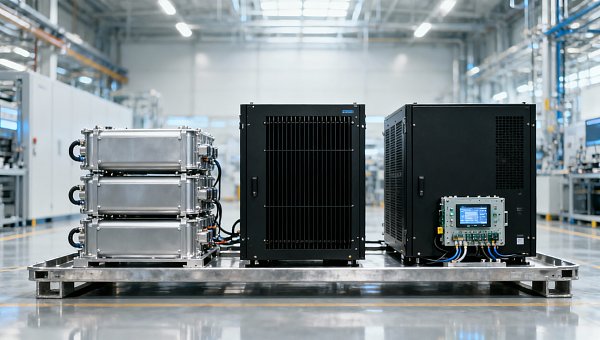
 ESS Key Component Prices Drop ~80%: Quality & Compliance RiseESS key component prices dropped ~80%—but quality & compliance demands surged. Discover how UL 9540A, AS/NZS 5139, and certified BMS/inverters now define market access.
 Mexico NOM-019-SCFI-2026 Effective July 2026: EMC Certification Mandatory for Auto ElectronicsMexico NOM-019-SCFI-2026 mandates EMC certification for auto electronics from July 2026 — ensure compliance now to avoid supply chain disruption & customs delays.
 Red Sea Rerouting Normalized, ECA Surcharge Hits $1,850/TEURed Sea rerouting normalized: ECA surcharge hits $1,850/TEU — 47% of total freight cost. Impacting hand tools, building materials & furniture exporters to Europe. Act now.
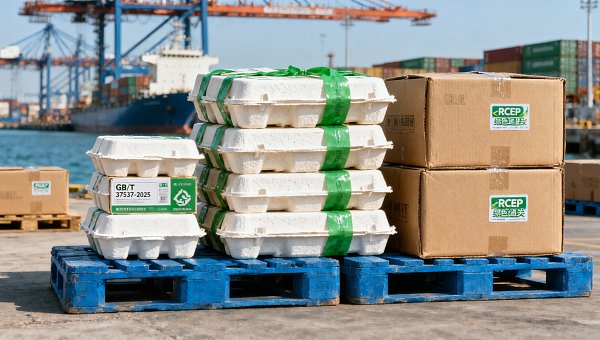
 RCEP Green Packaging Mutual Recognition Takes EffectRCEP Green Packaging Mutual Recognition is live—GB/T 37537-2025–certified packaging now enjoys fast-track clearance in Australia, NZ, Japan & Korea. Save time, cut costs, and boost export efficiency.
 Vietnam Suspends SASO Mutual Recognition for Chinese Irrigation EquipmentVietnam suspends SASO mutual recognition for Chinese irrigation equipment—drip tapes, PE fittings, auto valves now require VINAQ-IR certification. Act now to avoid delays & customs hold.
 Key Energy Storage Equipment Prices Drop ~80% in ChinaKey energy storage equipment prices in China dropped ~80% — PCS, BMS & liquid cooling units. Discover implications for compliance, margins & standards enforcement.
") China Releases Green Design Guidelines for Industrial Products (2026)China's 2026 Green Design Guidelines for industrial products—covering PV modules, lithium batteries & smart appliances—link eco-design to green factory certification and export tax rebates starting 2027.
China Releases Green Design Guidelines for Industrial Products (2026)China's 2026 Green Design Guidelines for industrial products—covering PV modules, lithium batteries & smart appliances—link eco-design to green factory certification and export tax rebates starting 2027. Mexico NOM-019-SCFI-2026 Effective: Automotive Electronics Require New EMC CertificationMexico NOM-019-SCFI-2026 is live: Automotive electronics (infotainment, ADAS, domain controllers) now require mandatory EMC certification by July 31, 2026 — act now to avoid customs delays.
 Red Sea Detour Premium Rises to $1,850/TEU Amid Port Congestion ReliefRed Sea Detour Premium hits $1,850/TEU — now 43% of FE–NE freight rates. Discover why this structural surcharge demands urgent supply chain action.
 TÜV Rheinland Updates PLd Certification: EMC Immunity Now Mandatory for Servo DrivesTÜV Rheinland now mandates EN IEC 61000-6-2:2024 EMC immunity testing for PLd certification of servo drives—act before May 26, 2026 to avoid EU market delays.
 RCEP Green Packaging Mutual Recognition Effective Apr 26, 2026RCEP Green Packaging Mutual Recognition takes effect Apr 26, 2026—unlock faster customs clearance & cost savings for eco-friendly packaging exporters to AU, NZ, JP, KR.
 FDA Final Rule: AI Diagnostic Devices Must Submit Bias Impact ReportsFDA mandates AI diagnostic devices submit third-party-verified bias impact reports—key for 510(k)/De Novo submissions. Act now to ensure compliance & market access.
 Vietnam Suspends SASO Mutual Recognition for Chinese Irrigation EquipmentVietnam suspends SASO mutual recognition for Chinese irrigation equipment—urgent QCVN certification now required for drip tapes, sprinklers, valves & smart controllers.
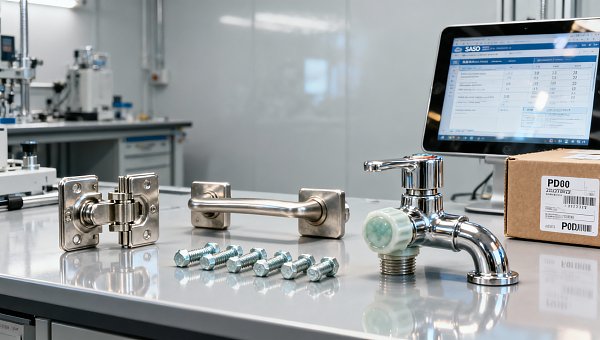
 SABER Phase II Launch: Building Hardware Must Submit Digital Type Test Reports & PIDSABER Phase II now requires digital type test reports & PID for building hardware — fasteners, door/window, bathroom fixtures. Avoid port rejection: ensure PID-bound compliance before shipment.
 IMDG Code 41-24 Enforced: UN3480 Lithium Batteries Require Class 9 LabelsUN3480 lithium batteries now require ISO 7225-compliant Class 9 labels under IMDG Code 41-24 — enforceable globally from 26 April 2026. Act now to avoid shipment delays!
 How to Compare an Online Trade Platform Before Signing Up?Compare an online trade platform with confidence—evaluate data quality, supplier trust, market insights, and search tools for smarter sourcing across cement price, MRI scanners cost, and more.
 Which Smart Home Automation Devices Are Easiest to Use?Smart home automation devices made simple: compare easy-to-use smart home automation devices, home improvement tools integration, and buyer tips from a business intelligence platform.
 Are Auto Detailing Services Worth the Cost?Auto detailing services: discover if the cost is justified, how pricing varies, and how a business intelligence platform helps buyers compare value, quality, and long-term ROI.
 What Makes Sustainable Fashion Brands Worth Buying?Sustainable fashion brands deliver transparency, quality, and lower risk. See how a business intelligence platform helps buyers verify value, avoid greenwashing, and source smarter.
 How to Choose a Business Intelligence Platform in 2026?Business intelligence platform selection in 2026: compare data coverage, pricing insights, online trade platform signals, Cement price trends, and MRI scanners cost to choose smarter, faster.

















Popular Tags
Global Trade Insights & Industry
Our mission is to empower global exporters and importers with data-driven insights that foster strategic growth.
Search News
Popular Tags
Industry Overview
The global commercial kitchen equipment market is projected to reach $112 billion by 2027. Driven by urbanization, the rise of e-commerce food delivery, and strict hygiene regulations.