

Dash cams with night vision: what footage quality can you expect?
For buyers, distributors, and market researchers evaluating dash cams with night vision, the short answer is this: night footage quality can range from barely usable to clear enough to identify plates and incidents, but only under the right combination of sensor size, image processing, lens quality, and installation conditions. Marketing terms like “night vision,” “starlight,” or “HDR” do not guarantee the same real-world result. For procurement decisions, the key is not whether a dash cam claims night vision, but what level of detail it can reliably capture in urban streets, highways, parking lots, and low-light roadside environments.
That matters because for commercial buyers and channel partners, footage quality affects product returns, user satisfaction, brand positioning, and after-sales credibility. Much like evaluating supply chain software or sourcing from an outdoor furniture manufacturer, the real decision comes down to performance under practical conditions rather than spec-sheet language alone.
What footage quality should you realistically expect from a night vision dash cam?
In realistic terms, a good night vision dash cam should provide:
- Clear lane, vehicle, and pedestrian visibility in lit urban environments
- Recognizable vehicle shape, direction, and incident context on darker roads
- Readable license plates only in favorable conditions, not all the time
- Balanced exposure when facing headlights, street lamps, and reflective signs
- Reduced motion blur at moderate speed, especially with front-facing cameras
What many buyers misunderstand is that even premium dash cams do not guarantee perfect plate capture at night. Fast-moving traffic, glare, rain, dirty windshields, and weak image processing can quickly reduce sharpness. So the right expectation is not “cinematic night recording,” but “reliable incident evidence with varying detail depending on environment.”
For B2B buyers, this distinction is critical. If your customer base includes fleet operators, rideshare drivers, distributors, or safety-conscious private vehicle owners, the purchasing benchmark should be evidence usability rather than headline resolution alone.
Why do some dash cams with night vision perform much better than others?
The biggest differences in night footage quality usually come from four technical areas.
1. Image sensor quality
The sensor is often more important than advertised resolution. A well-optimized 2K or 1080p dash cam with a strong low-light sensor can outperform a cheaper 4K model at night. Larger sensors generally collect more light, which improves brightness, noise control, and detail retention.
2. Image processing and HDR/WDR performance
At night, cameras must handle bright headlights and dark surroundings at the same time. Good HDR or WDR tuning helps preserve details in shadows without blowing out bright areas. Weak processing can make footage look overly dark, washed out, or full of glare.
3. Lens quality and aperture
A lens with good glass quality and a wide aperture allows more light to reach the sensor. This supports brighter images in low-light conditions. However, lens quality is not just about brightness. Poor optics can reduce edge sharpness, increase flare, and distort important details.
4. Compression, frame rate, and exposure tuning
Night video quality can suffer when cameras apply aggressive compression or use exposure settings that create blur. A brighter image is not always better if moving vehicles become unreadable. The best dash cams balance brightness, sharpness, and motion control.
For sourcing teams, these factors are more useful than broad marketing labels. If a supplier cannot explain sensor model, HDR logic, lens aperture, and bitrate strategy, it becomes harder to validate actual product value.
Can night vision dash cams capture license plates clearly?
This is often the most important buyer question, and the honest answer is: sometimes, but not consistently in every scenario.
License plate capture at night depends on:
- Distance between vehicles
- Vehicle speed and relative motion
- Headlight glare
- Road lighting
- Camera mounting angle
- Windshield cleanliness
- Exposure and shutter tuning
In slow traffic, parking areas, toll lanes, or well-lit city roads, a high-quality dash cam with night vision may capture readable plates. On dark highways or in rainy conditions, plate readability drops quickly, even on strong models.
This is why experienced buyers should avoid using “plate capture at night” as the only benchmark. A more practical evaluation framework includes:
- Can the footage clearly show fault or incident sequence?
- Can it identify vehicle type, color, and movement direction?
- Can it preserve enough detail for insurance or dispute support?
- Can it maintain visibility under glare-heavy traffic conditions?
For distributors and resellers, setting realistic expectations also reduces return risk and customer complaints caused by overpromised performance claims.
Which night driving conditions affect footage quality the most?
Real-world performance changes dramatically depending on where and how the camera is used. Buyers should review footage samples across multiple conditions rather than one ideal demo clip.
Urban night driving
Street lighting usually improves visibility, but glare from headlights, traffic signals, and reflective surfaces becomes a major challenge. Cameras with better dynamic range tend to perform more consistently here.
Dark highways and rural roads
These environments expose true low-light capability. Footage quality often depends heavily on sensor sensitivity and lens performance because there is little ambient light available.
Rain, fog, and wet roads
Moisture, reflections, and windshield interference can significantly reduce detail. Even good night vision dash cams may struggle in these conditions.
Parking surveillance at night
For models with parking mode, image quality depends on standby power strategy, motion detection sensitivity, and low-light processing. Stationary scenes may look better than moving traffic because motion blur is reduced.
If the target market includes commercial fleets or security-focused consumers, testing across these use cases is more valuable than comparing basic resolution claims.
How should buyers evaluate dash cams with night vision before purchasing?
For procurement specialists, business evaluators, and channel partners, the best approach is to build a practical review checklist.
Ask for unedited sample footage
Request original night recordings, not promotional clips. Samples should include city driving, dark roads, opposing headlights, and wet-weather scenes if possible.
Review sensor and chipset transparency
Suppliers that disclose sensor platform, processing chipset, aperture, and video bitrate usually provide stronger product transparency than those relying only on generic terms.
Compare actual evidence quality, not just sharpness
Look for whether the footage supports incident interpretation. In many commercial scenarios, usable evidence is more important than visually impressive brightness.
Check front and rear camera differences
Rear cameras often perform worse at night due to smaller sensors or lower bitrates. If dual-channel systems are being sourced, both channels need review.
Assess installation sensitivity
A dash cam with strong low-light hardware can still underperform if mounted incorrectly, obstructed by tint, or placed behind a dirty windshield area. Ask suppliers for installation guidance and support materials.
Validate claims against return-rate risk
For distributors and private-label buyers, poor night performance is a common cause of dissatisfaction. Product testing should include likely customer complaint scenarios, especially around plate visibility and glare control.
What product features usually add the most value for business buyers?
Not every feature contributes equally to night footage quality. For commercial decision-makers, the highest-value features often include:
- Proven low-light sensor performance
- Well-tuned HDR or WDR
- Stable video bitrate and efficient compression
- Reliable parking mode recording
- Clear front-and-rear night performance balance
- Consistent firmware optimization
- Low return risk due to realistic product positioning
By contrast, some heavily advertised features may have limited practical value if the imaging core is weak. For example, very high resolution alone does not guarantee better night video. Many buyers discover that a balanced, well-tuned product is more commercially viable than a spec-heavy model with inconsistent field performance.
What should distributors, sourcing teams, and market researchers conclude?
The core takeaway is that dash cams with night vision can deliver useful and commercially valuable footage, but performance varies widely across products and use cases. Buyers should expect the best models to provide strong incident documentation, decent scene clarity, and occasional license plate readability in favorable conditions. They should not expect every model to produce consistently sharp, courtroom-style footage in all low-light situations.
For B2B evaluation, the smartest approach is to judge night vision dash cams by real-world evidence quality, environmental consistency, supplier transparency, and end-user expectation fit. That gives procurement teams and channel partners a more reliable basis for product selection, market positioning, and long-term customer satisfaction.
In short, the question is not whether a dash cam has night vision, but how well that night vision performs when conditions are imperfect. That is the standard that helps buyers reduce risk, understand product value, and make a more confident sourcing decision.
Recommended News
 IMDG Code 41-24 Enforces UN3480 Class 9 Labeling for Lithium Battery Sea FreightIMDG Code 41-24 mandates UN3480 lithium battery sea freight to display durable Class 9 labels from April 27, 2026—avoid delays & port rejections.
 ESS Key Component Prices Drop ~80%: Quality & Compliance RiseESS key component prices dropped ~80%—but quality & compliance demands surged. Discover how UL 9540A, AS/NZS 5139, and certified BMS/inverters now define market access.
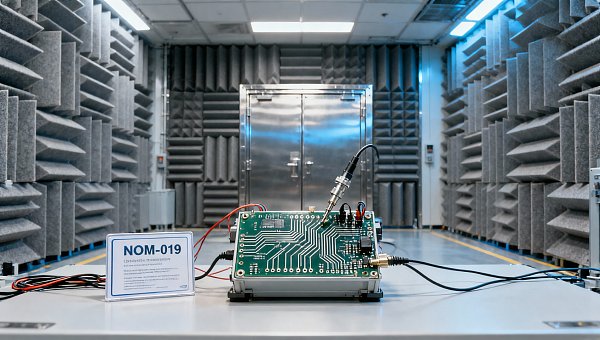
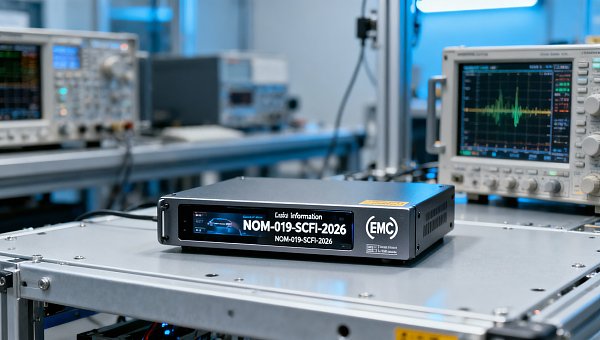
 Mexico NOM-019-SCFI-2026 Effective July 2026: EMC Certification Mandatory for Auto ElectronicsMexico NOM-019-SCFI-2026 mandates EMC certification for auto electronics from July 2026 — ensure compliance now to avoid supply chain disruption & customs delays.
 Red Sea Rerouting Normalized, ECA Surcharge Hits $1,850/TEURed Sea rerouting normalized: ECA surcharge hits $1,850/TEU — 47% of total freight cost. Impacting hand tools, building materials & furniture exporters to Europe. Act now.
 RCEP Green Packaging Mutual Recognition Takes EffectRCEP Green Packaging Mutual Recognition is live—GB/T 37537-2025–certified packaging now enjoys fast-track clearance in Australia, NZ, Japan & Korea. Save time, cut costs, and boost export efficiency.
 Vietnam Suspends SASO Mutual Recognition for Chinese Irrigation EquipmentVietnam suspends SASO mutual recognition for Chinese irrigation equipment—drip tapes, PE fittings, auto valves now require VINAQ-IR certification. Act now to avoid delays & customs hold.
 Key Energy Storage Equipment Prices Drop ~80% in ChinaKey energy storage equipment prices in China dropped ~80% — PCS, BMS & liquid cooling units. Discover implications for compliance, margins & standards enforcement.
") China Releases Green Design Guidelines for Industrial Products (2026)China's 2026 Green Design Guidelines for industrial products—covering PV modules, lithium batteries & smart appliances—link eco-design to green factory certification and export tax rebates starting 2027.
China Releases Green Design Guidelines for Industrial Products (2026)China's 2026 Green Design Guidelines for industrial products—covering PV modules, lithium batteries & smart appliances—link eco-design to green factory certification and export tax rebates starting 2027. Mexico NOM-019-SCFI-2026 Effective: Automotive Electronics Require New EMC CertificationMexico NOM-019-SCFI-2026 is live: Automotive electronics (infotainment, ADAS, domain controllers) now require mandatory EMC certification by July 31, 2026 — act now to avoid customs delays.
 Red Sea Detour Premium Rises to $1,850/TEU Amid Port Congestion ReliefRed Sea Detour Premium hits $1,850/TEU — now 43% of FE–NE freight rates. Discover why this structural surcharge demands urgent supply chain action.
 TÜV Rheinland Updates PLd Certification: EMC Immunity Now Mandatory for Servo DrivesTÜV Rheinland now mandates EN IEC 61000-6-2:2024 EMC immunity testing for PLd certification of servo drives—act before May 26, 2026 to avoid EU market delays.
 RCEP Green Packaging Mutual Recognition Effective Apr 26, 2026RCEP Green Packaging Mutual Recognition takes effect Apr 26, 2026—unlock faster customs clearance & cost savings for eco-friendly packaging exporters to AU, NZ, JP, KR.
 FDA Final Rule: AI Diagnostic Devices Must Submit Bias Impact ReportsFDA mandates AI diagnostic devices submit third-party-verified bias impact reports—key for 510(k)/De Novo submissions. Act now to ensure compliance & market access.
 Vietnam Suspends SASO Mutual Recognition for Chinese Irrigation EquipmentVietnam suspends SASO mutual recognition for Chinese irrigation equipment—urgent QCVN certification now required for drip tapes, sprinklers, valves & smart controllers.
 SABER Phase II Launch: Building Hardware Must Submit Digital Type Test Reports & PIDSABER Phase II now requires digital type test reports & PID for building hardware — fasteners, door/window, bathroom fixtures. Avoid port rejection: ensure PID-bound compliance before shipment.
 IMDG Code 41-24 Enforced: UN3480 Lithium Batteries Require Class 9 LabelsUN3480 lithium batteries now require ISO 7225-compliant Class 9 labels under IMDG Code 41-24 — enforceable globally from 26 April 2026. Act now to avoid shipment delays!
 Which Home Improvement Tools Do You Really Need First?Home improvement tools guide: discover the first essentials to buy, compare smart home automation devices and online trade platform sourcing tips, and make safer, smarter purchases.
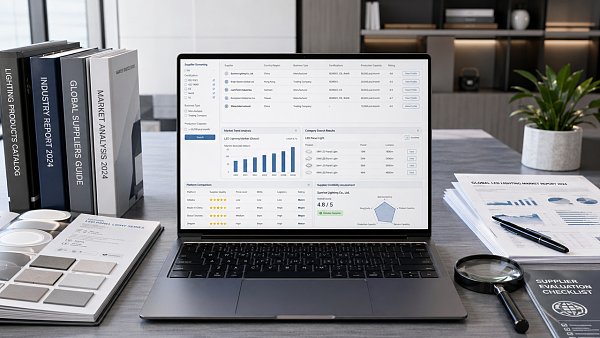
 How to Compare an Online Trade Platform Before Signing Up?Compare an online trade platform with confidence—evaluate data quality, supplier trust, market insights, and search tools for smarter sourcing across cement price, MRI scanners cost, and more.
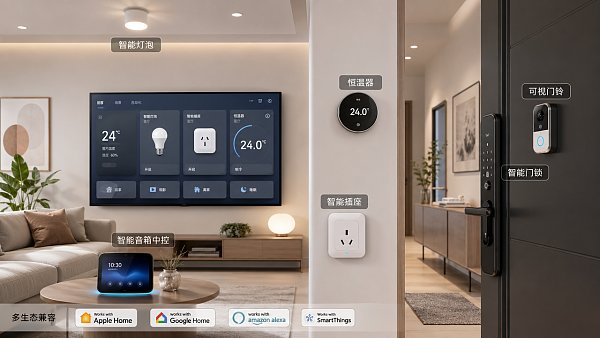
 Which Smart Home Automation Devices Are Easiest to Use?Smart home automation devices made simple: compare easy-to-use smart home automation devices, home improvement tools integration, and buyer tips from a business intelligence platform.
 Are Auto Detailing Services Worth the Cost?Auto detailing services: discover if the cost is justified, how pricing varies, and how a business intelligence platform helps buyers compare value, quality, and long-term ROI.
 What Makes Sustainable Fashion Brands Worth Buying?Sustainable fashion brands deliver transparency, quality, and lower risk. See how a business intelligence platform helps buyers verify value, avoid greenwashing, and source smarter.

















Popular Tags
Global Trade Insights & Industry
Our mission is to empower global exporters and importers with data-driven insights that foster strategic growth.
Search News
Popular Tags
Industry Overview
The global commercial kitchen equipment market is projected to reach $112 billion by 2027. Driven by urbanization, the rise of e-commerce food delivery, and strict hygiene regulations.