

Sheet Metal Welding Methods That Change Finish and Strength
For buyers comparing a sheet metal supplier or evaluating a CNC machining manufacturer, understanding sheet metal welding and sheet metal forming is critical because each method directly affects finish quality, structural strength, and total CNC machining cost. In today’s competitive sourcing landscape—where export import data for India, radiators cost, and even car maintenance cost trends shape procurement decisions—choosing the right welding process can improve product performance and long-term value.
For sourcing teams, distributors, and market researchers, welding is not a back-end production detail. It is a commercial factor that influences appearance, rework rates, compliance risk, packaging performance, field durability, and the final landed cost of a part or assembly. In sectors ranging from enclosures and brackets to HVAC panels, automotive subassemblies, and industrial housings, a poor welding choice can erase the savings gained from low unit pricing.
This guide explains how major sheet metal welding methods affect finish and strength, what buyers should ask suppliers before issuing a PO, and how welding decisions connect with forming complexity, tolerance targets, and post-processing requirements. The goal is practical: help decision-makers compare suppliers with clearer technical and commercial criteria.
Why Welding Method Matters in Sheet Metal Sourcing
In sheet metal production, welding sits at the intersection of design intent and manufacturing reality. A part may be laser cut to ±0.2 mm and formed accurately, yet still fail cosmetic or strength expectations if the wrong joining method is used. Thin-gauge materials from 0.8 mm to 3.0 mm are especially sensitive because heat input can distort flatness, round over crisp edges, and leave visible surface marks that increase finishing work.
Finish quality matters most when welded parts remain visible after installation. Powder-coated electrical cabinets, stainless kitchen equipment, retail fixtures, and branded metal housings often require low spatter, controlled discoloration, and minimal grinding. If the weld bead is too large or inconsistent, buyers may face extra polishing, filler use, or repainting steps, adding 8% to 20% to total fabrication cost in common shop scenarios.
Strength matters when the assembly carries vibration, load, pressure, or repeated opening and closing. For example, a sheet metal frame supporting 50 kg to 200 kg, or a bracket exposed to cyclic loading over 10,000 use cycles, needs more than visual weld continuity. Joint penetration, heat-affected zone control, and fit-up consistency all influence long-term performance.
Buyers should also understand the relationship between welding and forming. Deep bends, hems, embosses, and drawn features can restrict torch access or create variable gaps at the joint line. That means the “best” weld method is rarely chosen in isolation. It must match material type, gauge, edge preparation, batch size, and the expected post-weld finish.
Three sourcing questions that change outcomes
- Is the part cosmetic, structural, or both, and what defect level is acceptable on visible surfaces?
- What is the material and thickness range: mild steel, stainless steel, or aluminum, and is it below 1.5 mm or above 3 mm?
- Will the weld be left as-welded, ground flush, brushed, powder coated, plated, or passivated after fabrication?
When these questions are answered early, procurement teams can compare quotations on a like-for-like basis. Without them, one supplier may price a TIG weld with finish blending while another quotes MIG with visible bead retention, creating a misleading cost comparison.
How Common Sheet Metal Welding Methods Change Finish and Strength
The most common methods in sheet metal fabrication are TIG, MIG, spot welding, laser welding, and in some production environments, resistance seam welding. Each process has a different balance of aesthetics, penetration, speed, and labor cost. For buyers, the right choice depends on whether the project prioritizes appearance, throughput, or mechanical performance.
TIG welding is usually preferred for thin stainless steel and aluminum where appearance matters. It offers precise heat control and a clean bead, making it suitable for 0.8 mm to 3.0 mm sheets. However, TIG is slower than MIG and often requires more skilled labor, which can increase shop time by 20% to 50% depending on joint length and positioning.
MIG welding is faster and more economical for medium-volume production, especially for mild steel in the 1.5 mm to 6.0 mm range. It provides good structural strength, but it can create more spatter and a larger bead profile than TIG. If the part needs a premium finish, grinding and surface correction may offset the lower welding cost.
Spot welding is widely used for overlapping thin sheets, battery boxes, cabinets, and automotive-style stamped assemblies. It is efficient and repeatable, especially in high-volume runs above 500 units, but it does not produce a continuous seam. That limits its suitability for airtight or watertight applications unless combined with sealants or secondary joining methods.
Comparison of major welding methods for sheet metal buyers
The table below summarizes how different welding methods typically perform when finish quality, strength, production efficiency, and sourcing economics are evaluated together.
A key sourcing takeaway is that no single method is universally superior. TIG often wins on visible finish, MIG on throughput, spot welding on repetitive assembly, and laser welding on distortion control. The best decision comes from matching the joint function and finish expectation to the fabrication route, not from selecting the process with the lowest quoted welding rate.
Where buyers often misjudge cost
Many RFQs focus on welding cost per unit but ignore post-weld correction. A weld method that saves 10% in joining time may trigger 15% more finishing time if the bead must be flattened, polished, or hidden under a decorative coating. That is why buyers should request both welding method and post-processing scope in the quotation breakdown.
Material, Thickness, and Forming Geometry: The Real Drivers Behind Weld Performance
Welding results are shaped as much by material and design as by the process itself. Mild steel is generally forgiving, stainless steel is more sensitive to heat tint and cosmetic variation, and aluminum demands tighter control because of oxide layers, thermal conductivity, and distortion risk. The same supplier may produce excellent stainless TIG welds but average aluminum welds if fixture design and process discipline are weaker.
Thickness is another decisive factor. Below 1.0 mm, burn-through risk increases quickly if fit-up is poor or heat is not tightly controlled. Between 1.2 mm and 2.5 mm, buyers usually have more process flexibility, especially for cabinets, covers, ducting components, and brackets. Above 3.0 mm, structural performance becomes easier to achieve, but visible finish can still suffer if the bead profile is oversized.
Sheet metal forming changes weldability because formed edges are not always uniform. A flange angle off by even 1° to 2° can create inconsistent gap conditions along a seam. Deep draws and return flanges may also block tool access, making robotic welding difficult and forcing manual rework. As a result, buyers should assess welding together with bend sequence, fixture strategy, and hole location tolerance.
Surface finish before welding is equally important. Oily sheet, heavy mill scale, or oxide contamination can reduce consistency and increase spatter or porosity. In practical sourcing terms, this means that two suppliers using the same welding process may deliver very different visual and mechanical results if their incoming material handling differs.
Typical material and design considerations
The table below provides a practical reference for how common sheet materials and part conditions influence welding method selection.
The main conclusion is that welding quality starts well before the torch is activated. Supplier capability in cutting, forming, edge prep, and fixturing often determines whether a weld looks premium or problematic. For procurement and technical review teams, this is why process integration matters more than isolated machine lists.
Practical specification points for RFQs
- Define whether the weld is cosmetic, structural, sealed, or load-bearing.
- State material grade, thickness range, and surface finish expectation before welding.
- Specify acceptable flatness, bead visibility, and whether grinding flush is required.
- Indicate expected annual volume, such as 100 prototypes, 2,000 service parts, or 20,000 production units.
These four specification points reduce quote ambiguity and help suppliers recommend a realistic welding method tied to production scale.
How Buyers Should Evaluate Suppliers Beyond the Weld Bead
A visually acceptable sample does not always prove process stability. Buyers should evaluate the supplier’s control system around welding, including fixture repeatability, welder skill allocation, inspection frequency, rework handling, and finishing integration. For repeat B2B purchasing, consistency across 3 batches matters more than one good first article.
Lead time is another hidden differentiator. A supplier may quote a low welding price but require 4 to 6 weeks due to outsourced polishing or coating. Another supplier with integrated fabrication and finishing may deliver in 10 to 18 working days for medium-volume orders. In industries where launch timing or replenishment speed matters, shorter and more predictable delivery can outweigh a small unit price gap.
Commercial teams should also ask how defects are classified. Common acceptance categories include visible spatter, undercut, porosity, warpage, and surface discoloration. If these are not aligned upfront, disputes often appear after shipment, especially when the buyer expects showroom-grade finish and the supplier assumes industrial-grade acceptance.
For distributors and agents, supplier communication is equally important. Clear technical feedback during the quotation stage often signals stronger manufacturing maturity. When a supplier raises concerns about joint design, coating compatibility, or fixture access before production starts, that usually reduces downstream risk rather than slowing business.
Supplier evaluation checklist for procurement teams
- Ask whether welding, grinding, brushing, and coating are managed in one workflow or split across subcontractors.
- Request sample photos of similar material and thickness, not just generic factory images.
- Confirm whether dimensional inspection is performed before and after welding for distortion-sensitive parts.
- Review the expected scrap or rework handling plan for pilot runs of 20 to 100 units.
- Check whether packaging protects cosmetic surfaces after welding and finishing.
These checkpoints are especially useful for cross-border procurement, where rework after import can be expensive. A part that requires local correction may lose its original price advantage once freight, delay, and labor are considered.
What strong suppliers usually provide during quotation
Reliable suppliers typically clarify 5 things early: weld method, joint assumptions, finish scope, tolerance risk points, and estimated lead time by batch size. This level of detail helps business evaluators compare suppliers on operational transparency rather than price alone.
Common Mistakes That Increase Welding Cost or Reduce Product Life
One frequent mistake is treating all welds as equivalent as long as the assembly holds together at shipment. In reality, a product may pass initial inspection and still fail in service because of fatigue loading, corrosion around overheated zones, or coating defects caused by poor weld cleanup. This is common in outdoor cabinets, transport fixtures, and vehicle-adjacent components that experience vibration and moisture.
Another mistake is over-specifying premium weld appearance on hidden components. If an internal bracket never becomes visible and carries a moderate static load, a fast and well-controlled MIG or spot weld may be commercially smarter than a cosmetic TIG finish. Over-specification can increase labor cost by 12% to 30% with limited functional benefit.
A third issue is ignoring distortion control in thin or large-panel parts. On a 600 mm to 1200 mm panel, poor weld sequencing can create visible waviness that complicates assembly and coating. Buyers sometimes attribute this to poor forming when the real root cause is excessive heat concentration during joining.
Finally, some sourcing teams focus on unit price but overlook lifecycle cost. A stronger, cleaner, and more consistent weld may reduce warranty claims, service visits, repainting, or mechanical loosening over 1 to 3 years of field use. In value-driven procurement, that broader cost picture matters.
Risk signals buyers should not ignore
The following table highlights practical warning signs and the likely business consequences if they are not addressed during supplier selection or pre-production review.
In most B2B buying environments, risk reduction is more profitable than chasing the lowest initial offer. The right controls at the quotation and pilot stage can prevent delays, returns, and avoidable supplier switching later.
A balanced decision model
A practical model is to weigh four dimensions equally at the start: appearance, structural demand, production volume, and total post-weld cost. This creates a more reliable sourcing decision than evaluating the weld method in isolation.
Implementation Guidance and Buyer FAQ for Better Supplier Decisions
Once a welding method is shortlisted, the next step is structured implementation. Buyers should align technical requirements, sample approval, inspection criteria, and delivery expectations before production begins. A disciplined onboarding process can shorten pilot validation by 1 to 2 weeks and reduce
Recommended News
 IMDG Code 41-24 Enforces UN3480 Class 9 Labeling for Lithium Battery Sea FreightIMDG Code 41-24 mandates UN3480 lithium battery sea freight to display durable Class 9 labels from April 27, 2026—avoid delays & port rejections.
 ESS Key Component Prices Drop ~80%: Quality & Compliance RiseESS key component prices dropped ~80%—but quality & compliance demands surged. Discover how UL 9540A, AS/NZS 5139, and certified BMS/inverters now define market access.
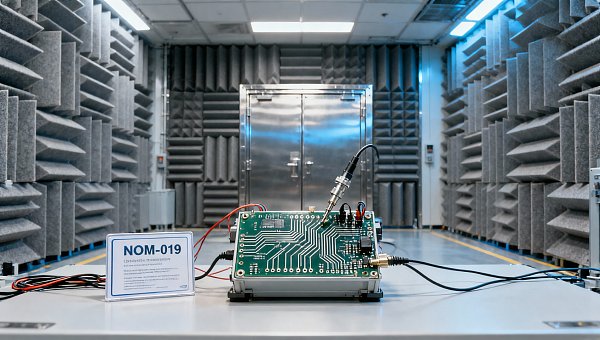
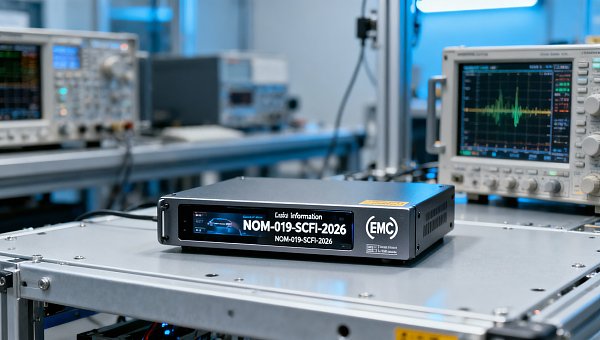
 Mexico NOM-019-SCFI-2026 Effective July 2026: EMC Certification Mandatory for Auto ElectronicsMexico NOM-019-SCFI-2026 mandates EMC certification for auto electronics from July 2026 — ensure compliance now to avoid supply chain disruption & customs delays.
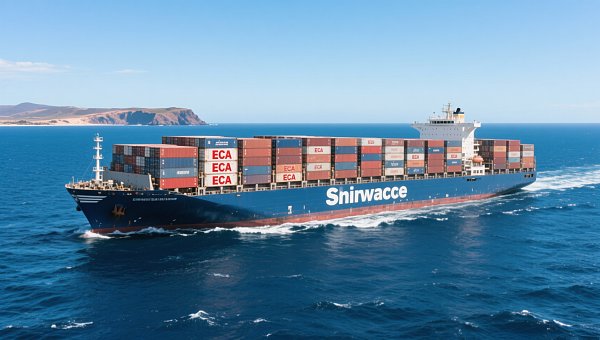
 Red Sea Rerouting Normalized, ECA Surcharge Hits $1,850/TEURed Sea rerouting normalized: ECA surcharge hits $1,850/TEU — 47% of total freight cost. Impacting hand tools, building materials & furniture exporters to Europe. Act now.
 RCEP Green Packaging Mutual Recognition Takes EffectRCEP Green Packaging Mutual Recognition is live—GB/T 37537-2025–certified packaging now enjoys fast-track clearance in Australia, NZ, Japan & Korea. Save time, cut costs, and boost export efficiency.
 Vietnam Suspends SASO Mutual Recognition for Chinese Irrigation EquipmentVietnam suspends SASO mutual recognition for Chinese irrigation equipment—drip tapes, PE fittings, auto valves now require VINAQ-IR certification. Act now to avoid delays & customs hold.
 Key Energy Storage Equipment Prices Drop ~80% in ChinaKey energy storage equipment prices in China dropped ~80% — PCS, BMS & liquid cooling units. Discover implications for compliance, margins & standards enforcement.
") China Releases Green Design Guidelines for Industrial Products (2026)China's 2026 Green Design Guidelines for industrial products—covering PV modules, lithium batteries & smart appliances—link eco-design to green factory certification and export tax rebates starting 2027.
China Releases Green Design Guidelines for Industrial Products (2026)China's 2026 Green Design Guidelines for industrial products—covering PV modules, lithium batteries & smart appliances—link eco-design to green factory certification and export tax rebates starting 2027. Mexico NOM-019-SCFI-2026 Effective: Automotive Electronics Require New EMC CertificationMexico NOM-019-SCFI-2026 is live: Automotive electronics (infotainment, ADAS, domain controllers) now require mandatory EMC certification by July 31, 2026 — act now to avoid customs delays.
 Red Sea Detour Premium Rises to $1,850/TEU Amid Port Congestion ReliefRed Sea Detour Premium hits $1,850/TEU — now 43% of FE–NE freight rates. Discover why this structural surcharge demands urgent supply chain action.
 TÜV Rheinland Updates PLd Certification: EMC Immunity Now Mandatory for Servo DrivesTÜV Rheinland now mandates EN IEC 61000-6-2:2024 EMC immunity testing for PLd certification of servo drives—act before May 26, 2026 to avoid EU market delays.
 RCEP Green Packaging Mutual Recognition Effective Apr 26, 2026RCEP Green Packaging Mutual Recognition takes effect Apr 26, 2026—unlock faster customs clearance & cost savings for eco-friendly packaging exporters to AU, NZ, JP, KR.
 FDA Final Rule: AI Diagnostic Devices Must Submit Bias Impact ReportsFDA mandates AI diagnostic devices submit third-party-verified bias impact reports—key for 510(k)/De Novo submissions. Act now to ensure compliance & market access.
 Vietnam Suspends SASO Mutual Recognition for Chinese Irrigation EquipmentVietnam suspends SASO mutual recognition for Chinese irrigation equipment—urgent QCVN certification now required for drip tapes, sprinklers, valves & smart controllers.
 SABER Phase II Launch: Building Hardware Must Submit Digital Type Test Reports & PIDSABER Phase II now requires digital type test reports & PID for building hardware — fasteners, door/window, bathroom fixtures. Avoid port rejection: ensure PID-bound compliance before shipment.
 IMDG Code 41-24 Enforced: UN3480 Lithium Batteries Require Class 9 LabelsUN3480 lithium batteries now require ISO 7225-compliant Class 9 labels under IMDG Code 41-24 — enforceable globally from 26 April 2026. Act now to avoid shipment delays!
 How to Compare an Online Trade Platform Before Signing Up?Compare an online trade platform with confidence—evaluate data quality, supplier trust, market insights, and search tools for smarter sourcing across cement price, MRI scanners cost, and more.
 Which Smart Home Automation Devices Are Easiest to Use?Smart home automation devices made simple: compare easy-to-use smart home automation devices, home improvement tools integration, and buyer tips from a business intelligence platform.
 Are Auto Detailing Services Worth the Cost?Auto detailing services: discover if the cost is justified, how pricing varies, and how a business intelligence platform helps buyers compare value, quality, and long-term ROI.
 What Makes Sustainable Fashion Brands Worth Buying?Sustainable fashion brands deliver transparency, quality, and lower risk. See how a business intelligence platform helps buyers verify value, avoid greenwashing, and source smarter.
 How to Choose a Business Intelligence Platform in 2026?Business intelligence platform selection in 2026: compare data coverage, pricing insights, online trade platform signals, Cement price trends, and MRI scanners cost to choose smarter, faster.

















Popular Tags
Global Trade Insights & Industry
Our mission is to empower global exporters and importers with data-driven insights that foster strategic growth.
Search News
Popular Tags
Industry Overview
The global commercial kitchen equipment market is projected to reach $112 billion by 2027. Driven by urbanization, the rise of e-commerce food delivery, and strict hygiene regulations.