

Why Sheet Metal Welding Quality Fails at Corner Joints
Corner joint failures in sheet metal welding often reveal deeper problems in design tolerance, heat control, and material handling. For buyers comparing a sheet metal supplier or a CNC machining manufacturer, understanding these defects is essential to controlling CNC machining cost, sheet metal forming quality, and long-term product reliability. In today’s export-driven market, even export import data for India can help procurement teams evaluate sourcing risks and manufacturing consistency before placing orders.
For procurement teams, business evaluators, distributors, and industry researchers, corner joint quality is not a minor workshop issue. It directly affects assembly fit, coating performance, leak resistance, fatigue life, warranty exposure, and the credibility of an overseas supplier. In sectors where enclosures, brackets, cabinets, ducts, frames, and custom fabricated parts are traded across borders, a weak corner weld can turn an acceptable quotation into an expensive field failure.
This article examines why sheet metal welding quality fails at corner joints, what warning signs buyers should monitor during supplier evaluation, and how sourcing teams can reduce risk through better technical review, process control, and trade intelligence. The goal is practical: help decision-makers translate weld quality into measurable purchasing criteria.
Why Corner Joints Are More Failure-Prone Than Flat Welds
Corner joints concentrate several manufacturing variables in a very small area. Two formed edges meet at an angle, often 90 degrees, and any inconsistency in cut quality, bend angle, flange length, or fit-up becomes amplified during welding. A gap variation of just 0.3 mm to 0.8 mm can change heat absorption, filler demand, and final distortion more than many buyers expect.
Unlike a long flat seam, a corner joint has less heat dissipation area and a higher tendency for edge burn-through, undercut, incomplete fusion, and angular deformation. Thin-gauge sheet metal in the 0.8 mm to 2.0 mm range is especially sensitive. When suppliers try to increase throughput by raising travel speed or lowering fixture time, corner integrity often becomes the first quality point to deteriorate.
The problem becomes more serious when the welded part must later undergo grinding, powder coating, sealing, or mechanical assembly. A corner that looks acceptable before finishing may reveal pinholes, weld sink, edge cracking, or misalignment after surface treatment. In export projects, these defects may only be discovered after 2 to 6 weeks of transit, which increases replacement cost and disrupts installation schedules.
Typical failure mechanisms at the corner
The most common mechanisms are geometric mismatch, poor root fusion, excessive heat input, and inconsistent tack sequence. These four factors account for a large share of corner rework in custom fabrication. Even when weld appearance is smooth, the internal metallurgical bond may still be weak if the arc angle or joint preparation was incorrect.
- Excessive joint gap leads to filler overload, shrinkage, and visible depression after cooling.
- Insufficient gap control causes lack of penetration or cold lap at the root.
- Poor tack placement pulls the corner out of square, often beyond ±0.5 mm assembly tolerance.
- Improper torch angle creates undercut along one leg of the corner.
From a buyer’s perspective, this means the corner joint should be treated as a process capability indicator. If a supplier cannot maintain stable corner weld quality across 20, 50, or 200 pieces in a batch, the same instability may appear in forming, dimensional control, and finishing consistency.
The table below summarizes the most frequent corner joint defects, their visible symptoms, and the likely production causes that sourcing teams should discuss during technical audits.
For commercial evaluation, visible appearance should never be the only acceptance basis. A bright, uniform bead can still hide poor penetration or dimensional pull. Buyers should align drawing tolerances, weld symbols, and finish requirements before comparing quotations from multiple sheet metal suppliers.
Design Tolerance and Material Preparation: The Hidden Root Causes
Many corner joint failures originate before welding starts. Design teams may specify nominal dimensions without accounting for bend radius, springback, laser kerf variation, or flange accumulation error. In production, a 1.5 mm sheet with two bends and one corner weld can easily accumulate total positional deviation of 0.7 mm to 1.2 mm if no tolerance stack analysis is performed.
Material condition matters just as much. Oily surfaces, mill scale, zinc residue, protective film traces, and burrs all interfere with arc stability and fusion. Stainless steel, galvanized steel, aluminum, and cold-rolled steel each behave differently at the corner. A supplier that uses one standard setup across all materials is more likely to generate inconsistent weld quality and unpredictable rework rates.
For buyers evaluating a CNC machining manufacturer that also offers fabrication, this is a key distinction. Precision machining capability does not automatically translate into strong sheet metal welding discipline. Welding demands separate control over edge preparation, fixture repeatability, and thermal sequence. If these systems are weak, the final assembly may miss fit requirements even when individual machined features are accurate.
Tolerance issues that frequently affect corner welds
Corner failure often begins with a drawing that is technically complete but not fabrication-ready. Several common specification gaps increase supplier interpretation risk and quotation variation.
- No clear allowance for bend deduction or bend radius, leading to corner mismatch after forming.
- No stated flatness or squareness requirement after welding, making acceptance subjective.
- No limit on post-grind material removal, which may weaken a cosmetic corner seam.
- No mention of sealing requirement for outdoor or liquid-exposed applications.
A disciplined supplier should flag these points during RFQ review, ideally within 24 to 72 hours. Silence at this stage often means assumptions are being made in the workshop, and assumptions are expensive in international sourcing.
Material-specific preparation guidance
The preparation standard should reflect both material and finish requirement. For example, aluminum corners usually need more precise cleaning and heat control than mild steel. Galvanized sheet often requires coating removal near the weld zone to avoid porosity and contamination. Stainless steel may need tighter control of heat tint and post-weld surface finishing if appearance is customer-facing.
The next table provides a practical procurement view of how different materials affect corner joint risk and what buyers should confirm before order release.
These checkpoints matter because the same price difference of 3% to 8% between suppliers can be erased quickly by rework, delayed shipment, or field complaints. In many B2B procurement cycles, the lower-risk supplier creates better total landed value than the lowest unit price.
Heat Control, Fixturing, and Operator Discipline on the Shop Floor
Once design and material preparation are set, process execution becomes the next decisive factor. Corner joints are highly sensitive to heat concentration. Excessive amperage, wrong travel speed, or extended dwell at the corner tip can create edge erosion, deformation, and residual stress. On thin sheet metal, even a small increase in heat input can distort the angle enough to affect downstream assembly.
Fixturing is often underestimated in supplier qualification. A stable fixture does more than hold the part; it controls gap consistency, angular accuracy, and weld sequence repeatability. In medium-volume production runs of 100 to 500 units, fixture wear or rushed loading can create lot-to-lot variation that does not appear in first article samples.
Operator discipline is equally important. Even where robotic welding is used, corners may still require manual tacking, repositioning, or cosmetic touch-up. A skilled welder understands how to balance penetration with appearance, while an inexperienced operator may overfill the joint to hide mismatch. That approach usually adds grinding time, increases heat distortion, and raises labor cost.
Practical controls that reduce corner weld failure
Buyers do not need to manage the supplier’s workshop directly, but they should know which controls distinguish a stable source from a reactive one.
- Use defined fit-up tolerance, such as keeping corner gap within a specified range before arc start.
- Apply tack welds in a consistent sequence to minimize angular pull and corner opening.
- Limit heat input on thin material and verify with sample coupons before mass production.
- Inspect both visual appearance and dimensional squareness after cooling, not only immediately after welding.
For global sourcing projects, it is useful to request 3 things before mass order confirmation: a welded sample, a dimensional inspection report, and photos of the fixture or holding method. These are low-cost verification tools that often reveal whether the supplier’s process is mature or improvised.
Quality signals during supplier audits
A capable supplier can usually explain target parameters, rework triggers, and inspection frequency in concrete terms. For example, they may review corner weld appearance every batch, check critical dimensions every 10 to 20 pieces, or maintain separate settings for 1.0 mm and 2.0 mm material. Vague answers such as “our workers are experienced” should not replace process evidence.
In trade intelligence work, these operational details are often more informative than marketing language. Companies with disciplined process control tend to show more stable lead times, fewer urgent shipment corrections, and stronger repeat export patterns over multiple quarters.
How Buyers Can Evaluate Suppliers Before Corner Weld Problems Reach the Market
For importers, distributors, and sourcing specialists, the real question is not whether corner weld failures exist, but how early they can be identified. The best time to control risk is during supplier screening and quotation comparison, not after shipment. A supplier may quote competitively on laser cutting and bending, yet lack strong corner welding capability for finished assemblies.
This is where structured evaluation helps. Buyers should compare suppliers across process capability, inspection discipline, lead time realism, communication quality, and market behavior. Trade data can also add context. For example, export import data for India, shipment frequency, and product category trends may help teams understand whether a factory is active in relevant fabricated metal segments or merely brokering mixed orders.
Supplier assessment should also connect weld quality to cost. When corner defects require grinding, rewelding, filler addition, or straightening, CNC machining cost and total fabrication cost can rise indirectly because assemblies no longer fit subsequent machining, tapping, or fixture steps. Quality problems at the corner often spread through the entire manufacturing chain.
A procurement checklist for corner weld risk
The following checklist can be used during RFQ review, sample approval, or supplier onboarding. It is especially useful when comparing 2 to 5 shortlisted manufacturers.
When suppliers can answer these questions clearly and consistently, the probability of stable corner joint quality is usually higher. When they avoid detail or respond only with price concessions, procurement risk increases.
Commercial red flags that often correlate with weld defects
There are several non-technical warning signs worth tracking. Large quotation swings without design changes, repeated requests to relax tolerance after order confirmation, and unusual shipment inconsistency across recent export records can indicate unstable internal controls. These signs do not prove poor welding, but they justify closer sample verification and clearer acceptance terms.
For GTIIN and TradeVantage readers, this is where industrial intelligence becomes commercially useful. Market visibility, supplier responsiveness, product focus, and export behavior should support technical sourcing decisions, not sit separately from them.
Corrective Actions, Specification Upgrades, and Long-Term Sourcing Strategy
If corner weld failures are already occurring, the response should go beyond sorting defective parts. The more effective approach is to separate root causes into three levels: design definition, process execution, and supplier management. This helps procurement and engineering teams correct the source of failure instead of repeatedly paying for containment.
A practical first step is to revise the technical package. Many sourcing teams improve results simply by adding 4 items to the drawing set: acceptable weld profile, post-weld dimensional tolerance, finish expectation after grinding, and any leak-tight or cosmetic critical zones. These details reduce interpretation gaps and make supplier quotations more comparable.
The second step is controlled validation. Before releasing a full overseas batch, buyers should approve a pilot lot of 5 to 20 pieces for dimensional review, visual inspection, and assembly fit. This is especially important for new suppliers, thin-gauge components, or parts that combine sheet metal fabrication with CNC machining operations.
Recommended corrective action flow
- Record defect type by location: undercut, porosity, distortion, mismatch, or crack.
- Check whether failure appeared before finishing, after coating, or during assembly.
- Review drawing tolerances, bend dimensions, and gap condition from first-off samples.
- Verify fixture stability, tack sequence, and operator settings on the production line.
- Run a pilot correction batch and compare scrap, rework, and fit rate before scaling.
This 5-step method gives buyers a disciplined way to discuss corrective action with suppliers. It also creates a useful record for distributor networks and regional agents that need stable product quality across repeat purchase cycles.
FAQ for sourcing and evaluation teams
How much can corner weld defects affect total manufacturing cost?
The impact varies by product type, but rework can add multiple hidden cost layers: extra welding time, grinding labor, repainting or recoating, dimensional correction, delayed assembly, and replacement freight. Even a defect rate in the low single digits can materially change the total cost of a finished assembly when delivery windows are tight.
Are cosmetic corner welds less risky than structural ones?
Not necessarily. Cosmetic corners may be ground flush, which can hide porosity or reduce local thickness if not controlled. Structural corners may fail from lack of penetration. The inspection method should match the application, finish, and service load rather than the visual category alone.
What lead time is reasonable for validated welded sheet metal samples?
For many custom parts, prototype or approval samples are commonly reviewed within 7 to 15 working days, depending on tooling, finishing, and material availability. Buyers should be cautious if a complex welded assembly is promised unusually fast without any discussion of fixture setup or inspection.
What documents should buyers request from new suppliers?
At minimum, request a quotation with process notes, sample photos, dimensional check results for critical features, and a written clarification of any tolerance assumptions. For higher-risk parts, ask for pilot batch data and confirmation of how the supplier controls fit-up and welding sequence.
Corner joint failure in sheet metal welding is rarely an isolated defect. It is usually a visible symptom of deeper issues in tolerance planning, material preparation, heat control, fixturing, and supplier discipline. For buyers comparing a sheet metal supplier or CNC machining manufacturer, the safest approach is to evaluate corner weld quality as part of a broader manufacturing capability review.
Recommended News
 IMDG Code 41-24 Enforces UN3480 Class 9 Labeling for Lithium Battery Sea FreightIMDG Code 41-24 mandates UN3480 lithium battery sea freight to display durable Class 9 labels from April 27, 2026—avoid delays & port rejections.
 ESS Key Component Prices Drop ~80%: Quality & Compliance RiseESS key component prices dropped ~80%—but quality & compliance demands surged. Discover how UL 9540A, AS/NZS 5139, and certified BMS/inverters now define market access.
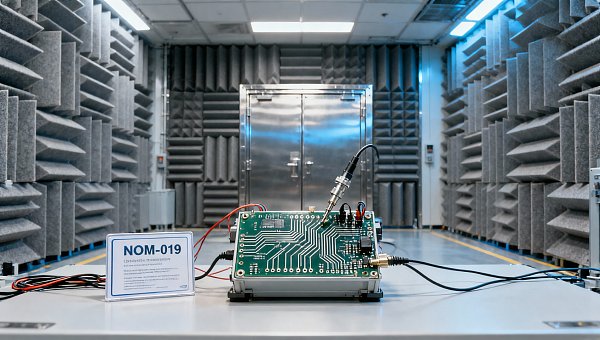
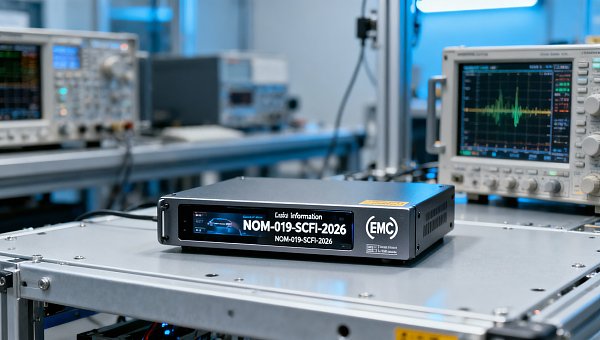
 Mexico NOM-019-SCFI-2026 Effective July 2026: EMC Certification Mandatory for Auto ElectronicsMexico NOM-019-SCFI-2026 mandates EMC certification for auto electronics from July 2026 — ensure compliance now to avoid supply chain disruption & customs delays.
 Red Sea Rerouting Normalized, ECA Surcharge Hits $1,850/TEURed Sea rerouting normalized: ECA surcharge hits $1,850/TEU — 47% of total freight cost. Impacting hand tools, building materials & furniture exporters to Europe. Act now.
 RCEP Green Packaging Mutual Recognition Takes EffectRCEP Green Packaging Mutual Recognition is live—GB/T 37537-2025–certified packaging now enjoys fast-track clearance in Australia, NZ, Japan & Korea. Save time, cut costs, and boost export efficiency.
 Vietnam Suspends SASO Mutual Recognition for Chinese Irrigation EquipmentVietnam suspends SASO mutual recognition for Chinese irrigation equipment—drip tapes, PE fittings, auto valves now require VINAQ-IR certification. Act now to avoid delays & customs hold.
 Key Energy Storage Equipment Prices Drop ~80% in ChinaKey energy storage equipment prices in China dropped ~80% — PCS, BMS & liquid cooling units. Discover implications for compliance, margins & standards enforcement.
") China Releases Green Design Guidelines for Industrial Products (2026)China's 2026 Green Design Guidelines for industrial products—covering PV modules, lithium batteries & smart appliances—link eco-design to green factory certification and export tax rebates starting 2027.
China Releases Green Design Guidelines for Industrial Products (2026)China's 2026 Green Design Guidelines for industrial products—covering PV modules, lithium batteries & smart appliances—link eco-design to green factory certification and export tax rebates starting 2027. Mexico NOM-019-SCFI-2026 Effective: Automotive Electronics Require New EMC CertificationMexico NOM-019-SCFI-2026 is live: Automotive electronics (infotainment, ADAS, domain controllers) now require mandatory EMC certification by July 31, 2026 — act now to avoid customs delays.
 Red Sea Detour Premium Rises to $1,850/TEU Amid Port Congestion ReliefRed Sea Detour Premium hits $1,850/TEU — now 43% of FE–NE freight rates. Discover why this structural surcharge demands urgent supply chain action.
 TÜV Rheinland Updates PLd Certification: EMC Immunity Now Mandatory for Servo DrivesTÜV Rheinland now mandates EN IEC 61000-6-2:2024 EMC immunity testing for PLd certification of servo drives—act before May 26, 2026 to avoid EU market delays.
 RCEP Green Packaging Mutual Recognition Effective Apr 26, 2026RCEP Green Packaging Mutual Recognition takes effect Apr 26, 2026—unlock faster customs clearance & cost savings for eco-friendly packaging exporters to AU, NZ, JP, KR.
 FDA Final Rule: AI Diagnostic Devices Must Submit Bias Impact ReportsFDA mandates AI diagnostic devices submit third-party-verified bias impact reports—key for 510(k)/De Novo submissions. Act now to ensure compliance & market access.
 Vietnam Suspends SASO Mutual Recognition for Chinese Irrigation EquipmentVietnam suspends SASO mutual recognition for Chinese irrigation equipment—urgent QCVN certification now required for drip tapes, sprinklers, valves & smart controllers.
 SABER Phase II Launch: Building Hardware Must Submit Digital Type Test Reports & PIDSABER Phase II now requires digital type test reports & PID for building hardware — fasteners, door/window, bathroom fixtures. Avoid port rejection: ensure PID-bound compliance before shipment.
 IMDG Code 41-24 Enforced: UN3480 Lithium Batteries Require Class 9 LabelsUN3480 lithium batteries now require ISO 7225-compliant Class 9 labels under IMDG Code 41-24 — enforceable globally from 26 April 2026. Act now to avoid shipment delays!
 How to Compare an Online Trade Platform Before Signing Up?Compare an online trade platform with confidence—evaluate data quality, supplier trust, market insights, and search tools for smarter sourcing across cement price, MRI scanners cost, and more.
 Which Smart Home Automation Devices Are Easiest to Use?Smart home automation devices made simple: compare easy-to-use smart home automation devices, home improvement tools integration, and buyer tips from a business intelligence platform.
 Are Auto Detailing Services Worth the Cost?Auto detailing services: discover if the cost is justified, how pricing varies, and how a business intelligence platform helps buyers compare value, quality, and long-term ROI.
 What Makes Sustainable Fashion Brands Worth Buying?Sustainable fashion brands deliver transparency, quality, and lower risk. See how a business intelligence platform helps buyers verify value, avoid greenwashing, and source smarter.
 How to Choose a Business Intelligence Platform in 2026?Business intelligence platform selection in 2026: compare data coverage, pricing insights, online trade platform signals, Cement price trends, and MRI scanners cost to choose smarter, faster.


















Popular Tags
Global Trade Insights & Industry
Our mission is to empower global exporters and importers with data-driven insights that foster strategic growth.
Search News
Popular Tags
Industry Overview
The global commercial kitchen equipment market is projected to reach $112 billion by 2027. Driven by urbanization, the rise of e-commerce food delivery, and strict hygiene regulations.