

Smart home devices wholesale margins shrink faster than many expect
Smart home devices wholesale margins are tightening faster than many distributors, agents, and resellers anticipated. As pricing pressure rises, product cycles shorten, and platform competition intensifies, staying profitable now requires sharper sourcing, smarter channel strategy, and better market intelligence. This article explores why margin erosion is accelerating and what trade-focused businesses can do to protect growth in an increasingly crowded global market.
Why are Smart home devices wholesale margins shrinking so quickly?
For distributors and agents, the challenge is no longer limited to finding suppliers with acceptable pricing. The real issue is that the entire value chain has become more transparent, more crowded, and less forgiving. In Smart home devices wholesale, buyers can compare offers faster, manufacturers can approach downstream channels directly, and marketplaces can compress price expectations within weeks rather than quarters.
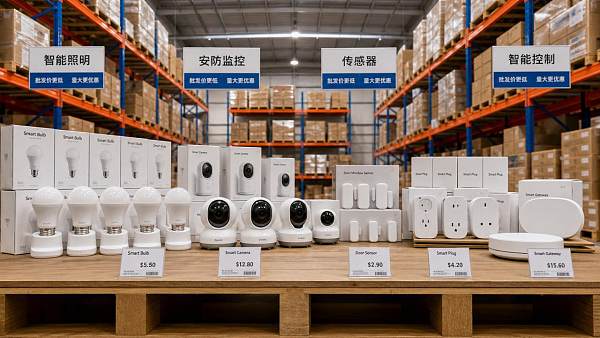
This is especially visible in categories such as smart bulbs, security cameras, door sensors, plugs, hubs, and voice-compatible accessories. These products often look similar on paper, but channel pricing changes rapidly due to firmware revisions, chipset substitutions, app ecosystem compatibility, and new retail promotions. A distributor may secure inventory at a fair cost, only to face lower online reference prices before the stock cycle ends.
Margin compression is also linked to shorter replacement cycles. New product generations arrive quickly, and older SKUs lose appeal before channel partners have fully monetized them. As a result, smart home distribution now depends less on simple buy-low-sell-high logic and more on timing, assortment discipline, compliance planning, and localized market positioning.
- Direct-to-consumer brand expansion reduces the traditional distributor buffer.
- Cross-border e-commerce exposes benchmark prices across multiple regions.
- Retailers increasingly demand marketing support, faster replenishment, and after-sales accountability.
- Certification, data privacy, and interoperability requirements add cost without always improving shelf price.
The margin squeeze is not uniform across every product
Not every segment in Smart home devices wholesale suffers equally. Entry-level smart plugs and generic Wi-Fi bulbs usually experience the harshest price competition because technical differentiation is limited and substitutes are easy to source. By contrast, products with stronger ecosystem lock-in, better app reliability, enterprise-grade support, or region-specific certifications may still offer healthier margins if positioned correctly.
Where do distributors lose profit in practice?
The loss rarely comes from one dramatic mistake. More often, it comes from several small commercial leaks that compound over time. In Smart home devices wholesale, profitability can disappear through hidden logistics fees, return handling, dead-on-arrival replacement rates, localization costs, and weak product mix decisions.
The table below highlights common sources of margin erosion and the practical impact they have on wholesale operations.
A distributor that tracks only invoice cost will miss the broader margin picture. Landed cost, service cost, compliance cost, and speed-to-market all influence real profitability. In many cases, a slightly higher ex-factory price from a more stable supplier generates better net returns than the cheapest offer on a spreadsheet.
How should buyers evaluate Smart home devices wholesale opportunities?
Procurement teams should move from price-led sourcing to margin-led sourcing. That means evaluating products according to channel fit, support burden, compliance readiness, replenishment reliability, and market differentiation. A low-cost item that creates frequent returns or app complaints can damage both margin and distributor reputation.
A practical selection framework
- Define the target channel first. Mass retail, specialist electronics stores, installers, and online resellers need different product mixes and packaging strategies.
- Check ecosystem compatibility early. Integration with major voice assistants, mobile app stability, and setup simplicity often influence return rates more than hardware specifications.
- Separate headline cost from full landed cost. Include freight volatility, import duties, local testing, warranty reserves, and replacement handling.
- Review supplier roadmap discipline. Frequent undocumented changes in firmware, chipsets, or app interfaces create downstream support issues.
- Assess speed of sell-through. Faster rotation can protect margin even when unit profit is lower.
The following table can be used as a procurement checklist when comparing Smart home devices wholesale offers across multiple suppliers.
This checklist helps buyers compare offers beyond unit price. It is particularly useful for agents and regional distributors who need to balance aggressive pricing with support capacity and channel credibility.
Which product categories are more vulnerable to price wars?
In Smart home devices wholesale, vulnerability depends on product substitutability and user-perceived differentiation. If end users cannot easily see why one device is better than another, price becomes the default decision factor. That weakens downstream margins for everyone in the chain.
Higher-risk categories
- Wi-Fi smart plugs with standard on/off functions and minimal design differences.
- Commodity LED smart bulbs where wattage and color-control claims are easy to imitate.
- Basic indoor cameras sold mainly on resolution claims rather than software experience.
More defensible categories
- Integrated kits bundled for apartment security, elderly care, or small property management.
- Products requiring local certification discipline or specialized installation support.
- Devices with stronger interoperability, more reliable apps, or better channel training resources.
The lesson is simple: if your assortment depends heavily on low-barrier, look-alike items, margin pressure will intensify. Distributors need to diversify into bundles, category-specific solutions, or value-added service layers that are harder to compare line by line.
How do compliance and standards affect wholesale profitability?
Many buyers underestimate how much compliance affects sellability. Smart home products combine electrical components, wireless communication, software, and user data interfaces. That means importers and channel partners may need to check multiple layers of conformity depending on destination market and product type.
For Smart home devices wholesale, compliance is not just a legal checkbox. It influences customs clearance, retailer acceptance, online listing continuity, and warranty exposure. Poor documentation or incorrect declarations can erase margin faster than a modest price difference between two suppliers.
Common areas buyers should review
- Electrical safety requirements for consumer devices in the destination market.
- Radio or wireless communication compliance where Wi-Fi, Bluetooth, Zigbee, or similar technologies are used.
- Labeling and traceability requirements for packaging, importer details, and disposal markings where relevant.
- Data handling and user privacy expectations if products rely on cloud platforms, mobile apps, or camera functions.
When a distributor enters a new region, external market intelligence becomes critical. TradeVantage and GTIIN add value here by helping buyers monitor regulatory shifts, compare market-entry risks across sectors, and reduce blind spots before inventory commitments are made.
What channel strategies help protect margins in Smart home devices wholesale?
Margin defense is often a channel design problem rather than a product problem. If the same SKU is pushed through every reseller type without price governance or market segmentation, discounting becomes inevitable. Smart home distributors need channel architecture that reflects customer type, service depth, and product complexity.
Margin-protective channel moves
- Use differentiated SKU packs for separate channels, such as retail-ready kits, installer bundles, and e-commerce bundles.
- Prioritize categories where support content, onboarding guides, and local language materials increase conversion.
- Build category authority rather than broad, shallow catalogs. A tighter range often improves inventory control and training quality.
- Negotiate supplier support on firmware updates, replacement handling, and co-marketing assets before scaling volume.
This is where industry intelligence matters. A B2B information platform such as GTIIN, together with TradeVantage’s editorial and visibility network, helps distributors identify where consumer demand is shifting, which regions are seeing stronger adoption patterns, and how competitive positioning changes across markets. Better information leads to better channel timing.
Cost control versus value-added positioning: which works better?
Both matter, but they must be balanced. Pure cost control without differentiation traps distributors in low-margin rotation. Pure value-added positioning without disciplined sourcing can weaken competitiveness. The best Smart home devices wholesale strategy usually combines selective cost discipline with a clear reason for channel partners to buy from you rather than from a cheaper listing.
The table below compares two common operating models for wholesalers and agents.
For many regional distributors, the hybrid model is the most resilient. Commodity items can support traffic and sales frequency, while better-differentiated products improve average margin and reduce direct comparability.
FAQ: key questions buyers ask before scaling Smart home devices wholesale
How do I know whether a lower-priced supplier is actually cheaper?
Compare full landed cost, not just unit cost. Include freight, duties, localization, warranty reserve, failure replacement exposure, and support workload. A supplier with stable firmware, clear documentation, and flexible replenishment may deliver better net margin even if the invoice price is higher.
Which Smart home devices wholesale products are safer for new distributors?
Products with moderate technical complexity, reliable app performance, and clear use cases are usually easier to scale. Bundled starter kits, sensor-based home security sets, and selected automation accessories can be more manageable than ultra-commoditized single-function items.
What should I ask about certification before placing a trial order?
Ask whether the current product version matches the available compliance documents, whether packaging and labels fit your market, and whether any radio, safety, or importer declarations need updating. Also verify if any recent hardware or firmware changes affect documentation validity.
How fast should inventory turn in this category?
There is no universal benchmark, but faster rotation matters more in smart home than in many traditional categories because retail pricing shifts quickly and product generations update often. Buyers should align order size with realistic sell-through windows rather than optimistic annual demand forecasts.
Why market intelligence now matters as much as sourcing
In a volatile category, the distributor with better information usually outperforms the distributor with the cheapest spreadsheet. Smart home devices wholesale now depends on reading demand shifts, monitoring policy updates, understanding channel saturation, and spotting emerging niches before they become crowded.
GTIIN supports this by aggregating global B2B intelligence across sectors, helping importers, exporters, distributors, and agents reduce information gaps in the supply chain. TradeVantage extends that advantage by turning market insight into commercial visibility, brand exposure, and stronger digital trust signals in international trade environments. For businesses operating across regions, this combination supports not only sourcing decisions but also market entry planning and partner discovery.
Why choose us for Smart home devices wholesale market insight and sourcing decisions?
If your margins are under pressure, the next step is not simply to chase another lower quote. It is to validate the full commercial picture. With GTIIN and TradeVantage, you can access structured market intelligence that helps you compare sourcing regions, identify high-pressure product segments, assess channel risks, and strengthen your international market positioning.
You can contact us for practical support on the issues that matter most to distributors, agents, and resellers:
- Product selection guidance based on target market, channel type, and margin expectations.
- Parameter and specification confirmation before supplier comparison or trial orders.
- Delivery cycle evaluation, MOQ review, and replenishment planning for fast-moving smart home categories.
- Certification and destination-market compliance review at a practical planning level.
- Sample support planning, quotation discussion, and sourcing-risk screening for cross-border trade teams.
In Smart home devices wholesale, margin protection comes from better judgment, not just lower purchase prices. If you are reviewing new suppliers, adjusting your product mix, or preparing to enter a new market, now is the right time to start with better data and a more disciplined decision framework.
Recommended News
 Portable oxygen concentrators vary more in noise than spec sheets suggestPortable oxygen concentrators may share similar specs, yet real-world noise can vary widely. Learn what decibel ratings miss and choose a quieter, more comfortable model with confidence.
 Interactive whiteboards are easier to buy than to integrate wellInteractive whiteboards are easy to buy, but hard to integrate. Discover how to align workflows, IT, training, and ROI for smarter deployment.
![]() Medical diagnostic equipment upgrades should start with workflow bottlenecksMedical diagnostic equipment upgrades should start with workflow bottlenecks. Discover how targeted investments improve throughput, integration, ROI, and diagnostic efficiency.
Medical diagnostic equipment upgrades should start with workflow bottlenecksMedical diagnostic equipment upgrades should start with workflow bottlenecks. Discover how targeted investments improve throughput, integration, ROI, and diagnostic efficiency.![]() Eco-friendly building materials can raise budgets before they lower themEco-friendly building materials may raise upfront budgets, but they can cut long-term costs, improve compliance, and strengthen asset value. Learn when the premium truly pays off.
Eco-friendly building materials can raise budgets before they lower themEco-friendly building materials may raise upfront budgets, but they can cut long-term costs, improve compliance, and strengthen asset value. Learn when the premium truly pays off. Ergonomic workspace design fixes discomfort, but not every layout problemErgonomic workspace design improves comfort, focus, and buying decisions—but not every layout issue. Learn what upgrades work, what room limits remain, and how to choose smarter.
![]() Outdoor garden supplies demand shifts earlier than many sellers plan forOutdoor garden supplies demand is starting earlier than many sellers expect. Learn what drives the shift and how distributors, wholesalers, and agents can plan smarter to win more sales.
Outdoor garden supplies demand shifts earlier than many sellers plan forOutdoor garden supplies demand is starting earlier than many sellers expect. Learn what drives the shift and how distributors, wholesalers, and agents can plan smarter to win more sales. Sustainable home decor sells better when materials are easy to verifySustainable home decor sells better when material claims are easy to verify. Discover how traceable data, certifications, and clear sourcing build trust and boost B2B sales.
 Modern office furniture trends are changing around hybrid work needsModern office furniture trends are redefining hybrid workplaces with flexible layouts, ergonomic design, and smart tech integration. Discover what drives demand and smarter buying decisions.
 Smart street lighting projects often miss the maintenance sideSmart street lighting projects often overlook maintenance. Learn how diagnostics, spare parts, and scenario-based support improve reliability, reduce downtime, and protect long-term value.
 Solid-state battery breakthroughs are real, but mass rollout is still difficultSolid-state battery breakthroughs are real, but scaling remains difficult. Explore what’s driving progress, what blocks mass rollout, and where commercialization may happen first.
![]() Commercial LED lighting retrofits save money, but not at the same paceCommercial LED lighting can cut costs, but payback varies by warehouse, office, retail, and industrial scenario. Discover how to identify the fastest-return retrofit opportunities.
Commercial LED lighting retrofits save money, but not at the same paceCommercial LED lighting can cut costs, but payback varies by warehouse, office, retail, and industrial scenario. Discover how to identify the fastest-return retrofit opportunities. Lithium battery storage projects fail early when thermal planning is weakLithium battery storage projects fail early when thermal planning is weak. Learn the key checks to improve safety, uptime, compliance, and long-term project returns.
 Photovoltaic solar panels: when higher efficiency is not the better dealPhotovoltaic solar panels are not always best when efficiency is highest. Discover how lifecycle cost, payback, and site conditions can deliver smarter ROI and better sourcing decisions.
 Plant-based protein processing depends more on texture than many expectPlant-based protein processing relies heavily on texture to improve quality, control risk, and boost consistency. Learn how better texture management strengthens compliance and competitiveness.
 Foldable screen technology keeps improving, yet repair costs remain a problemFoldable screen technology is getting stronger and smarter, but repair costs still worry buyers. Discover who should buy, key ownership risks, and how to choose wisely.
 Next-gen wireless charging sounds convenient, but how efficient is it?Next-gen wireless charging sounds effortless, but how efficient is it in real use? Explore heat, power loss, alignment, and the market factors shaping adoption.
![]() Wearable technology is improving fast, but comfort still decides adoptionWearable technology is evolving fast, but comfort still drives real adoption. Explore how design, fit, battery life, and daily usability shape the wearables consumers truly keep using.
Wearable technology is improving fast, but comfort still decides adoptionWearable technology is evolving fast, but comfort still drives real adoption. Explore how design, fit, battery life, and daily usability shape the wearables consumers truly keep using. Smart home devices wholesale margins shrink faster than many expectSmart home devices wholesale margins are shrinking fast. Learn what causes profit erosion, which categories face price wars, and how distributors can protect growth and improve sourcing decisions.
 Agri-PV systems make sense only when land use goals are clearAgri-PV systems create business value only when land use goals are clearly defined. Discover how aligned energy, farming, and ESG priorities reduce risk and improve returns.
 Organic fertilizers vs synthetic inputs: where does the payoff change?Organic fertilizers vs synthetic inputs: discover where costs, compliance, soil health, and market premiums shift the payoff—and how to choose the smartest long-term strategy.
 Smart classroom solutions often underdeliver without teacher-side usabilitySmart classroom solutions often fail when teacher-side usability is ignored. Discover scenario-based insights to improve adoption, reduce friction, and maximize classroom ROI.















Popular Tags
Global Trade Insights & Industry
Our mission is to empower global exporters and importers with data-driven insights that foster strategic growth.
Search News
Popular Tags
Industry Overview
The global commercial kitchen equipment market is projected to reach $112 billion by 2027. Driven by urbanization, the rise of e-commerce food delivery, and strict hygiene regulations.