

Agri-PV systems make sense only when land use goals are clear
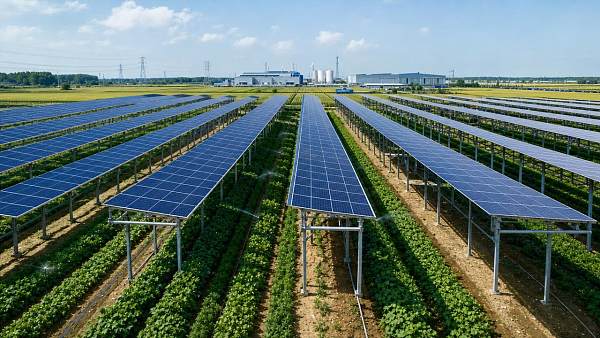
Agri-PV systems can unlock new value for businesses, but only when land use objectives are clearly defined from the start. For enterprise decision-makers balancing energy returns, agricultural productivity, and long-term investment risk, clarity in land strategy is essential. This article examines why Agri-PV systems succeed only when commercial, environmental, and operational goals are aligned.
Why land use clarity matters more than technology in real business scenarios
Many companies approach Agri-PV systems as a solar investment with an agricultural add-on. In practice, that sequence often creates avoidable conflict. The real question is not whether the technology works, but what the land is expected to deliver over the next ten to twenty years. If one stakeholder sees the site as a power asset, another as productive farmland, and a third as a compliance or ESG showcase, the project will struggle before engineering even begins.
This is especially relevant for enterprise decision-makers operating across supply chains, industrial parks, food processing networks, export-oriented farms, or land-intensive manufacturing. In each case, land is already tied to cost, output, regulation, financing, and reputation. Agri-PV systems only make sense when those priorities are ranked clearly. A site designed for crop resilience will not be configured the same way as a site designed for peak power generation. A site under water stress requires different assumptions than one intended for public sustainability reporting.
That is why different scenarios deserve attention. The same Agri-PV systems model can perform very differently depending on crop type, labor availability, irrigation methods, local grid access, land tenure, and the strategic purpose of the investment. Businesses that define land use goals early usually move faster in approvals, negotiate better with partners, and avoid redesign costs later.
Where Agri-PV systems usually appear in the market
In the broader industrial and trade environment, Agri-PV systems are most often considered in five business settings. First, large farms and agri-enterprises use them to stabilize income while protecting selected crops or grazing activity. Second, food processors and exporters explore them to reinforce supply security and reduce Scope 2 or Scope 3 emissions exposure. Third, industrial groups with rural land banks evaluate them as a dual-use asset strategy. Fourth, infrastructure investors view them as a way to increase land productivity where conventional solar may face social or regulatory resistance. Fifth, regional development actors consider them in climate adaptation programs tied to food systems and energy transition goals.
These are not identical scenarios. The first is often operations-led, the second supply-chain-led, the third finance-led, the fourth project-led, and the fifth policy-led. As a result, the right evaluation framework changes. Some organizations should prioritize crop compatibility and field access. Others should focus on power offtake certainty, land classification rules, or stakeholder acceptance. Treating all Agri-PV systems opportunities as interchangeable leads to weak assumptions and poor capital allocation.
Scenario comparison: the same land can serve very different goals
Before assessing technical design, decision-makers should identify which business scenario best matches the intended land function. The table below shows how priorities change across common use cases.
Scenario 1: When productive agriculture must remain the first priority
For farms, cooperatives, and agribusiness operators, Agri-PV systems make sense only if agricultural output remains protected or strategically improved. This scenario is common where land values are high, weather volatility is rising, or crop margins are unstable. Here, the project should begin with agronomy, not panel density. The land use goal is to keep the site agriculturally active while adding energy revenue or on-site power support.
The central business question is straightforward: does the system preserve the crop model? If the answer is uncertain, the project is not ready. Enterprises should examine crop sensitivity to shading, machinery movement requirements, labor workflow, irrigation infrastructure, and harvest schedules. Specialty crops, orchards, berries, and some heat-stressed production models may be more compatible than broad-acre operations requiring unrestricted mechanization. In this scenario, the best Agri-PV systems are not always those that maximize installed capacity, but those that maintain field economics.
Decision-makers should also test who bears downside risk if yields change. A project may appear attractive on paper, yet fail commercially if crop revenue volatility is shifted entirely to the producer. Clear land use goals help structure contracts, insurance terms, and performance expectations more realistically.
Scenario 2: When supply chain resilience matters more than direct power sales
Food exporters, processors, retailers, and branded manufacturers increasingly look at Agri-PV systems through a supply chain lens. In this scenario, the company may not own the land or operate the farm directly. Instead, it wants stronger supplier resilience, lower climate exposure, and measurable sustainability outcomes that support procurement continuity and market trust.
That changes the investment logic. The key land use goal is not simply energy generation; it is preserving strategic sourcing capacity. If an exporter depends on vulnerable agricultural regions, dual-use sites can support more stable production conditions while also contributing to renewable energy targets. But this only works when the company clearly defines what success looks like: fewer disruptions, stronger supplier retention, better emissions data, lower water stress, or improved customer-facing ESG proof.
In this scenario, Agri-PV systems should be evaluated alongside supplier finance, traceability systems, certification frameworks, and long-term sourcing agreements. A technically successful site may still fail the business test if it does not improve procurement resilience or if the benefits cannot be verified in reporting. For enterprise buyers, the land strategy must be linked to supply chain KPIs, not just megawatt output.
Scenario 3: When landowners seek better asset productivity
A different scenario appears when companies hold rural land as part of a larger industrial, logistics, or investment portfolio. In these cases, Agri-PV systems are often viewed as a way to increase asset productivity without fully converting the land away from agricultural use. This can be attractive in markets where conventional ground-mounted solar faces land use resistance or where policy supports multifunctional land strategies.
The mistake here is assuming all underused land is suitable. The critical land use goal must be defined at portfolio level first. Is the objective recurring lease income, renewable power supply, land value preservation, development optionality, or public sustainability positioning? Different answers lead to different structures. For example, a company wanting future land flexibility may reject dense permanent layouts. A company focused on long-duration yield may accept more site specialization.
Enterprises in this scenario should assess title clarity, agricultural designation, interconnection capacity, community expectations, and exit options. Agri-PV systems can add strategic value, but only if the land is not carrying hidden
Recommended News
 Portable oxygen concentrators vary more in noise than spec sheets suggestPortable oxygen concentrators may share similar specs, yet real-world noise can vary widely. Learn what decibel ratings miss and choose a quieter, more comfortable model with confidence.
 Interactive whiteboards are easier to buy than to integrate wellInteractive whiteboards are easy to buy, but hard to integrate. Discover how to align workflows, IT, training, and ROI for smarter deployment.
![]() Medical diagnostic equipment upgrades should start with workflow bottlenecksMedical diagnostic equipment upgrades should start with workflow bottlenecks. Discover how targeted investments improve throughput, integration, ROI, and diagnostic efficiency.
Medical diagnostic equipment upgrades should start with workflow bottlenecksMedical diagnostic equipment upgrades should start with workflow bottlenecks. Discover how targeted investments improve throughput, integration, ROI, and diagnostic efficiency.![]() Eco-friendly building materials can raise budgets before they lower themEco-friendly building materials may raise upfront budgets, but they can cut long-term costs, improve compliance, and strengthen asset value. Learn when the premium truly pays off.
Eco-friendly building materials can raise budgets before they lower themEco-friendly building materials may raise upfront budgets, but they can cut long-term costs, improve compliance, and strengthen asset value. Learn when the premium truly pays off. Ergonomic workspace design fixes discomfort, but not every layout problemErgonomic workspace design improves comfort, focus, and buying decisions—but not every layout issue. Learn what upgrades work, what room limits remain, and how to choose smarter.
![]() Outdoor garden supplies demand shifts earlier than many sellers plan forOutdoor garden supplies demand is starting earlier than many sellers expect. Learn what drives the shift and how distributors, wholesalers, and agents can plan smarter to win more sales.
Outdoor garden supplies demand shifts earlier than many sellers plan forOutdoor garden supplies demand is starting earlier than many sellers expect. Learn what drives the shift and how distributors, wholesalers, and agents can plan smarter to win more sales. Sustainable home decor sells better when materials are easy to verifySustainable home decor sells better when material claims are easy to verify. Discover how traceable data, certifications, and clear sourcing build trust and boost B2B sales.
 Modern office furniture trends are changing around hybrid work needsModern office furniture trends are redefining hybrid workplaces with flexible layouts, ergonomic design, and smart tech integration. Discover what drives demand and smarter buying decisions.
 Smart street lighting projects often miss the maintenance sideSmart street lighting projects often overlook maintenance. Learn how diagnostics, spare parts, and scenario-based support improve reliability, reduce downtime, and protect long-term value.
 Solid-state battery breakthroughs are real, but mass rollout is still difficultSolid-state battery breakthroughs are real, but scaling remains difficult. Explore what’s driving progress, what blocks mass rollout, and where commercialization may happen first.
![]() Commercial LED lighting retrofits save money, but not at the same paceCommercial LED lighting can cut costs, but payback varies by warehouse, office, retail, and industrial scenario. Discover how to identify the fastest-return retrofit opportunities.
Commercial LED lighting retrofits save money, but not at the same paceCommercial LED lighting can cut costs, but payback varies by warehouse, office, retail, and industrial scenario. Discover how to identify the fastest-return retrofit opportunities. Lithium battery storage projects fail early when thermal planning is weakLithium battery storage projects fail early when thermal planning is weak. Learn the key checks to improve safety, uptime, compliance, and long-term project returns.
 Photovoltaic solar panels: when higher efficiency is not the better dealPhotovoltaic solar panels are not always best when efficiency is highest. Discover how lifecycle cost, payback, and site conditions can deliver smarter ROI and better sourcing decisions.
 Plant-based protein processing depends more on texture than many expectPlant-based protein processing relies heavily on texture to improve quality, control risk, and boost consistency. Learn how better texture management strengthens compliance and competitiveness.
 Foldable screen technology keeps improving, yet repair costs remain a problemFoldable screen technology is getting stronger and smarter, but repair costs still worry buyers. Discover who should buy, key ownership risks, and how to choose wisely.
 Next-gen wireless charging sounds convenient, but how efficient is it?Next-gen wireless charging sounds effortless, but how efficient is it in real use? Explore heat, power loss, alignment, and the market factors shaping adoption.
![]() Wearable technology is improving fast, but comfort still decides adoptionWearable technology is evolving fast, but comfort still drives real adoption. Explore how design, fit, battery life, and daily usability shape the wearables consumers truly keep using.
Wearable technology is improving fast, but comfort still decides adoptionWearable technology is evolving fast, but comfort still drives real adoption. Explore how design, fit, battery life, and daily usability shape the wearables consumers truly keep using. Smart home devices wholesale margins shrink faster than many expectSmart home devices wholesale margins are shrinking fast. Learn what causes profit erosion, which categories face price wars, and how distributors can protect growth and improve sourcing decisions.
 Agri-PV systems make sense only when land use goals are clearAgri-PV systems create business value only when land use goals are clearly defined. Discover how aligned energy, farming, and ESG priorities reduce risk and improve returns.
 Organic fertilizers vs synthetic inputs: where does the payoff change?Organic fertilizers vs synthetic inputs: discover where costs, compliance, soil health, and market premiums shift the payoff—and how to choose the smartest long-term strategy.
 Smart classroom solutions often underdeliver without teacher-side usabilitySmart classroom solutions often fail when teacher-side usability is ignored. Discover scenario-based insights to improve adoption, reduce friction, and maximize classroom ROI.








Popular Tags
Global Trade Insights & Industry
Our mission is to empower global exporters and importers with data-driven insights that foster strategic growth.
Search News
Popular Tags
Industry Overview
The global commercial kitchen equipment market is projected to reach $112 billion by 2027. Driven by urbanization, the rise of e-commerce food delivery, and strict hygiene regulations.