

Lithium battery storage projects fail early when thermal planning is weak
Lithium battery storage projects often underperform long before commissioning when thermal planning is treated as a secondary task. For project managers and engineering leads, early decisions around heat load, ventilation, spacing, and safety design can determine whether a system delivers stable returns or costly setbacks. This article explains why weak thermal strategy creates hidden risks across performance, compliance, and lifecycle reliability.
A checklist approach is the fastest way to evaluate thermal readiness in a Lithium battery storage project because thermal risk rarely comes from one dramatic mistake. It usually grows through small omissions: an underestimated peak load, an incomplete airflow study, a poorly coordinated room layout, or a late-stage conflict between fire protection and cooling equipment. For project leaders, the goal is not just to “add cooling.” It is to verify whether thermal assumptions, safety controls, and operational realities are aligned before procurement and installation lock the project into expensive constraints.
Why project teams should review thermal planning before final design freeze
In many Lithium battery storage developments, thermal planning is delayed because battery capacity, inverter sizing, civil layout, and grid connection seem more urgent. That sequencing creates a problem: once electrical architecture and enclosure dimensions are fixed, thermal flexibility becomes narrow and costly. By that point, any correction may require redesign of ducting, repositioning of racks, stronger auxiliary power support, revised clearances, or even a change in fire compartment strategy.
Weak thermal planning also distorts financial expectations. A system may meet nameplate power targets on paper but experience thermal derating, inconsistent charging windows, accelerated cell aging, and higher maintenance demand in real operation. For project managers, that means schedule pressure during delivery, more disputes between vendors, and reduced confidence from investors or site owners. In short, poor thermal preparation is not only an engineering issue; it is a project execution risk.
First-pass checklist: the critical questions to confirm early
Before comparing suppliers or signing off the layout, use the following checklist to test whether the Lithium battery storage concept is thermally credible.
- Has the project defined both average and peak thermal loads for charge, discharge, standby, and abnormal operating conditions?
- Has the design team considered local climate extremes rather than annual averages only?
- Are battery racks, cabinets, or containers arranged to avoid hot spots and short-circuit airflow paths?
- Is there a clear strategy for ventilation, active cooling, heat rejection, and auxiliary power backup?
- Have thermal control assumptions been coordinated with the battery management system, PCS operation, and EMS dispatch logic?
- Does the fire protection concept remain effective under the selected airflow and compartment design?
- Are maintenance access, filter cleaning, sensor calibration, and equipment replacement possible without disrupting thermal balance?
- Has the owner reviewed how thermal design affects efficiency, degradation rate, warranty conditions, and operating expenditure?
If several of these answers are unclear, the project is not yet thermally mature, even if major equipment selection appears complete.
Core thermal planning checks for Lithium battery storage projects
1. Heat load calculation must reflect real operating behavior
One of the most common failures in Lithium battery storage planning is using simplified heat estimates based on nominal operation only. Project teams should ask for load cases that include peak cycling, high ambient temperature, partial state-of-charge operation, auxiliary equipment heat gain, and reduced cooling efficiency over time. The question is not whether the cooling system works in a perfect scenario. The question is whether it still protects battery health in the most demanding but realistic scenario.
2. Ambient environment should be assessed as a project variable, not a background detail
Sites in coastal, desert, high-humidity, high-altitude, or heavily polluted areas create very different thermal design requirements. Outdoor Lithium battery storage installations may face solar gain, dust loading, salt exposure, or unstable night cooling. Indoor projects may struggle with building heat accumulation and poor air exchange. Project managers should request site-specific thermal assumptions, not generic supplier brochures. If the thermal design ignores the local environment, operating margins may disappear during the first hot season.
3. Layout and spacing decisions directly affect temperature uniformity
Thermal problems are often spatial problems. Tight cabinet spacing, blocked return air, cable congestion, and poorly placed sensors can produce uneven cell temperatures even when total cooling capacity looks adequate. For Lithium battery storage systems, temperature uniformity is as important as absolute temperature control because imbalance accelerates aging and increases the chance of localized failure. A layout review should verify airflow path, hot aisle separation, intake protection, service clearance, and the location of obstructions introduced by other disciplines.
4. Cooling strategy should match duty cycle and maintenance reality
Air cooling, liquid cooling, hybrid approaches, and conditioned container designs each have trade-offs. The right solution depends on cycling intensity, climate, response speed, maintenance capability, and reliability expectations. A project with aggressive charge-discharge schedules may require tighter thermal control than a backup-oriented asset. Engineering leads should evaluate not only thermal performance but also spare parts access, leak management, fan redundancy, filter maintenance, and downtime implications. The best thermal solution for Lithium battery storage is not always the one with the highest technical specification; it is the one that remains controllable throughout the full operating lifecycle.
Quick judgment table: what strong vs weak thermal planning usually looks like
Scenario-based checks project managers should not overlook
For utility-scale outdoor projects
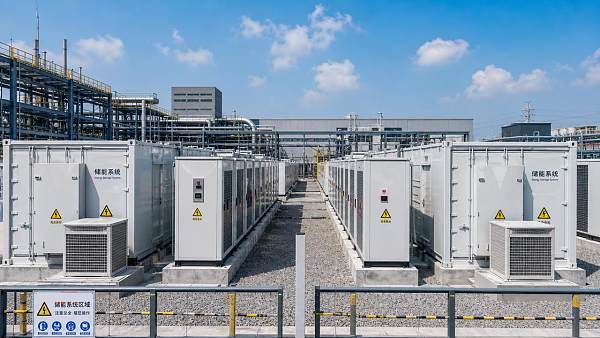
Confirm solar exposure assumptions, container orientation, shading impacts, dust filtration plan, auxiliary power reliability, and emergency ventilation logic. In large Lithium battery storage yards, heat rejection can also be influenced by unit spacing and recirculation between containers.
For commercial and industrial indoor projects
Check building HVAC integration, structural constraints on air routing, occupancy-related safety rules, smoke control interactions, and whether expansion phases will alter thermal behavior. Indoor Lithium battery storage may appear easier to protect, yet building interfaces often create hidden restrictions.
For fast-cycle or high-utilization applications
Require tighter review of charge-discharge frequency, rest periods, heat accumulation across dispatch windows, and the response time of the cooling system. High-utilization Lithium battery storage leaves less room for thermal recovery, so small modeling errors can quickly become operational limits.
Commonly missed risks that push projects into early underperformance
- Assuming warranty coverage replaces design rigor. Many warranties require operation within temperature windows that weak site design cannot consistently maintain.
- Ignoring thermal sensor placement. A well-designed cooling system can still underperform if monitoring points do not reflect real hot spots.
- Overlooking degraded conditions. Dirty filters, aging fans, partial blockage, or refrigerant issues can reduce thermal performance long before total failure occurs.
- Separating safety review from thermal review. Ventilation patterns may affect gas detection, smoke movement, and suppression effectiveness.
- Underestimating auxiliary energy demand. Thermal control consumes power, and that parasitic load affects project economics and backup design.
Execution advice: what to prepare before procurement and construction
To keep a Lithium battery storage project on track, project managers should require a short but disciplined thermal readiness package before final procurement. This package should include the design ambient envelope, thermal load matrix, cooling concept description, airflow or fluid path review, sensor placement logic, control sequence summary, safety coordination notes, and maintenance access confirmation. It should also identify assumptions that still need validation during FAT, SAT, and commissioning.
It is also useful to define acceptance criteria in operational terms rather than descriptive language. Instead of approving a design because it is “adequately cooled,” specify measurable thresholds for temperature distribution, response time, alarm logic, derating triggers, and sustained operation under high ambient conditions. That turns thermal planning from a vague design topic into a project control item.
FAQ for engineering leads reviewing Lithium battery storage thermal plans
Is thermal planning mainly a supplier responsibility?
No. Suppliers provide equipment data, but the owner’s team must verify site conditions, integration interfaces, duty cycle assumptions, and long-term operating expectations. Thermal planning for Lithium battery storage is a shared responsibility across owner, integrator, EPC, and specialist consultants.
When should thermal review start?
It should start during concept design, before layout and equipment packages are frozen. Waiting until detailed engineering usually means the most effective corrections are no longer easy to implement.
What is the simplest warning sign of weak planning?
If the team cannot clearly explain how the Lithium battery storage system behaves during peak summer operation, partial cooling degradation, and emergency shutdown conditions, the thermal strategy is probably incomplete.
Practical next step for project teams
Early failure in Lithium battery storage projects is rarely caused by battery chemistry alone. More often, it results from preventable thermal planning gaps that were not challenged early enough. For project managers and engineering decision-makers, the best next step is to organize a focused cross-functional review covering thermal loads, site climate, layout, controls, fire strategy, and maintenance constraints before major procurement commitments are made.
If your organization needs to confirm system parameters, solution suitability, implementation timeline, budget impact, or partner coordination for a Lithium battery storage project, prepare these questions first: What operating profile defines the true heat load? What site conditions narrow the thermal margin? Which design assumptions affect warranty and compliance? How will the system be monitored, maintained, and validated after installation? Clear answers to those points create the trust and technical confidence needed for a more bankable, resilient project outcome.
Recommended News
 Portable oxygen concentrators vary more in noise than spec sheets suggestPortable oxygen concentrators may share similar specs, yet real-world noise can vary widely. Learn what decibel ratings miss and choose a quieter, more comfortable model with confidence.
 Interactive whiteboards are easier to buy than to integrate wellInteractive whiteboards are easy to buy, but hard to integrate. Discover how to align workflows, IT, training, and ROI for smarter deployment.
![]() Medical diagnostic equipment upgrades should start with workflow bottlenecksMedical diagnostic equipment upgrades should start with workflow bottlenecks. Discover how targeted investments improve throughput, integration, ROI, and diagnostic efficiency.
Medical diagnostic equipment upgrades should start with workflow bottlenecksMedical diagnostic equipment upgrades should start with workflow bottlenecks. Discover how targeted investments improve throughput, integration, ROI, and diagnostic efficiency.![]() Eco-friendly building materials can raise budgets before they lower themEco-friendly building materials may raise upfront budgets, but they can cut long-term costs, improve compliance, and strengthen asset value. Learn when the premium truly pays off.
Eco-friendly building materials can raise budgets before they lower themEco-friendly building materials may raise upfront budgets, but they can cut long-term costs, improve compliance, and strengthen asset value. Learn when the premium truly pays off. Ergonomic workspace design fixes discomfort, but not every layout problemErgonomic workspace design improves comfort, focus, and buying decisions—but not every layout issue. Learn what upgrades work, what room limits remain, and how to choose smarter.
![]() Outdoor garden supplies demand shifts earlier than many sellers plan forOutdoor garden supplies demand is starting earlier than many sellers expect. Learn what drives the shift and how distributors, wholesalers, and agents can plan smarter to win more sales.
Outdoor garden supplies demand shifts earlier than many sellers plan forOutdoor garden supplies demand is starting earlier than many sellers expect. Learn what drives the shift and how distributors, wholesalers, and agents can plan smarter to win more sales. Sustainable home decor sells better when materials are easy to verifySustainable home decor sells better when material claims are easy to verify. Discover how traceable data, certifications, and clear sourcing build trust and boost B2B sales.
 Modern office furniture trends are changing around hybrid work needsModern office furniture trends are redefining hybrid workplaces with flexible layouts, ergonomic design, and smart tech integration. Discover what drives demand and smarter buying decisions.
 Smart street lighting projects often miss the maintenance sideSmart street lighting projects often overlook maintenance. Learn how diagnostics, spare parts, and scenario-based support improve reliability, reduce downtime, and protect long-term value.
 Solid-state battery breakthroughs are real, but mass rollout is still difficultSolid-state battery breakthroughs are real, but scaling remains difficult. Explore what’s driving progress, what blocks mass rollout, and where commercialization may happen first.
![]() Commercial LED lighting retrofits save money, but not at the same paceCommercial LED lighting can cut costs, but payback varies by warehouse, office, retail, and industrial scenario. Discover how to identify the fastest-return retrofit opportunities.
Commercial LED lighting retrofits save money, but not at the same paceCommercial LED lighting can cut costs, but payback varies by warehouse, office, retail, and industrial scenario. Discover how to identify the fastest-return retrofit opportunities. Lithium battery storage projects fail early when thermal planning is weakLithium battery storage projects fail early when thermal planning is weak. Learn the key checks to improve safety, uptime, compliance, and long-term project returns.
 Photovoltaic solar panels: when higher efficiency is not the better dealPhotovoltaic solar panels are not always best when efficiency is highest. Discover how lifecycle cost, payback, and site conditions can deliver smarter ROI and better sourcing decisions.
 Plant-based protein processing depends more on texture than many expectPlant-based protein processing relies heavily on texture to improve quality, control risk, and boost consistency. Learn how better texture management strengthens compliance and competitiveness.
 Foldable screen technology keeps improving, yet repair costs remain a problemFoldable screen technology is getting stronger and smarter, but repair costs still worry buyers. Discover who should buy, key ownership risks, and how to choose wisely.
 Next-gen wireless charging sounds convenient, but how efficient is it?Next-gen wireless charging sounds effortless, but how efficient is it in real use? Explore heat, power loss, alignment, and the market factors shaping adoption.
![]() Wearable technology is improving fast, but comfort still decides adoptionWearable technology is evolving fast, but comfort still drives real adoption. Explore how design, fit, battery life, and daily usability shape the wearables consumers truly keep using.
Wearable technology is improving fast, but comfort still decides adoptionWearable technology is evolving fast, but comfort still drives real adoption. Explore how design, fit, battery life, and daily usability shape the wearables consumers truly keep using. Smart home devices wholesale margins shrink faster than many expectSmart home devices wholesale margins are shrinking fast. Learn what causes profit erosion, which categories face price wars, and how distributors can protect growth and improve sourcing decisions.
 Agri-PV systems make sense only when land use goals are clearAgri-PV systems create business value only when land use goals are clearly defined. Discover how aligned energy, farming, and ESG priorities reduce risk and improve returns.
 Organic fertilizers vs synthetic inputs: where does the payoff change?Organic fertilizers vs synthetic inputs: discover where costs, compliance, soil health, and market premiums shift the payoff—and how to choose the smartest long-term strategy.
 Smart classroom solutions often underdeliver without teacher-side usabilitySmart classroom solutions often fail when teacher-side usability is ignored. Discover scenario-based insights to improve adoption, reduce friction, and maximize classroom ROI.












Popular Tags
Global Trade Insights & Industry
Our mission is to empower global exporters and importers with data-driven insights that foster strategic growth.
Search News
Popular Tags
Industry Overview
The global commercial kitchen equipment market is projected to reach $112 billion by 2027. Driven by urbanization, the rise of e-commerce food delivery, and strict hygiene regulations.