

EN 62368-1:2026 Mandatory in EU from Apr 18, 2026
Effective April 18, 2026, the European Union will enforce EN 62368-1:2026 as a mandatory safety standard for all power-supplied smart wearables, wireless chargers, USB-C fast-charging accessories, and small smart home terminals. This update introduces new arc fault detection and interruption (AFDD) protection testing — a requirement that directly affects CE marking eligibility and market access for affected product categories.
Event Overview
The European Committee for Electrotechnical Standardization (CENELEC) has confirmed that EN 62368-1:2026 becomes fully mandatory across all EU member states on April 18, 2026. The revised standard includes a newly introduced requirement for arc fault detection and interruption (AFDD) protection testing. This applies to any electrical equipment with a mains power input falling within the scope of EN 62368-1 — specifically including smart wearables, wireless charging devices, USB-C fast-charging adapters and cables, and compact smart home control units. Products failing to meet the AFDD test criteria will be ineligible for CE marking and prohibited from being placed on the EU market.
Industries Affected by the Update
Direct Exporters & Brand Owners
Exporters placing smart wearables or small powered consumer electronics into the EU must ensure full compliance before shipment. Non-compliant products risk customs rejection, post-market surveillance penalties, or forced withdrawal. The AFDD requirement adds a new validation layer beyond prior versions — meaning existing type approvals under EN 62368-1:2015 or earlier are no longer sufficient.
Contract Manufacturers & OEMs
Manufacturers producing for EU-bound brands face revised design and testing obligations. AFDD integration may require hardware-level changes — such as updated circuit breakers, current-sensing components, or firmware logic — affecting bill-of-materials, PCB layout, and production timelines. Product redesign cycles initiated after Q2 2025 should account for this requirement from the outset.
Component Suppliers & Module Providers
Suppliers of AC-DC power modules, USB-C PD controllers, or integrated charging ICs may see increased demand for AFDD-capable reference designs or pre-certified subsystems. However, no harmonized component-level AFDD specification is mandated; responsibility for system-level compliance remains with the final product manufacturer.
Distribution & Certification Service Providers
Notified Bodies and testing laboratories will need to validate AFDD performance per Annex G of EN 62368-1:2026. Distributors handling CE documentation must verify that test reports explicitly cover the new AFDD clause — not just general safety assessment. Incomplete or outdated reports may invalidate conformity declarations.
Key Focus Areas and Recommended Actions
Monitor official implementation guidance from CENELEC and EU national market surveillance authorities
While the date is fixed, interpretation of AFDD applicability thresholds (e.g., minimum rated voltage/current, exclusion clauses for battery-only operation) may vary slightly between Notified Bodies. Current more relevant than ever is tracking updates from national authorities like Germany’s ZLS or the UK’s UKCA transition office — even though UKCA is outside scope, its technical alignment often signals EU enforcement nuance.
Prioritize AFDD readiness for high-volume, high-risk product categories
Focus first on products with direct mains connection and frequent thermal stress — e.g., multi-port USB-C wall chargers, smartwatches with proprietary charging docks, and compact smart plugs. These are most likely to trigger arc faults and therefore face higher scrutiny during market surveillance checks post-April 2026.
Verify CE documentation completeness before shipment
Confirm that your Declaration of Conformity references EN 62368-1:2026 (not earlier editions), and that the supporting test report includes explicit pass/fail results for Clause G.1 (arc fault simulation) and G.2 (interruption time verification). Do not rely on generic safety statements.
Initiate internal cross-functional alignment now
Assign responsibility across R&D, procurement, QA, and regulatory teams for AFDD implementation. Reassess lead times for component qualification, retesting, and certification renewal — especially if legacy designs are still in active production or inventory.
Editorial Perspective / Industry Observation
From industry perspective, this update is less about introducing fundamentally new safety concepts and more about formalizing and mandating an existing best practice — arc fault detection — into harmonized legislation. Analysis来看, it reflects a broader EU trend toward proactive fire prevention in low-voltage consumer electronics, especially as device power density increases and charging speeds rise. Observation来看, the timing suggests regulators anticipate growing incident data related to thermal runaway in compact charging systems. It is currently more a signal of tightening enforcement expectations than an immediate technical barrier — but one that demands structured response rather than reactive compliance.
Conclusion
This revision marks a procedural shift in how compliance is verified for certain consumer electronics entering the EU — moving from generalized safety evaluation to targeted functional safety verification. It does not redefine product categories or introduce new hazard classes, but it does raise the bar for evidence-based conformity. Currently, it is better understood as a mandatory upgrade to documentation and test protocol rigor, rather than a fundamental redesign mandate — provided AFDD considerations are integrated early in development cycles.
Source Attribution
Main source: Official CENELEC announcement regarding EN 62368-1:2026.
Ongoing monitoring required for: National market surveillance interpretations and Notified Body implementation notes.
Recommended News
 Mexico Enforces NOM-019-SCFI-2026 EMC Certification for Auto Electronics from May 2026Mexico enforces NOM-019-SCFI-2026 EMC certification for auto electronics from May 2026 — mandatory local testing, stricter standards, and urgent compliance action required.
 Global Port Congestion Eases, but Red Sea Rerouting PersistsRed Sea rerouting persists amid easing port congestion—Shanghai–Rotterdam freight rates surge 4.2% to $5,280/TEU. Critical insights for exporters, importers & logistics leaders.
 RCEP Green Packaging Mutual Recognition Starts June 2026RCEP Green Packaging Mutual Recognition starts June 2026 — streamline exports to Australia, NZ, Japan & SK with GB/T 37572-2025 certification. Save time & costs!
 FDA AI Diagnostic Device Rules: ABIA Required from Q3 2026FDA AI diagnostic device rules now require ABIA reports from Q3 2026 — essential for 510(k)/De Novo submissions. Stay compliant, avoid delays & secure U.S. market access.
 Vietnam Suspends SASO Mutual Recognition for Chinese Irrigation EquipmentVietnam suspends SASO mutual recognition for Chinese irrigation equipment—sprinkler systems, drip controllers & irrigation systems now require local QUATEST 3 testing. Act now to avoid 12-week delays & 35% cost hikes.
") TÜV Rheinland Updates CE Certification for Industrial Robot Drives (2026 Q3)TÜV Rheinland’s 2026 Q3 CE certification update for industrial robot drives mandates PLd safety + EN 61800-3 EMC — act now to avoid EU market delays.
TÜV Rheinland Updates CE Certification for Industrial Robot Drives (2026 Q3)TÜV Rheinland’s 2026 Q3 CE certification update for industrial robot drives mandates PLd safety + EN 61800-3 EMC — act now to avoid EU market delays. IMDG Code Amendment 41-24 Takes Effect for Lithium Battery Sea FreightIMDG Code Amendment 41-24 is live: New QR labels, bilingual handling tags & SOC disclosure required for UN3480 lithium battery sea freight—act now to avoid delays.
 SASO SABER Phase II: Digital Type Test Reports Required for Building Hardware from Jun 2026SASO SABER Phase II requires digital type test reports & unique product IDs for building hardware exports to Saudi Arabia — effective June 2026. Act now to ensure compliance and avoid customs delays.
 CPSC Updates 16 CFR Part 1236: New Suffocation Test for Children's Sleep Sacks Effective July 2026CPSC Updates 16 CFR Part 1236: New suffocation test for children's sleep sacks takes effect July 2026 — ensure compliance, avoid delays & protect your U.S. market access.
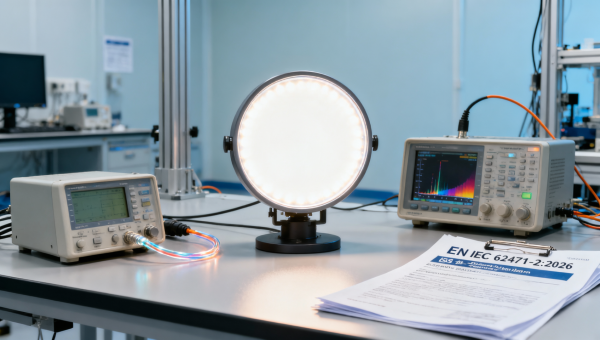
 EN IEC 62471-2:2026 Effective Oct 2026 for EU LED Lighting ExportsEN IEC 62471-2:2026 mandates full-spectrum photobiological safety testing (200–3000 nm) for all EU-bound LED lighting — effective 1 Oct 2026. Act now to secure CE marking & avoid market access delays.
 AI Patent Tools Security Flaw Triggers Compliance ReviewAI Patent Tools security flaw exposed—triggering urgent compliance reviews for medical device, semiconductor & AI firms. Act now to secure submissions.
 Lithium Carbonate Price Rebound Pressures Battery CostsLithium carbonate price rebound in April 2026 pressures battery costs—impacting procurement, EV manufacturing & EU energy storage compliance. Key insights inside.
 AI+New Materials Summit at Canton Fair ClosesAI+New Materials Summit at Canton Fair closes—key insights for AI testing instruments, optical metrology & ISO/IEC 17025 compliance. Discover what Tier 1 auto buyers and TÜV/JIS labs really want.
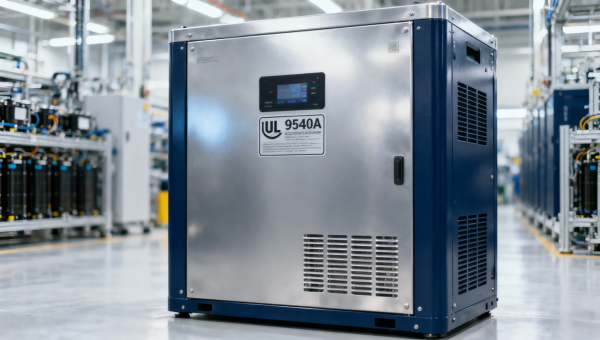
 Sodium-Ion Battery Mass Production Accelerates for Energy StorageSodium-ion battery mass production accelerates in 2026 — lower-cost, UL 9540A-certified energy storage for solar exporters and off-grid markets.
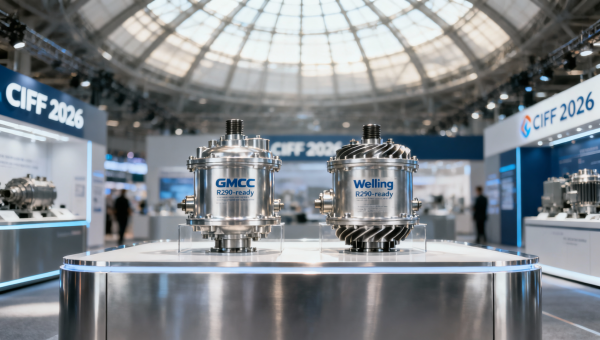
 GMCC & Welling Showcase R290-Ready Compressors at CIFF 2026R290-ready compressors from GMCC & Welling—ultra-low noise (≤22 dB), high IPLV, EU F-Gas III & US DOE 2026 compliant. See why HVAC exporters must act now.
 Dongfang Select's Blue Hat Supplements Go Global with TraceabilityBlue Hat supplements with blockchain traceability—Dongfang Select’s global launch sets a new standard for trusted health & beauty exports.
 China’s New Green Design Guidelines Mandate LCA for Export Packaging & Building MaterialsChina’s new Green Design Guidelines mandate LCA for export packaging & building materials—key for EU, Korea, Canada market access. Act now to secure green procurement eligibility & tariff benefits.
 Semiconductor Supply Chain Price Hikes Extend Lead TimesSemiconductor supply chain price hikes hit MCUs, power ICs & automotive sensors—lead times now stretch 16–20 weeks. Act now to secure A-BOM readiness and local packaging capacity.
 Wuxi E-Bike Cluster Seeks Global Market at Canton FairWuxi e-bike cluster (Yadea, Aima, Tailg) targets global markets at Canton Fair—UL2849, IEC62133 & UN38.3 compliance is now key for LATAM entry.
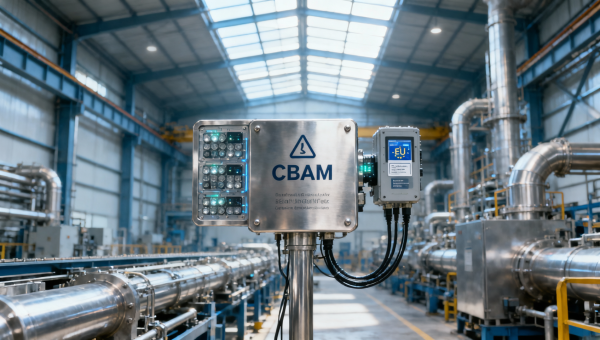
 EU CBAM Enters Enforcement Phase on Jan 1, 2026EU CBAM enforcement starts Jan 1, 2026 — critical for exporters of iron, steel, aluminium, cement, fertilizers, electricity & hydrogen to the EU. Act now.
 2026 Jan–Feb Paper Industry Profits +6.1%; Green Packaging Export Premium EmergesGreen packaging export premium drives +6.1% paper industry profits in Jan–Feb 2026 — discover how FSC/PEFC certification and water-based processes boost margins for eco-friendly, food & cosmetics packaging exporters.















Popular Tags
Global Trade Insights & Industry
Our mission is to empower global exporters and importers with data-driven insights that foster strategic growth.
Search News
Popular Tags
Industry Overview
The global commercial kitchen equipment market is projected to reach $112 billion by 2027. Driven by urbanization, the rise of e-commerce food delivery, and strict hygiene regulations.