

Where AI-assisted surgery saves time and where it still falls short
AI-assisted surgery is redefining operating room efficiency, helping hospitals reduce procedure time, improve precision, and optimize resource allocation. Yet for business leaders evaluating healthcare innovation, the real question is where this technology delivers measurable value—and where technical, regulatory, and workflow limitations still slow adoption. Understanding both sides is essential for making informed strategic decisions.
What exactly does AI-assisted surgery mean, and why is it attracting so much executive attention?
AI-assisted surgery refers to the use of algorithms, data models, computer vision, and decision-support systems to enhance surgical planning, intraoperative guidance, and post-operative evaluation. It does not usually mean that artificial intelligence replaces the surgeon. In most real-world settings, AI-assisted surgery functions as an augmentation layer that helps teams identify anatomy, predict risk, standardize workflows, and improve timing across the operating room.
This matters to enterprise decision-makers because hospitals and medical technology suppliers are under constant pressure to raise throughput without compromising safety. Longer procedures create bottlenecks in staffing, bed utilization, equipment scheduling, and reimbursement performance. When AI-assisted surgery shortens setup time, supports more precise navigation, or reduces avoidable complications, it can influence both clinical outcomes and operational economics.
The strategic appeal goes beyond healthcare providers. For investors, manufacturers, platform vendors, and international trade stakeholders, this segment reflects a broader digital transformation trend: the convergence of robotics, imaging, software, analytics, and data governance. That makes AI-assisted surgery not just a hospital tool, but a cross-sector signal of how advanced industrial ecosystems are evolving.
Where does AI-assisted surgery save the most time in actual operating room workflows?
Time savings are most visible when AI is applied to tasks that are repetitive, data-heavy, and sensitive to human variation. In these areas, AI-assisted surgery can produce measurable efficiency gains without requiring fully autonomous intervention.
One high-impact area is preoperative planning. AI systems can analyze scans, segment organs or tumors, and generate recommended surgical pathways faster than manual review alone. For teams handling complex orthopedic, neurosurgical, or cardiovascular procedures, better planning can reduce uncertainty before the first incision.
Another strong use case is intraoperative visualization. Computer vision tools can highlight tissue boundaries, instrument location, or relevant anatomy in real time. This can reduce pauses for interpretation and improve handoff quality between surgeons, anesthesiologists, and support staff. In procedures where seconds matter, small time savings can accumulate into meaningful gains.
AI-assisted surgery also helps with workflow orchestration. Some systems track procedural steps automatically, estimate remaining time, and support room turnover planning. For hospital administrators, this matters because operating rooms are among the most expensive assets in the facility. Improved predictability can increase utilization and reduce costly scheduling friction.
Finally, post-operative documentation and data capture can be streamlined. Automated recording of case metrics, image tagging, and quality review reduce administrative burden and create cleaner data for compliance and continuous improvement. In other words, the time value of AI-assisted surgery often extends beyond the procedure itself.
Which surgical specialties benefit the most, and which settings see weaker returns?
Not every clinical environment benefits equally. AI-assisted surgery tends to perform best in specialties where imaging quality is high, procedure steps are relatively standardized, and large training datasets exist. Orthopedics is a common example, especially in joint replacement, where preoperative imaging, implant positioning, and repeatable workflow patterns support algorithmic assistance. Neurosurgery and certain minimally invasive procedures also show strong potential because precision and visualization are central to success.
In contrast, emergency surgeries, highly variable anatomy cases, and lower-volume specialty environments may see weaker returns. If a procedure changes rapidly based on bleeding, unexpected tissue characteristics, or trauma complexity, AI models may offer less practical support. Likewise, smaller hospitals may struggle to justify the investment if case volume is too low to generate a meaningful return on capital and training effort.
Decision-makers should also distinguish between premium flagship deployments and scalable operational value. A technology may perform impressively in a leading academic center with expert staff, but that does not automatically translate into broad adoption across regional health systems or international markets. The question is not whether AI-assisted surgery can work, but whether it works consistently across the buyer’s actual environment.
Where does AI-assisted surgery still fall short despite the market excitement?
The biggest limitation is that surgical reality is messy. Data quality, patient variation, equipment compatibility, and workflow inconsistency all challenge algorithm performance. AI systems are only as reliable as the data, labeling standards, and validation methods behind them. If models are trained on narrow datasets or idealized conditions, they may struggle in real clinical settings.
Integration is another major weakness. Many hospitals operate with fragmented software stacks, legacy imaging systems, and procurement constraints. Even if an AI-assisted surgery platform performs well in isolation, it may create friction if it does not connect cleanly with surgical robots, PACS environments, EHR systems, or sterilization workflows. In these cases, implementation delays can erode the very time savings the technology promises.
There is also a trust gap. Surgeons and operating room teams need transparent systems that support judgment rather than obscure it. Black-box recommendations can slow adoption, especially in high-risk specialties where liability, explainability, and patient safety are non-negotiable. Regulatory scrutiny further raises the bar. Approval pathways, cybersecurity standards, and data privacy requirements can all extend commercialization timelines.
Most importantly, AI-assisted surgery does not remove the need for human skill. If a hospital has weak change management, inconsistent training, or poor interdisciplinary coordination, adding AI may not fix the underlying problem. In some settings, it may even add cognitive burden during the early adoption phase.
How should business leaders evaluate whether AI-assisted surgery is worth the investment?
Executives should avoid evaluating AI-assisted surgery as a single technology category. The better approach is to assess a specific use case, a defined clinical pathway, and a measurable operational objective. Is the goal to reduce procedure time, improve surgical consistency, increase case volume, lower revision rates, or strengthen market positioning? Different systems deliver value in different ways.
A practical review should include clinical fit, data readiness, integration complexity, reimbursement alignment, vendor support, and training requirements. Procurement teams should ask whether the platform improves a constrained part of the workflow or simply adds another dashboard. If the value depends on extensive manual input, expensive customization, or rare specialist oversight, the economic case may weaken quickly.
Below is a decision table that helps frame common evaluation questions around AI-assisted surgery.
What are the most common misconceptions about AI-assisted surgery?
One misconception is that AI-assisted surgery automatically means robotic surgery. In reality, robotics and AI may overlap, but they are not identical. A robotic platform can operate with limited AI, while an AI-based surgical support tool may function without a robot at all. Conflating the two can distort budgeting and vendor comparisons.
Another misconception is that time saved in a pilot study translates directly into system-wide efficiency. Early trials often involve highly motivated teams, selected patient populations, and vendor-heavy support. Once the technology moves into routine use, the performance gap can narrow. That is why post-deployment governance matters as much as initial procurement.
A third misunderstanding is that AI-assisted surgery is mainly a clinical issue. It is also a procurement, IT, legal, cybersecurity, and supply chain issue. The broader enterprise impact includes service contracts, software updates, data storage obligations, cross-border compliance, and vendor continuity. For global businesses following medical technology trends, these factors shape market scalability.
What should companies, hospitals, and industry partners confirm before moving forward?
Before adopting or partnering around AI-assisted surgery, organizations should clarify a short list of high-value questions. First, what measurable problem is being solved, and how will success be tracked over 6 to 12 months? Second, which procedures and sites are most suitable for a pilot? Third, what data governance, security, and regulatory obligations apply across target markets?
They should also confirm whether the vendor can support implementation beyond the sale. That includes onboarding, interoperability testing, surgeon training, performance monitoring, and upgrade pathways. In complex B2B environments, commercial success depends less on the headline technology and more on the reliability of execution.
For enterprise decision-makers, the most balanced conclusion is this: AI-assisted surgery already creates value where data is strong, workflows are structured, and teams are prepared to operationalize the technology. It still falls short where variation is high, integration is weak, or expectations outrun practical readiness. If you need to confirm a specific deployment path, procurement strategy, technical scope, timeline, pricing logic, or partnership model, the first conversations should focus on clinical use case fit, integration requirements, compliance constraints, and measurable ROI milestones.
Recommended News
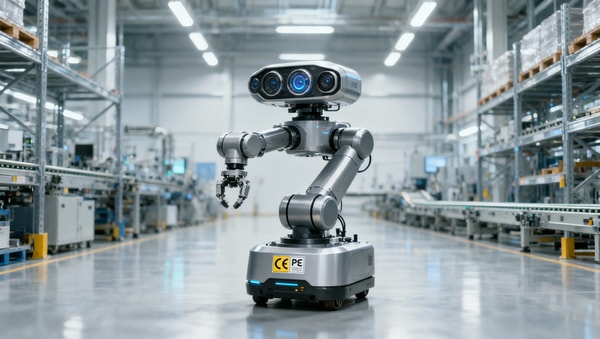
 China’s First Embodied AI Robot Export Liability Insurance Launched in GuangxiEmbodied AI Robot Export Liability Insurance launched in Guangxi—China’s first insurer-backed solution for EU/Japan-bound industrial & service robots. Boost compliance, trust & tenders now.
 Morocco: 4th Top African Recipient of EU Energy Aid, Boosting China’s PV & Storage ExportsMorocco’s EU energy aid boost unlocks opportunities for Chinese PV mounting structures & containerized energy storage exports—act now to leverage new regulatory advantages.
 Industrial Robot Controller Thermal Gel: China's Export-Ready Heat Dissipation SolutionIndustrial Robot Controller Thermal Gel: China’s export-ready, TÜV-certified heat dissipation solution (8.5 W/mK) for robotics in SEA & Mexico.
 ADB Raises Vietnam’s 2026 GDP Forecast to 7.2% on Sino-Vietnam Supply Chain IntegrationADB raises Vietnam’s 2026 GDP forecast to 7.2% amid deepening Sino-Vietnam supply chain integration in electronics, solar PV, and lithium battery PACK production — key insight for OEMs, exporters & integrators.
 First National SME Service Demonstration Platforms AnnouncedFirst National SME Service Demonstration Platforms announced—16 specialize in REACH, UKCA, UL certification & rapid factory audits for exporters.
 U.S. Natural Gas Inventory Growth Below Forecast: Impact on Plastic Export CostsU.S. natural gas inventory growth missed forecast—impacting plastic export costs globally. Learn how rising TTF prices affect PP/PE resin costs, margins & supply chain strategy for exporters.
 EN 62368-1:2026 Enforced in EU: Thermal Runaway Protection for Wearables & Smart Home DevicesEN 62368-1:2026 is now mandatory in the EU—learn how thermal runaway protection impacts wearables, smart home devices & EV accessories.
 Q1 2026 Industrial Profits Up 15.5%: Supply Chain Cost Stability ConfirmedQ1 2026 Industrial Profits Up 15.5% — supply chain cost stability confirmed for global procurement, contract manufacturing & OEM teams.
") MIIT Releases Service Trade Standardization Plan (2026–2030)MIIT's 2026–2030 Service Trade Standardization Plan boosts AI-driven digital services—remote QA, cloud maintenance, intelligent warehouse SaaS—for global export competitiveness.
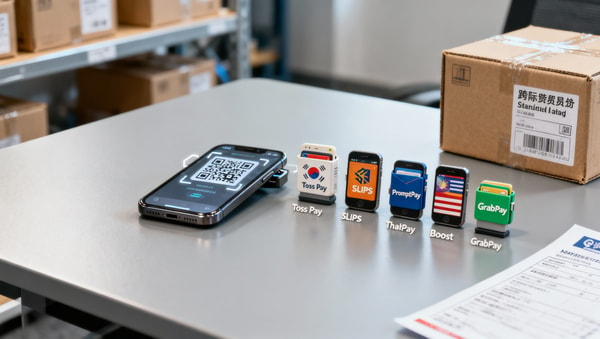
MIIT Releases Service Trade Standardization Plan (2026–2030)MIIT's 2026–2030 Service Trade Standardization Plan boosts AI-driven digital services—remote QA, cloud maintenance, intelligent warehouse SaaS—for global export competitiveness. WeChat Pay Integrates QR Codes from 5 Countries for B2B Cross-Border SettlementWeChat Pay integrates QR codes from South Korea, Sri Lanka, Thailand, Malaysia & Singapore — enabling faster, cheaper B2B cross-border settlement for global buyers and Chinese suppliers.
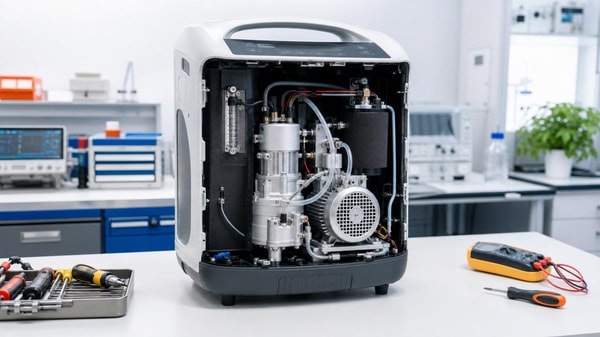
 Portable oxygen concentrators get noisy over time for several reasonsPortable oxygen concentrators get noisy over time due to dust, wear, loose parts, and aging compressors. Learn key causes, inspection priorities, and service tips to prevent failures.
 Interactive whiteboards: what schools regret not checking earlyInteractive whiteboards can boost learning, but schools often regret missing key checks on compatibility, durability, training, and support. Discover how to buy smarter.
 Medical diagnostic equipment downtime usually starts with this oversightMedical diagnostic equipment downtime often starts with one overlooked maintenance gap. Learn the warning signs, hidden costs, and smart service strategies to improve uptime.
 Eco-friendly building materials: where certification changes the decisionEco-friendly building materials now win or lose on certification. Learn how verified standards reduce sourcing risk, support compliance, and improve procurement decisions.
 Ergonomic workspace design mistakes that still cause daily strainErgonomic workspace design mistakes can silently cause daily strain, fatigue, and lower productivity. Discover practical fixes to improve comfort, focus, and workstation performance.
 Outdoor garden supplies that wear out too fast in summer heatOutdoor garden supplies can fail fast in extreme summer heat. Discover which items wear out first, what materials last longer, and how to buy smarter for durable, cost-saving performance.
 Sustainable home decor: how to spot green claims with substanceSustainable home decor explained: learn how to spot credible green claims, avoid greenwashing, compare materials and certifications, and choose stylish, healthier pieces with real impact.
 Modern office furniture trends that improve layout flexibilityModern office furniture trends are transforming flexible workplace design. Explore modular, mobile, ergonomic, and acoustic solutions that boost productivity and smarter space planning.
 Smart street lighting works best when control systems are not overlookedSmart street lighting succeeds when control systems come first. Learn how better monitoring, dimming, and integration improve ROI, maintenance efficiency, and long-term project performance.
 What solid-state battery breakthroughs are still years from market?Solid-state battery breakthroughs sound transformative, but which ones are still years from market? Explore the technical, cost, and scaling barriers shaping real adoption timelines.
 Commercial LED lighting retrofits: when is payback slower than planned?Commercial LED lighting payback can slip when costs, runtime, rebates, and controls are misjudged. Learn the hidden risks and review steps that protect ROI before approval.


















Popular Tags
Global Trade Insights & Industry
Our mission is to empower global exporters and importers with data-driven insights that foster strategic growth.
Search News
Popular Tags
Industry Overview
The global commercial kitchen equipment market is projected to reach $112 billion by 2027. Driven by urbanization, the rise of e-commerce food delivery, and strict hygiene regulations.