

Outdoor furniture manufacturer red flags before placing an order
Choosing an outdoor furniture manufacturer should go beyond catalogs and price lists. For procurement teams, distributors, and business evaluators, spotting warning signs early can prevent rising procurement cost, delivery risks, and supplier disputes. This guide explains the key red flags to watch for when screening an outdoor furniture supplier, helping buyers make smarter sourcing decisions within today’s fast-changing global supply chain management solutions landscape.
Why outdoor furniture manufacturer screening is different from general supplier sourcing
An outdoor furniture manufacturer is not just a fabricator of tables, chairs, or loungers. In B2B purchasing, the supplier also becomes a risk point for weather durability, packaging protection, delivery timing, and after-sales claim exposure. A weak supplier can create problems that only appear after 3–6 months of use, especially in coastal, humid, or high-UV markets.
This is why buyers, importers, and distributors should evaluate more than visible product appearance. Powder coating quality, teak moisture control, welded joint consistency, fabric abrasion resistance, and carton reinforcement all affect landed performance. If a manufacturer avoids technical discussion and only pushes a low quote, that is already an early red flag in the sourcing process.
In the outdoor category, product failure often causes chain reactions. A rust issue can trigger return costs. A delayed shipment can miss a seasonal selling window of 6–10 weeks. Incorrect labeling can create customs inspection risk. These are not small operational details. They directly affect margin, channel trust, and reorder probability.
For information researchers and commercial evaluators, manufacturer screening should be handled as a structured assessment with at least 4 layers: company credibility, production capability, compliance readiness, and communication discipline. TradeVantage supports this kind of evaluation by helping B2B users compare supplier-facing claims against broader industry signals, market movement, and supply chain context across regions.
- Company credibility: legal registration, export history, responsiveness stability, and consistency across official channels.
- Production capability: material handling, lead time control, QC checkpoints, and OEM or ODM execution ability.
- Compliance readiness: labeling, test report coordination, packaging marks, and destination market requirements.
- Communication discipline: quotation accuracy, sample revision speed, issue escalation path, and document transparency.
What are the biggest red flags before placing an outdoor furniture order?
The most dangerous red flags are usually not dramatic. They often appear as small inconsistencies across pricing, samples, production answers, and paperwork. A supplier may present attractive showroom items but fail to explain aluminum wall thickness, foam density range, or fabric sourcing. When details stay vague after 2–3 rounds of discussion, buyers should slow the process down.
Red flag 1: Quotes are fast, but specifications are incomplete
A serious outdoor furniture manufacturer should provide itemized quotations with material grade, finish method, unit dimensions, packing method, loading quantity, and lead time range. If the quote only lists a model name and price, procurement cannot compare suppliers on an equal basis. Hidden changes later may involve thinner frames, lighter cushions, or downgraded hardware.
This is especially risky for distributors and agents managing multiple SKUs. One missing detail in the first quote can affect warranty exposure for an entire season. Good practice is to ask for 5 key items in writing: frame material, surface treatment, cushion specification, package detail, and production lead time. Reluctance to provide this data is a warning sign.
Red flag 2: Sample quality does not match mass-production readiness
Many buyers focus heavily on sample appearance, but a sample can be manually polished or specially packed. The real question is whether the supplier can repeat that quality over 500, 1,000, or 3,000 units. Ask how many QC checkpoints exist between cutting, welding, coating, assembly, and packing. If there is no structured answer, consistency risk is high.
You should also ask whether the sample uses the same bill of materials as production. In some cases, sample cushions have denser foam or stronger fabric than bulk orders. This gap is not always intentional, but if the factory cannot document version control, commercial disputes become likely after delivery.
Red flag 3: Lead times sound too short for the order size
Outdoor furniture production includes sourcing, cutting, welding or woodworking, coating or oil finishing, textile processing, assembly, and packaging. For many standard export orders, lead time often falls in the 30–60 day range after deposit and sample confirmation, depending on volume and material complexity. A very short promise without capacity explanation should be examined carefully.
Ask what part of the process is in-house and what is outsourced. Outsourcing is not automatically negative, but unmanaged subcontracting can cause color variation, delayed assembly, or quality mismatch between lots. If the supplier cannot explain capacity per month or bottleneck management during peak season, delivery reliability is uncertain.
Red flag 4: Communication becomes unclear once technical questions start
A dependable manufacturer should welcome practical questions about finish durability, hardware grade, carton drop protection, or replacement parts policy. If answers become generic or contradictory, the issue may not be language ability alone. It can indicate weak engineering support, unstable internal coordination, or an incomplete understanding of export expectations.
For buyers working through long international supply chains, clarity matters as much as price. In TradeVantage’s research-oriented environment, many procurement users rely on cross-checking supplier communication patterns with broader market insight. A factory that cannot speak clearly about process discipline today may struggle even more when handling complaints later.
The table below helps procurement teams identify practical warning signs when comparing an outdoor furniture manufacturer during pre-order assessment.
This comparison framework is useful because outdoor furniture sourcing problems often begin before production starts. If a factory cannot provide stable data during quotation and sampling, it is difficult to expect disciplined performance during shipment preparation, claim handling, or repeat-order improvement.
How to verify manufacturing capability instead of relying on sales language
A polished catalog is not proof of manufacturing strength. Buyers should verify whether the outdoor furniture manufacturer can actually control raw materials, process flow, and inspection discipline. In practical terms, this means asking for process evidence rather than promotional wording. You do not need confidential internal files, but you do need operational clarity.
Start with the materials most likely to fail in field use. For aluminum collections, ask about tubing thickness range, welding method, and powder coating steps. For wood items, ask about species consistency, moisture conditioning, and storage. For rope and textile products, ask about UV resistance claims, colorfastness references, and replacement component management.
Next, review factory control points. A credible supplier should be able to describe at least 4–6 checkpoints from incoming inspection to final packing. Common examples include raw material verification, pre-coating surface review, welding alignment checks, assembly fit checks, carton test confirmation, and pre-loading inspection. If all quality control is described only as “final inspection,” the system is weak.
For commercial evaluators, one of the best tests is internal consistency. Ask the sales contact, quality contact, and production contact versions of the same question in different meetings. If the answers differ on lead time, finish method, or packaging details, the risk is organizational rather than individual. That often leads to claims, rework, or missed shipment windows.
A practical 6-point verification checklist
- Request a specification sheet for each core SKU, not just product photos.
- Confirm whether sample materials and production materials follow the same BOM version.
- Ask for the normal lead time range for small batch, medium batch, and peak-season orders.
- Review packaging design, especially for glass tops, stacked chairs, and KD structures.
- Clarify replacement parts policy, especially hardware sets, cushion covers, and feet caps.
- Check whether inspection records, pre-shipment coordination, and claim procedures are documented.
This approach does more than reduce quality risk. It also shortens decision cycles. When teams collect structured supplier data early, they can compare vendors faster and avoid losing 2–4 weeks in repeated clarification. That is important in categories tied to spring and summer retail demand.
Questions that often reveal hidden weakness
Ask what percentage of products are assembled before packing and what percentage ship knocked down. Ask how carton markings are confirmed for each market. Ask who approves material substitutions. Ask how the factory handles a finish mismatch found 7 days before loading. Strong manufacturers answer with process steps. Weak ones answer with promises.
TradeVantage adds value here because buyers rarely assess factories in isolation. They need broader context: seasonal demand shifts, regional manufacturing constraints, freight timing pressure, and category-specific sourcing patterns. Better decisions come from combining factory verification with market intelligence, not from relying on product photos alone.
Which compliance, testing, and documentation gaps should buyers treat seriously?
Compliance risk in outdoor furniture is often underestimated because the product seems straightforward. In reality, buyers may face destination-specific requirements for labeling, chemical restrictions, packaging marks, or material declarations. Even when a product itself is simple, missing documents can delay customs clearance or create distributor liability after arrival.
A capable outdoor furniture manufacturer does not need to hold every test report in advance for every market, but it should understand the document path. That includes knowing which materials come from which upstream source, how technical files are organized, and how long it usually takes to prepare supporting documents. A common planning window is 1–3 weeks for document coordination, depending on complexity.
Buyers should also distinguish between product test language and real production control. A supplier may mention a material standard or weather-resistance claim without explaining batch traceability. If there is no connection between source material, production record, and shipping lot, claim resolution becomes difficult when a problem appears in one container but not another.
Documentation discipline is especially important for importers and distributors selling under private labels. Incorrect carton marks, missing assembly instructions, inconsistent SKU coding, or unverified warning labels can create downstream warehouse and retail issues. These failures often cost more to fix after landing than before loading.
The following table summarizes the compliance and documentation checkpoints that should be reviewed before issuing a purchase order to an outdoor furniture manufacturer.
These checks are not about adding bureaucracy. They are about making sure the supplier can support the commercial reality of international trade. In many cases, reliable documentation is what separates a manageable issue from an expensive dispute.
Common misconceptions buyers should avoid
One misconception is that compliance only matters for high-tech goods. In fact, low-complexity products can still create customs, labeling, or channel acceptance problems. Another misconception is that a third-party inspection at the end is enough. Inspection helps, but it cannot replace weak upstream document control or uncontrolled material substitution.
A third misconception is that any manufacturer offering OEM service understands private-label execution. True OEM support involves artwork version control, barcode coordination, package language review, and replacement-part continuity. These processes should be clarified before deposit, not after production starts.
How should procurement teams compare suppliers on cost, risk, and channel fit?
The cheapest outdoor furniture manufacturer is not always the most economical supplier. Buyers should compare total sourcing cost, not just FOB price. A lower unit price can be offset by damage claims, late delivery, higher spare-parts needs, or heavier packaging inefficiency. This matters even more for distributors working with fixed seasonal promotions and narrow retail margins.
A practical comparison model uses 5 dimensions: unit price, technical consistency, lead time reliability, claim handling, and channel fit. Channel fit means whether the supplier’s product, packaging, and service model align with your market. For example, a factory that performs well in project orders may not be suitable for flat-pack retail or e-commerce distribution.
You should also compare order structure flexibility. Can the supplier support mixed containers, color assortment control, spare-part kits, or packaging variation for different distributors? For some buyers, these capabilities are worth more than a 3%–5% price gap because they reduce inventory risk and improve sell-through.
This is where market intelligence platforms become useful. TradeVantage helps buyers move beyond one-to-one supplier conversations by providing broader supply-chain signals and industry visibility. That context supports better negotiation, sharper supplier shortlisting, and stronger risk awareness before capital is committed.
A simple supplier comparison model for outdoor furniture sourcing
Before committing to a purchase order, it is useful to score each manufacturer on a weighted basis rather than by intuition. The matrix below is designed for procurement teams, business evaluators, and distributors comparing multiple suppliers in the same product category.
Using a matrix like this creates better internal alignment. Procurement can focus on supply risk, the business team can focus on channel fit, and management can compare commercial exposure more clearly. It is especially effective when at least 3 shortlisted suppliers appear similar on headline price.
When a low quote may still be acceptable
A lower quote is not automatically suspicious if the supplier can explain standardization, material substitution with approval, efficient loading, or stable in-house production. The key is transparency. If cost savings are linked to clear process advantages, they may be real. If they are linked to vague statements, they may become post-order problems.
For importers managing margin-sensitive categories, the best supplier is often the one with predictable performance over 2–4 order cycles, not the one that appears cheapest in the first round. Repeatability is a financial advantage in its own right.
FAQ: practical questions buyers ask before selecting an outdoor furniture manufacturer
How many suppliers should a buyer compare before placing an order?
For standard B2B sourcing, comparing 3–5 qualified suppliers is usually enough to identify pricing range, technical differences, and communication quality. Fewer than 3 can limit market visibility. Too many can slow evaluation and create internal confusion. The goal is not volume of quotes, but depth of comparable information.
What is a realistic lead time for outdoor furniture orders?
For many export orders, a realistic lead time may fall between 30 and 60 days after deposit and final confirmation, though material type, order size, and season can shift that range. If a supplier promises much faster delivery, ask whether raw materials are stocked, whether production is in-house, and how capacity is protected during peak demand.
Should buyers insist on factory audits or third-party inspections?
Not every order requires the same level of control, but some form of verification is highly advisable, especially for new suppliers, private-label programs, or larger seasonal commitments. A remote document review, sample validation, and pre-shipment inspection can already reduce risk significantly. The right control level depends on order value, claim exposure, and destination market requirements.
What are the most common mistakes distributors make?
The most common mistakes are over-focusing on price, approving a sample without confirming the production BOM, ignoring packaging details, and assuming documentation can be fixed later. Another frequent issue is failing to align supplier capability with channel needs. A good project supplier may still be a poor fit for high-volume retail or agent distribution.
When should a buyer walk away from a supplier?
Walk away when inconsistencies continue after clarification. Examples include changing lead times without explanation, refusal to confirm specifications in writing, unclear responses about subcontracting, and missing accountability during sample revisions. A single issue can be solved. Repeated lack of clarity usually points to a structural management problem.
Why work with TradeVantage when evaluating outdoor furniture suppliers?
Choosing an outdoor furniture manufacturer is no longer just a product task. It is a supply-chain intelligence task. Buyers need to understand not only what a supplier says, but how that supplier fits into broader market conditions, export realities, and commercial risk patterns. That is where TradeVantage provides practical value for sourcing teams and business evaluators.
As a global B2B information aggregator and industry intelligence portal covering 50+ sectors, GTIIN and TradeVantage help exporters, importers, distributors, and market researchers close the information gap that often leads to poor supplier decisions. Our editorial and intelligence approach supports deeper due diligence, sharper supplier comparison, and stronger trust signals across global trade communication.
If you are assessing an outdoor furniture supplier, you can use our platform to support key decision points such as product specification confirmation, sourcing shortlist refinement, delivery cycle evaluation, market trend review, and communication benchmarking. This is particularly useful when your team needs to make decisions across multiple regions, categories, or channel models within a limited timeframe of 1–4 weeks.
Contact TradeVantage if you need support with supplier background review, product selection direction, lead time assessment, OEM or private-label planning, compliance document coordination questions, sample strategy, or quotation comparison. For procurement teams and distribution businesses, better information at the start usually means lower risk and better margins at the end.
Recommended News
 IMDG Code 41-24 Enforces UN3480 Class 9 Labeling for Lithium Battery Sea FreightIMDG Code 41-24 mandates UN3480 lithium battery sea freight to display durable Class 9 labels from April 27, 2026—avoid delays & port rejections.
 ESS Key Component Prices Drop ~80%: Quality & Compliance RiseESS key component prices dropped ~80%—but quality & compliance demands surged. Discover how UL 9540A, AS/NZS 5139, and certified BMS/inverters now define market access.
 Mexico NOM-019-SCFI-2026 Effective July 2026: EMC Certification Mandatory for Auto ElectronicsMexico NOM-019-SCFI-2026 mandates EMC certification for auto electronics from July 2026 — ensure compliance now to avoid supply chain disruption & customs delays.
 Red Sea Rerouting Normalized, ECA Surcharge Hits $1,850/TEURed Sea rerouting normalized: ECA surcharge hits $1,850/TEU — 47% of total freight cost. Impacting hand tools, building materials & furniture exporters to Europe. Act now.
 RCEP Green Packaging Mutual Recognition Takes EffectRCEP Green Packaging Mutual Recognition is live—GB/T 37537-2025–certified packaging now enjoys fast-track clearance in Australia, NZ, Japan & Korea. Save time, cut costs, and boost export efficiency.
 Vietnam Suspends SASO Mutual Recognition for Chinese Irrigation EquipmentVietnam suspends SASO mutual recognition for Chinese irrigation equipment—drip tapes, PE fittings, auto valves now require VINAQ-IR certification. Act now to avoid delays & customs hold.
 Key Energy Storage Equipment Prices Drop ~80% in ChinaKey energy storage equipment prices in China dropped ~80% — PCS, BMS & liquid cooling units. Discover implications for compliance, margins & standards enforcement.
") China Releases Green Design Guidelines for Industrial Products (2026)China's 2026 Green Design Guidelines for industrial products—covering PV modules, lithium batteries & smart appliances—link eco-design to green factory certification and export tax rebates starting 2027.
China Releases Green Design Guidelines for Industrial Products (2026)China's 2026 Green Design Guidelines for industrial products—covering PV modules, lithium batteries & smart appliances—link eco-design to green factory certification and export tax rebates starting 2027. Mexico NOM-019-SCFI-2026 Effective: Automotive Electronics Require New EMC CertificationMexico NOM-019-SCFI-2026 is live: Automotive electronics (infotainment, ADAS, domain controllers) now require mandatory EMC certification by July 31, 2026 — act now to avoid customs delays.
 Red Sea Detour Premium Rises to $1,850/TEU Amid Port Congestion ReliefRed Sea Detour Premium hits $1,850/TEU — now 43% of FE–NE freight rates. Discover why this structural surcharge demands urgent supply chain action.
 TÜV Rheinland Updates PLd Certification: EMC Immunity Now Mandatory for Servo DrivesTÜV Rheinland now mandates EN IEC 61000-6-2:2024 EMC immunity testing for PLd certification of servo drives—act before May 26, 2026 to avoid EU market delays.
 RCEP Green Packaging Mutual Recognition Effective Apr 26, 2026RCEP Green Packaging Mutual Recognition takes effect Apr 26, 2026—unlock faster customs clearance & cost savings for eco-friendly packaging exporters to AU, NZ, JP, KR.
 FDA Final Rule: AI Diagnostic Devices Must Submit Bias Impact ReportsFDA mandates AI diagnostic devices submit third-party-verified bias impact reports—key for 510(k)/De Novo submissions. Act now to ensure compliance & market access.
 Vietnam Suspends SASO Mutual Recognition for Chinese Irrigation EquipmentVietnam suspends SASO mutual recognition for Chinese irrigation equipment—urgent QCVN certification now required for drip tapes, sprinklers, valves & smart controllers.
 SABER Phase II Launch: Building Hardware Must Submit Digital Type Test Reports & PIDSABER Phase II now requires digital type test reports & PID for building hardware — fasteners, door/window, bathroom fixtures. Avoid port rejection: ensure PID-bound compliance before shipment.
 IMDG Code 41-24 Enforced: UN3480 Lithium Batteries Require Class 9 LabelsUN3480 lithium batteries now require ISO 7225-compliant Class 9 labels under IMDG Code 41-24 — enforceable globally from 26 April 2026. Act now to avoid shipment delays!
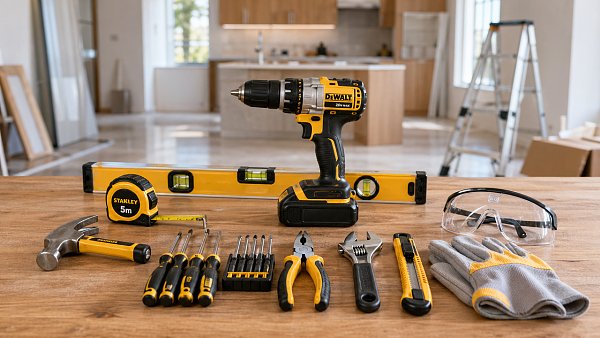
 Which Home Improvement Tools Do You Really Need First?Home improvement tools guide: discover the first essentials to buy, compare smart home automation devices and online trade platform sourcing tips, and make safer, smarter purchases.
 How to Compare an Online Trade Platform Before Signing Up?Compare an online trade platform with confidence—evaluate data quality, supplier trust, market insights, and search tools for smarter sourcing across cement price, MRI scanners cost, and more.
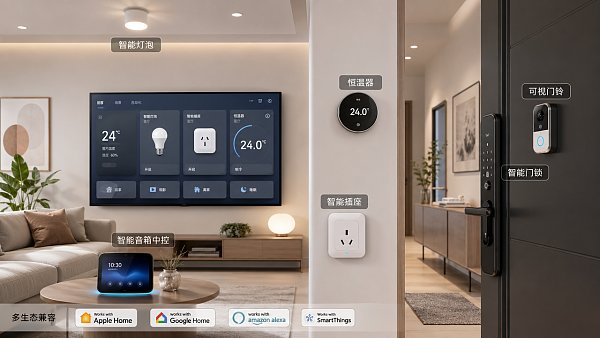
 Which Smart Home Automation Devices Are Easiest to Use?Smart home automation devices made simple: compare easy-to-use smart home automation devices, home improvement tools integration, and buyer tips from a business intelligence platform.
 Are Auto Detailing Services Worth the Cost?Auto detailing services: discover if the cost is justified, how pricing varies, and how a business intelligence platform helps buyers compare value, quality, and long-term ROI.
 What Makes Sustainable Fashion Brands Worth Buying?Sustainable fashion brands deliver transparency, quality, and lower risk. See how a business intelligence platform helps buyers verify value, avoid greenwashing, and source smarter.



















Popular Tags
Global Trade Insights & Industry
Our mission is to empower global exporters and importers with data-driven insights that foster strategic growth.
Search News
Popular Tags
Industry Overview
The global commercial kitchen equipment market is projected to reach $112 billion by 2027. Driven by urbanization, the rise of e-commerce food delivery, and strict hygiene regulations.