

CNC Machines Manufacturer Claims That Deserve a Closer Look
Bold claims from any CNC machines manufacturer can shape sourcing decisions, but smart buyers look beyond marketing. For procurement teams, distributors, and market researchers comparing a CNC machining manufacturer, sheet metal supplier, and sheet metal welding capabilities, real value lies in production quality, CNC machining cost, and long-term reliability. This article takes a closer look at the claims that matter most before you commit.
What Buyers Are Really Trying to Verify
When someone searches for information around CNC machines manufacturer claims, the real intent is usually not to read brand slogans. It is to answer a practical sourcing question: which claims signal a dependable supplier, and which are just sales language? Buyers, sourcing managers, and channel partners want to reduce risk before placing orders, approving vendors, or entering distribution agreements.
In most cases, the core concerns are straightforward:
- Can the manufacturer consistently deliver to specification?
- Is the quoted price realistic once quality, scrap, lead time, and after-sales support are considered?
- Does the supplier actually have the production capacity it advertises?
- Are claims about precision, certifications, customization, and quality control supported by evidence?
- Will this partner remain reliable over repeated orders, engineering changes, and market fluctuations?
The most useful way to evaluate a CNC machining manufacturer is to focus less on broad promises and more on proof points: process control, inspection systems, engineering communication, material traceability, on-time performance, and issue resolution speed. That is where purchasing risk becomes visible.
“High Precision” Is Meaningful Only If the Process Supports It
One of the most common claims in the market is high precision. Nearly every CNC machines manufacturer says it can achieve tight tolerances, but buyers should ask a more important question: under what production conditions?
Precision is not just a machine feature. It depends on the full process, including:
- Machine condition and maintenance discipline
- Operator skill and programming quality
- Fixture design and repeatability
- Material consistency
- In-process inspection and final quality checks
- Environmental control where required
If a supplier promotes micron-level capability, ask for examples of parts already produced at those tolerances, the inspection methods used, and whether those tolerances are routine or only possible in limited cases. A serious supplier should be able to explain tolerance ranges by material, geometry, batch size, and surface finish requirement.
For many buyers, the most valuable supplier is not the one making the most extreme precision claim, but the one that can deliver stable repeatability at commercially viable cost. Consistency across batches often matters more than a headline number on a brochure.
“Competitive CNC Machining Cost” Should Be Examined Beyond the Unit Price
Low pricing attracts attention, but experienced sourcing teams know that CNC machining cost cannot be evaluated from a quote sheet alone. A low unit price may hide higher total cost in the form of scrap, delays, rework, weak documentation, or inconsistent finishing quality.
To judge whether cost claims are credible, buyers should break pricing into its practical drivers:
- Material grade and sourcing stability
- Machining time and process complexity
- Tolerance requirements
- Surface treatment or secondary operations
- Tooling and fixture cost allocation
- Inspection and compliance requirements
- Packaging, export handling, and logistics
A strong manufacturer can explain where cost savings come from. For example, savings may result from process optimization, efficient nesting, in-house tooling support, consolidated finishing, or better production scheduling. That is very different from savings caused by weaker inspection standards or lower-grade raw material.
For procurement and commercial evaluation teams, the best comparison model is total delivered value. Ask:
- What is the expected defect rate?
- How often are shipments delayed?
- How are non-conforming parts handled?
- What is the cost impact of engineering revisions?
- Is technical support available before and after order placement?
These questions often reveal whether an attractive CNC machining cost is truly sustainable.
“Full-Service Manufacturing” Often Sounds Stronger Than It Really Is
Many suppliers position themselves as one-stop partners. That can be valuable, especially when buyers need CNC machining, fabrication, finishing, assembly, and documentation under one management structure. But the term full-service is often used loosely.
In practical terms, buyers should distinguish between three models:
- True in-house integration — core processes are owned and controlled internally.
- Hybrid production model — key processes are in-house, while some secondary operations are subcontracted.
- Coordinator model — the company mainly manages external workshops.
None of these models is automatically bad, but transparency matters. If you are also comparing a sheet metal supplier or assessing sheet metal welding capability alongside CNC work, process ownership becomes even more important. Tolerance stacking, weld quality, finishing consistency, and scheduling control can all be affected when too many operations are outsourced.
Ask directly which processes are performed in-house, which are subcontracted, and how subcontractor quality is controlled. Buyers should also request a clear workflow for engineering review, production scheduling, inspection, and corrective action.
How to Evaluate Claims About Quality Control and Certifications
Quality claims deserve close attention because they directly affect field performance, returns, and brand reputation. However, certificates alone should not be treated as proof of strong manufacturing discipline.
A more useful evaluation framework includes the following checkpoints:
- Incoming material control: Can the supplier provide material certificates and traceability?
- Process inspection: Are key dimensions checked during production, not only at the end?
- Final inspection: Is there a documented sampling or full-inspection method based on product risk?
- Measurement capability: What inspection tools are used, and are they calibrated?
- Nonconformance control: How are defects isolated, analyzed, and corrected?
- Documentation: Can they provide reports required by your customers or internal QA team?
If a CNC machines manufacturer promotes ISO compliance or advanced quality systems, ask how those systems affect everyday execution. Buyers gain more insight from sample inspection reports, corrective action records, and first article documentation than from general statements about “strict QC.”
For distributors and agents, this is especially important because weak quality systems create downstream warranty and reputation issues that are expensive to reverse.
Lead Time and Capacity Claims Need Evidence, Not Assumptions
Another common manufacturer promise is fast delivery. That sounds appealing, but speed claims should always be tested against actual production planning logic.
A supplier may quote short lead times during a low-load period, then struggle once order volume increases. Capacity claims are only meaningful if the manufacturer has:
- Enough machine availability for your part type
- Skilled labor across shifts if needed
- Stable raw material access
- Reliable secondary process scheduling
- A realistic approach to urgent orders and backlog management
Ask for typical lead times by order size, not just a best-case figure. It is also helpful to understand how the manufacturer handles repeat orders, forecast-based scheduling, and demand spikes. A dependable partner should be able to discuss bottlenecks honestly.
For commercial buyers evaluating long-term cooperation, on-time delivery performance over time is often more important than the fastest initial sample turnaround.
Engineering Support and Communication Are Strong Predictors of Supplier Reliability
One of the most underestimated sourcing factors is communication quality. Yet in real projects, poor engineering communication causes major delays, cost overruns, and avoidable quality issues.
A capable CNC machining manufacturer should be able to:
- Review drawings and flag manufacturability risks early
- Suggest cost-saving design adjustments without compromising function
- Clarify tolerance conflicts and finishing requirements
- Respond quickly to technical questions
- Document changes clearly across revisions
This becomes even more important in projects involving machined parts plus fabricated assemblies from a sheet metal supplier. Interfacing dimensions, weld distortion, hole alignment, and coating compatibility can all create issues if engineering review is weak.
For buyers, the supplier’s response quality during the RFQ and sampling stage is often the best preview of future cooperation. Fast, precise, technically grounded communication usually indicates stronger internal coordination.
What Claims Matter Most When Comparing CNC, Sheet Metal, and Welding Suppliers
In many industrial sourcing projects, buyers are not evaluating CNC capability in isolation. They are comparing a mixed supply option that may include precision machining, metal fabrication, and sheet metal welding. In that case, the most important claims are the ones affecting integration risk.
Focus on these factors:
- Dimensional consistency across processes
- Weld quality and distortion control
- Surface finish compatibility
- Assembly fit and tolerance management
- Single-point accountability for defects
- Production coordination across machining and fabrication stages
If the supplier can support both machining and fabricated parts, that can reduce handoff risk and simplify accountability. But only if process control is mature. Otherwise, combining services may actually increase hidden quality and coordination issues.
This is why buyers should request case examples similar to their own application rather than accepting broad cross-category claims.
A Practical Checklist for Testing Manufacturer Claims Before You Commit
To move from marketing language to informed decision-making, use a structured supplier review process. Before selecting a CNC machines manufacturer, ask for evidence in the following areas:
- Recent part examples similar in complexity, material, and tolerance
- Sample inspection reports and quality documentation
- Clarification of in-house versus outsourced processes
- Lead time data for prototype and batch production
- Material traceability procedures
- Corrective action process for defects or returns
- Engineering support during design or revision stages
- Packaging and export handling standards
- References, case studies, or long-term customer categories
Where possible, conduct a sample order or pilot run before larger commitments. This provides real-world insight into communication, adherence to specification, and overall execution reliability.
Final Takeaway: Trust Evidence More Than Claims
The strongest sourcing decisions are rarely based on the boldest manufacturer promises. They are based on evidence that a supplier can perform repeatedly under real commercial conditions. For buyers, distributors, and market evaluators, the key is not whether a CNC machines manufacturer claims high precision, low cost, fast delivery, or full service. The key is whether those claims are supported by stable processes, measurable outcomes, and transparent communication.
If you are comparing a CNC machining manufacturer, a sheet metal supplier, or providers with sheet metal welding capabilities, prioritize proof over positioning. Look closely at process control, total CNC machining cost, integration capability, and response quality. Those are the factors that most reliably predict whether a supplier will create value or create risk.
In short, a closer look is not optional. It is how smart industrial buyers protect quality, margins, and long-term supply confidence.
Recommended News
 IMDG Code 41-24 Enforces UN3480 Class 9 Labeling for Lithium Battery Sea FreightIMDG Code 41-24 mandates UN3480 lithium battery sea freight to display durable Class 9 labels from April 27, 2026—avoid delays & port rejections.
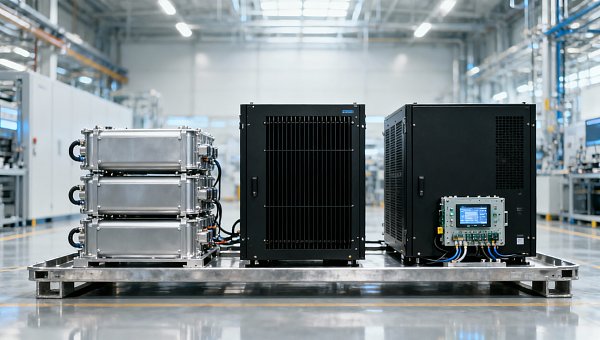
 ESS Key Component Prices Drop ~80%: Quality & Compliance RiseESS key component prices dropped ~80%—but quality & compliance demands surged. Discover how UL 9540A, AS/NZS 5139, and certified BMS/inverters now define market access.
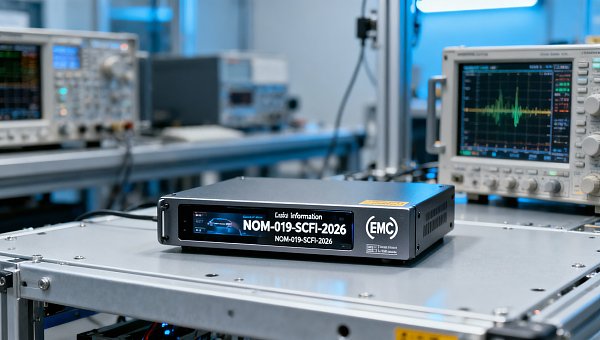
 Mexico NOM-019-SCFI-2026 Effective July 2026: EMC Certification Mandatory for Auto ElectronicsMexico NOM-019-SCFI-2026 mandates EMC certification for auto electronics from July 2026 — ensure compliance now to avoid supply chain disruption & customs delays.
 Red Sea Rerouting Normalized, ECA Surcharge Hits $1,850/TEURed Sea rerouting normalized: ECA surcharge hits $1,850/TEU — 47% of total freight cost. Impacting hand tools, building materials & furniture exporters to Europe. Act now.
 RCEP Green Packaging Mutual Recognition Takes EffectRCEP Green Packaging Mutual Recognition is live—GB/T 37537-2025–certified packaging now enjoys fast-track clearance in Australia, NZ, Japan & Korea. Save time, cut costs, and boost export efficiency.
 Vietnam Suspends SASO Mutual Recognition for Chinese Irrigation EquipmentVietnam suspends SASO mutual recognition for Chinese irrigation equipment—drip tapes, PE fittings, auto valves now require VINAQ-IR certification. Act now to avoid delays & customs hold.
 Key Energy Storage Equipment Prices Drop ~80% in ChinaKey energy storage equipment prices in China dropped ~80% — PCS, BMS & liquid cooling units. Discover implications for compliance, margins & standards enforcement.
") China Releases Green Design Guidelines for Industrial Products (2026)China's 2026 Green Design Guidelines for industrial products—covering PV modules, lithium batteries & smart appliances—link eco-design to green factory certification and export tax rebates starting 2027.
China Releases Green Design Guidelines for Industrial Products (2026)China's 2026 Green Design Guidelines for industrial products—covering PV modules, lithium batteries & smart appliances—link eco-design to green factory certification and export tax rebates starting 2027. Mexico NOM-019-SCFI-2026 Effective: Automotive Electronics Require New EMC CertificationMexico NOM-019-SCFI-2026 is live: Automotive electronics (infotainment, ADAS, domain controllers) now require mandatory EMC certification by July 31, 2026 — act now to avoid customs delays.
 Red Sea Detour Premium Rises to $1,850/TEU Amid Port Congestion ReliefRed Sea Detour Premium hits $1,850/TEU — now 43% of FE–NE freight rates. Discover why this structural surcharge demands urgent supply chain action.
 TÜV Rheinland Updates PLd Certification: EMC Immunity Now Mandatory for Servo DrivesTÜV Rheinland now mandates EN IEC 61000-6-2:2024 EMC immunity testing for PLd certification of servo drives—act before May 26, 2026 to avoid EU market delays.
 RCEP Green Packaging Mutual Recognition Effective Apr 26, 2026RCEP Green Packaging Mutual Recognition takes effect Apr 26, 2026—unlock faster customs clearance & cost savings for eco-friendly packaging exporters to AU, NZ, JP, KR.
 FDA Final Rule: AI Diagnostic Devices Must Submit Bias Impact ReportsFDA mandates AI diagnostic devices submit third-party-verified bias impact reports—key for 510(k)/De Novo submissions. Act now to ensure compliance & market access.
 Vietnam Suspends SASO Mutual Recognition for Chinese Irrigation EquipmentVietnam suspends SASO mutual recognition for Chinese irrigation equipment—urgent QCVN certification now required for drip tapes, sprinklers, valves & smart controllers.
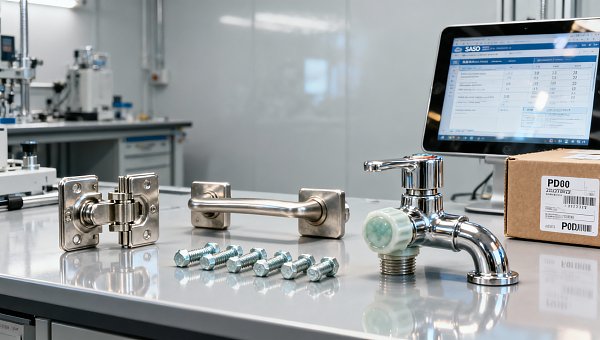
 SABER Phase II Launch: Building Hardware Must Submit Digital Type Test Reports & PIDSABER Phase II now requires digital type test reports & PID for building hardware — fasteners, door/window, bathroom fixtures. Avoid port rejection: ensure PID-bound compliance before shipment.
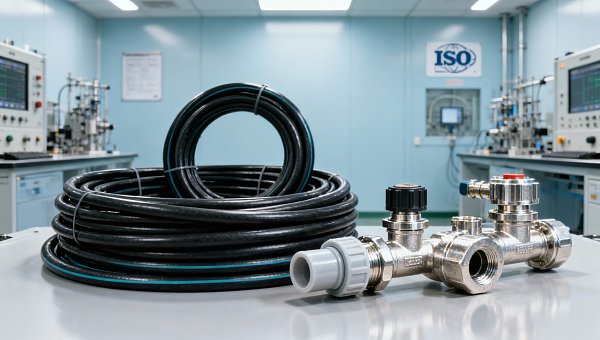
 IMDG Code 41-24 Enforced: UN3480 Lithium Batteries Require Class 9 LabelsUN3480 lithium batteries now require ISO 7225-compliant Class 9 labels under IMDG Code 41-24 — enforceable globally from 26 April 2026. Act now to avoid shipment delays!
 How to Compare an Online Trade Platform Before Signing Up?Compare an online trade platform with confidence—evaluate data quality, supplier trust, market insights, and search tools for smarter sourcing across cement price, MRI scanners cost, and more.
 Which Smart Home Automation Devices Are Easiest to Use?Smart home automation devices made simple: compare easy-to-use smart home automation devices, home improvement tools integration, and buyer tips from a business intelligence platform.
 Are Auto Detailing Services Worth the Cost?Auto detailing services: discover if the cost is justified, how pricing varies, and how a business intelligence platform helps buyers compare value, quality, and long-term ROI.
 What Makes Sustainable Fashion Brands Worth Buying?Sustainable fashion brands deliver transparency, quality, and lower risk. See how a business intelligence platform helps buyers verify value, avoid greenwashing, and source smarter.
 How to Choose a Business Intelligence Platform in 2026?Business intelligence platform selection in 2026: compare data coverage, pricing insights, online trade platform signals, Cement price trends, and MRI scanners cost to choose smarter, faster.

















Popular Tags
Global Trade Insights & Industry
Our mission is to empower global exporters and importers with data-driven insights that foster strategic growth.
Search News
Popular Tags
Industry Overview
The global commercial kitchen equipment market is projected to reach $112 billion by 2027. Driven by urbanization, the rise of e-commerce food delivery, and strict hygiene regulations.