

Why 3D printing quotations vary so much for the same part
Why does one supplier quote significantly more than another for what appears to be the same 3D printed part? In most cases, the difference is not random. A 3D printing quotation reflects far more than the visible geometry of a file. Material grade, printing technology, dimensional tolerance, surface finish, inspection requirements, order volume, post-processing, lead time, and supplier risk assumptions all affect price. For procurement teams, distributors, and business evaluators, the key is not simply finding the lowest quote, but understanding which quote is realistic, which one hides downstream cost, and which supplier is most likely to deliver reliably.
For businesses comparing vendors, this is where quotation analysis becomes a practical supply chain decision. A low initial price may lead to delays, quality issues, rework, or inconsistent repeat orders. A higher price may include engineering review, better process control, tighter quality assurance, or more suitable production planning. The real objective is to compare like for like and identify total procurement value rather than unit price alone.
Why the “same part” often is not the same quote in practice
When buyers submit the same CAD file to several suppliers, they often assume they are requesting exactly the same job. In reality, each supplier may interpret the scope differently. One may quote using a lower-cost process such as FDM, while another assumes SLS, SLA, MJF, or metal printing based on the part’s likely application. One may include support removal and cosmetic finishing, while another may only quote a raw print. One may build in inspection and packaging standards, while another may not.
This is why 3D printing quotations vary so much for the same part: the quote is based not only on geometry, but also on assumptions. If those assumptions are not aligned, the prices will naturally diverge. For sourcing professionals, the first step is to verify exactly what each supplier has included.
What cost factors have the biggest impact on a 3D printing quotation?
The largest price drivers usually fall into several categories:
1. Printing technology.
Different 3D printing processes have very different machine costs, throughput, material utilization, and labor requirements. A part printed in FDM may be much cheaper than the same geometry in SLA or SLS, but the mechanical properties, visual quality, and dimensional consistency may differ substantially. Metal additive manufacturing can be dramatically more expensive because of machine cost, powder handling, build preparation, and post-processing.
2. Material selection.
Even within one process, material prices vary widely. Standard PLA or ABS is not priced the same as nylon, glass-filled polymers, TPU, high-temperature resins, biocompatible materials, or aerospace-grade metal powders. Some suppliers also quote premium for certified or traceable material batches.
3. Part size and build volume efficiency.
A part that occupies more machine space or requires inefficient orientation can cost more than expected. In powder-bed systems, nested builds may lower cost when multiple parts fit efficiently. In filament or resin systems, build time may increase sharply depending on height and support needs.
4. Tolerance and accuracy requirements.
Tighter tolerances often mean slower setup, more process control, more inspection, and sometimes secondary machining. If one supplier assumes standard tolerance and another quotes to a stricter engineering standard, their prices will not be comparable.
5. Surface finish and post-processing.
Raw printed parts are usually cheaper. Once sanding, dyeing, polishing, vapor smoothing, painting, machining, support removal, thread inserts, heat treatment, or assembly are required, costs rise quickly. Many quotation gaps come from post-processing details that buyers overlook in the RFQ stage.
6. Quantity and batch economics.
For prototypes, setup and handling can represent a large share of total cost. For repeat or higher-volume orders, unit pricing may improve. However, some suppliers are optimized for prototyping while others are structured for low-volume production, and their pricing logic reflects that.
7. Lead time.
Expedited orders usually cost more. Priority scheduling, overtime, split production, and faster shipping all influence final quotations. A low-cost quote with a long lead time may not be useful in a time-sensitive procurement situation.
8. Quality assurance and compliance.
If your part requires dimensional reports, first article inspection, test data, regulated documentation, or industry-specific certification, the quote will increase. Suppliers serving industrial or export markets often include stronger quality controls than low-cost job shops.
Why cheaper 3D printing quotes can become more expensive later
For buyers, the most important insight is that the lowest quote may not represent the lowest total cost. Hidden costs often appear after order placement, especially when quotation assumptions are incomplete or overly optimistic.
Common downstream cost risks include:
- Part failure due to unsuitable material or process selection
- Rework caused by poor dimensional accuracy
- Additional finishing charges added after production begins
- Longer lead times than expected
- Inconsistent quality across repeat batches
- Damage in shipping because packaging was basic or unspecified
- Procurement delays from missing documentation or unclear communication
For distributors, agents, and sourcing managers, these problems affect more than one order. They can damage delivery performance, customer trust, and margin. That is why quotation review should include reliability, not just price.
How procurement teams should compare 3D printing quotations fairly
If you want meaningful quote comparison, standardize your RFQ package. The more precise your request, the smaller the interpretation gap between suppliers.
A strong RFQ should include:
- CAD file and revision number
- Required material and acceptable alternatives
- Target application or performance requirement
- Critical dimensions and tolerances
- Surface finish expectations
- Color requirements if relevant
- Quantity now and forecast volume later
- Required inspection or test reports
- Packaging expectations
- Requested lead time and delivery destination
Then compare suppliers against the same checklist:
- What process did they assume?
- What material grade is included?
- Are finishing and support removal included?
- Is shipping included or excluded?
- What tolerance standard are they quoting to?
- What quality documentation is included?
- What is the remake or defect policy?
- Can they support repeat orders consistently?
This approach helps transform a price comparison into a sourcing decision based on total manufacturing value.
Which supplier signals suggest a quote is more trustworthy?
Not every detailed quote is necessarily the best quote, but trustworthy suppliers tend to show certain behaviors. They ask clarifying questions. They flag manufacturability issues before production. They explain whether the chosen process matches the part’s use case. They identify risks such as warping, support marks, weak features, or tolerance limitations. They also make inclusions and exclusions visible instead of leaving them vague.
For business evaluators and procurement professionals, strong trust signals include:
- Transparent quotation breakdown
- Clear technical assumptions
- Defined quality process
- Evidence of relevant production capability
- Responsiveness during pre-sales communication
- Ability to support repeatability and scale
- Documented experience in similar industries or applications
In cross-border sourcing especially, quote transparency matters because communication gaps can easily turn into delivery or quality disputes later.
When is a higher 3D printing quotation actually justified?
A higher quote may be justified when the supplier is solving a higher-value problem. For example, if the part is functional rather than visual, process stability and material performance matter more than saving a small amount on unit cost. If the part will be customer-facing, finish quality may justify extra post-processing. If the part is used in industrial equipment, compliance and consistency may outweigh a low prototype-style price.
In other words, price should be evaluated against business use case:
- Prototype validation: speed and affordability may matter most
- Functional testing: material and dimensional reliability become critical
- End-use production: repeatability, finishing, QA, and supply continuity matter more
- Regulated or export applications: documentation and process control may be non-negotiable
For sourcing teams, the right question is not “Why is this quote higher?” but “What risk, quality level, or service level does this higher price include?”
How to reduce quotation gaps and improve negotiation outcomes
If you regularly source 3D printed parts, the best way to reduce quotation variability is to improve specification discipline and supplier alignment. Large quote spreads often indicate unclear requirements rather than irrational pricing.
Practical ways to improve outcomes include:
- Provide a technical drawing in addition to the 3D file
- Separate must-have requirements from preferred requirements
- Ask for optional pricing by process or finish level
- Request DFM feedback before final quote approval
- Clarify whether the order is for prototype, bridge production, or repeat volume
- Negotiate based on annual demand where possible
- Evaluate supplier communication quality as part of sourcing scorecards
These steps not only improve quote comparability but also strengthen negotiations. Suppliers can quote more accurately when requirements are clear, and buyers can challenge price differences with greater confidence.
Final takeaway for buyers, distributors, and business evaluators
3D printing quotations vary widely for the same part because suppliers are rarely quoting the same manufacturing reality. Differences in process assumptions, material quality, tolerance, finishing, quality assurance, lead time, and service scope all shape price. For professional buyers and commercial decision-makers, the smartest approach is to compare total delivered value, not just unit cost.
A useful 3D printing quotation should help you answer three questions: Is the process suitable for the application? Is the scope fully defined? And is the supplier reliable enough to avoid hidden cost later? When those questions are answered clearly, quotation analysis becomes a strategic sourcing tool rather than a simple price check.
Recommended News
 IMDG Code 41-24 Enforces UN3480 Class 9 Labeling for Lithium Battery Sea FreightIMDG Code 41-24 mandates UN3480 lithium battery sea freight to display durable Class 9 labels from April 27, 2026—avoid delays & port rejections.
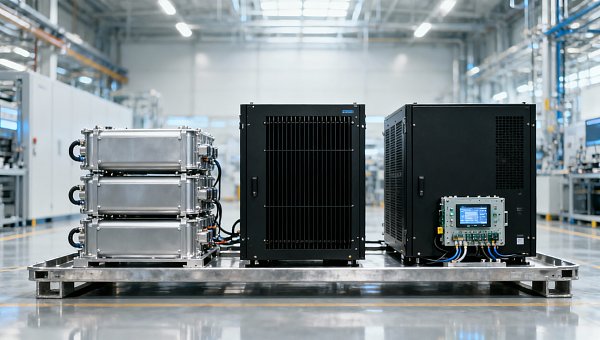
 ESS Key Component Prices Drop ~80%: Quality & Compliance RiseESS key component prices dropped ~80%—but quality & compliance demands surged. Discover how UL 9540A, AS/NZS 5139, and certified BMS/inverters now define market access.
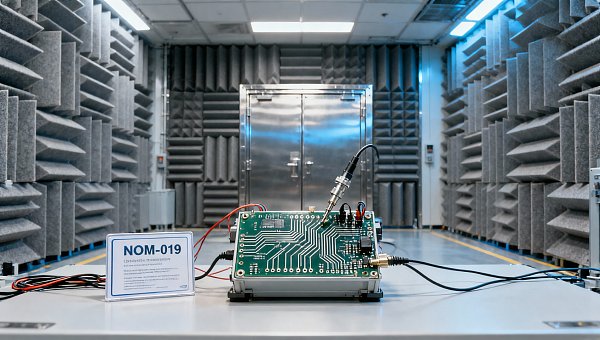
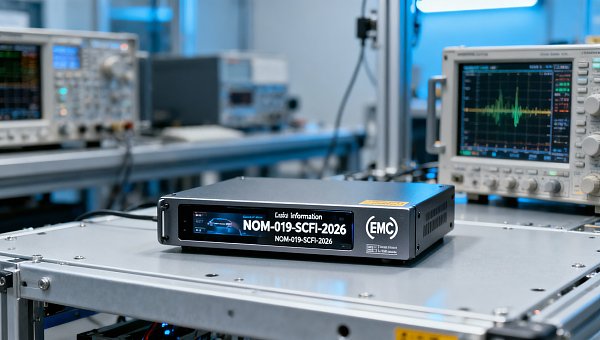
 Mexico NOM-019-SCFI-2026 Effective July 2026: EMC Certification Mandatory for Auto ElectronicsMexico NOM-019-SCFI-2026 mandates EMC certification for auto electronics from July 2026 — ensure compliance now to avoid supply chain disruption & customs delays.
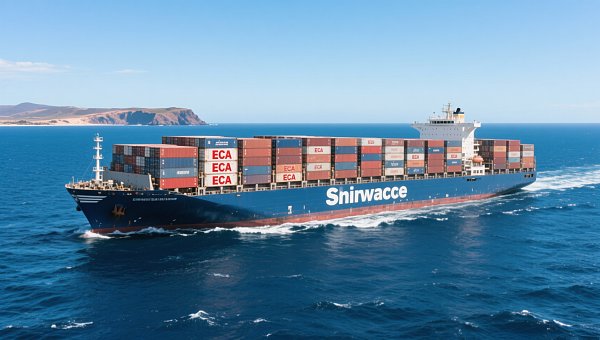
 Red Sea Rerouting Normalized, ECA Surcharge Hits $1,850/TEURed Sea rerouting normalized: ECA surcharge hits $1,850/TEU — 47% of total freight cost. Impacting hand tools, building materials & furniture exporters to Europe. Act now.
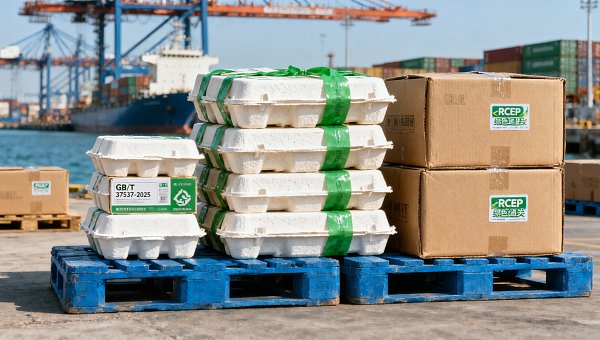
 RCEP Green Packaging Mutual Recognition Takes EffectRCEP Green Packaging Mutual Recognition is live—GB/T 37537-2025–certified packaging now enjoys fast-track clearance in Australia, NZ, Japan & Korea. Save time, cut costs, and boost export efficiency.
 Vietnam Suspends SASO Mutual Recognition for Chinese Irrigation EquipmentVietnam suspends SASO mutual recognition for Chinese irrigation equipment—drip tapes, PE fittings, auto valves now require VINAQ-IR certification. Act now to avoid delays & customs hold.
 Key Energy Storage Equipment Prices Drop ~80% in ChinaKey energy storage equipment prices in China dropped ~80% — PCS, BMS & liquid cooling units. Discover implications for compliance, margins & standards enforcement.
") China Releases Green Design Guidelines for Industrial Products (2026)China's 2026 Green Design Guidelines for industrial products—covering PV modules, lithium batteries & smart appliances—link eco-design to green factory certification and export tax rebates starting 2027.
China Releases Green Design Guidelines for Industrial Products (2026)China's 2026 Green Design Guidelines for industrial products—covering PV modules, lithium batteries & smart appliances—link eco-design to green factory certification and export tax rebates starting 2027. Mexico NOM-019-SCFI-2026 Effective: Automotive Electronics Require New EMC CertificationMexico NOM-019-SCFI-2026 is live: Automotive electronics (infotainment, ADAS, domain controllers) now require mandatory EMC certification by July 31, 2026 — act now to avoid customs delays.
 Red Sea Detour Premium Rises to $1,850/TEU Amid Port Congestion ReliefRed Sea Detour Premium hits $1,850/TEU — now 43% of FE–NE freight rates. Discover why this structural surcharge demands urgent supply chain action.
 TÜV Rheinland Updates PLd Certification: EMC Immunity Now Mandatory for Servo DrivesTÜV Rheinland now mandates EN IEC 61000-6-2:2024 EMC immunity testing for PLd certification of servo drives—act before May 26, 2026 to avoid EU market delays.
 RCEP Green Packaging Mutual Recognition Effective Apr 26, 2026RCEP Green Packaging Mutual Recognition takes effect Apr 26, 2026—unlock faster customs clearance & cost savings for eco-friendly packaging exporters to AU, NZ, JP, KR.
 FDA Final Rule: AI Diagnostic Devices Must Submit Bias Impact ReportsFDA mandates AI diagnostic devices submit third-party-verified bias impact reports—key for 510(k)/De Novo submissions. Act now to ensure compliance & market access.
 Vietnam Suspends SASO Mutual Recognition for Chinese Irrigation EquipmentVietnam suspends SASO mutual recognition for Chinese irrigation equipment—urgent QCVN certification now required for drip tapes, sprinklers, valves & smart controllers.
 SABER Phase II Launch: Building Hardware Must Submit Digital Type Test Reports & PIDSABER Phase II now requires digital type test reports & PID for building hardware — fasteners, door/window, bathroom fixtures. Avoid port rejection: ensure PID-bound compliance before shipment.
 IMDG Code 41-24 Enforced: UN3480 Lithium Batteries Require Class 9 LabelsUN3480 lithium batteries now require ISO 7225-compliant Class 9 labels under IMDG Code 41-24 — enforceable globally from 26 April 2026. Act now to avoid shipment delays!
 Which Home Improvement Tools Do You Really Need First?Home improvement tools guide: discover the first essentials to buy, compare smart home automation devices and online trade platform sourcing tips, and make safer, smarter purchases.
 How to Compare an Online Trade Platform Before Signing Up?Compare an online trade platform with confidence—evaluate data quality, supplier trust, market insights, and search tools for smarter sourcing across cement price, MRI scanners cost, and more.
 Which Smart Home Automation Devices Are Easiest to Use?Smart home automation devices made simple: compare easy-to-use smart home automation devices, home improvement tools integration, and buyer tips from a business intelligence platform.
 Are Auto Detailing Services Worth the Cost?Auto detailing services: discover if the cost is justified, how pricing varies, and how a business intelligence platform helps buyers compare value, quality, and long-term ROI.
 What Makes Sustainable Fashion Brands Worth Buying?Sustainable fashion brands deliver transparency, quality, and lower risk. See how a business intelligence platform helps buyers verify value, avoid greenwashing, and source smarter.













Popular Tags
Global Trade Insights & Industry
Our mission is to empower global exporters and importers with data-driven insights that foster strategic growth.
Search News
Popular Tags
Industry Overview
The global commercial kitchen equipment market is projected to reach $112 billion by 2027. Driven by urbanization, the rise of e-commerce food delivery, and strict hygiene regulations.