

Educational robots in class: which features improve real engagement?
Educational robots are becoming common in classrooms, but real engagement depends on more than novelty. For teachers and operators, the key is choosing features that support interaction, adaptability, and easy classroom management. This article explores which functions truly help students participate, stay curious, and learn more effectively while giving schools practical insight for smarter adoption.
Why classroom scenario differences matter before choosing Educational robots
Not every classroom uses Educational robots in the same way. A primary school coding club, a science lab, a language classroom, and a special education setting may all want student engagement, but they define success differently. In one room, engagement means hands-on building and trial-and-error. In another, it means smoother participation from quiet learners or better collaboration among mixed-ability groups. For operators, school coordinators, and teachers, this is why feature evaluation should begin with context rather than product hype.
The strongest adoption decisions usually come from asking practical questions: Will students use the robot actively or just watch it? Can one teacher manage it with limited prep time? Does the robot adapt to different ages and lesson lengths? Is setup simple enough for repeated use across departments? These questions matter more than a long list of technical specifications. In real classrooms, engagement rises when Educational robots reduce friction and create meaningful interaction at the right difficulty level.
For a platform focused on global industry intelligence such as GTIIN and TradeVantage, this topic also reflects a wider procurement pattern: buyers increasingly want tools that show measurable use value, not just innovation appeal. In education technology procurement, that means features must connect directly to daily operating conditions, teacher workload, and student response.
Typical classroom scenarios where Educational robots are used
Before comparing features, it helps to separate the most common application scenarios. Educational robots may look similar across brochures, but their engagement performance changes sharply by use case.
This comparison shows why a single “best” robot rarely exists. The better question is which Educational robots align with the participation style, learning objective, and management reality of each setting.
Features that improve real engagement, not just first-week excitement
1. Fast and intuitive interaction
If students spend too much time waiting for a system to connect, calibrate, or respond, engagement drops quickly. Educational robots that succeed in everyday use usually offer immediate, understandable interaction. Clear buttons, touch inputs, visual cues, and simple app pairing reduce dependence on adult troubleshooting. For younger students, instant cause-and-effect is especially important because it rewards exploration and supports confidence.
2. Adaptive difficulty and flexible learning paths
Real classrooms are mixed by ability, speed, and confidence. A robot that works only at one challenge level often loses part of the room. Adaptive task levels, beginner-to-advanced coding options, and adjustable response pacing help Educational robots stay relevant across wider student groups. This is a high-value feature in schools that want one system shared across grades or departments.
3. Active participation instead of passive observation
Some robots are entertaining but teacher-centered, meaning one student or the instructor controls most of the activity while others watch. For stronger engagement, look for designs that support group roles, repeated student turns, team-based inputs, or collaborative problem-solving. The best Educational robots invite students to predict, test, revise, and discuss rather than simply admire the machine.
4. Useful feedback loops
Engagement improves when students can see what worked, what failed, and what to try next. Lights, sounds, movement outcomes, sensor data, scoring systems, or progress dashboards all help if they guide learning rather than distract from it. In STEM settings, feedback supports iteration. In communication settings, it supports confidence and repetition. Educational robots with visible feedback make learning more concrete.
5. Easy teacher and operator control
A robot can have excellent student-facing features and still fail because classroom management becomes too difficult. Operators should prioritize battery life, durable components, reliable connectivity, simple user account management, and easy reset functions. When Educational robots are easy to store, charge, update, and relaunch, they are more likely to be used often enough to produce real engagement gains.
How feature priorities change by application scenario
The same feature can have different value depending on the classroom. This is where many purchasing mistakes happen. Schools may overvalue advanced functions that are rarely used, while underestimating routine operating needs that shape actual engagement.
Primary classrooms: simplicity beats complexity
In early years settings, engagement usually depends on speed, visibility, and low frustration. Educational robots should start quickly, survive repeated handling, and provide obvious reactions. Long programming sequences may not suit this scenario unless heavily guided. Teachers often need robots that can fit into short lesson blocks and support turn-taking without long setup.
STEM classes: challenge and experimentation matter more
Here, students often stay engaged when the robot allows meaningful control. Sensors, path planning, coding logic, modular building, and testable outcomes matter more than scripted entertainment. Educational robots in this scenario should help students solve problems, not just complete fixed demonstrations. Open-ended tasks usually produce better long-term engagement than one-path activities.
Language learning: response quality is central
For language practice, the robot must encourage participation without making students feel judged. Voice clarity, repeat prompts, customizable vocabulary, and simple conversational routines become high-priority features. Educational robots that can support pair work or speaking games are often more effective than highly technical systems with weak communication design.
Special education: predictability and emotional comfort come first
In these settings, novelty can help, but stability matters more. Students may respond well to Educational robots that provide structured repetition, consistent behavior, and controllable sensory output. Operators should be cautious about systems with sudden sounds, confusing interfaces, or frequent software interruptions. Engagement here often grows through trust and routine.
Practical selection checklist for teachers and operators
When comparing Educational robots, a scenario-based checklist can prevent expensive mismatch. Instead of asking which product has the longest feature list, ask which one has the best fit.
Common mistakes schools make when evaluating Educational robots
One common mistake is buying based on demonstration impact. A robot can look impressive in a showroom but perform poorly in a noisy, time-limited classroom. Real engagement depends on repeatability, not a one-time wow effect.
Another mistake is ignoring operator workload. If Educational robots require complex updates, delicate handling, or frequent troubleshooting, they may be used only in special events rather than weekly lessons. That reduces educational value and lowers return on investment.
A third error is underestimating training needs. Even intuitive systems benefit from short onboarding for teachers and lab staff. Schools should check whether the vendor provides usable guides, scenario-based lesson examples, and support that matches local implementation capacity.
Finally, some buyers focus too much on technical sophistication and too little on learning design. More sensors, more accessories, or more AI features do not automatically create better participation. Educational robots become effective only when their features connect clearly to classroom routines and student tasks.
How to test engagement potential before full adoption
A pilot program is usually the safest path. Run Educational robots in two or three different scenarios rather than one showcase lesson. For example, test them in a standard class, a small-group intervention setting, and an enrichment activity. Compare not only student enthusiasm but also ease of setup, lesson flow, teacher control, and how many students actively participate.
Useful pilot indicators include time to start, number of student interactions per session, frequency of technical interruptions, quality of peer discussion, and teacher willingness to reuse the system. These indicators reveal more about real engagement than general satisfaction surveys alone.
FAQ: scenario-based questions about Educational robots
Are Educational robots better for younger students or older learners?
They can work for both, but feature priorities differ. Younger students need immediate interaction and simple controls, while older learners often engage more when robots support coding depth, design challenges, and measurable project outcomes.
Which feature matters most for daily classroom use?
In many schools, usability matters most. If Educational robots are easy to launch, reliable in operation, and simple for teachers to manage, they are far more likely to generate repeated engagement than technically rich systems that are difficult to run.
Do schools need advanced AI functions to improve engagement?
Not always. For many classroom scenarios, responsive interaction, good feedback, and adaptable lesson design create more practical value than advanced AI. Schools should choose features that support their teaching model rather than chase complexity.
Making the right match between classroom needs and robot features
The most effective Educational robots are not simply the most advanced ones. They are the ones that match the classroom scenario, reduce friction for teachers, and invite repeated student participation. In primary settings, simplicity and immediate response often drive engagement. In STEM programs, adaptable challenges and problem-solving tools matter more. In communication or special education scenarios, consistency, comfort, and manageable interaction can be the deciding factors.
For schools, distributors, and education-focused buyers tracking global market trends, the smart next step is to evaluate Educational robots through a scenario lens: who will use them, in what lesson format, with what support capacity, and for what kind of participation outcome. That approach leads to better adoption decisions, stronger classroom results, and more sustainable value over time. If you are reviewing solutions for broader procurement or international sourcing, aligning product features with real application scenarios will always be the strongest trust signal for successful implementation.
Recommended News
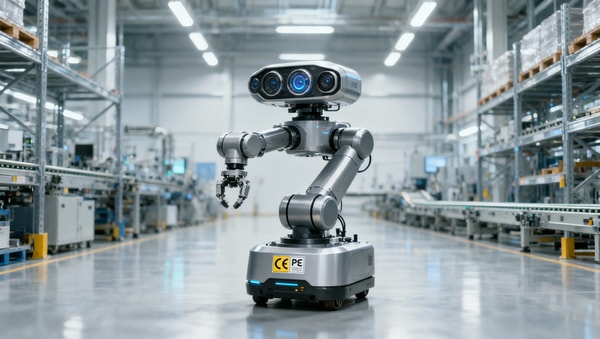
 China’s First Embodied AI Robot Export Liability Insurance Launched in GuangxiEmbodied AI Robot Export Liability Insurance launched in Guangxi—China’s first insurer-backed solution for EU/Japan-bound industrial & service robots. Boost compliance, trust & tenders now.
 Morocco: 4th Top African Recipient of EU Energy Aid, Boosting China’s PV & Storage ExportsMorocco’s EU energy aid boost unlocks opportunities for Chinese PV mounting structures & containerized energy storage exports—act now to leverage new regulatory advantages.
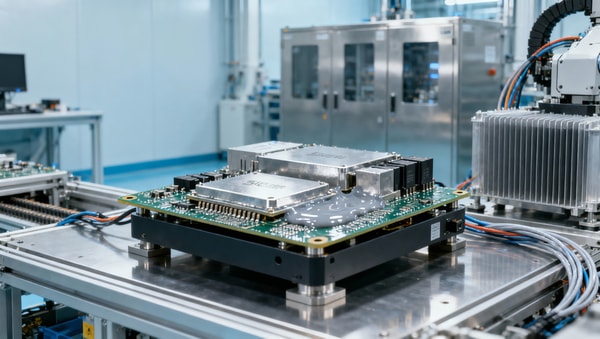
 Industrial Robot Controller Thermal Gel: China's Export-Ready Heat Dissipation SolutionIndustrial Robot Controller Thermal Gel: China’s export-ready, TÜV-certified heat dissipation solution (8.5 W/mK) for robotics in SEA & Mexico.
 ADB Raises Vietnam’s 2026 GDP Forecast to 7.2% on Sino-Vietnam Supply Chain IntegrationADB raises Vietnam’s 2026 GDP forecast to 7.2% amid deepening Sino-Vietnam supply chain integration in electronics, solar PV, and lithium battery PACK production — key insight for OEMs, exporters & integrators.
 First National SME Service Demonstration Platforms AnnouncedFirst National SME Service Demonstration Platforms announced—16 specialize in REACH, UKCA, UL certification & rapid factory audits for exporters.
 U.S. Natural Gas Inventory Growth Below Forecast: Impact on Plastic Export CostsU.S. natural gas inventory growth missed forecast—impacting plastic export costs globally. Learn how rising TTF prices affect PP/PE resin costs, margins & supply chain strategy for exporters.
 EN 62368-1:2026 Enforced in EU: Thermal Runaway Protection for Wearables & Smart Home DevicesEN 62368-1:2026 is now mandatory in the EU—learn how thermal runaway protection impacts wearables, smart home devices & EV accessories.
 Q1 2026 Industrial Profits Up 15.5%: Supply Chain Cost Stability ConfirmedQ1 2026 Industrial Profits Up 15.5% — supply chain cost stability confirmed for global procurement, contract manufacturing & OEM teams.
") MIIT Releases Service Trade Standardization Plan (2026–2030)MIIT's 2026–2030 Service Trade Standardization Plan boosts AI-driven digital services—remote QA, cloud maintenance, intelligent warehouse SaaS—for global export competitiveness.
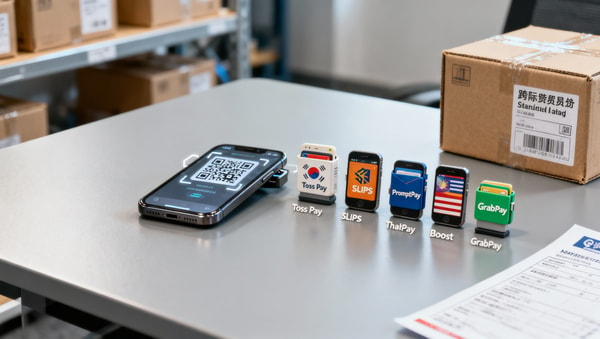
MIIT Releases Service Trade Standardization Plan (2026–2030)MIIT's 2026–2030 Service Trade Standardization Plan boosts AI-driven digital services—remote QA, cloud maintenance, intelligent warehouse SaaS—for global export competitiveness. WeChat Pay Integrates QR Codes from 5 Countries for B2B Cross-Border SettlementWeChat Pay integrates QR codes from South Korea, Sri Lanka, Thailand, Malaysia & Singapore — enabling faster, cheaper B2B cross-border settlement for global buyers and Chinese suppliers.
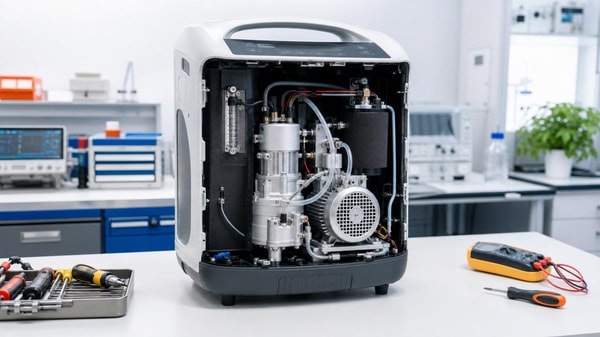
 Portable oxygen concentrators get noisy over time for several reasonsPortable oxygen concentrators get noisy over time due to dust, wear, loose parts, and aging compressors. Learn key causes, inspection priorities, and service tips to prevent failures.
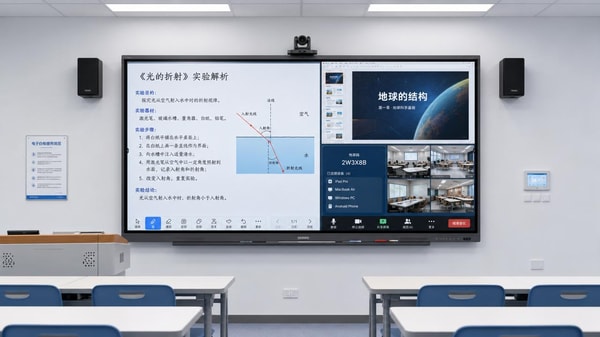
 Interactive whiteboards: what schools regret not checking earlyInteractive whiteboards can boost learning, but schools often regret missing key checks on compatibility, durability, training, and support. Discover how to buy smarter.
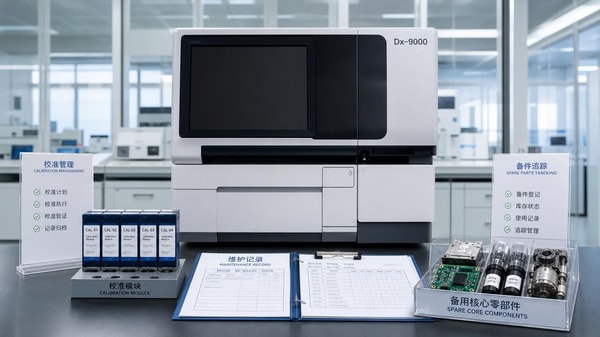
 Medical diagnostic equipment downtime usually starts with this oversightMedical diagnostic equipment downtime often starts with one overlooked maintenance gap. Learn the warning signs, hidden costs, and smart service strategies to improve uptime.
 Eco-friendly building materials: where certification changes the decisionEco-friendly building materials now win or lose on certification. Learn how verified standards reduce sourcing risk, support compliance, and improve procurement decisions.
 Ergonomic workspace design mistakes that still cause daily strainErgonomic workspace design mistakes can silently cause daily strain, fatigue, and lower productivity. Discover practical fixes to improve comfort, focus, and workstation performance.
 Outdoor garden supplies that wear out too fast in summer heatOutdoor garden supplies can fail fast in extreme summer heat. Discover which items wear out first, what materials last longer, and how to buy smarter for durable, cost-saving performance.
 Sustainable home decor: how to spot green claims with substanceSustainable home decor explained: learn how to spot credible green claims, avoid greenwashing, compare materials and certifications, and choose stylish, healthier pieces with real impact.
 Modern office furniture trends that improve layout flexibilityModern office furniture trends are transforming flexible workplace design. Explore modular, mobile, ergonomic, and acoustic solutions that boost productivity and smarter space planning.
 Smart street lighting works best when control systems are not overlookedSmart street lighting succeeds when control systems come first. Learn how better monitoring, dimming, and integration improve ROI, maintenance efficiency, and long-term project performance.
 What solid-state battery breakthroughs are still years from market?Solid-state battery breakthroughs sound transformative, but which ones are still years from market? Explore the technical, cost, and scaling barriers shaping real adoption timelines.
 Commercial LED lighting retrofits: when is payback slower than planned?Commercial LED lighting payback can slip when costs, runtime, rebates, and controls are misjudged. Learn the hidden risks and review steps that protect ROI before approval.














Popular Tags
Global Trade Insights & Industry
Our mission is to empower global exporters and importers with data-driven insights that foster strategic growth.
Search News
Popular Tags
Industry Overview
The global commercial kitchen equipment market is projected to reach $112 billion by 2027. Driven by urbanization, the rise of e-commerce food delivery, and strict hygiene regulations.