

China's First Embodied AI Robot Export Liability Insurance Launched in Guangxi
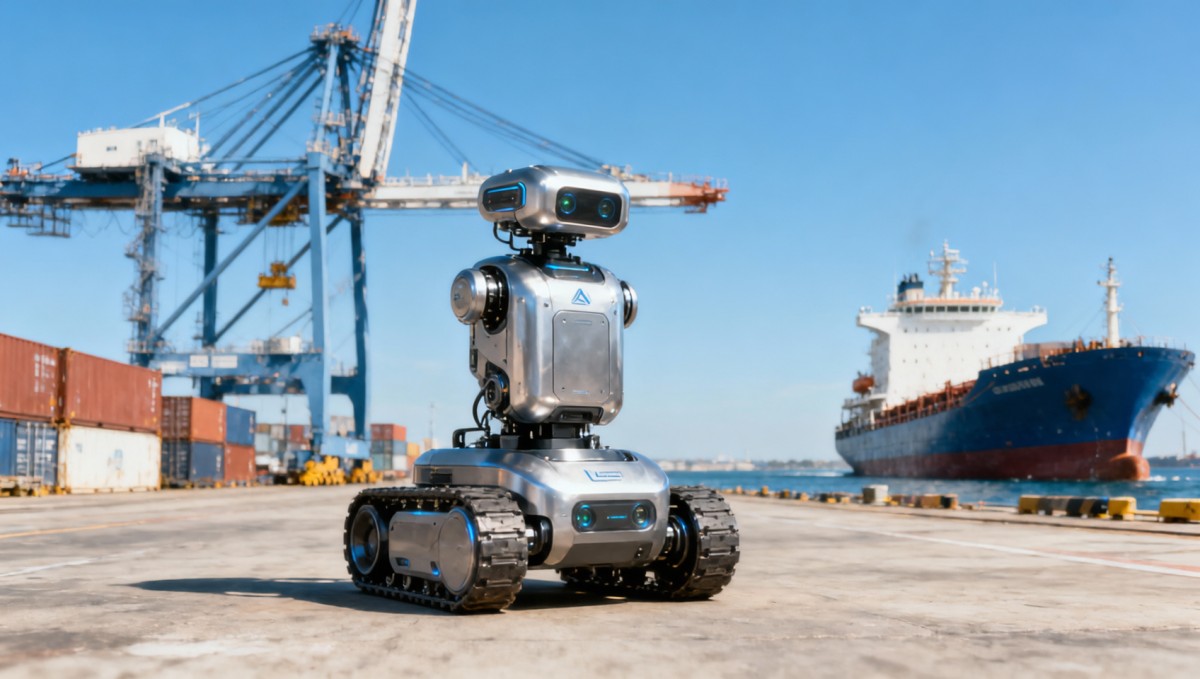
On April 7, 2026, Guangxi Banking and Insurance Regulatory Bureau approved the nation’s first dedicated export liability insurance policy for embodied artificial intelligence robots — a development with direct implications for Chinese exporters of intelligent robotics, smart security systems, and medical assistive devices. This marks a structural upgrade in overseas compliance safeguards for high-tech hardware exports.
Event Overview
On April 7, 2026, the Guangxi Banking and Insurance Regulatory Bureau approved the first ‘Embodied AI Robot Export Liability Insurance’ in China. The policy covers third-party bodily injury, property damage, and data breach liabilities arising from AI-driven decision-making errors during overseas use of insured robots. The maximum coverage is RMB 50 million. It has been incorporated into China Export & Credit Insurance Corporation’s (Sinosure) ‘Comprehensive Export Protection Program for High-Tech Equipment’, enabling bundled subscription with export credit insurance.
Industries Affected by Segment
Direct Exporters of Intelligent Robotics
These enterprises face heightened contractual and reputational exposure when selling AI-integrated physical systems abroad. The new insurance directly addresses buyer concerns about autonomous behavior risks — particularly in jurisdictions with strict product liability regimes (e.g., EU, Japan, Canada). Impact manifests in tender eligibility, warranty terms negotiation, and post-sale service obligations.
Medical Assistive Device Manufacturers
For devices involving real-time AI interpretation or physical interaction (e.g., surgical support robots, rehabilitation exoskeletons), liability exposure extends beyond mechanical failure to algorithmic judgment — such as misreading patient vitals or misapplying force. The policy’s inclusion of data leakage liability is especially relevant where health data processing occurs on-device or at the edge.
Smart Security System Exporters
Vendors deploying AI-powered surveillance, access control, or autonomous patrol robots now confront dual-layer risk: physical harm (e.g., collision, restraint malfunction) and privacy-related liability (e.g., unauthorized biometric capture or retention). The policy’s explicit coverage of data breach aligns with GDPR-style enforcement trends in key export markets.
What Relevant Enterprises or Practitioners Should Monitor and Do Now
Track official implementation guidance from Sinosure and local regulatory bureaus
The current approval is jurisdiction-specific (Guangxi) and product-specific (embodied AI robots). Enterprises should monitor whether similar policies will be standardized nationally or extended to adjacent categories (e.g., AI-enabled industrial cobots, autonomous logistics platforms).
Assess eligibility and underwriting criteria for priority export markets
Coverage applies only to overseas use; however, underwriting may vary by destination jurisdiction — especially where AI regulation is nascent or highly prescriptive (e.g., EU AI Act conformity requirements). Exporters should verify whether certification documentation (e.g., CE, FDA clearance) affects premium calculation or claim adjudication.
Distinguish between policy availability and operational readiness
While the insurance is approved, its rollout depends on insurer capacity, actuarial models for AI-related risk, and integration with existing export credit workflows. Companies should not assume immediate availability — instead, confirm lead times and documentation requirements with authorized insurers before quoting contracts.
Prepare technical documentation aligned with liability triggers
Claims related to ‘AI decision-making error’ will require traceable logs, version-controlled model parameters, and clear boundary definitions of autonomous vs. human-in-the-loop operation. Exporters should audit their product documentation and telemetry architecture now to meet likely evidentiary standards.
Editorial Perspective / Industry Observation
Observably, this initiative functions primarily as a policy signal — not yet an industry-wide capability. Its significance lies less in immediate scalability and more in formal recognition that embodied AI introduces distinct liability vectors beyond traditional product defects. Analysis shows it reflects a growing institutional effort to decouple export finance support from technology ambiguity: by defining insurable perils (e.g., AI decision error, data leakage), regulators are implicitly setting boundaries for what constitutes ‘manageable risk’ in high-autonomy hardware exports. From an industry standpoint, sustained attention is warranted — not because the product is widely deployable today, but because its design signals how future export frameworks may treat algorithmic accountability.
Conclusion: This insurance launch does not eliminate export risk for AI-integrated hardware, nor does it represent a mature market solution. It is better understood as an early-stage infrastructure response to a recognized regulatory gap — one that prioritizes contractual confidence over technical resolution. For stakeholders, the most pragmatic stance is cautious monitoring: treating the policy as a benchmark for evolving expectations around AI safety assurance in global trade, rather than as an immediate procurement item.
Source: Official announcement by Guangxi Banking and Insurance Regulatory Bureau (April 7, 2026); public statement from China Export & Credit Insurance Corporation (Sinosure) confirming inclusion in its ‘High-Tech Equipment Export Comprehensive Protection Program’. Note: Further details on underwriting scope, participating insurers, and cross-provincial applicability remain subject to ongoing observation.
Recommended News
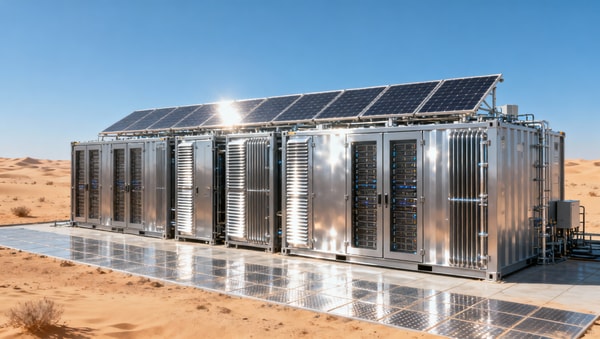
 MIIT Launches Space-Based Computing & Power-Compute CoordinationMIIT launches space-based computing & power-compute coordination—boosting modular IDC exports, liquid-cooled servers, and solar-powered data centers for arid regions.
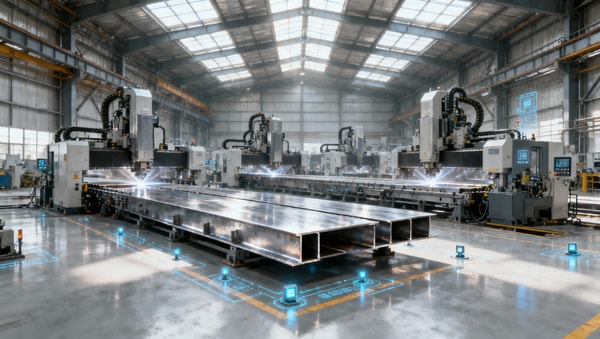
 Tangshan Iron Tower Smart Base Processes 600K Tons Steel AnnuallyTangshan Iron Tower Smart Base processes 600K tons steel annually—42× faster angle steel marking, API-enabled traceability for Belt and Road infrastructure projects.
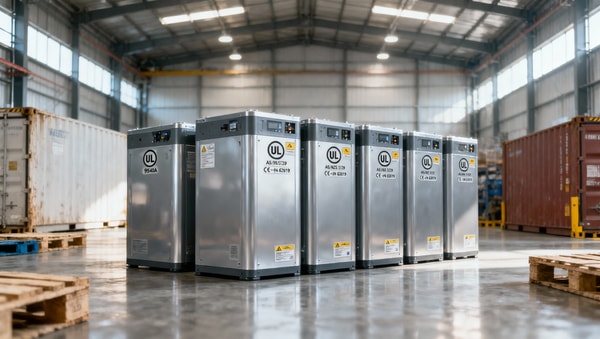
 Q1 2026 Lithium Battery Export Prices Rise 11.3% for ESSQ1 2026 Lithium Battery Export Prices Rise 11.3% for ESS — $128/kWh amid UL 9540A costs, freight normalization & surging demand in Vietnam, Germany, Australia.
 China Launches 'Model-Data Resonance' Initiative for AI+Manufacturing InteroperabilityChina's 'Model-Data Resonance' initiative launches AI+Manufacturing interoperability standard—key for global buyers, OEMs & integrators seeking seamless smart factory integration.
 China's First Embodied AI Robot Export Liability Insurance Launched in GuangxiChina's first Embodied AI Robot Export Liability Insurance launched in Guangxi—covers AI decision errors, data breaches & third-party harm for robotics, medtech & security exporters.
 State Grid’s $680M Embodied AI Equipment Procurement LaunchesState Grid’s $680M embodied AI equipment procurement demands IEC 62443 & GB/T 38925 compliance—unlock global infrastructure bids now.
 RCEP Green Packaging Mutual Recognition Extended to AU, NZ, JP, KRRCEP green packaging mutual recognition now extends to AU, NZ, JP, KR — unlock faster customs clearance & 22% lower inspection costs for GB/T 38727-2020-compliant sustainable food packaging exports from China.
 Tangshan Beijiao Thermal Power Unit 1 A-Check StartsTangshan Beijiao Thermal Power Unit 1 A-Check starts Apr 2026 — urgent demand for domestic industrial valves, high-temp sensors & fire-resistant cables. Act now to secure Q3 2026 supply.
 WeChat Pay Integrates QR Codes from 5 Countries for Cross-Border B2B PaymentsWeChat Pay integrates QR codes from 5 countries for cross-border B2B payments—faster T+0 settlement, 35% lower fees, and seamless USD 50K transactions.
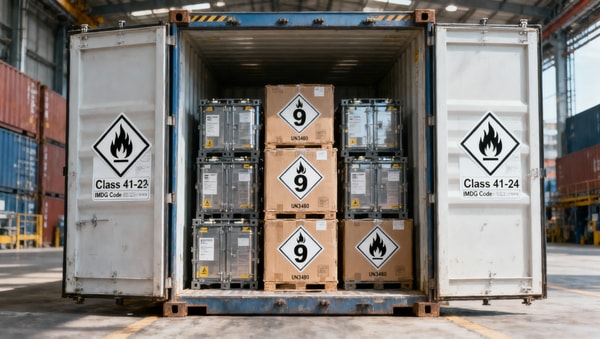
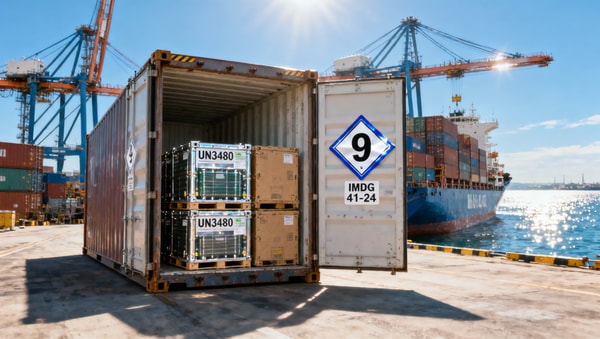
 IMDG Code 41-24 Enforces New UN3480 Labeling for Lithium BatteriesIMDG Code 41-24 mandates new UN3480 labeling for lithium batteries from 29 April 2026 — avoid shipment rejection. Act now to ensure compliance.
 China-France Nuclear Cooperation Advances at Beijing ExpoChina-France nuclear cooperation advances: mutual recognition for nuclear-grade seals, cables & radiation monitors boosts export readiness for suppliers targeting EU and BRI projects.
 Vietnam’s 4 Provinces Seek AI Tourism Tech in NanningAI tourism tech in demand: Vietnam’s 4 provinces seek AI-guided terminals, multilingual interpretation, AI-CCTV & smart ticketing in Nanning—key opportunity for B2G exporters.
 Q1 2026 China Power Market Trading Up 25.6%: Smart Meters, Storage Export Demand RisesSmart meters, energy storage exports surge as China’s Q1 2026 power market trading jumps 25.6% — key signal for global manufacturers & channel partners.
 China First Country with 5M+ Active Invention PatentsChina first country with 5M+ active invention patents—key for buyers in AI, solar, lithium battery & energy storage. Discover IP implications for sourcing, compliance & supplier vetting.
 Shenneng Etorkeqi Green Ammonia Project: Deionized Water Station OperationalShenneng Etorkeqi Green Ammonia Project’s deionized water station is now operational—ISO 8502-3 compliant, fully integrated, and a key milestone for global green hydrogen developers and exporters.
 China Launches 'Model-Data Resonance' Initiative for AI+Manufacturing InteroperabilityModel-Data Resonance initiative boosts AI+manufacturing interoperability—learn how GB/T XXXX–2026 aligns with VDI 2182 & ISA-95 for smoother global factory deployments.
 China’s First Embodied AI Robot Insurance Launched in GuangxiChina’s first embodied AI robot insurance launched in Guangxi—key for robotics exporters, AI hardware makers & global compliance teams. CE-recognized, EU/UK/AU-ready.
 IMDG Code 41-24 Enforced: UN3480 Lithium Battery Labeling Now MandatoryIMDG Code 41-24 is now mandatory: UN3480 lithium battery labeling, documentation & packaging rules are enforced globally as of 28 April 2026 — avoid port rejections!
 State Grid’s $680M Embodied AI Procurement Signals Export OpportunityEmbodied AI, IEC 61850 & IEC 62443: State Grid’s $680M procurement unlocks export opportunities for compliant industrial robots and smart vision systems in emerging markets.
 IMDG Code 41-24 Enforces UN3480 Class 9 Labeling for Lithium Battery Sea FreightIMDG Code 41-24 mandates UN3480 lithium battery sea freight to display durable Class 9 labels from April 27, 2026—avoid delays & port rejections.
 ESS Key Component Prices Drop ~80%: Quality & Compliance RiseESS key component prices dropped ~80%—but quality & compliance demands surged. Discover how UL 9540A, AS/NZS 5139, and certified BMS/inverters now define market access.



Popular Tags
Global Trade Insights & Industry
Our mission is to empower global exporters and importers with data-driven insights that foster strategic growth.
Search News
Popular Tags
Industry Overview
The global commercial kitchen equipment market is projected to reach $112 billion by 2027. Driven by urbanization, the rise of e-commerce food delivery, and strict hygiene regulations.