

How to Avoid Hidden Fees on an Online Trade Platform?
Hidden fees can quickly turn an online trade platform into a costly risk for buyers, suppliers, and project teams alike. Whether you use a business intelligence platform to compare Cement price trends, MRI scanners cost, or sourcing options across sectors like water treatment plant equipment and smart home automation devices, understanding where extra charges appear is essential. This guide explains how to identify fee traps, evaluate total transaction costs, and make smarter, more transparent trade decisions.
Why hidden fees are a serious risk on an online trade platform

In B2B trade, the listed price is often only the first layer of cost. Buyers comparing industrial goods, medical devices, building materials, or automation components may see a competitive offer on an online trade platform, yet the final payable amount can rise after logistics handling, payment processing, document preparation, inspection, storage, or currency conversion are added. For procurement teams working on 2–4 week sourcing cycles, even a 3%–8% unplanned charge can disrupt budget approval.
This risk affects more than purchasing departments. Technical evaluators may approve a supplier based on product specifications, while operators focus on usability, and project managers focus on delivery milestones. Hidden fees cut across all 3 layers. A low unit price can still produce a high landed cost, especially when orders involve samples, urgent dispatch, split shipments, or third-party inspection requirements.
For distributors, agents, and foreign trade decision-makers, the issue is also strategic. Unclear pricing weakens margin planning, damages customer trust, and complicates resale quoting. On platforms covering 50+ sectors, fee structures vary widely between commodity sourcing, capital equipment purchases, and recurring data subscriptions. That is why cost transparency should be treated as a selection criterion, not a post-purchase surprise.
Where hidden charges usually appear
Most extra charges do not appear as obvious “penalties.” They are usually embedded in service layers, transaction conditions, or optional features that become necessary during execution. A buyer may think a quotation covers end-to-end support, but later discover separate charges for compliance documents, supplier contact access, or priority response.
- Transaction fees, including escrow, card processing, bank transfer handling, and cross-border settlement charges that may apply per order or per payment event.
- Operational fees, such as warehousing beyond 3–7 free days, export documentation, sample consolidation, and inspection coordination.
- Platform service fees, including lead access, premium supplier visibility, data exports, subscription renewals, and API or report download limits.
A reliable trade intelligence workflow starts by separating product price, platform fee, logistics cost, and compliance cost into distinct lines. This is where a market intelligence portal like GTIIN and its TradeVantage ecosystem becomes valuable: it helps users compare not just offers, but also market context, supplier visibility, and cross-sector pricing signals before committing to a transaction path.
How to read the real cost behind a supplier quote
A practical way to avoid hidden fees on an online trade platform is to shift from price comparison to total cost comparison. Instead of asking “Which supplier is cheapest?” ask “What is the full transaction cost from platform inquiry to delivery acceptance?” For many industrial purchases, this means reviewing at least 5 cost layers: base price, transaction fee, logistics, compliance, and after-sales support.
This approach matters across industries. A buyer sourcing cement in bulk may face port handling and moisture-control storage costs. A hospital procurement team comparing MRI scanners may encounter installation coordination, calibration support, and training charges. A water treatment project team may see extra costs for drawings, FAT documentation, or replacement parts kits. The product category changes, but the fee logic is similar.
Core cost checkpoints before approval
Before issuing a purchase order, teams should verify a short but strict checklist. This is especially useful for procurement managers, quality personnel, and business reviewers who need a repeatable approval method across multiple suppliers and regions.
The table shows why price-only sourcing is risky. In many B2B transactions, hidden fees emerge because buyers do not define scope boundaries. A complete quote review should always convert each item into a comparable line, even if the platform displays only a simplified offer card.
A 4-step quote review method
- Break the quote into fixed and variable cost lines, including fees that scale by weight, payment method, or delivery urgency.
- Match all costs to the Incoterm used, because EXW, FOB, CIF, and DDP shift responsibility in very different ways.
- Request a validity period, usually 7–30 days, to avoid price drift from raw material changes or exchange-rate updates.
- Ask which items are excluded, not only what is included. Exclusions often reveal the true fee traps.
TradeVantage helps decision-makers support this process with market updates, supplier exposure data, and cross-industry pricing context. That makes it easier to judge whether a “special offer” reflects real competitiveness or simply shifts cost into less visible fee categories.
Which fee models are safer for buyers, operators, and project teams?
Not all fee models are equally risky. Some online trade platform structures are transparent and predictable, while others create uncertainty until the final invoice or shipment stage. For project managers and procurement teams handling delivery windows of 2–8 weeks, predictability often matters more than the lowest headline number.
The safest fee model is usually the one that separates services clearly and aligns them with milestones. A platform that states listing access, supplier inquiry, payment processing, documentation support, and dispute handling as separate terms is easier to evaluate than one that uses broad language such as “additional operational charges may apply.”
Comparison of common fee structures
The following comparison is useful when evaluating sourcing portals, supplier directories, and data-driven trade platforms across multiple categories.
For most enterprise users, the ideal model is not necessarily the cheapest one. It is the one that preserves forecast accuracy. If a sourcing team can estimate cost variance within a narrow range before approval, internal reporting becomes easier and supplier comparison becomes more credible.
What different stakeholders should prioritize
- Researchers and market analysts should prioritize transparent data-access rules, update frequency, and report usage limits.
- Operators and technical evaluators should verify whether manuals, installation guidance, and after-sales response windows are included.
- Procurement and business reviewers should compare total transaction cost, refund conditions, and cost impact if delivery slips by 7–15 days.
- Distributors and agents should examine lead access charges, visibility upgrades, and the true cost of maintaining customer acquisition on-platform.
Because TradeVantage operates as both an intelligence portal and a high-authority networking hub, users can approach supplier discovery with better context. Visibility, trust signaling, and market insight become part of decision quality, reducing the chance that hidden fees are masked by incomplete information.
What should procurement teams ask before placing an order?
A strong procurement process reduces hidden-fee exposure before the contract stage. In cross-border B2B trade, it is not enough to ask for a quotation. Teams should request a fee map that covers inquiry, order confirmation, payment, production, shipment, delivery, and after-sales support. This 6-stage view is especially important for capital equipment, engineered systems, or goods requiring documentation review.
Quality and safety personnel should also be involved early. If a platform or supplier charges separately for test reports, packaging validation, pre-shipment inspection, or safety labeling updates, those items may directly affect product acceptance. When they are discovered too late, the result is often rework, storage delay, or emergency spending.
A practical pre-order checklist
Use the following questions as a structured discussion tool with suppliers and platform account managers. This is useful for both single orders and recurring sourcing programs.
- What exactly does the quoted price include: packaging, loading, documents, inspection support, spare parts, training, or only the goods themselves?
- Which charges vary by quantity, weight, destination, payment method, or urgency level, and which are fixed regardless of order size?
- What are the free storage, free amendment, or free cancellation windows? Typical thresholds may be 24–72 hours for amendment and 3–7 days for storage.
- If quality issues occur, who pays for return logistics, replacement dispatch, inspection repeat fees, or document reissuance?
These questions help buyers move from reactive problem-solving to preventive control. They also support internal approvals, because finance and management teams can review a documented fee structure instead of relying on assumptions.
Procurement signals that deserve caution
Be careful when a supplier or platform cannot define revision fees, document scope, refund timing, or payment-route charges. Another warning sign is a quotation that is valid for a very short period but does not explain which variables may change. In volatile categories such as commodities, electronics, or imported equipment, price validity and surcharge logic should be linked to specific triggers.
TradeVantage adds value here by helping users validate whether a quoted offer aligns with broader market behavior. If one supplier’s base price appears sharply below category norms, researchers and buyers can investigate whether the gap comes from genuine supply advantage, limited scope, or deferred service charges.
Common misconceptions, compliance issues, and FAQ
Hidden fees are often caused by assumptions rather than bad intent alone. In multi-country trade, parties may interpret scope differently. A supplier may assume the buyer handles local compliance. The buyer may assume documentation is included. The platform may provide access and introductions, but not guarantee transaction services. Clarifying these boundaries can save days of delay and repeated cost approvals.
Compliance is another overlooked area. Even when a platform does not directly sell goods, the transaction may still require product-specific records, safety documentation, country-specific labeling, or inspection support. Those tasks can create extra charges if they were not defined in advance. For regulated categories, the cost of missing a document can exceed the cost of the document itself.
FAQ: How to avoid hidden fees with fewer surprises
How can I tell if an online trade platform is transparent?
Check whether pricing terms are separated into access fee, transaction fee, service fee, and optional add-ons. Transparent platforms usually explain billing intervals, renewal timing, refund treatment, and response scope in plain language. If critical cost details only appear after signup or order confirmation, risk is higher.
Are hidden fees more common in low-price offers?
Often, yes. A low base price can be legitimate, but it deserves closer scope review. Ask whether the quote excludes packaging upgrades, destination charges, compliance support, or post-sale service. In many cases, the difference appears only after 3–5 operational steps have already started.
What documentation should I request before payment?
Request a formal quotation, commercial terms, payment conditions, delivery scope, and any compliance-related deliverables relevant to the product category. For equipment or project goods, include manuals, inspection scope, spare parts list, and service response boundaries. This creates a measurable basis for later claims if extra charges appear.
How often should companies review platform fees?
For active sourcing teams, a quarterly review is practical. If your company handles high-value or high-frequency orders, monthly tracking may be better. Review not only subscription cost, but also the actual cost per lead, per inquiry, per completed transaction, and per resolved dispute.
The most effective strategy is to combine platform diligence with market intelligence. That means comparing fee structures, supplier credibility, and industry pricing trends together rather than as separate decisions. This is especially relevant in a cross-sector environment where one team may source raw materials, components, equipment, and market data within the same quarter.
Why choose us for smarter trade research and cost transparency
When companies try to avoid hidden fees on an online trade platform, they usually need more than a list of suppliers. They need reliable market context, cross-sector price visibility, and a stronger basis for vendor evaluation. GTIIN and TradeVantage support that need by connecting real-time B2B information, industrial trend analysis, and high-authority publishing visibility across more than 50 sectors.
This is valuable for researchers comparing supplier landscapes, for procurement teams reviewing total transaction cost, and for exporters or distributors building digital trust in global markets. Our platform helps users interpret commercial signals more accurately, especially when comparing offers that look similar at first glance but carry very different service and fee implications.
What you can contact us about
- Supplier and market research support for comparing price ranges, sourcing options, and cross-region industry movement.
- Content visibility and backlink opportunities that strengthen international brand exposure and buyer trust signals.
- Decision support for quotation review, supplier shortlist refinement, delivery-cycle expectations, and category-specific information gaps.
- Discussion around product selection logic, market-entry content strategy, certification-related content planning, and quote communication preparation.
If you need clearer insight into pricing logic, sourcing transparency, supplier visibility, or sector-specific trade intelligence, contact us with your target product, delivery region, expected order cycle, and decision priorities. We can help you frame the right questions before cost uncertainty turns into procurement loss.
Recommended News
 CDE Adds 74 International Experts to Accelerate MedTech Export RegistrationCDE adds 74 international experts to accelerate MedTech export registration—key for IVD, imaging & rehab device exporters targeting FDA, EU MDR, Health Canada.
 MIIT Launches Space-Ground Computing & Green Data Center Export PlanMIIT's Space-Ground Computing & Green Data Center Export Plan unlocks global opportunities for liquid-cooled servers, PV direct-drive power, and satellite-ground scheduling—learn key impacts now.
 2026 Bio-based Raw Material Supplier Guide ReleasedBio-based raw material supplier guide 2026: Discover 47 ISO 16128-certified Chinese PLA, PBAT & PHA suppliers trusted by CBL, BPI & JIS.
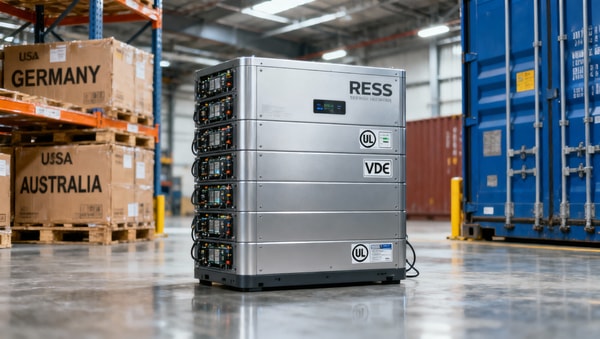
 Q1 2026 Lithium Battery Export Prices Rise 11.3% YoYQ1 2026 Lithium Battery Export Prices Rise 11.3% YoY — discover why residential energy storage systems (RESS) drove the surge and what it means for exporters, suppliers & integrators.
 ‘Modular-Data Resonance’ Initiative Launches AI+Manufacturing Interface StandardModular-Data Resonance standard GB/T 45288-2026 launches AI+manufacturing interoperability—key for smart equipment exporters, MES/SCADA & AI model developers targeting EU/US markets.
 China's First Embodied AI Robot Export Liability Insurance Launched in GuangxiChina's first Embodied AI Robot Export Liability Insurance launched in Guangxi—key for robotics exporters targeting EU & SEA markets. Get compliant, certified, and covered.
 State Grid Launches $682M Embodied AI Inspection Equipment ProcurementState Grid’s $940M embodied AI inspection tender mandates IEC 62443-4-2 & ISO 13482 certs—key for robotics makers and global compliance teams. Act now.
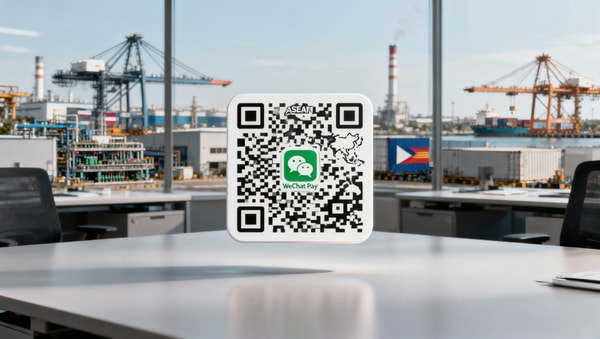
 WeChat Pay Cross-Border B2B QR Code Live in 5 ASEAN CountriesWeChat Pay Cross-Border B2B QR Code is now live in 5 ASEAN countries — enabling fast, low-cost, local-currency settlements for SMEs and trade firms. Discover how it cuts costs by 47% and accelerates procurement.
 RCEP Green Packaging Mutual Recognition Extended to AU, NZ, JP, KRRCEP Green Packaging Mutual Recognition now extends to AU, NZ, JP, KR — unlock faster customs clearance & zero on-site inspection for compliant Chinese food packaging exports.
 IMDG Code 41-24 Enforces UN3480 Lithium Battery Labeling GloballyIMDG Code 41-24 enforces global UN3480 lithium battery labeling, packaging & e-CMR rules from 1 May 2026—act now to avoid port rejections and delays.
 Medical diagnostic equipment buying mistakes often start with workflowMedical diagnostic equipment buying mistakes often begin with workflow gaps. Learn how to compare systems, uncover hidden costs, and choose suppliers that fit real clinical operations.
 Interactive whiteboards are improving, but teacher adoption is unevenInteractive whiteboards are improving fast, but teacher adoption remains uneven. Explore what drives classroom success, ROI, and smarter edtech implementation.
 Portable oxygen concentrators: what noise levels feel acceptable?Portable oxygen concentrators: discover what noise levels feel acceptable for sleep, travel, work, and home use, with practical guidance to choose a quieter, more comfortable model.
 Car electronics failures often start with power instabilityCar electronics issues often begin with hidden power instability. Learn how voltage drops, ripple, and weak grounds cause faults—and how smarter diagnostics cut repair time and repeat failures.
 Telemedicine hardware works best when setup friction is lowTelemedicine hardware works best with low setup friction. Discover how faster deployment, easier operation, and scenario-based selection improve care efficiency and service quality.
 Are light-weighting vehicle materials worth the repair tradeoff?Light-weighting vehicle materials: Are efficiency gains worth higher repair costs? Explore lifecycle impact, EV value, downtime risks, and smarter sourcing decisions.
 Educational robots in class: novelty or lasting value?Educational robots are moving beyond classroom novelty. Discover how they create lasting value through STEM learning, scalability, and smarter school purchasing decisions.
 Biodegradable plastics fail when disposal assumptions are wrongBiodegradable plastics can fail when real disposal systems do not match design assumptions. Learn the compliance, contamination, and claim risks before they damage trust.
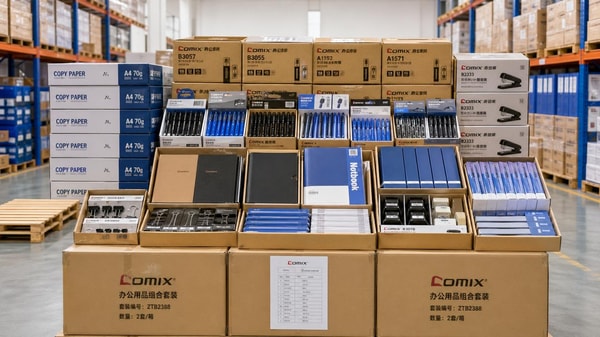
 Office stationery wholesale margins depend on boring detailsOffice stationery wholesale margins are won in the details—packaging, MOQ, freight, and SKU rotation. Learn how distributors protect profit and reduce hidden cost leakage.
 Carbon capture materials are improving, but durability still mattersCarbon capture materials are improving, but durability still decides ROI. Explore cycle stability, regeneration resilience, and supplier evaluation factors for reliable industrial deployment.
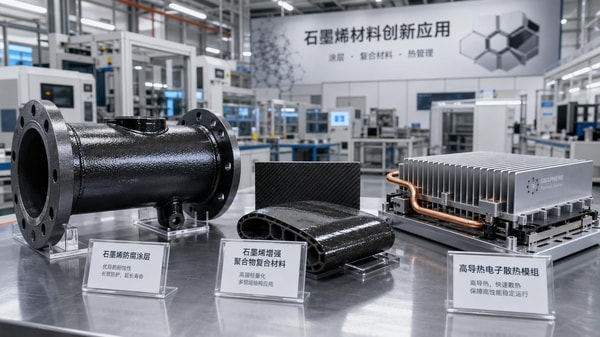
 Which graphene applications in industry are moving beyond pilots?Graphene applications in industry are moving beyond pilots fastest in coatings, composites, thermal management, sensors, and energy storage. See where commercialization is gaining traction.

















Popular Tags
Global Trade Insights & Industry
Our mission is to empower global exporters and importers with data-driven insights that foster strategic growth.
Search News
Popular Tags
Industry Overview
The global commercial kitchen equipment market is projected to reach $112 billion by 2027. Driven by urbanization, the rise of e-commerce food delivery, and strict hygiene regulations.