

Procurement cost looks low at first, then rises later
A low procurement cost can be misleading when hidden expenses emerge across sourcing, logistics, quality control, and after-sales support. Whether you are comparing an outdoor furniture supplier, evaluating a lubricants distributor, or reviewing supply chain management solutions, the real value lies beyond the initial quote. This article explains why procurement cost often rises later and how buyers can assess total ownership more accurately before making commercial decisions.
For information researchers, procurement teams, commercial evaluators, and channel partners, the first price on a quotation sheet is only one layer of the decision. In cross-border B2B trade, a 5% lower unit price can quickly be offset by 12% higher freight, a 2-week delay, or a 3% defect rate that triggers rework and claims. That is why experienced buyers no longer focus only on purchase price, but on total procurement cost across the full supply cycle.
Across more than 50 sectors, GTIIN and TradeVantage track how sourcing decisions shape competitiveness. In many categories, especially where suppliers operate across multiple regions, hidden cost drivers appear in compliance, packaging, payment terms, inventory exposure, and post-sale coordination. A quote that looks efficient on day 1 may become expensive by month 3 if the operational assumptions were incomplete.
Why a Low Procurement Price Often Becomes a Higher Total Cost
The most common mistake in procurement is treating the invoice price as the final cost. In reality, procurement cost includes supplier onboarding, sample validation, order management, production follow-up, shipping, customs handling, inspection, warehousing, and service resolution. Even in relatively standardized products, the difference between quoted price and landed cost often ranges from 8% to 25%.
This gap becomes larger in multi-country sourcing. A supplier with a lower base price may require smaller production batches but use weaker export packaging, slower documentation handling, or limited communication support. If a buyer loses 7–10 days in document correction or port release, the apparent savings can disappear before goods even reach the warehouse.
The issue is not always supplier misconduct. In many cases, buyers compare quotes without aligning specifications. A low-price proposal may exclude mold charges, pallet requirements, test reports, spare parts, warranty response, or destination duties. Procurement cost rises later because the original comparison was not made on the same scope, service level, and risk profile.
Key hidden cost layers in B2B procurement
The table below shows how hidden expenses typically emerge after the initial sourcing decision. These items are common across general industry categories, from industrial components to consumer-facing trade goods.
The practical lesson is straightforward: a lower quote is not automatically a lower procurement cost. Buyers need to compare complete execution conditions, not just unit pricing. This is especially important for distributors and agents who face downstream service obligations and cannot absorb avoidable supply chain variance.
Three early warning signs
- Large price gaps above 10% with no clear explanation of materials, testing scope, or service terms.
- Lead times that are unusually short, such as 7 days when the category norm is 15–30 days.
- Vague wording on warranty, packaging standard, export documents, or claim handling responsibility.
Where Procurement Cost Rises Later in the Real Buying Process
Procurement inflation rarely happens in one dramatic moment. More often, it builds across several small decisions. A buyer may accept a low quotation, then add paid samples, special labels, urgent freight, third-party inspection, and local rework. Each item seems manageable, yet together they can push the total spend well beyond the original budget by 15% or more.
In sectors such as outdoor products, industrial consumables, hardware, packaging materials, and aftermarket goods, variability in packaging and freight has a strong impact. A shipment with poor carton strength may increase breakage by 2% to 4%. For low-margin distribution models, even a small damage ratio can erase an entire order’s profit contribution.
Documentation is another frequent blind spot. Missing certificates, incorrect HS code usage, inconsistent labeling, or unconfirmed destination-market requirements can delay customs clearance by 3–10 working days. This adds storage, detention, and planning costs, but the indirect impact is often greater: lost sales windows, line stoppage, or channel dissatisfaction.
A practical breakdown of cost escalation points
The following comparison helps procurement teams map where a “cheap” order starts to become expensive during execution.
For commercial evaluators, the takeaway is to track procurement cost by stage, not just by purchase order value. Once cost visibility is segmented, it becomes easier to identify whether the real issue is supplier pricing, process discipline, or poor specification control.
Common cost triggers buyers underestimate
- MOQ mismatch that forces overbuying and increases inventory holding for 30–90 days.
- Payment terms such as 100% prepayment that raise working capital pressure.
- Inadequate inspection planning, leading to late discovery of defects after arrival.
- Limited after-sales support, especially where replacement parts must ship internationally.
How to Evaluate Total Cost of Ownership Before You Buy
A stronger procurement decision starts with a broader cost framework. Instead of comparing only price per unit, buyers should calculate total cost of ownership across at least 6 dimensions: product cost, logistics, quality assurance, inventory exposure, compliance handling, and service support. This approach gives procurement teams a more realistic decision basis, especially for recurring purchases or multi-market distribution.
For example, a supplier offering a 4% lower unit price may still be the more expensive option if it requires a 30% larger MOQ, takes 10 extra days to deliver, and has a slower claim response window. If the buyer serves retail or project clients with deadline commitments, the cost of disruption may be higher than the invoice difference itself.
The right method is to build a comparison model before negotiation is finalized. A 3-supplier matrix often works well for B2B teams. It allows direct review of pricing, lead time, defect risk, shipping structure, and service responsiveness in one place. This reduces decisions based on impression, pressure, or incomplete quote analysis.
A practical procurement scorecard
The table below shows a simple framework procurement teams can adapt for supplier comparison. Weightings should be adjusted by product criticality, market sensitivity, and channel risk.
What matters here is not mathematical perfection, but decision visibility. When buyers assign formal weight to service, logistics, and quality, low-price distortions become easier to detect. This is especially useful for distributors and agents that depend on reliable replenishment and stable channel reputation.
Minimum checks before supplier confirmation
- Request a full quotation scope covering packaging, labeling, documents, and claim handling.
- Confirm lead time in calendar days and identify any assumptions tied to raw materials or order volume.
- Ask for defect-resolution procedure, including response time, evidence requirement, and compensation path.
- Review MOQ and replenishment flexibility to avoid excess stock or split-shipment penalties.
For buyers using market intelligence platforms, this analysis becomes stronger when paired with supplier monitoring, regional trend updates, and sector-specific sourcing benchmarks. That is where industry information can move from passive reading to active procurement risk control.
Risk Control Strategies for Importers, Distributors, and Procurement Teams
The best procurement savings do not come from pressing the lowest price, but from reducing avoidable variance. In practical terms, this means controlling 4 areas: specification clarity, supplier accountability, logistics alignment, and post-sale readiness. Each one directly influences whether the total procurement cost remains predictable over 1 order or 12 months of repeat buying.
For importers and sourcing managers, one effective strategy is phased validation. Instead of scaling immediately, begin with a sample review, a pilot order, and a performance check after receipt. This 3-step approach can add 1–2 weeks upfront, but it often prevents much larger losses tied to defect batches, return claims, or distributor dissatisfaction later.
Channel businesses should also estimate downstream service cost before confirming a vendor. If you sell through dealers, agents, or project installers, every supply inconsistency creates extra communication cycles. A supplier that saves 3% on purchase price but generates 6% in claim management cost is not a cost advantage; it is simply a delayed expense.
Operational controls that reduce future cost escalation
- Standardize specifications in one approved sheet, including materials, tolerances, packaging, markings, and inspection points.
- Set measurable delivery milestones, such as sample approval in 5 days, production confirmation in 7 days, and shipment file review before dispatch.
- Use pre-shipment inspection for higher-risk or first-time orders, especially where defect tolerance is below 2%.
- Define after-sales process in writing, including who pays replacement freight, what evidence is needed, and target closure time.
Procurement mistakes that create “cheap first, expensive later” outcomes
One major mistake is buying from a supplier whose commercial terms do not match the actual operating model. A factory may be suitable for container-scale orders, but not for mixed-SKU replenishment. A trader may offer fast communication, but not enough technical control for customized goods. Cost rises later when the supplier model and business model are misaligned.
Another mistake is separating procurement from market intelligence. If buyers ignore sector shifts such as freight volatility, seasonal lead-time pressure, or regional compliance changes, a quote reviewed today may no longer be competitive or safe 30 days later. Reliable industrial information helps teams re-evaluate sourcing assumptions before exposure becomes expensive.
For B2B enterprises expanding globally, information quality is now part of procurement quality. Platforms such as GTIIN and TradeVantage support this by surfacing sector movements, supply chain signals, and international market visibility that help teams compare not only suppliers, but also sourcing environments, business timing, and risk context.
Frequently Asked Questions About Rising Procurement Cost
How many cost elements should buyers review beyond the quoted price?
A practical baseline is 6 to 8 elements: unit price, tooling or sampling, logistics, customs or documentation, inspection, inventory effect, warranty handling, and payment-related capital pressure. For high-variability categories, adding packaging performance and replenishment flexibility can further improve accuracy.
Is the lowest-price supplier always a bad choice?
Not necessarily. A low-price supplier can still be the right choice if specifications are clear, lead times are stable, quality performance is verified, and support obligations are transparent. The problem is not low price itself, but low visibility. If the supplier can document service scope and execution capability, a lower quote may still deliver good total value.
What defect rate or delay level should trigger extra caution?
Thresholds vary by category, but many buyers begin escalation when defect risk exceeds 2%–3%, or when lead time variance exceeds 20% against the agreed schedule. For project-based or seasonal goods, even a 5-day delay can be commercially significant, so time sensitivity should be assessed before price comparison is finalized.
How can distributors and agents protect margin during procurement?
They should focus on replenishment reliability, warranty clarity, and claim response speed, not only on cost per piece. Margin protection depends on the total service burden. It is often better to accept a 2% higher purchase price if it reduces field complaints, replacement freight, and channel dissatisfaction over the next 6–12 months.
Procurement cost looks low at first when decision-makers focus narrowly on the quotation. It rises later when the real cost of execution, quality assurance, logistics, and service is finally revealed. The most resilient buyers compare total ownership, validate operational details early, and use structured market intelligence to reduce uncertainty before orders scale.
For information researchers, procurement professionals, commercial reviewers, and distribution partners, better decisions come from better visibility. GTIIN and TradeVantage help businesses strengthen that visibility through industrial updates, supply chain insight, and global B2B intelligence that supports smarter sourcing and stronger commercial positioning. To evaluate suppliers more accurately, get a tailored sourcing perspective, or explore broader trade solutions, contact us today and learn more about the right strategy for your market.
Recommended News
 IMDG Code 41-24 Enforces UN3480 Class 9 Labeling for Lithium Battery Sea FreightIMDG Code 41-24 mandates UN3480 lithium battery sea freight to display durable Class 9 labels from April 27, 2026—avoid delays & port rejections.
 ESS Key Component Prices Drop ~80%: Quality & Compliance RiseESS key component prices dropped ~80%—but quality & compliance demands surged. Discover how UL 9540A, AS/NZS 5139, and certified BMS/inverters now define market access.
 Mexico NOM-019-SCFI-2026 Effective July 2026: EMC Certification Mandatory for Auto ElectronicsMexico NOM-019-SCFI-2026 mandates EMC certification for auto electronics from July 2026 — ensure compliance now to avoid supply chain disruption & customs delays.
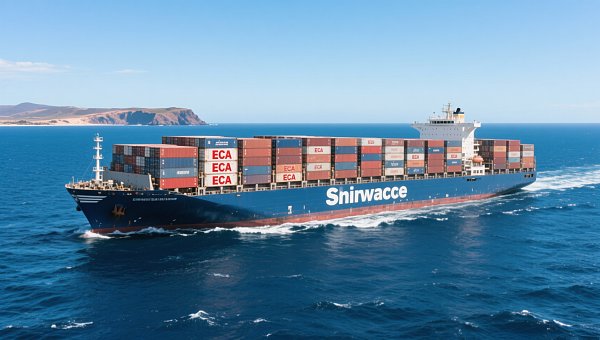
 Red Sea Rerouting Normalized, ECA Surcharge Hits $1,850/TEURed Sea rerouting normalized: ECA surcharge hits $1,850/TEU — 47% of total freight cost. Impacting hand tools, building materials & furniture exporters to Europe. Act now.
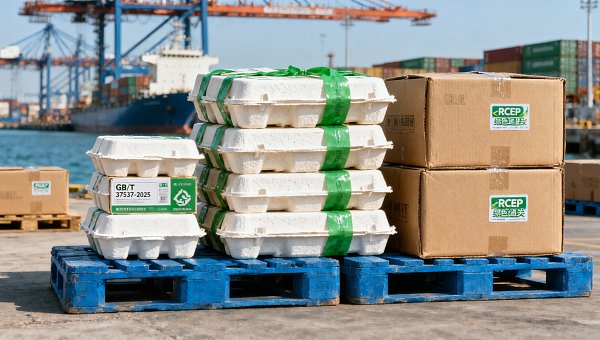
 RCEP Green Packaging Mutual Recognition Takes EffectRCEP Green Packaging Mutual Recognition is live—GB/T 37537-2025–certified packaging now enjoys fast-track clearance in Australia, NZ, Japan & Korea. Save time, cut costs, and boost export efficiency.
 Vietnam Suspends SASO Mutual Recognition for Chinese Irrigation EquipmentVietnam suspends SASO mutual recognition for Chinese irrigation equipment—drip tapes, PE fittings, auto valves now require VINAQ-IR certification. Act now to avoid delays & customs hold.
 Key Energy Storage Equipment Prices Drop ~80% in ChinaKey energy storage equipment prices in China dropped ~80% — PCS, BMS & liquid cooling units. Discover implications for compliance, margins & standards enforcement.
") China Releases Green Design Guidelines for Industrial Products (2026)China's 2026 Green Design Guidelines for industrial products—covering PV modules, lithium batteries & smart appliances—link eco-design to green factory certification and export tax rebates starting 2027.
China Releases Green Design Guidelines for Industrial Products (2026)China's 2026 Green Design Guidelines for industrial products—covering PV modules, lithium batteries & smart appliances—link eco-design to green factory certification and export tax rebates starting 2027. Mexico NOM-019-SCFI-2026 Effective: Automotive Electronics Require New EMC CertificationMexico NOM-019-SCFI-2026 is live: Automotive electronics (infotainment, ADAS, domain controllers) now require mandatory EMC certification by July 31, 2026 — act now to avoid customs delays.
 Red Sea Detour Premium Rises to $1,850/TEU Amid Port Congestion ReliefRed Sea Detour Premium hits $1,850/TEU — now 43% of FE–NE freight rates. Discover why this structural surcharge demands urgent supply chain action.
 TÜV Rheinland Updates PLd Certification: EMC Immunity Now Mandatory for Servo DrivesTÜV Rheinland now mandates EN IEC 61000-6-2:2024 EMC immunity testing for PLd certification of servo drives—act before May 26, 2026 to avoid EU market delays.
 RCEP Green Packaging Mutual Recognition Effective Apr 26, 2026RCEP Green Packaging Mutual Recognition takes effect Apr 26, 2026—unlock faster customs clearance & cost savings for eco-friendly packaging exporters to AU, NZ, JP, KR.
 FDA Final Rule: AI Diagnostic Devices Must Submit Bias Impact ReportsFDA mandates AI diagnostic devices submit third-party-verified bias impact reports—key for 510(k)/De Novo submissions. Act now to ensure compliance & market access.
 Vietnam Suspends SASO Mutual Recognition for Chinese Irrigation EquipmentVietnam suspends SASO mutual recognition for Chinese irrigation equipment—urgent QCVN certification now required for drip tapes, sprinklers, valves & smart controllers.
 SABER Phase II Launch: Building Hardware Must Submit Digital Type Test Reports & PIDSABER Phase II now requires digital type test reports & PID for building hardware — fasteners, door/window, bathroom fixtures. Avoid port rejection: ensure PID-bound compliance before shipment.
 IMDG Code 41-24 Enforced: UN3480 Lithium Batteries Require Class 9 LabelsUN3480 lithium batteries now require ISO 7225-compliant Class 9 labels under IMDG Code 41-24 — enforceable globally from 26 April 2026. Act now to avoid shipment delays!
 Which Home Improvement Tools Do You Really Need First?Home improvement tools guide: discover the first essentials to buy, compare smart home automation devices and online trade platform sourcing tips, and make safer, smarter purchases.
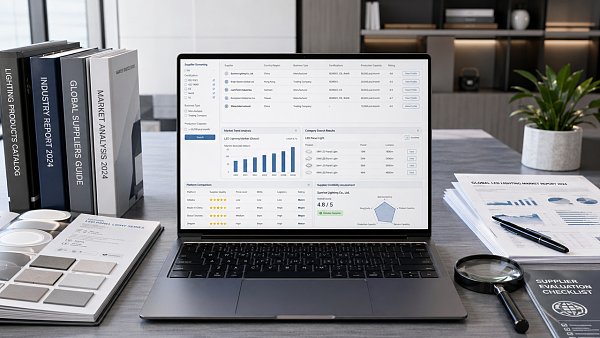
 How to Compare an Online Trade Platform Before Signing Up?Compare an online trade platform with confidence—evaluate data quality, supplier trust, market insights, and search tools for smarter sourcing across cement price, MRI scanners cost, and more.
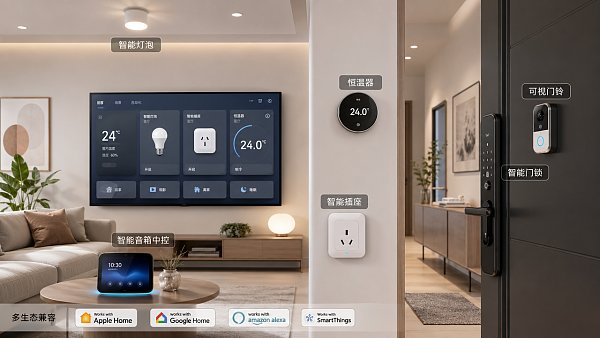
 Which Smart Home Automation Devices Are Easiest to Use?Smart home automation devices made simple: compare easy-to-use smart home automation devices, home improvement tools integration, and buyer tips from a business intelligence platform.
 Are Auto Detailing Services Worth the Cost?Auto detailing services: discover if the cost is justified, how pricing varies, and how a business intelligence platform helps buyers compare value, quality, and long-term ROI.
 What Makes Sustainable Fashion Brands Worth Buying?Sustainable fashion brands deliver transparency, quality, and lower risk. See how a business intelligence platform helps buyers verify value, avoid greenwashing, and source smarter.

















Popular Tags
Global Trade Insights & Industry
Our mission is to empower global exporters and importers with data-driven insights that foster strategic growth.
Search News
Popular Tags
Industry Overview
The global commercial kitchen equipment market is projected to reach $112 billion by 2027. Driven by urbanization, the rise of e-commerce food delivery, and strict hygiene regulations.