

Precision farming drones save time, but can they improve yield reliably?
Precision farming drones are saving operators valuable time in scouting, spraying, and field mapping—but can they deliver yield gains consistently across different crops and conditions? For users on the ground, the answer depends on data accuracy, flight planning, and how well drone insights translate into timely action. This article explores where these tools create measurable value and what operators should know before relying on them for yield improvement.
Why a checklist is the best way to judge Precision farming drones
For operators, the main question is rarely whether Precision farming drones are impressive. It is whether they can improve decisions often enough to justify the effort, training, maintenance, and data workflow behind them. Yield does not increase because a drone flew over a field. Yield improves when the drone helps identify a problem early, measure it correctly, and support action before crop stress becomes irreversible.
That is why a checklist approach matters. It helps separate visible efficiency gains, such as faster scouting and lower labor pressure, from reliable agronomic gains, such as better stand uniformity, targeted nutrient correction, lower pest pressure, and improved harvest consistency. Operators who use a structured evaluation process are more likely to know when Precision farming drones are creating real value and when they are simply generating more images than actionable insight.
First checks: what to confirm before expecting yield improvement
Before using Precision farming drones as a yield tool, operators should confirm several baseline conditions. If these are weak, drone adoption may still save time, but yield response will be inconsistent.
- Is there a clearly defined field problem to solve? Examples include uneven emergence, weed escapes, irrigation variation, nutrient deficiency, lodging risk, or localized pest pressure.
- Can the problem be detected early enough from aerial data to allow intervention? A late diagnosis rarely improves yield, even if the imagery is accurate.
- Is there an action pathway after detection? If no sprayer, labor team, agronomist, or prescription workflow is ready, the data has limited yield value.
- Are weather windows stable enough for repeatable flights and timely field response? Poor timing reduces consistency across seasons.
- Are field boundaries, crop stages, and prior input records available? Without context, drone maps are harder to interpret correctly.
This first screen matters because Precision farming drones perform best inside a complete management system. They are not a stand-alone guarantee of higher yields. They are a decision accelerator.
Core checklist: the factors that most directly affect reliable yield gains
1. Sensor fit and data quality
Operators should verify whether the drone payload matches the agronomic objective. RGB cameras are useful for visible stand gaps, waterlogging, lodging, and obvious weed patches. Multispectral sensors support vegetation index analysis and can reveal stress patterns earlier. Thermal sensors can be useful for irrigation and canopy temperature monitoring. If the sensor cannot capture the target issue with enough precision, yield improvement should not be expected.
Data quality also depends on altitude, overlap, lighting conditions, wind, and calibration routines. Inconsistent image capture can create false variability, leading operators to treat the wrong areas.
2. Flight timing by growth stage
The same drone can be highly valuable at one crop stage and far less useful at another. Emergence-stage flights help measure establishment quality. Mid-season flights often support nutrient, disease, or irrigation decisions. Late-season flights may be useful for harvest planning, but they usually have less impact on final yield. Precision farming drones are most reliable when operators map flight plans to decision windows, not just to available time.
3. Ground truthing discipline
One of the most common mistakes is acting on imagery without field verification. A stress zone on a map may reflect soil compaction, nutrient shortage, root disease, shading, irrigation failure, or simple sensor noise. Reliable yield gains come from pairing drone observations with ground checks, plant tissue analysis, soil testing, or localized inspection. Operators who skip this step may save time but reduce decision accuracy.
4. Speed from map to action
Precision farming drones only improve yield when findings lead to fast response. If processing takes too long, if variable-rate files are delayed, or if labor cannot act quickly, crop stress continues and the yield window closes. Operational speed is often a stronger predictor of value than image volume.
5. Repeatability across seasons
A single successful season does not prove reliability. Operators should track whether drone-guided interventions repeatedly improve outcomes across different weather patterns, hybrid choices, soil zones, and pressure conditions. Long-term consistency is the real test.
Quick decision table: where Precision farming drones usually create value
The table below helps operators judge where Precision farming drones are more likely to affect yield directly and where they mainly improve efficiency or visibility.
Scenario-based checks: different crops and field conditions need different expectations
Row crops
In corn, soybean, cotton, and similar row crops, Precision farming drones often deliver the strongest value through emergence checks, drainage pattern detection, weed mapping, and mid-season stress zoning. Yield gains are more reliable in large fields where manual scouting is slower and variability is harder to catch from the ground.
High-value horticulture
Vegetables, orchards, and vineyards may benefit even more because crop value per acre is higher and small stress events can justify rapid intervention. However, canopy complexity increases the need for good sensor choice and stronger interpretation skills. Operators should not assume that a workflow designed for open field crops will transfer directly.
Variable soils and uneven topography
Fields with drainage differences, slope variation, salinity patches, or inconsistent fertility often show the clearest advantage from Precision farming drones. In highly uniform fields, the time savings may remain attractive, but direct yield gains may be smaller because fewer hidden problems exist to correct.
Common missed issues that reduce results
Operators evaluating Precision farming drones should pay special attention to these overlooked points:
- Confusing correlation with cause. Stress patterns may look meaningful but still require diagnosis.
- Flying too infrequently. A single monthly scan can miss short but critical intervention windows.
- Ignoring operator training. Better hardware cannot replace weak mission planning or poor data interpretation.
- Overestimating autonomous features. Automation supports consistency, but local conditions still require judgment.
- Not integrating with other farm records. Yield maps, spray records, weather history, and soil data make drone outputs far more useful.
- Using the same threshold for all fields. What signals a problem in one field may be normal in another.
Execution guide: how operators can improve reliability in the field
If the goal is not just faster scouting but dependable yield support, operators should build a repeatable process around Precision farming drones.
- Set one priority objective per flight, such as emergence quality, irrigation stress, disease hotspots, or weed escapes.
- Standardize flight conditions as much as possible, including altitude, overlap, and time of day.
- Create a same-day review routine so anomalies are checked quickly.
- Flag zones for physical inspection rather than treating whole fields by assumption.
- Record what action was taken and compare it with yield outcomes later.
- Review seasonal results to identify which drone-guided decisions actually changed performance.
This disciplined loop transforms Precision farming drones from a promising technology into a measurable management tool. For many operators, the biggest improvement comes not from flying more often, but from tightening the gap between detection, verification, and intervention.
How to evaluate ROI beyond simple time savings
Time savings matter, especially where labor is stretched, but operators should assess broader return on investment. Useful measures include reduced scouting hours, fewer unnecessary blanket applications, lower missed-stress losses, better prioritization of field visits, improved spray timing, and more confident replant or correction decisions. In some seasons, Precision farming drones may not deliver dramatic yield increases, yet still protect margins by improving input efficiency and reducing delayed response.
A fair evaluation therefore asks two separate questions: did the drone save time, and did it improve agronomic decisions enough to influence yield or profitability? Treating those as different metrics leads to better adoption choices.
FAQ: operator-focused questions about Precision farming drones
Do Precision farming drones improve yield every season?
No. They improve the chances of timely and accurate action, but weather extremes, market-driven input limits, and late detection can still reduce impact.
Are they more valuable for scouting or spraying?
For many operators, scouting creates the most reliable management value because it informs multiple decisions. Spraying value depends more on regulation, payload, area size, and treatment economics.
What is the biggest mistake when using Precision farming drones?
Assuming that map output is the same as agronomic truth. The strongest results come from combining imagery with ground confirmation and fast field action.
Final checklist before you rely on drones for yield improvement
If you want Precision farming drones to support yield reliably, prioritize these questions: What problem are you trying to catch? At what crop stage can action still change the outcome? Is your sensor setup appropriate? Can your team ground-check anomalies quickly? How fast can you convert findings into treatment or management changes? And can you track whether those actions actually improved results over time?
For operators and agribusiness users evaluating next steps, it is smart to prepare a short decision brief covering field size, crop type, target use case, available intervention tools, budget range, seasonal timing, and data integration needs. If you need to confirm equipment parameters, workflow fit, service support, implementation cycles, or partnership options, start by discussing those practical points first. That approach leads to better deployment decisions and stronger long-term returns from Precision farming drones.
Recommended News
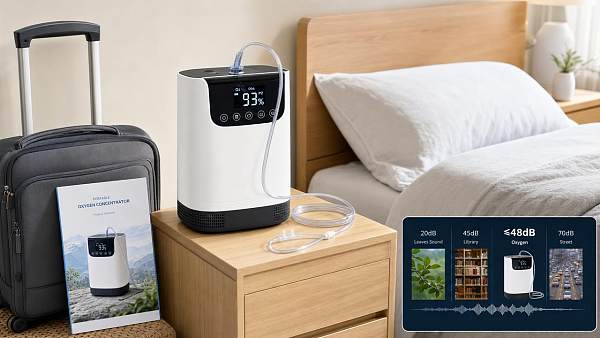
 Portable oxygen concentrators vary more in noise than spec sheets suggestPortable oxygen concentrators may share similar specs, yet real-world noise can vary widely. Learn what decibel ratings miss and choose a quieter, more comfortable model with confidence.
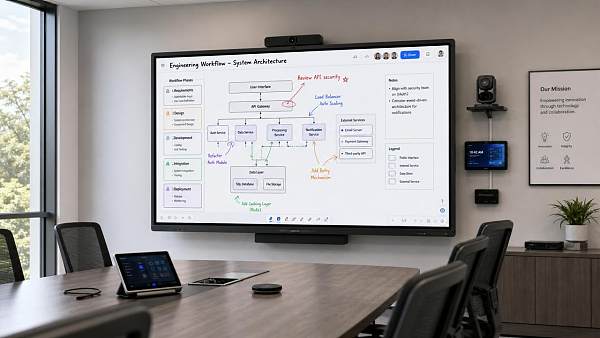
 Interactive whiteboards are easier to buy than to integrate wellInteractive whiteboards are easy to buy, but hard to integrate. Discover how to align workflows, IT, training, and ROI for smarter deployment.
![]() Medical diagnostic equipment upgrades should start with workflow bottlenecksMedical diagnostic equipment upgrades should start with workflow bottlenecks. Discover how targeted investments improve throughput, integration, ROI, and diagnostic efficiency.
Medical diagnostic equipment upgrades should start with workflow bottlenecksMedical diagnostic equipment upgrades should start with workflow bottlenecks. Discover how targeted investments improve throughput, integration, ROI, and diagnostic efficiency.![]() Eco-friendly building materials can raise budgets before they lower themEco-friendly building materials may raise upfront budgets, but they can cut long-term costs, improve compliance, and strengthen asset value. Learn when the premium truly pays off.
Eco-friendly building materials can raise budgets before they lower themEco-friendly building materials may raise upfront budgets, but they can cut long-term costs, improve compliance, and strengthen asset value. Learn when the premium truly pays off. Ergonomic workspace design fixes discomfort, but not every layout problemErgonomic workspace design improves comfort, focus, and buying decisions—but not every layout issue. Learn what upgrades work, what room limits remain, and how to choose smarter.
![]() Outdoor garden supplies demand shifts earlier than many sellers plan forOutdoor garden supplies demand is starting earlier than many sellers expect. Learn what drives the shift and how distributors, wholesalers, and agents can plan smarter to win more sales.
Outdoor garden supplies demand shifts earlier than many sellers plan forOutdoor garden supplies demand is starting earlier than many sellers expect. Learn what drives the shift and how distributors, wholesalers, and agents can plan smarter to win more sales. Sustainable home decor sells better when materials are easy to verifySustainable home decor sells better when material claims are easy to verify. Discover how traceable data, certifications, and clear sourcing build trust and boost B2B sales.
 Modern office furniture trends are changing around hybrid work needsModern office furniture trends are redefining hybrid workplaces with flexible layouts, ergonomic design, and smart tech integration. Discover what drives demand and smarter buying decisions.
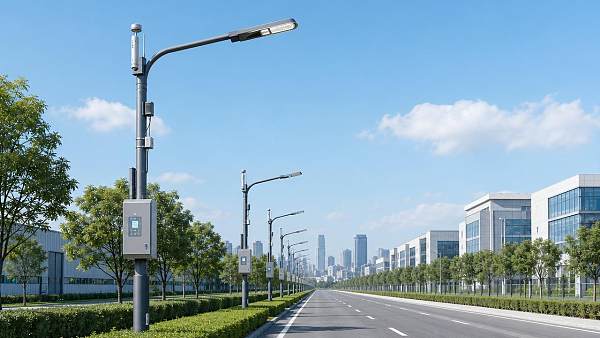
 Smart street lighting projects often miss the maintenance sideSmart street lighting projects often overlook maintenance. Learn how diagnostics, spare parts, and scenario-based support improve reliability, reduce downtime, and protect long-term value.
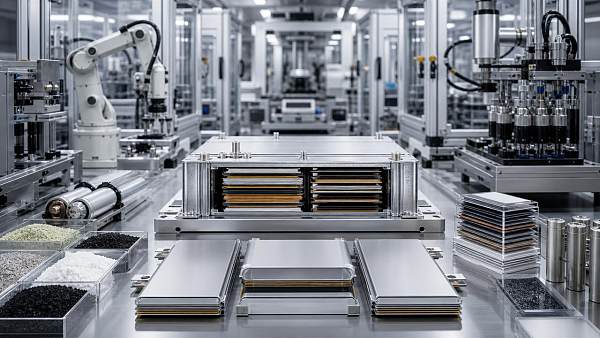
 Solid-state battery breakthroughs are real, but mass rollout is still difficultSolid-state battery breakthroughs are real, but scaling remains difficult. Explore what’s driving progress, what blocks mass rollout, and where commercialization may happen first.
![]() Commercial LED lighting retrofits save money, but not at the same paceCommercial LED lighting can cut costs, but payback varies by warehouse, office, retail, and industrial scenario. Discover how to identify the fastest-return retrofit opportunities.
Commercial LED lighting retrofits save money, but not at the same paceCommercial LED lighting can cut costs, but payback varies by warehouse, office, retail, and industrial scenario. Discover how to identify the fastest-return retrofit opportunities. Lithium battery storage projects fail early when thermal planning is weakLithium battery storage projects fail early when thermal planning is weak. Learn the key checks to improve safety, uptime, compliance, and long-term project returns.
 Photovoltaic solar panels: when higher efficiency is not the better dealPhotovoltaic solar panels are not always best when efficiency is highest. Discover how lifecycle cost, payback, and site conditions can deliver smarter ROI and better sourcing decisions.
 Plant-based protein processing depends more on texture than many expectPlant-based protein processing relies heavily on texture to improve quality, control risk, and boost consistency. Learn how better texture management strengthens compliance and competitiveness.
 Foldable screen technology keeps improving, yet repair costs remain a problemFoldable screen technology is getting stronger and smarter, but repair costs still worry buyers. Discover who should buy, key ownership risks, and how to choose wisely.
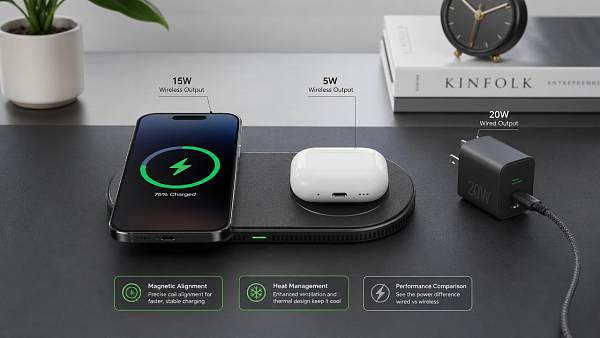
 Next-gen wireless charging sounds convenient, but how efficient is it?Next-gen wireless charging sounds effortless, but how efficient is it in real use? Explore heat, power loss, alignment, and the market factors shaping adoption.
![]() Wearable technology is improving fast, but comfort still decides adoptionWearable technology is evolving fast, but comfort still drives real adoption. Explore how design, fit, battery life, and daily usability shape the wearables consumers truly keep using.
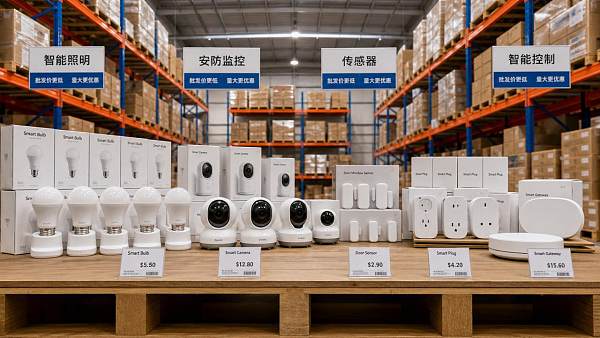
Wearable technology is improving fast, but comfort still decides adoptionWearable technology is evolving fast, but comfort still drives real adoption. Explore how design, fit, battery life, and daily usability shape the wearables consumers truly keep using. Smart home devices wholesale margins shrink faster than many expectSmart home devices wholesale margins are shrinking fast. Learn what causes profit erosion, which categories face price wars, and how distributors can protect growth and improve sourcing decisions.
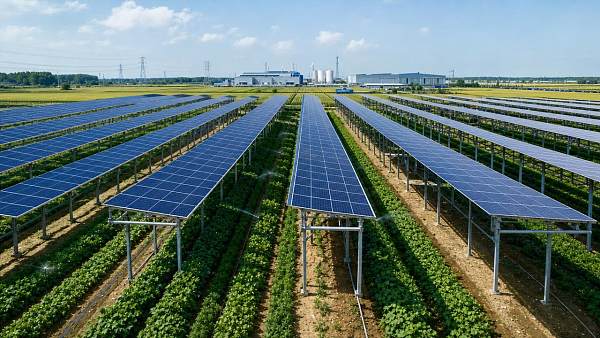
 Agri-PV systems make sense only when land use goals are clearAgri-PV systems create business value only when land use goals are clearly defined. Discover how aligned energy, farming, and ESG priorities reduce risk and improve returns.
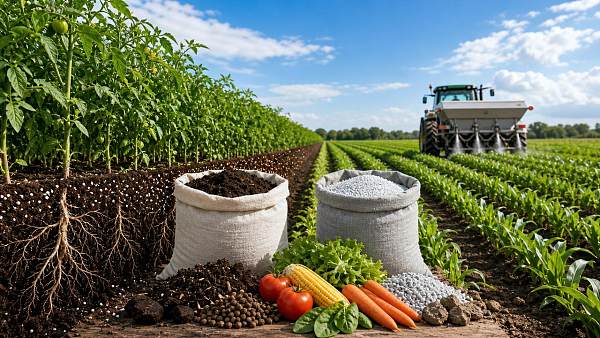
 Organic fertilizers vs synthetic inputs: where does the payoff change?Organic fertilizers vs synthetic inputs: discover where costs, compliance, soil health, and market premiums shift the payoff—and how to choose the smartest long-term strategy.
 Smart classroom solutions often underdeliver without teacher-side usabilitySmart classroom solutions often fail when teacher-side usability is ignored. Discover scenario-based insights to improve adoption, reduce friction, and maximize classroom ROI.





Popular Tags
Global Trade Insights & Industry
Our mission is to empower global exporters and importers with data-driven insights that foster strategic growth.
Search News
Popular Tags
Industry Overview
The global commercial kitchen equipment market is projected to reach $112 billion by 2027. Driven by urbanization, the rise of e-commerce food delivery, and strict hygiene regulations.