

How to Evaluate Industrial Robot Integrators
Choosing the right industrial robot integrator is not mainly about finding the lowest bid. For procurement teams, distributors, and business evaluators, the real question is whether an integrator can deliver a safe, reliable, and scalable automation system that fits your production goals, budget, and long-term operating model. A strong partner should be able to prove technical competence, relevant industry experience, realistic project management, and dependable after-sales support. If any of these areas are weak, the project can quickly turn into downtime, cost overruns, and difficult handover issues.
This guide explains how to evaluate industrial robot integrators in a practical way. It focuses on the factors that matter most to buyers and decision-makers: technical ability, application fit, integration quality, delivery risk, compliance, service response, and total business value. Whether you are reviewing suppliers for manufacturing, food processing, water treatment, cutting tools, or broader industrial automation projects, the same evaluation logic applies.
What Should You Look at First When Evaluating an Industrial Robot Integrator?
Start with one principle: an industrial robot integrator should be evaluated on proven execution, not presentation quality. Many companies can speak confidently about automation, but only a smaller group can demonstrate successful delivery in environments similar to yours.
The first review should cover five essentials:
- Application experience: Have they integrated robotic systems for tasks similar to yours, such as pick-and-place, palletizing, welding, machine tending, packaging, inspection, or material handling?
- Industry familiarity: Do they understand the regulatory, hygiene, safety, and throughput requirements of your sector?
- Engineering depth: Can they handle controls, end-of-arm tooling, vision systems, conveyors, sensors, guarding, and software integration?
- Project delivery discipline: Do they have a structured process for design review, factory acceptance testing, site installation, commissioning, and operator training?
- Service capability: Can they support the system after launch with troubleshooting, spare parts, maintenance, and upgrades?
If an integrator cannot clearly document these five areas, they are not yet a low-risk choice. Early evaluation should quickly filter out suppliers that rely on generic automation claims without enough evidence.
Does the Integrator Have Real Experience in Your Application and Industry?
This is often the most important checkpoint. A robot cell that works well in automotive assembly may not be suitable for food processing, water treatment equipment manufacturing, or high-mix industrial component handling. The best industrial robot integrator is usually not the one with the broadest claims, but the one with the most relevant experience.
Ask for examples that match your operating conditions:
- Payload range and reach requirements
- Cycle time expectations
- Product variability
- Required accuracy and repeatability
- Cleanliness or washdown requirements
- Shift pattern and expected uptime
- Integration with existing ERP, MES, PLC, or SCADA systems
For example, if you operate in food processing, the integrator should understand hygienic design, contamination risks, and easy-clean layouts. If your production involves cutting tools or precision parts, they should understand tolerance sensitivity, fixture design, and repeatability under continuous operation. If your environment includes water treatment equipment or corrosive conditions, material selection and enclosure design become more important.
Case studies are useful, but ask deeper questions. What problem did the client face? What was the system architecture? What measurable result was achieved? What issues appeared during commissioning, and how were they solved? Detailed answers reveal whether the integrator truly led the project or is simply reusing marketing language.
How Strong Is the Integrator’s Technical Capability?
Industrial robot integration is not only about installing a robot arm. It is about building a complete production-ready system. That means technical evaluation should go beyond robot brand familiarity.
A capable integrator should be able to demonstrate strength in the following areas:
- Mechanical design: custom frames, fixtures, guarding, and end-of-arm tooling
- Electrical engineering: panels, wiring, safety circuits, and equipment layout
- Controls engineering: PLC programming, HMI development, robot programming, and communication protocols
- Vision and sensing: barcode reading, part detection, orientation, quality checks, or guidance systems
- Safety integration: interlocks, light curtains, area scanners, fencing, emergency stops, and risk assessment
- System interoperability: integration with conveyors, CNC machines, packaging lines, testing units, and upstream/downstream equipment
One practical way to evaluate capability is to ask who does the engineering work in-house and what is subcontracted. A company that outsources most of the controls or mechanical design may have less control over schedule, quality, and troubleshooting. Subcontracting is not always a problem, but it should be transparent and well-managed.
You should also ask whether they are robot-brand agnostic or heavily tied to one manufacturer. A brand-aligned partner may offer stronger support on a specific platform, but a more flexible integrator may recommend a better-fit solution based on payload, speed, footprint, software compatibility, and budget.
Can They Define the Business Case, Not Just the Equipment?
For buyers and business evaluators, the project must make operational and financial sense. A qualified industrial robot integrator should be able to explain not only what equipment they propose, but why it supports your business goals.
Important business questions include:
- What labor, throughput, quality, or safety issue is the system solving?
- What baseline metrics are being used?
- What performance improvement is realistically expected?
- What assumptions affect ROI?
- What hidden costs should be included, such as tooling changes, utilities, floor space, or training?
- How expandable is the system if production volume increases?
The best proposals connect engineering choices to measurable outcomes. For example, they may estimate reduced scrap, lower manual handling injuries, more stable output, shorter changeover time, or better traceability. A weak proposal tends to focus only on hardware features without showing how those features improve operations.
If the expected return is based on unrealistic utilization or best-case uptime assumptions, that is a warning sign. Procurement teams should look for balanced, evidence-based projections.
How Do You Assess Project Delivery Risk?
Many automation projects fail not because the concept was wrong, but because execution was poorly controlled. That is why delivery capability matters almost as much as technical design.
Ask the integrator to walk you through their standard project stages:
- Requirements gathering and site review
- Concept design and feasibility validation
- Detailed engineering and approval milestones
- Build and internal testing
- Factory Acceptance Test (FAT)
- Shipment, installation, and commissioning
- Site Acceptance Test (SAT)
- Training, documentation, and handover
Then evaluate how clearly they define responsibility, timeline, and change management at each stage. Strong integrators typically provide:
- A detailed scope of work
- A responsibility matrix
- Documented assumptions and exclusions
- Milestone schedules
- Test criteria for FAT and SAT
- A formal process for design changes
Pay special attention to how they manage scope change. In industrial automation, small design revisions can affect lead time, controls logic, guarding, and throughput. If the supplier cannot explain how changes are approved and costed, budget control may become difficult.
Are Safety, Compliance, and Reliability Built Into the Proposal?
When evaluating industrial robot integrators, safety should never be treated as an optional add-on. A low-cost proposal that overlooks compliance can create serious legal, operational, and reputational risk.
The integrator should be able to explain how they approach:
- Machine risk assessments
- Applicable local and international safety standards
- Emergency stop architecture
- Guarding and access control
- Safe maintenance procedures
- Validation and documentation
Reliability is equally important. A well-designed robotic system should be maintainable in daily operation. Ask about component selection, spare parts strategy, cable management, accessibility for maintenance, and expected wear points. A system that is difficult to maintain may perform well in demonstrations but become expensive in real production.
Also ask what happens during a fault. Can operators diagnose basic issues from the HMI? Is remote support available? How quickly can replacement parts be shipped? Reliability is not only about preventing breakdowns, but also about recovering quickly when they occur.
What Kind of Support Will You Get After Installation?
Long-term service is one of the biggest differences between a good integrator and a risky one. Even a well-designed robotic cell will need support over time for optimization, spare parts, software updates, retraining, and process changes.
Before selection, clarify the support model:
- Warranty coverage and duration
- Response time for service calls
- Remote diagnostics capability
- Availability of local or regional field technicians
- Preventive maintenance plans
- Operator and maintenance training
- Documentation quality, including manuals, electrical drawings, and software backups
This is especially important for global buyers, distributors, and multi-site operations. If your facilities are in different regions, an integrator with limited support coverage may create delays every time an issue arises. For procurement teams comparing suppliers, after-sales structure should be weighted heavily, not treated as a secondary factor.
Which Questions Should Procurement Teams Ask During Supplier Comparison?
To compare industrial robot integrators objectively, use a structured checklist instead of relying only on presentations. The following questions help expose differences that are easy to miss in early discussions:
- How many similar projects have you completed in the last three years?
- Can you provide customer references in our industry or application?
- Which engineering functions are handled in-house?
- Which robot brands and control platforms do you support?
- How do you perform risk assessment and safety validation?
- What are the expected cycle time and uptime assumptions?
- How do you handle scope changes after design approval?
- What is included in FAT, SAT, training, and documentation?
- What post-installation support is included, and what is billed separately?
- How will this system scale if our volume, product mix, or process changes?
These questions help move the conversation from generic capability statements to decision-grade evidence. They also make it easier to compare a specialist integrator with a broader industrial automation supplier.
What Red Flags Suggest an Integrator May Not Be the Right Choice?
Some warning signs appear early if you know what to look for. Be cautious if an industrial robot integrator:
- Provides only generic case studies with no relevant application detail
- Cannot explain realistic cycle times or throughput constraints
- Offers a quote before fully understanding the process
- Minimizes safety requirements to lower price
- Has weak documentation practices
- Relies heavily on one salesperson without access to engineers
- Gives unclear answers about service response or spare parts
- Promises unusually short lead times without explaining resource capacity
- Avoids performance guarantees or acceptance criteria
Another red flag is overengineering. Not every process needs the most complex robotic solution. If the proposal seems significantly more complicated than your actual need, ask whether the design supports long-term maintainability and operator adoption. Simpler systems are often easier to sustain and scale.
How Should You Make the Final Decision?
The final decision should balance technical fit, operational risk, and business value. In practice, the best industrial robot integrator is the one that can deliver the right level of automation for your process with acceptable cost, manageable risk, and dependable support.
A useful evaluation model includes weighted criteria such as:
- Relevant application experience
- Engineering capability
- Industry understanding
- Project management maturity
- Safety and compliance approach
- Total cost of ownership
- After-sales support
- Scalability and upgrade path
This approach helps procurement teams avoid choosing only on upfront pricing. A lower initial quotation may become more expensive if downtime, poor training, redesign work, or weak support reduce system performance after launch.
For distributors, agents, and business evaluators, the same logic applies when assessing potential automation partners for channel cooperation or strategic sourcing. A reliable integrator is not just an equipment vendor; they are a delivery partner whose capability will directly affect customer satisfaction and long-term commercial value.
In summary, evaluating industrial robot integrators should center on proof, relevance, and execution. Look for a partner that understands your application, can engineer the complete system, manages risk with discipline, and supports the solution after installation. When those elements are present, you are far more likely to achieve the productivity, safety, and scalability benefits that industrial automation promises.
Recommended News
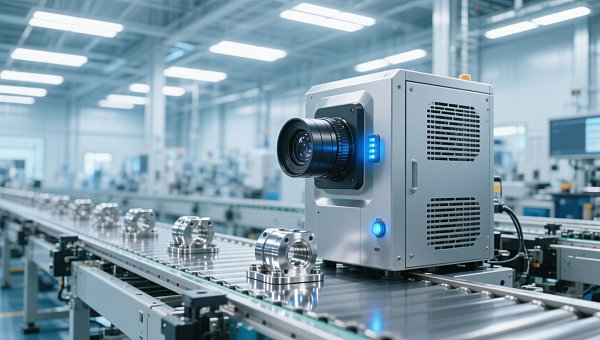
 China’s 10-Dept AI Export Ethics Review Rule Takes EffectChina’s new 10-dept AI export ethics rule mandates algorithmic bias review for AI hardware bound for the EU, US, Canada, Japan & SK—key for smart cameras, voice assistants & industrial vision exporters.
 Red Sea Detour Now Standard: $1,850 TEU Premium on Asia-Europe RoutesRed Sea detour premium now standard: $1,850/TEU surcharge embedded in Asia-Europe freight rates — vital intel for exporters, importers & logistics teams.
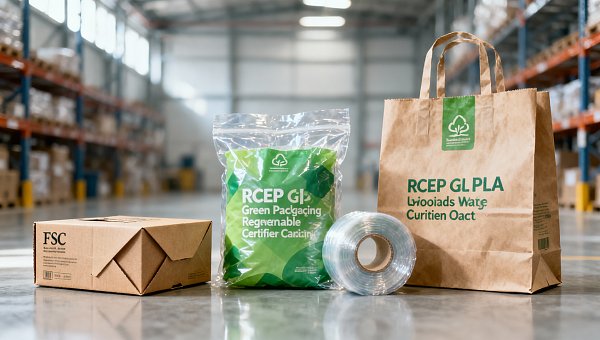
 RCEP Green Packaging Mutual Recognition Takes EffectRCEP Green Packaging Mutual Recognition takes effect Apr 22, 2026—streamline exports to AU, NZ, JP, KR with GB/T 37629–2019 certified molded fiber & PLA packaging.
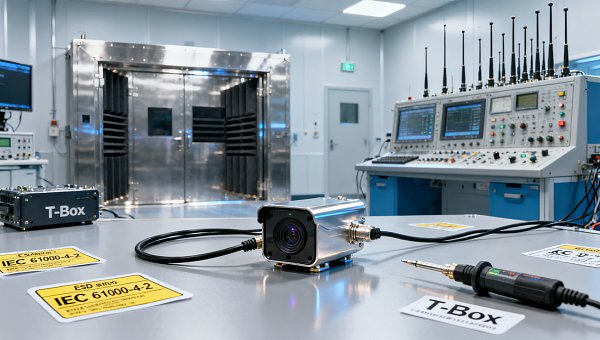
 Mexico NOM-019-SCFI-2026 Effective: EMC Certification Required for Auto Electronics ExportsEMC certification is now mandatory for auto electronics exports to Mexico under NOM-019-SCFI-2026. Ensure compliance for rearview mirrors, radar sensors & T-Box units—avoid shipment delays and order cancellations.
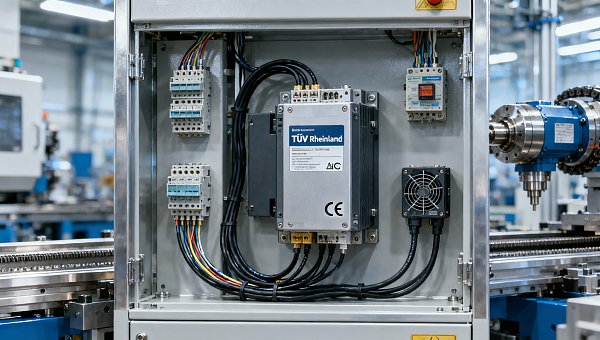
") TÜV Rheinland Updates CE Requirements for Servo Drives (PLd + EMC Joint Validation)TÜV Rheinland now mandates joint PLd + EMC validation for servo drives under CE marking—learn how this impacts certification timelines, lab selection, and EU market access.
TÜV Rheinland Updates CE Requirements for Servo Drives (PLd + EMC Joint Validation)TÜV Rheinland now mandates joint PLd + EMC validation for servo drives under CE marking—learn how this impacts certification timelines, lab selection, and EU market access. Vietnam Suspends SASO Mutual Recognition for Chinese Irrigation EquipmentVietnam suspends SASO mutual recognition for Chinese irrigation equipment—urgent compliance updates for drip tapes & PE pipes (HS 8424.89/3917.39). Act now to avoid delays.
 FDA Finalizes AI Diagnostic Device Rules for ImportersFDA finalizes AI diagnostic device rules for importers: New bias assessment mandate impacts ultrasound, glucose analyzers & dermatoscopes. Act now to ensure U.S. market access.
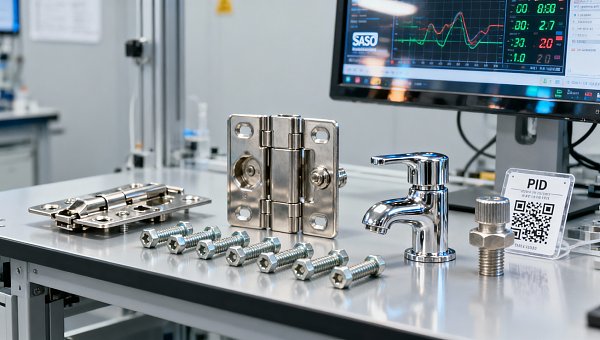
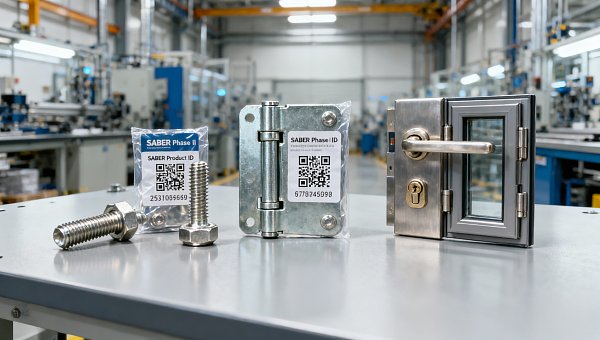
 SABER Phase II Live: Saudi Building Hardware Requires Digital Type Test Reports & PIDSABER Phase II is live: Building hardware exports to Saudi Arabia now require digital type test reports & a mandatory, immutable Product ID (PID). Act now to avoid customs delays!
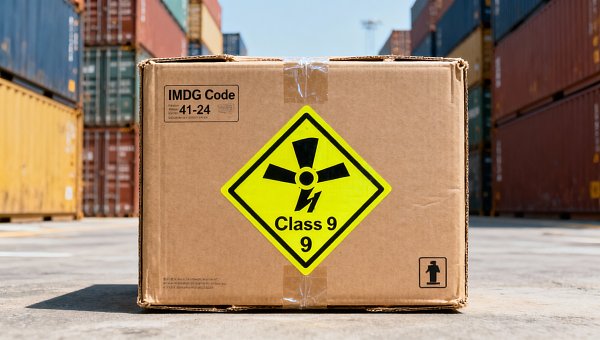
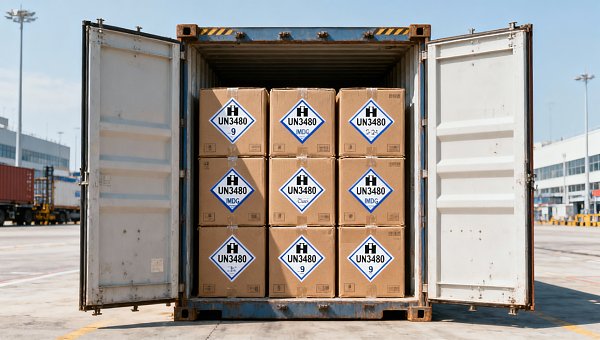
 IMDG Code 41-24 Enforced: UN3480 Lithium Battery Labeling Mandatory from Apr 2026IMDG Code 41-24 enforcement starts Apr 2026: UN3480 lithium battery labeling & ISO 17363 docs are now mandatory—avoid port rejections!
 CBAM Carbon Tax Launch: Low CBAM Reporting Rate Among Chinese ExportersCBAM Carbon Tax is live—only 36.8% of Chinese exporters reported. Discover why, which industries are at risk, and how to secure EU market access now.
 China’s 10 Agencies Issue AI Export Ethics Review RulesChina’s 10 agencies launch AI export ethics rules—mandating bias reviews for visual inspection, warehouse AI & defect detection systems. Stay compliant & competitive.
 RCEP Green Packaging Mutual Recognition Takes EffectRCEP Green Packaging Mutual Recognition is now in effect—unlock faster customs clearance in Australia, NZ, Japan & Korea for GB/T 37659–2019-certified eco-packaging.
 Mexico NOM-019-SCFI-2026 Effective Apr 10, 2026: EMC Certification Required for Automotive ElectronicsNOM-019-SCFI-2026 EMC certification is now mandatory for automotive electronics entering Mexico — act before the July 1, 2026 customs ban.
 Red Sea Rerouting Normalized, EBA at $1,850/TEURed Sea rerouting normalized with EBA fixed at $1,850/TEU—learn how this structural shift impacts Asia-Europe freight costs, lead times & supply chain strategy.
 FDA AI Diagnostic Device Draft Rules: Bias Assessment for ImportsFDA AI diagnostic device draft rules require bias assessment for imports—learn how portable ultrasound, glucose, and dermatoscopic AI devices are affected & what to do next.
") TÜV Rheinland Updates CE Requirements for Servo Drives (PLd + EMC)TÜV Rheinland updates CE requirements for servo drives: PLd (ISO 13849-1) + EMC immunity (IEC 61000-6-2 Ed.4) now mandatory together — act now to avoid EU market delays!
TÜV Rheinland Updates CE Requirements for Servo Drives (PLd + EMC)TÜV Rheinland updates CE requirements for servo drives: PLd (ISO 13849-1) + EMC immunity (IEC 61000-6-2 Ed.4) now mandatory together — act now to avoid EU market delays! SABER Phase II Launch: Building Hardware Must Submit Digital Type Test Reports & Unique Product IDSABER Phase II now mandates digital type test reports & unique product IDs for building hardware—fasteners, scaffolding, door/window components. Ensure compliance to avoid customs rejection & SCOC delays.
 Vietnam Suspends SASO Mutual Recognition for Chinese Irrigation EquipmentVietnam suspends SASO mutual recognition for Chinese irrigation equipment—TCVN testing now mandatory. Act now to avoid 8–12 week delays and customs holdups.
 IMDG Code 41-24 Enforced: UN3480 Lithium Battery Labeling UpdateIMDG Code 41-24 enforcement starts April 2026: UN3480 lithium battery labeling updates are mandatory for global maritime shipments — avoid port delays, detention & penalties.
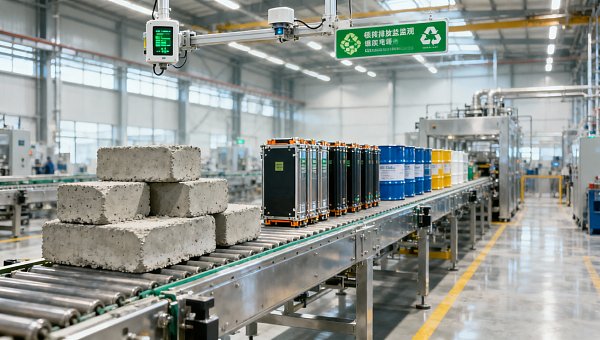
 EU CBAM Enters Full Enforcement on Jan 1, 2026EU CBAM full enforcement starts Jan 1, 2026 — mandatory quarterly reporting & certificate purchases for batteries, steel, cement, aluminum, fertilizers & chemicals. Act now to ensure EU market access.
 EU CBAM Carbon Tariff Starts Oct 2026 for Chinese Battery, Cement, Chemical ExportsEU CBAM carbon tariff hits Chinese battery, cement & chemical exports from Oct 2026 — mandatory emissions reporting starts now. Avoid €98/t default fees.








Popular Tags
Global Trade Insights & Industry
Our mission is to empower global exporters and importers with data-driven insights that foster strategic growth.
Search News
Popular Tags
Industry Overview
The global commercial kitchen equipment market is projected to reach $112 billion by 2027. Driven by urbanization, the rise of e-commerce food delivery, and strict hygiene regulations.