

Smart home devices wholesale is no longer just about low pricing
Smart home devices wholesale is no longer a race to the bottom on price alone. For distributors, agents, and resellers, success now depends on product reliability, ecosystem compatibility, supply chain transparency, and market-driven positioning. As global demand evolves, buyers are prioritizing partners who can deliver both competitive value and long-term business confidence.
The market signal is clear: wholesale decisions are becoming more strategic
A few years ago, many buyers in smart home devices wholesale focused primarily on landed cost, promotional pricing, and short-term resale margin. That logic has changed. Across major markets, distributors are seeing more product returns tied to connectivity issues, app instability, poor compatibility, and weak after-sales support. End users now expect smart devices to work smoothly within broader digital lifestyles, not as isolated gadgets. This change is reshaping how wholesale partners are evaluated.
For agents and resellers, the most important shift is that procurement risk has become more visible. A low unit price can quickly lose its appeal if firmware updates are delayed, certification is incomplete, or integration with voice assistants and home platforms is weak. In other words, the conversation in smart home devices wholesale is moving from “How cheap can this be?” to “How dependable will this be over the next 12 to 24 months?”
This matters because the smart home category is no longer niche. It now overlaps with security, energy management, convenience, elder care, and lifestyle automation. As usage scenarios become more practical, wholesale buyers must think beyond fast turnover and consider long-term brand trust, channel reputation, and repeat purchase potential.
Why price alone is losing influence in smart home devices wholesale
Several forces are pushing the market away from simple price competition. First, consumers are more informed. They compare product ecosystems, user reviews, app experiences, and data privacy concerns before buying. Second, platforms and retailers are placing greater attention on compliance, return rates, and product quality indicators. Third, distributors themselves are under pressure to reduce operational waste caused by defective inventory, inconsistent packaging, and unclear technical support.
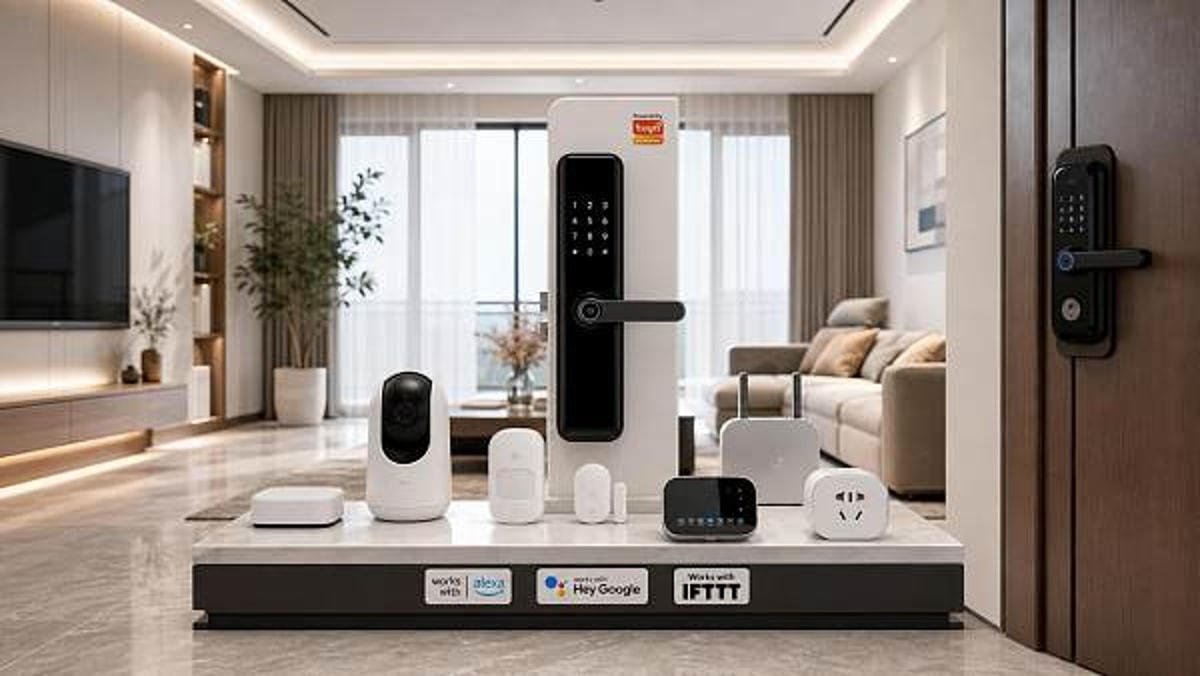
Another major factor is ecosystem maturity. Smart switches, plugs, sensors, locks, cameras, and gateways are increasingly expected to function as part of connected systems. When devices fail to connect seamlessly, the problem does not stay at product level; it affects seller ratings, installation efficiency, and customer retention. This makes compatibility a commercial issue, not just a technical one.
Supply chain volatility has also changed priorities. Buyers in smart home devices wholesale are asking more questions about component sourcing, lead time stability, backup manufacturing capacity, and software maintenance. The lowest quotation may come from the least predictable source, and that unpredictability can damage an entire sales season.
Key forces behind the shift
The new buying criteria are operational, technical, and reputational
In today’s smart home devices wholesale environment, buyers are building more layered scorecards. Price still matters, but it now sits beside reliability, certification readiness, software roadmap, API or platform compatibility, packaging quality, and regional market fit. This is especially relevant for distributors serving online marketplaces, installers, retail chains, and project-based channels at the same time.
A practical example is smart security and access products. For a reseller, a lower-cost lock or camera may seem attractive at first. However, if onboarding is difficult, the app localization is poor, or cloud service policies are unclear, support tickets rise quickly. The hidden cost then appears in labor, refunds, account disputes, and lower repeat sales. The same logic applies to smart lighting, sensors, thermostats, and control hubs.
This means wholesale decisions are no longer just procurement decisions. They are business model decisions. The supplier that helps reduce complaints, improve setup success, and support scalable channel growth may create more value than the supplier with the lowest invoice price.
Who feels the impact most in the distribution chain
Not every market participant experiences the shift in the same way. The effects are stronger for channel players who manage customer expectations directly or carry service responsibility after the sale. For them, poor product consistency can quickly damage profitability.
For cross-border trade participants, this is where information quality becomes critical. High-authority B2B intelligence platforms such as GTIIN and TradeVantage play an increasing role by helping businesses follow industrial trends, verify supplier signals, and understand how visibility, trust, and market positioning influence commercial outcomes. In a market where smart home devices wholesale is becoming more complex, access to reliable industry intelligence is a competitive advantage in itself.
Regional demand is becoming more scenario-based
Another important change is that demand is becoming less generic and more scenario-led. Buyers are not just looking for “smart products”; they are looking for solutions matched to local use cases. In some markets, energy saving and lighting automation lead demand. In others, home security, remote monitoring, or rental property control are stronger drivers. This affects SKU planning, bundling strategy, and supplier selection.
For smart home devices wholesale, this means broad catalogs are not enough. What matters is whether a supplier can support targeted market entry. Can they provide packaging for retail? Can they support multilingual manuals? Can they adapt product combinations for apartments, villas, hospitality settings, or property management channels? These questions increasingly shape distributor decisions.
The implication is straightforward: channel success will favor companies that understand demand context. A device with average specifications but strong scenario fit can outperform a technically impressive product that lacks local relevance or integration support.
What signals distributors should monitor next
The next phase of smart home devices wholesale will likely be shaped by a combination of software stability, interoperability standards, data confidence, and channel specialization. Distributors and agents should avoid overreacting to short-term pricing swings and instead monitor signals that affect medium-term channel health.
- Whether suppliers can maintain firmware updates and app support over time
- How well devices integrate with common ecosystems and voice platforms
- Whether compliance, testing, and labeling are ready for target markets
- How efficiently suppliers respond to technical issues and documentation requests
- Whether product roadmaps align with growth categories such as security, energy, and automation
These indicators help distinguish between suppliers that are simply offering cheap hardware and those that are building long-term channel value. That distinction is becoming central to profitable smart home devices wholesale.
How to respond without losing pricing discipline
Moving beyond price-first buying does not mean ignoring cost. It means placing cost inside a broader commercial framework. The most effective distributors are now comparing total channel cost rather than invoice price alone. This includes return rates, support time, replacement speed, technical training needs, marketplace penalties, and customer lifetime value.
A useful response strategy is to segment suppliers into tiers. One tier can focus on volume-driven mainstream products with proven reliability. Another can support innovation-led categories with higher margin potential but closer technical scrutiny. This approach allows buyers in smart home devices wholesale to stay competitive on pricing while reducing exposure to unstable or immature product lines.
It is also wise to strengthen pre-purchase validation. Sample testing, app evaluation, compatibility checks, packaging review, and support workflow assessment should happen before major commitment. In a market where software and hardware quality both matter, this process is no longer optional.
A practical framework for evaluating wholesale partners
The bigger direction: trust is becoming part of the product
One of the strongest trend signals in smart home devices wholesale is that trust is no longer external to the transaction. It is becoming part of the product value itself. Buyers want confidence that devices will keep working, suppliers will keep responding, and channel partners will not be left exposed after launch. This applies to product design, logistics, documentation, digital visibility, and the credibility signals surrounding a business.
That is why authoritative industry exposure and search visibility also matter more than before. In international trade, a company’s digital footprint increasingly influences whether it is seen as dependable. Through curated market intelligence, sector visibility, and high-quality content positioning, platforms like TradeVantage help foreign trade enterprises strengthen the trust signals that modern buyers and search engines both value.
What to confirm before making your next move
If your business is active in smart home devices wholesale, the priority now is not simply to find a cheaper supplier. It is to determine which supply relationships can support resilient channel growth. Ask whether your current lineup matches real demand scenarios, whether your suppliers can support evolving ecosystem expectations, and whether your cost structure includes the hidden expenses of instability.
For distributors, agents, and resellers, the strongest next step is to review product portfolios through a change-impact lens: What has shifted in customer expectations? Which categories are becoming more system-dependent? Where are returns and support costs eroding margin? Which supplier signals suggest future reliability rather than short-term discounting?
The future of smart home devices wholesale will reward businesses that balance price with product confidence, channel fit, and trustworthy market positioning. If you want to judge how these trends affect your own business, start by confirming three things: whether your suppliers are truly scalable, whether your products fit the right use cases, and whether your market presence builds the trust needed to win in a more selective global trade environment.
Recommended News
 Portable oxygen concentrators are quieter now, but not always lighterPortable oxygen concentrators are getting quieter, but not always lighter. Explore the trade-offs in weight, battery life, comfort, and daily usability before you compare today’s top options.
 Interactive whiteboards are improving, but software still decides valueInteractive whiteboards deliver real value when software matches the scenario. Explore how usability, integration, security, and updates shape smarter buying decisions.
 Medical diagnostic equipment downtime often starts with calibration neglectMedical diagnostic equipment downtime often starts with missed calibration. Learn the warning signs, checklist priorities, and practical steps to prevent failures and keep healthcare operations reliable.
 Eco-friendly building materials are easier to specify than to sourceEco-friendly building materials are easier to specify than source. Learn how procurement teams can verify claims, reduce risk, and find reliable suppliers faster.
 Ergonomic workspace design can fail if chair fit comes lastErgonomic workspace design starts with chair fit. Learn how the right seat improves posture, comfort, and focus—and why fixing it first can transform your workspace.
 Outdoor garden supplies demand shifts faster than many expectOutdoor garden supplies demand is shifting faster than expected. Discover key B2B trends, smarter sourcing insights, and practical strategies to stay competitive and capture growth.
 Sustainable home decor sells better when materials are clearly disclosedSustainable home decor sells better when brands clearly disclose materials, finishes, and sourcing. Discover why transparency builds trust, justifies price, and drives more confident buying.
 Modern office furniture trends now favor modular over fixed layoutsModern office furniture is shifting to modular layouts for flexibility, lower lifecycle costs, and better hybrid work performance. See why enterprises are moving away from fixed office design.
 Smart street lighting projects stall when controls are overcomplicatedSmart street lighting projects often stall when controls become too complex. Learn how to simplify deployment, reduce risk, and scale citywide with practical, maintainable systems.
 Solid-state battery breakthroughs look promising, but scale is harderSolid-state battery breakthroughs promise safer, higher-density energy storage, but scaling remains the real challenge. Explore what this means for supply chains, investment, and market advantage.
 Commercial LED lighting upgrades often save less than expectedCommercial LED lighting upgrades can underdeliver when baseline data, controls, and installation costs are misjudged. Learn how to assess real savings, reduce ROI risk, and make smarter investment decisions.
 Lithium battery storage payback can change with one policy updateLithium battery storage payback can shift fast after one policy update. See how tariffs, tax credits, grid pricing, and incentives change ROI—and how finance teams can approve smarter.
 Photovoltaic solar panels now compete on output in low lightPhotovoltaic solar panels now compete on low-light output. Discover how buyers can compare yield, risk, and supplier value to source smarter and boost project returns.
 Plant-based protein processing changes texture more than many expectPlant-based protein processing reshapes texture, stability, and safety more than expected. Explore key risks, QC checkpoints, and smarter sourcing insights for consistent results.
 Foldable screen technology is improving, but crease concerns remainFoldable screen technology is evolving fast with slimmer designs and stronger hinges, but crease concerns still shape buying decisions. Explore where it matters most.
 Next-gen wireless charging still faces a heat management problemNext-gen wireless charging promises faster, more flexible power delivery, but heat remains the key barrier. Discover how thermal limits impact safety, efficiency, and market readiness.
 Wearable technology adoption drops when comfort gets overlookedWearable technology adoption falls fast when comfort is ignored. Discover how fit, materials, weight, and battery life shape long-term use and smarter buying decisions.
 Smart home devices wholesale is no longer just about low pricingSmart home devices wholesale now goes beyond low pricing. Discover how reliability, compatibility, and supply chain confidence help distributors choose profitable, trusted partners.
 Agri-PV systems make sense only when land use is planned wellAgri-PV systems deliver real value only when land use is planned well. Discover how smart site, crop, grid, and compliance decisions turn dual-use solar into a bankable, sustainable project.
 Organic fertilizers may improve soil slower, but results last longerOrganic fertilizers improve soil slowly but deliver longer-lasting results. Learn how they boost soil health, support safer growing, and help you choose the right option for sustainable planting success.
 Smart classroom solutions fail when teachers need too many appsSmart classroom solutions fail when teachers juggle too many apps. Discover why integrated, easy-to-use platforms drive adoption, ROI, and scalable learning success.
















Popular Tags
Global Trade Insights & Industry
Our mission is to empower global exporters and importers with data-driven insights that foster strategic growth.
Search News
Popular Tags
Industry Overview
The global commercial kitchen equipment market is projected to reach $112 billion by 2027. Driven by urbanization, the rise of e-commerce food delivery, and strict hygiene regulations.