

Solid-state battery breakthroughs look promising, but scale is harder
Solid-state battery breakthroughs are generating strong momentum across the energy and mobility landscape, promising safer designs, higher energy density, and longer-term competitive advantage. Yet for business decision-makers, the real question is not innovation alone, but whether these advances can move beyond the lab into cost-effective, large-scale production. This article explores what the latest progress means for global supply chains, industrial investment, and strategic market positioning.
What Solid-State Battery Breakthroughs Actually Mean
At a basic level, solid-state battery breakthroughs refer to advances in battery systems that replace conventional liquid electrolytes with solid materials. The appeal is straightforward: a well-engineered solid-state architecture can improve safety, raise energy density, reduce leakage risk, and potentially support longer cycle life. For industries ranging from automotive and electronics to grid storage and aerospace, these benefits have strategic implications that go far beyond product performance.
However, the phrase often creates unrealistic expectations. A laboratory result, a pilot-line milestone, and a commercially scalable platform are not the same thing. Business leaders should separate scientific progress from industrial readiness. Many solid-state battery breakthroughs are highly meaningful, but they do not automatically translate into mass production, stable yields, or acceptable costs in competitive markets.
This distinction matters because the current market narrative often rewards speed of announcement more than proof of manufacturing maturity. For exporters, importers, suppliers, and industrial investors, the central issue is whether a claimed breakthrough can survive the realities of tooling, materials qualification, throughput targets, quality control, and global logistics.
Why the Industry Is Paying Close Attention
The growing attention around solid-state battery breakthroughs is driven by converging pressures across the global economy. Electric vehicle makers need higher range and faster charging without compromising safety. Consumer electronics brands want thinner designs with better battery endurance. Energy storage developers are seeking more durable systems that can operate under strict safety expectations. At the same time, regulators and customers are becoming more demanding about thermal stability, transportation risk, and lifecycle efficiency.
This is why the topic now sits at the intersection of advanced manufacturing, energy transition, and industrial policy. Governments are funding domestic battery ecosystems. Tier-one suppliers are reevaluating long-term material sourcing. OEMs are testing future platforms that can support both performance differentiation and supply resilience. In this context, solid-state battery breakthroughs are not just technical news; they are signals that influence capital allocation and partnership decisions across multiple sectors.
For decision-makers who monitor global trade and industrial intelligence, the relevance is even broader. A major battery innovation can shift demand for ceramics, lithium metal, sulfides, polymers, precision coating equipment, and specialized testing systems. It can also reshape trade flows, export opportunities, and the competitive landscape for manufacturers in Asia, Europe, and North America.
A Practical Industry Overview
Not all solid-state battery breakthroughs are equal in business value. Some are breakthroughs in chemistry, others in interface engineering, and others in manufacturability. The table below offers a practical view for enterprise readers assessing market implications.
Why Scale Is Harder Than the Headlines Suggest
The biggest challenge behind solid-state battery breakthroughs is that batteries are manufacturing products, not just scientific objects. A chemistry that performs well in a coin cell or prototype may struggle in large-format cells under real operating conditions. Uniformity across thousands or millions of cells is a different challenge from proving a concept in controlled settings.
One obstacle is materials compatibility. Solid electrolytes must maintain strong ionic conductivity while staying chemically and mechanically stable against electrodes. Even minor interface defects can reduce performance or create reliability concerns. Another issue is process integration. Existing lithium-ion production lines were built around liquid-electrolyte systems, so moving to solid-state formats may require expensive equipment changes, new quality-control routines, and retraining across the production chain.
Cost is equally important. Many solid-state battery breakthroughs rely on advanced materials or highly controlled manufacturing environments. If a battery delivers excellent performance but cannot reach viable cost-per-kilowatt-hour targets, market adoption will be slow outside premium niches. This is why scale-up conversations increasingly focus on yield, scrap rates, supply security, and downstream serviceability rather than only on energy density numbers.
There is also a timing challenge. Companies must decide when to invest without overcommitting to immature architectures. Enter too early, and they risk stranded capital. Move too late, and they may lose access to strategic partnerships, technology know-how, or future procurement positions. For many executives, the real decision is not whether solid-state battery breakthroughs matter, but how to stage exposure while preserving flexibility.
Where the Business Value Is Most Likely to Emerge First
Commercial value from solid-state battery breakthroughs will likely emerge in stages rather than all at once. High-value, performance-sensitive sectors usually adopt first because they can absorb higher costs if the performance gains are compelling. Over time, broader sectors may follow as process economics improve.
For global B2B participants, these early application patterns are important. Suppliers that understand where commercial traction appears first can better align product development, export strategy, and business development resources. A company selling advanced separators, thermal systems, precision ceramics, diagnostic tools, or specialty chemicals may find new opportunities by tracking which segment is moving from validation to procurement.
Implications for Supply Chains and International Trade
Solid-state battery breakthroughs could reshape supply chains in several ways. First, they may shift material demand away from some conventional components and toward new electrolyte families, protective coatings, dry-room standards, and precision manufacturing equipment. Second, they may concentrate value in specialized upstream suppliers with unique process knowledge or patent positions. Third, they may trigger regional industrial policies aimed at securing domestic battery capacity.
These changes create both opportunity and uncertainty for trade-oriented enterprises. Exporters need visibility into which materials and components are becoming strategically important. Importers need reliable intelligence on supplier maturity, lead times, regulatory exposure, and technical certification risks. Because commercialization remains uneven, supply-chain mapping must go deeper than simple demand forecasts. It should include pilot capacity, technology partnerships, geographic concentration, and substitution risk.
This is where high-quality industry intelligence becomes essential. Companies that track solid-state battery breakthroughs only at the headline level may miss the actual market signals: who is building pilot lines, who is signing joint development agreements, which regions are subsidizing production, and which equipment makers are gaining order visibility. In practical terms, better information reduces strategic blind spots and improves timing for market entry, sourcing, and collaboration.
How Enterprise Decision-Makers Should Evaluate Progress
For corporate leaders, the best approach is disciplined evaluation rather than hype-driven reaction. A useful framework includes five questions. First, what exact problem does the breakthrough solve: safety, energy density, charging speed, cost, or manufacturability? Second, at what technology readiness stage does it sit: lab validation, pilot demonstration, or scalable production? Third, which dependencies are critical, such as rare materials, proprietary equipment, or single-region supply? Fourth, how does the solution compare with improving conventional lithium-ion systems? Fifth, what is the realistic timeline for revenue-impacting deployment?
This framework helps avoid a common mistake: assuming that all solid-state battery breakthroughs carry equal strategic urgency. In reality, some deserve active partnership exploration, while others warrant only monitored observation. Businesses should match response intensity to market proximity and operational relevance.
It is also wise to evaluate ecosystem strength, not only the core battery developer. The surrounding network of equipment providers, materials companies, testing laboratories, and downstream integrators often determines whether a promising technology can survive industrial scaling. Enterprises that monitor the whole ecosystem gain a more reliable view of commercialization potential.
Practical Recommendations for Market Positioning
Companies do not need to manufacture batteries directly to benefit from solid-state battery breakthroughs. Many can create value by refining adjacent capabilities. Material suppliers can invest in qualification programs and export readiness. Equipment manufacturers can tailor systems for dry processing, coating precision, or defect inspection. Trading firms and B2B platforms can strengthen sector intelligence, helping clients identify credible suppliers and emerging demand pockets earlier.
For enterprise decision-makers, three practical steps stand out:
- Build a watchlist of solid-state battery breakthroughs by readiness level, not media visibility.
- Map supplier exposure across materials, equipment, and regional policy shifts.
- Use market intelligence partnerships to validate signals before committing capital or procurement volume.
In this environment, information quality becomes a competitive asset. Platforms such as GTIIN and TradeVantage are valuable because they connect real-time developments with broader industrial context. That matters when executives need more than isolated news. They need structured insight on how technology milestones affect trade routes, sector demand, brand visibility, and partner discovery across global markets.
Conclusion
Solid-state battery breakthroughs deserve serious attention because they may redefine performance benchmarks across mobility, electronics, and energy storage. Yet the promise of the technology should not obscure the complexity of scaling it. Commercial success depends on materials maturity, process control, cost discipline, and ecosystem coordination as much as on scientific ingenuity.
For business leaders, the right response is neither blind optimism nor passive skepticism. It is informed positioning. By tracking solid-state battery breakthroughs through the lens of industrial readiness, supply-chain impact, and market timing, enterprises can make smarter decisions about investment, sourcing, and partnership development. In a fast-moving global trade environment, those who combine technical awareness with reliable industry intelligence will be best placed to convert emerging battery innovation into long-term strategic advantage.
Recommended News
 Portable oxygen concentrators are quieter now, but not always lighterPortable oxygen concentrators are getting quieter, but not always lighter. Explore the trade-offs in weight, battery life, comfort, and daily usability before you compare today’s top options.
 Interactive whiteboards are improving, but software still decides valueInteractive whiteboards deliver real value when software matches the scenario. Explore how usability, integration, security, and updates shape smarter buying decisions.
 Medical diagnostic equipment downtime often starts with calibration neglectMedical diagnostic equipment downtime often starts with missed calibration. Learn the warning signs, checklist priorities, and practical steps to prevent failures and keep healthcare operations reliable.
 Eco-friendly building materials are easier to specify than to sourceEco-friendly building materials are easier to specify than source. Learn how procurement teams can verify claims, reduce risk, and find reliable suppliers faster.
 Ergonomic workspace design can fail if chair fit comes lastErgonomic workspace design starts with chair fit. Learn how the right seat improves posture, comfort, and focus—and why fixing it first can transform your workspace.
 Outdoor garden supplies demand shifts faster than many expectOutdoor garden supplies demand is shifting faster than expected. Discover key B2B trends, smarter sourcing insights, and practical strategies to stay competitive and capture growth.
 Sustainable home decor sells better when materials are clearly disclosedSustainable home decor sells better when brands clearly disclose materials, finishes, and sourcing. Discover why transparency builds trust, justifies price, and drives more confident buying.
 Modern office furniture trends now favor modular over fixed layoutsModern office furniture is shifting to modular layouts for flexibility, lower lifecycle costs, and better hybrid work performance. See why enterprises are moving away from fixed office design.
 Smart street lighting projects stall when controls are overcomplicatedSmart street lighting projects often stall when controls become too complex. Learn how to simplify deployment, reduce risk, and scale citywide with practical, maintainable systems.
 Solid-state battery breakthroughs look promising, but scale is harderSolid-state battery breakthroughs promise safer, higher-density energy storage, but scaling remains the real challenge. Explore what this means for supply chains, investment, and market advantage.
 Commercial LED lighting upgrades often save less than expectedCommercial LED lighting upgrades can underdeliver when baseline data, controls, and installation costs are misjudged. Learn how to assess real savings, reduce ROI risk, and make smarter investment decisions.
 Lithium battery storage payback can change with one policy updateLithium battery storage payback can shift fast after one policy update. See how tariffs, tax credits, grid pricing, and incentives change ROI—and how finance teams can approve smarter.
 Photovoltaic solar panels now compete on output in low lightPhotovoltaic solar panels now compete on low-light output. Discover how buyers can compare yield, risk, and supplier value to source smarter and boost project returns.
 Plant-based protein processing changes texture more than many expectPlant-based protein processing reshapes texture, stability, and safety more than expected. Explore key risks, QC checkpoints, and smarter sourcing insights for consistent results.
 Foldable screen technology is improving, but crease concerns remainFoldable screen technology is evolving fast with slimmer designs and stronger hinges, but crease concerns still shape buying decisions. Explore where it matters most.
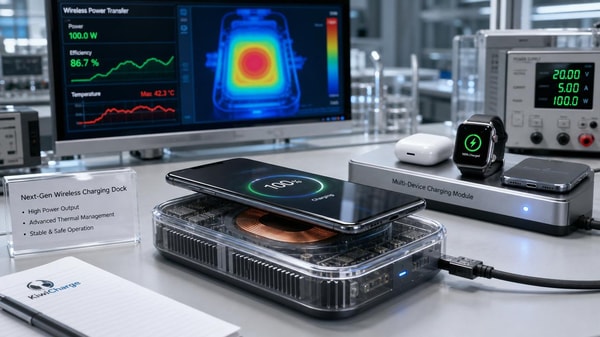
 Next-gen wireless charging still faces a heat management problemNext-gen wireless charging promises faster, more flexible power delivery, but heat remains the key barrier. Discover how thermal limits impact safety, efficiency, and market readiness.
 Wearable technology adoption drops when comfort gets overlookedWearable technology adoption falls fast when comfort is ignored. Discover how fit, materials, weight, and battery life shape long-term use and smarter buying decisions.
 Smart home devices wholesale is no longer just about low pricingSmart home devices wholesale now goes beyond low pricing. Discover how reliability, compatibility, and supply chain confidence help distributors choose profitable, trusted partners.
 Agri-PV systems make sense only when land use is planned wellAgri-PV systems deliver real value only when land use is planned well. Discover how smart site, crop, grid, and compliance decisions turn dual-use solar into a bankable, sustainable project.
 Organic fertilizers may improve soil slower, but results last longerOrganic fertilizers improve soil slowly but deliver longer-lasting results. Learn how they boost soil health, support safer growing, and help you choose the right option for sustainable planting success.
 Smart classroom solutions fail when teachers need too many appsSmart classroom solutions fail when teachers juggle too many apps. Discover why integrated, easy-to-use platforms drive adoption, ROI, and scalable learning success.
















Popular Tags
Global Trade Insights & Industry
Our mission is to empower global exporters and importers with data-driven insights that foster strategic growth.
Search News
Popular Tags
Industry Overview
The global commercial kitchen equipment market is projected to reach $112 billion by 2027. Driven by urbanization, the rise of e-commerce food delivery, and strict hygiene regulations.