

Agri-PV systems make sense only when land use is planned well
Agri-PV systems can deliver both energy and agricultural value, but only when land use is planned with precision from the start. For project managers and engineering leaders, the real challenge lies in balancing site selection, crop compatibility, grid access, and long-term returns. This article explores why integrated planning is the key to making Agri-PV systems commercially viable and operationally sustainable.
What Agri-PV systems are and why they matter now
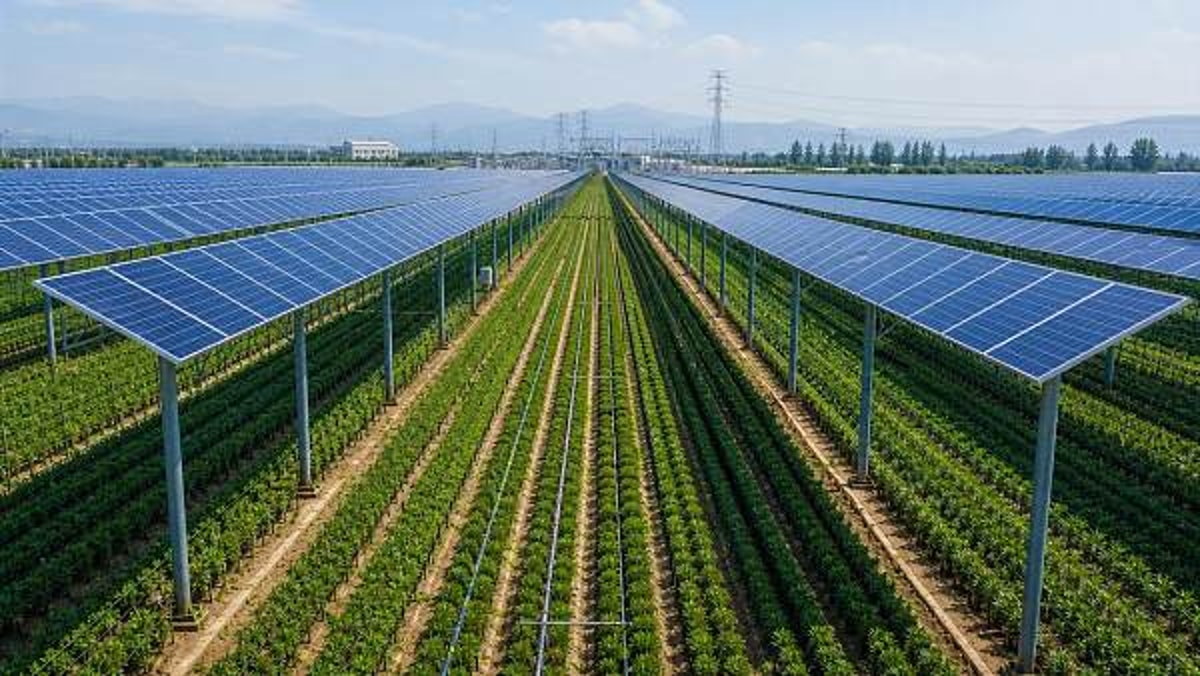
Agri-PV systems combine agricultural production with photovoltaic power generation on the same land parcel. Instead of treating farming and solar development as competing land uses, this model aims to design them as complementary functions. In practice, that can mean elevated solar modules above crops, row spacing adapted to farm machinery, or layouts that support grazing, horticulture, or specialty cultivation. The core idea is straightforward, but the operational success of Agri-PV systems depends on one difficult question: can the land support both outputs without weakening either one?
That question matters more today because pressure on land is increasing globally. Energy transition targets require faster solar deployment, while food security concerns make agricultural land protection a strategic issue. For developers, investors, and public authorities, Agri-PV systems offer an attractive answer only if the project protects farm productivity, secures grid value, and stays compliant with land-use regulation. For project managers, this means the business case starts long before procurement or construction. It starts with planning.
Across international markets tracked by industry intelligence platforms such as GTIIN and TradeVantage, Agri-PV systems are increasingly discussed not just as renewable infrastructure, but as cross-sector projects that sit at the intersection of agriculture, engineering, policy, finance, and local stakeholder management. This is exactly why integrated planning is no longer optional. It is the factor that determines whether a promising concept becomes a bankable asset or a difficult compromise.
Why land-use planning is the real make-or-break factor
In conventional ground-mounted solar, site screening often prioritizes irradiation, slope, grid connection, and permitting complexity. In Agri-PV systems, those criteria still matter, but they are not enough. The land must also support an agricultural model that remains technically feasible and economically meaningful after solar infrastructure is added. A site with excellent solar yield may still be a weak Agri-PV candidate if crop access becomes difficult, water management is disrupted, or shading patterns reduce yields beyond recovery.
Good land-use planning aligns three layers at once. First, it evaluates the physical layer: soil type, topography, drainage, wind, solar exposure, and equipment access. Second, it addresses the production layer: crop type, seasonal labor needs, mechanization requirements, irrigation design, and harvest logistics. Third, it integrates the infrastructure layer: foundation design, cable routing, inverter placement, maintenance roads, grid interconnection, and safety separation. If any one of these layers is treated in isolation, Agri-PV systems can quickly become inefficient or conflict-prone.
This is why many underperforming projects are not engineering failures in the narrow sense. They are planning failures. The solar array may work as designed, but the agricultural operation becomes too constrained. Or the farm side remains viable, yet the electrical design sacrifices too much generation. The value of Agri-PV systems is created when those trade-offs are modeled early and managed deliberately.
Industry context shaping current interest in Agri-PV systems
Several market drivers explain why Agri-PV systems are drawing growing attention from engineering leaders and project decision-makers. Renewable energy expansion is accelerating, but land-use conflicts are also becoming more visible. In parallel, agricultural operators face climate stress, volatile input costs, and pressure to improve resilience. Agri-PV systems are being examined as a multi-benefit model that may reduce direct competition for land while supporting more diversified revenue streams.
Policy is another major driver. In many jurisdictions, subsidy access, land classification, or planning approval now depends on whether a project preserves active agricultural use rather than simply occupying farmland. This has made the design standard for Agri-PV systems much more demanding. Authorities increasingly ask whether the agricultural function is real, measurable, and durable over time. That shifts attention from headline megawatt capacity to evidence-based land management.
At the same time, capital markets are becoming more selective. Investors may like the resilience story behind Agri-PV systems, but they also expect clear assumptions on crop output, operating costs, maintenance interfaces, and revenue timing. In other words, the concept attracts interest, but only disciplined planning converts interest into financeable projects.
A practical overview of planning priorities
For project managers, the most useful way to assess Agri-PV systems is to map decisions across the full project lifecycle rather than viewing them as a single design choice. The table below summarizes the priorities that usually shape performance.
Where Agri-PV systems create the most practical value
The value of Agri-PV systems is not universal in the same way across all farm types. Their strongest use cases typically appear where partial shading can be tolerated or even beneficial, where irrigation and evaporation management matter, and where farm operations can adapt to structured layouts. They also work better when developers and agricultural operators have aligned incentives over the life of the asset.
For engineering and project leadership teams, the business significance comes from diversification. Properly planned Agri-PV systems can create dual income logic, improve land productivity per hectare, reduce stakeholder opposition linked to farmland conversion, and support stronger environmental positioning. In some cases, they may also improve microclimate conditions for selected crops by lowering heat stress or reducing excessive water loss. However, these benefits are highly site-specific and should never be assumed by default.
Typical application categories
Key planning dimensions project managers should not separate
One of the most common mistakes in Agri-PV systems is to assign agricultural planning and energy planning to parallel tracks that only meet late in development. That approach usually leads to redesign costs or unresolved conflicts. Project managers should instead coordinate several dimensions from the beginning.
Crop and shading relationship
Not all crops respond to shading the same way. Some may benefit from moderated heat and reduced evapotranspiration, while others experience clear yield penalties. The relevant issue is not simply total shade, but seasonal shade pattern, module height, row orientation, and the timing of peak crop sensitivity. Agri-PV systems need crop-specific assumptions backed by local agronomic evidence.
Mechanization and farm logistics
If tractors, sprayers, or harvesting equipment cannot move efficiently, the farming model will weaken regardless of solar performance. Clearance height, turning radii, road placement, and service zones must be planned with actual farm operations in mind, not generic drawings. This is particularly important for larger commercial farms where labor and machine time drive margins.
Water, soil, and microclimate
Solar structures change runoff patterns, wind behavior, and localized moisture conditions. In some settings this can be beneficial, but in others it creates compaction, erosion, or uneven irrigation distribution. Agri-PV systems must be evaluated as modified landscapes, not just as equipment additions.
Grid timing and commercial sequencing
A technically elegant land-use concept may still fail commercially if interconnection is delayed or export capacity is uncertain. Energy yield assumptions, curtailment risk, and tariff structure should be integrated into the same development model as crop revenue and land-use obligations. The best Agri-PV systems are planned as coordinated assets, not split-value projects.
What successful implementation usually looks like
Strong Agri-PV systems usually share several characteristics. They begin with a realistic land-use assessment instead of forcing a solar template onto agricultural land. They involve farmers, engineers, planners, and permitting specialists early. They define measurable agricultural outputs rather than vague coexistence claims. And they use phased validation, especially when entering new crop types or unfamiliar climate zones.
From a management standpoint, successful projects also define governance clearly. Who is responsible for vegetation control, crop performance reporting, access coordination, insurance, and conflict resolution? These issues often appear secondary during development, but they strongly influence operating stability later. In Agri-PV systems, land-use complexity does not disappear after commissioning; it becomes part of long-term asset management.
Practical recommendations for evaluation and rollout
For project management teams considering Agri-PV systems, a disciplined evaluation framework is more valuable than enthusiasm alone. Start by identifying whether the site has genuine dual-use potential rather than just available land. Then test the agricultural scenario with local operators and agronomic advisors before locking in structural design. Use sensitivity analysis for crop yield, power output, maintenance cost, and permitting timeline. Most importantly, document how the project preserves productive land use in a way that regulators, landowners, and financing partners can verify.
It is also wise to benchmark projects using cross-market intelligence. As global supply chains and renewable investment patterns evolve, decision-makers benefit from watching how different jurisdictions define agricultural continuity, performance reporting, and land eligibility. This is where sector-wide insight from B2B intelligence platforms becomes useful. By comparing policy trends, engineering choices, and operational outcomes across markets, companies can reduce blind spots and improve early-stage planning quality.
Conclusion: planning quality determines whether Agri-PV systems truly make sense
Agri-PV systems are not valuable simply because they combine two functions on one site. They become valuable when land use is designed carefully enough to sustain both functions over time. For project managers and engineering leaders, that means viewing land as an integrated operating platform where agriculture, energy, infrastructure, and compliance must work together from day one.
When planned well, Agri-PV systems can support stronger land productivity, more resilient project narratives, and better alignment between decarbonization goals and agricultural continuity. When planned poorly, they risk becoming compromised solar assets or constrained farming operations. The difference is not the concept itself. The difference is the rigor of land-use planning, stakeholder coordination, and long-term operational design. For organizations seeking credible, scalable development opportunities, that is the standard Agri-PV systems must meet.
Recommended News
 Portable oxygen concentrators are quieter now, but not always lighterPortable oxygen concentrators are getting quieter, but not always lighter. Explore the trade-offs in weight, battery life, comfort, and daily usability before you compare today’s top options.
 Interactive whiteboards are improving, but software still decides valueInteractive whiteboards deliver real value when software matches the scenario. Explore how usability, integration, security, and updates shape smarter buying decisions.
 Medical diagnostic equipment downtime often starts with calibration neglectMedical diagnostic equipment downtime often starts with missed calibration. Learn the warning signs, checklist priorities, and practical steps to prevent failures and keep healthcare operations reliable.
 Eco-friendly building materials are easier to specify than to sourceEco-friendly building materials are easier to specify than source. Learn how procurement teams can verify claims, reduce risk, and find reliable suppliers faster.
 Ergonomic workspace design can fail if chair fit comes lastErgonomic workspace design starts with chair fit. Learn how the right seat improves posture, comfort, and focus—and why fixing it first can transform your workspace.
 Outdoor garden supplies demand shifts faster than many expectOutdoor garden supplies demand is shifting faster than expected. Discover key B2B trends, smarter sourcing insights, and practical strategies to stay competitive and capture growth.
 Sustainable home decor sells better when materials are clearly disclosedSustainable home decor sells better when brands clearly disclose materials, finishes, and sourcing. Discover why transparency builds trust, justifies price, and drives more confident buying.
 Modern office furniture trends now favor modular over fixed layoutsModern office furniture is shifting to modular layouts for flexibility, lower lifecycle costs, and better hybrid work performance. See why enterprises are moving away from fixed office design.
 Smart street lighting projects stall when controls are overcomplicatedSmart street lighting projects often stall when controls become too complex. Learn how to simplify deployment, reduce risk, and scale citywide with practical, maintainable systems.
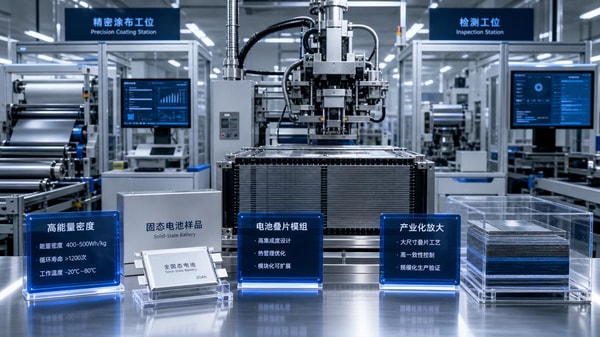
 Solid-state battery breakthroughs look promising, but scale is harderSolid-state battery breakthroughs promise safer, higher-density energy storage, but scaling remains the real challenge. Explore what this means for supply chains, investment, and market advantage.
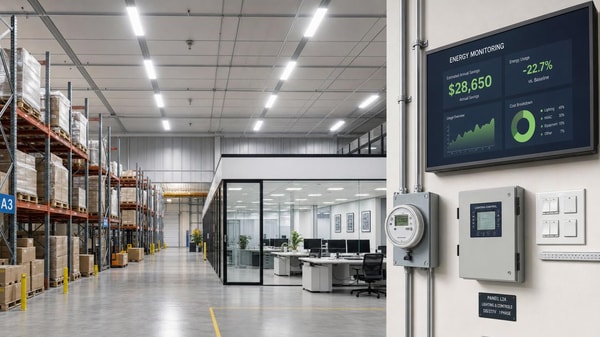
 Commercial LED lighting upgrades often save less than expectedCommercial LED lighting upgrades can underdeliver when baseline data, controls, and installation costs are misjudged. Learn how to assess real savings, reduce ROI risk, and make smarter investment decisions.
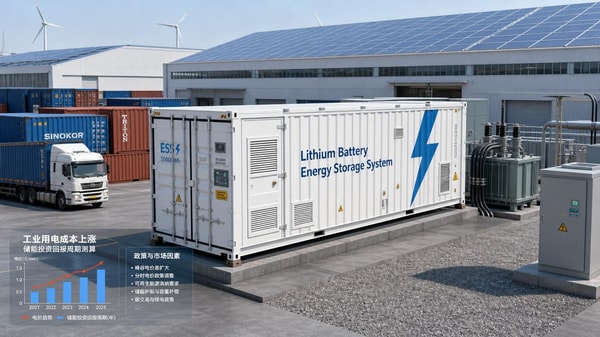
 Lithium battery storage payback can change with one policy updateLithium battery storage payback can shift fast after one policy update. See how tariffs, tax credits, grid pricing, and incentives change ROI—and how finance teams can approve smarter.
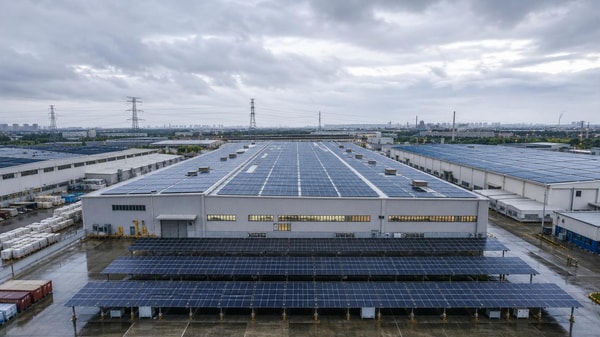
 Photovoltaic solar panels now compete on output in low lightPhotovoltaic solar panels now compete on low-light output. Discover how buyers can compare yield, risk, and supplier value to source smarter and boost project returns.
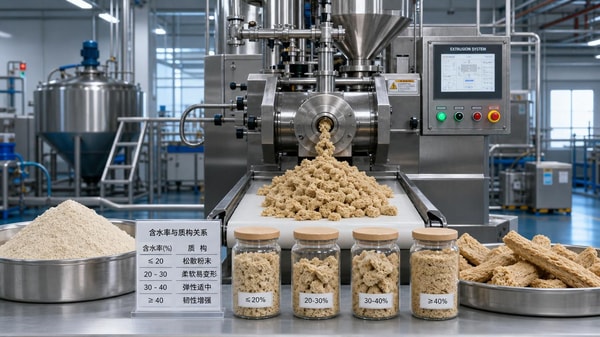
 Plant-based protein processing changes texture more than many expectPlant-based protein processing reshapes texture, stability, and safety more than expected. Explore key risks, QC checkpoints, and smarter sourcing insights for consistent results.
 Foldable screen technology is improving, but crease concerns remainFoldable screen technology is evolving fast with slimmer designs and stronger hinges, but crease concerns still shape buying decisions. Explore where it matters most.
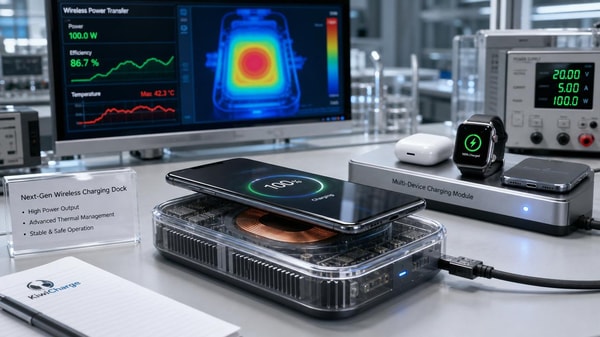
 Next-gen wireless charging still faces a heat management problemNext-gen wireless charging promises faster, more flexible power delivery, but heat remains the key barrier. Discover how thermal limits impact safety, efficiency, and market readiness.
 Wearable technology adoption drops when comfort gets overlookedWearable technology adoption falls fast when comfort is ignored. Discover how fit, materials, weight, and battery life shape long-term use and smarter buying decisions.
 Smart home devices wholesale is no longer just about low pricingSmart home devices wholesale now goes beyond low pricing. Discover how reliability, compatibility, and supply chain confidence help distributors choose profitable, trusted partners.
 Agri-PV systems make sense only when land use is planned wellAgri-PV systems deliver real value only when land use is planned well. Discover how smart site, crop, grid, and compliance decisions turn dual-use solar into a bankable, sustainable project.
 Organic fertilizers may improve soil slower, but results last longerOrganic fertilizers improve soil slowly but deliver longer-lasting results. Learn how they boost soil health, support safer growing, and help you choose the right option for sustainable planting success.
 Smart classroom solutions fail when teachers need too many appsSmart classroom solutions fail when teachers juggle too many apps. Discover why integrated, easy-to-use platforms drive adoption, ROI, and scalable learning success.










Popular Tags
Global Trade Insights & Industry
Our mission is to empower global exporters and importers with data-driven insights that foster strategic growth.
Search News
Popular Tags
Industry Overview
The global commercial kitchen equipment market is projected to reach $112 billion by 2027. Driven by urbanization, the rise of e-commerce food delivery, and strict hygiene regulations.