

Outdoor garden supplies demand shifts faster than many expect
Outdoor garden supplies demand is shifting faster than many distributors, wholesalers, and agents anticipate, driven by seasonal volatility, changing consumer preferences, and tighter inventory cycles. For B2B players, understanding these market movements is no longer optional—it is essential for smarter sourcing, better pricing strategies, and stronger channel positioning in an increasingly competitive global trade environment.
Understanding the New Shape of Outdoor Garden Supplies Demand
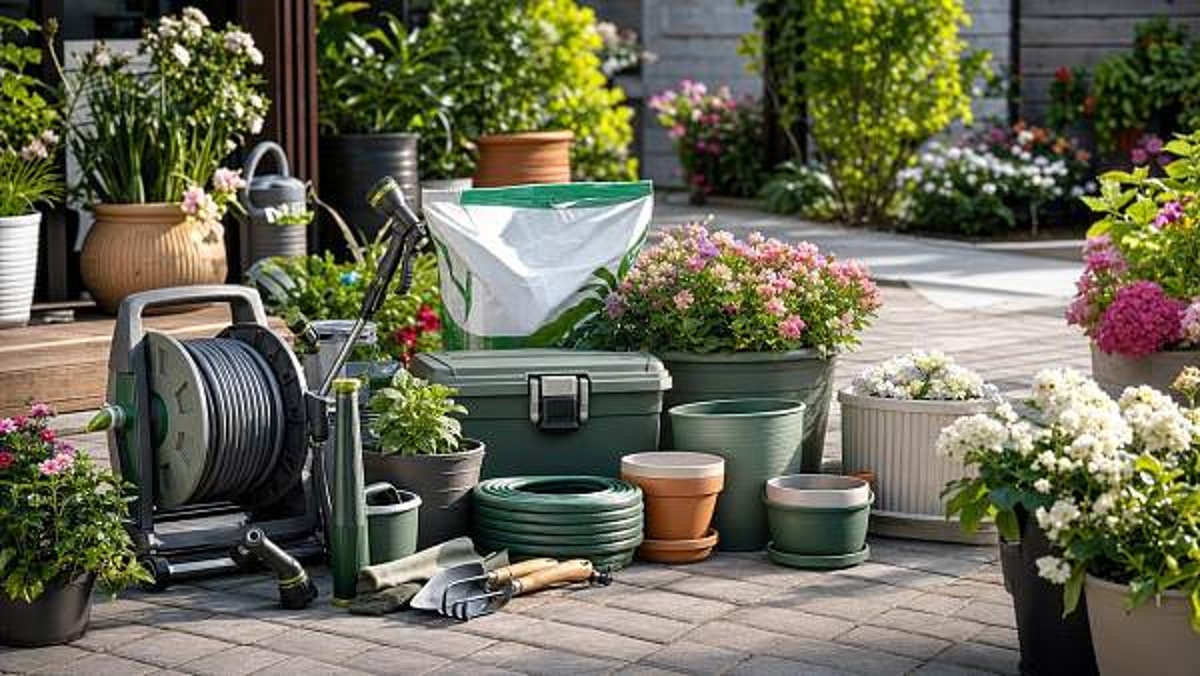
The term Outdoor garden supplies covers a broad commercial category that includes planting tools, watering systems, hoses, pots, planters, fertilizers, soil enhancers, outdoor storage, garden décor, patio accessories, and seasonal maintenance products. In the past, many channel partners treated this category as relatively predictable: demand would rise before spring, peak in early summer, and soften as colder months approached. That pattern still exists, but it is no longer sufficient as a planning model.
Today, distributors and agents face a more fragmented demand landscape. Climate irregularities alter buying windows. E-commerce influences retail replenishment speed. Consumers move between functional gardening, decorative landscaping, and outdoor living upgrades more quickly than before. As a result, Outdoor garden supplies now behave less like a static seasonal category and more like a flexible market segment shaped by weather, lifestyle trends, and local inventory pressure.
For B2B decision-makers, this shift matters because timing errors are costly. Over-ordering bulky items can lock up warehouse capacity and cash flow, while underestimating fast-moving stock can lead to missed sales windows. A modern view of the category requires better market monitoring, faster signal detection, and a closer link between regional demand patterns and sourcing strategy.
Why the Industry Is Paying Closer Attention
The growing attention around Outdoor garden supplies is not just about consumer interest in gardening. It reflects a wider shift in how outdoor spaces are used and valued. Residential buyers increasingly see gardens, patios, balconies, and backyards as extensions of living space. Commercial buyers, including hospitality operators and property managers, are also investing more in appearance, maintenance efficiency, and weather resilience.
At the same time, supply chains have become more sensitive. Freight fluctuations, raw material costs, and inconsistent lead times make it harder to rely on old replenishment habits. A product that was once easy to source in bulk may now require earlier commitment or alternative supplier development. This puts extra pressure on wholesalers and distributors to identify which segments of Outdoor garden supplies are staple, which are trend-driven, and which require flexible stock planning.
Another reason for increased attention is the role of digital visibility in trade. Market intelligence platforms such as GTIIN and high-authority editorial ecosystems like TradeVantage help global buyers and sellers translate trend signals into commercial action. For foreign trade enterprises, visibility around emerging demand categories helps attract the right partners, build trust signals, and strengthen search performance in highly competitive export markets.
Key Demand Drivers Reshaping the Category
Several demand drivers explain why Outdoor garden supplies move faster than many market participants expect. First is weather variability. A warmer early spring can accelerate demand for seeds, planters, irrigation tools, and fertilizers. Extended dry periods can increase interest in watering solutions, mulch, and water-saving accessories. Heavy rain, by contrast, may push demand toward drainage aids, protective covers, and repair products.
Second is lifestyle segmentation. Some buyers prioritize practical gardening and food cultivation, while others focus on decorative landscaping or outdoor entertaining. This means demand can shift not only in volume but also in product mix. A market that once favored basic hand tools may suddenly show stronger pull for raised beds, premium planters, solar lighting, or space-saving storage.
Third is inventory compression across the retail chain. Retailers increasingly want to hold less stock and replenish more often, especially for weather-sensitive or trend-sensitive items. That pushes forecasting risk upstream to distributors, importers, and agents. In this environment, having access to current industry intelligence is a competitive advantage rather than a support function.
A Practical Market Overview for Distributors and Agents
Not all Outdoor garden supplies respond to the market in the same way. Some products are stable volume drivers, while others are highly reactive to local trends and seasonal triggers. A simple classification helps B2B companies allocate attention and inventory more effectively.
This market view shows why generic planning is increasingly ineffective. When channel partners group all Outdoor garden supplies into one forecast, they miss important differences in lead time risk, margin profile, and local demand sensitivity.
Business Value Across Different B2B Roles
The commercial value of tracking Outdoor garden supplies demand changes depends on where a company sits in the channel. For importers and master distributors, the main benefit is better capital allocation. Knowing which product families are accelerating and which are flattening supports more precise container planning, supplier negotiation, and warehouse prioritization.
For regional wholesalers, the value lies in assortment control and service speed. Buyers increasingly expect shorter replenishment cycles, especially during peak gardening periods. Wholesalers that can react to local demand spikes gain stronger customer loyalty and better sell-through performance.
For agents, the opportunity is slightly different. Agents benefit from identifying emerging product niches within Outdoor garden supplies before they become crowded. That may include eco-friendly pots, compact urban gardening kits, premium irrigation accessories, or weather-resistant storage solutions. Early positioning can improve brand representation opportunities and strengthen long-term supplier relationships.
Typical Demand Scenarios in Global Trade
In international trade, Outdoor garden supplies demand rarely moves uniformly across regions. Urban markets may prioritize balcony gardening, portable planters, and compact tools. Suburban and rural markets often generate stronger volume for hoses, lawn care, bulk soil amendments, and storage products. Meanwhile, hospitality and commercial landscaping channels may emphasize durability, easy maintenance, and repeat supply consistency.
Cross-border suppliers should also recognize that product compliance, packaging expectations, and merchandising preferences vary by market. Lightweight decorative items may perform well in one region but face cost pressure in another due to freight economics. Likewise, products that sell through on design appeal in retail may require more practical, specification-led positioning in distribution channels.
How to Interpret Demand Signals More Accurately
A common mistake in this category is reacting too late. By the time one visible retail trend appears across multiple markets, sourcing windows may already be tighter and margins weaker. To stay ahead, distributors should combine several signal types: weather data, search interest, retailer restock frequency, supplier inquiry patterns, and competitor assortment shifts.
Data should also be segmented by product logic rather than treated as one demand curve. For example, a rise in interest around water-saving solutions does not automatically mean all Outdoor garden supplies will gain equally. It may specifically benefit drip irrigation kits, hose connectors, watering timers, and moisture-retention products. Precision matters because it supports better forecasting and reduces wasteful broad-stock buying.
This is where industry intelligence platforms create value. By aggregating sector updates, export trends, and market commentary across regions, they help B2B firms move from assumptions to evidence-based planning. That is especially important when channel decisions must be made before full-season demand becomes visible.
Practical Planning Recommendations for Channel Partners
A sound approach to Outdoor garden supplies begins with category mapping. Separate products into core, seasonal-volatile, trend-led, and opportunistic groups. This gives teams a clearer basis for stocking depth, reorder frequency, and supplier diversification. Core tools may justify larger base inventory, while design-sensitive or climate-sensitive items may require more conservative ordering and faster review cycles.
It is also wise to shorten planning intervals. Quarterly category reviews may no longer be enough in fast-moving periods. Monthly or even biweekly checks during peak season can reveal whether demand is tracking by function, price point, or style. This is especially useful for distributors serving different climate zones or mixed retail formats.
Supplier collaboration is another priority. Channel partners should discuss not only price and MOQ, but also production flexibility, packaging adaptation, substitute materials, and surge capacity. In a shifting market, the best supplier is not always the cheapest one; often it is the one that can respond quickly without sacrificing consistency.
Finally, do not overlook digital positioning. Buyers researching Outdoor garden supplies increasingly discover suppliers through high-visibility industry content, search-optimized trade portals, and trusted information hubs. Strong editorial exposure and backlink authority can improve discoverability, reinforce credibility, and support lead generation beyond traditional trade fair cycles.
What to Watch in the Next Phase of the Market
Looking ahead, the category is likely to remain dynamic rather than return to older, slower patterns. Sustainability claims, urban gardening formats, compact storage solutions, and weather-adaptive products may continue to gain importance. At the same time, buyers will keep expecting faster replenishment, clearer product differentiation, and more reliable demand visibility.
For distributors, wholesalers, and agents, the best response is not to chase every trend, but to build a disciplined framework for reading the market. That means combining demand intelligence, category segmentation, supplier agility, and digital exposure. In a category as broad and responsive as Outdoor garden supplies, advantage comes from being informed early and acting with structure.
Closing Perspective and Next Step
The market for Outdoor garden supplies is no longer defined by simple seasonal assumptions. It is shaped by weather shifts, consumer behavior, channel compression, and global sourcing realities. For B2B players, that creates both risk and opportunity. Those who rely on outdated planning models may face margin pressure and stock inefficiency, while those who use timely industry insight can improve assortment accuracy, strengthen partner relationships, and position themselves ahead of demand.
If your business serves this category across export, wholesale, or agency channels, now is the time to review how you monitor trends, classify products, and communicate market value. With stronger intelligence and better visibility, Outdoor garden supplies can become not just a seasonal business line, but a smarter and more resilient growth category.
Recommended News
 Portable oxygen concentrators are quieter now, but not always lighterPortable oxygen concentrators are getting quieter, but not always lighter. Explore the trade-offs in weight, battery life, comfort, and daily usability before you compare today’s top options.
 Interactive whiteboards are improving, but software still decides valueInteractive whiteboards deliver real value when software matches the scenario. Explore how usability, integration, security, and updates shape smarter buying decisions.
 Medical diagnostic equipment downtime often starts with calibration neglectMedical diagnostic equipment downtime often starts with missed calibration. Learn the warning signs, checklist priorities, and practical steps to prevent failures and keep healthcare operations reliable.
 Eco-friendly building materials are easier to specify than to sourceEco-friendly building materials are easier to specify than source. Learn how procurement teams can verify claims, reduce risk, and find reliable suppliers faster.
 Ergonomic workspace design can fail if chair fit comes lastErgonomic workspace design starts with chair fit. Learn how the right seat improves posture, comfort, and focus—and why fixing it first can transform your workspace.
 Outdoor garden supplies demand shifts faster than many expectOutdoor garden supplies demand is shifting faster than expected. Discover key B2B trends, smarter sourcing insights, and practical strategies to stay competitive and capture growth.
 Sustainable home decor sells better when materials are clearly disclosedSustainable home decor sells better when brands clearly disclose materials, finishes, and sourcing. Discover why transparency builds trust, justifies price, and drives more confident buying.
 Modern office furniture trends now favor modular over fixed layoutsModern office furniture is shifting to modular layouts for flexibility, lower lifecycle costs, and better hybrid work performance. See why enterprises are moving away from fixed office design.
 Smart street lighting projects stall when controls are overcomplicatedSmart street lighting projects often stall when controls become too complex. Learn how to simplify deployment, reduce risk, and scale citywide with practical, maintainable systems.
 Solid-state battery breakthroughs look promising, but scale is harderSolid-state battery breakthroughs promise safer, higher-density energy storage, but scaling remains the real challenge. Explore what this means for supply chains, investment, and market advantage.
 Commercial LED lighting upgrades often save less than expectedCommercial LED lighting upgrades can underdeliver when baseline data, controls, and installation costs are misjudged. Learn how to assess real savings, reduce ROI risk, and make smarter investment decisions.
 Lithium battery storage payback can change with one policy updateLithium battery storage payback can shift fast after one policy update. See how tariffs, tax credits, grid pricing, and incentives change ROI—and how finance teams can approve smarter.
 Photovoltaic solar panels now compete on output in low lightPhotovoltaic solar panels now compete on low-light output. Discover how buyers can compare yield, risk, and supplier value to source smarter and boost project returns.
 Plant-based protein processing changes texture more than many expectPlant-based protein processing reshapes texture, stability, and safety more than expected. Explore key risks, QC checkpoints, and smarter sourcing insights for consistent results.
 Foldable screen technology is improving, but crease concerns remainFoldable screen technology is evolving fast with slimmer designs and stronger hinges, but crease concerns still shape buying decisions. Explore where it matters most.
 Next-gen wireless charging still faces a heat management problemNext-gen wireless charging promises faster, more flexible power delivery, but heat remains the key barrier. Discover how thermal limits impact safety, efficiency, and market readiness.
 Wearable technology adoption drops when comfort gets overlookedWearable technology adoption falls fast when comfort is ignored. Discover how fit, materials, weight, and battery life shape long-term use and smarter buying decisions.
 Smart home devices wholesale is no longer just about low pricingSmart home devices wholesale now goes beyond low pricing. Discover how reliability, compatibility, and supply chain confidence help distributors choose profitable, trusted partners.
 Agri-PV systems make sense only when land use is planned wellAgri-PV systems deliver real value only when land use is planned well. Discover how smart site, crop, grid, and compliance decisions turn dual-use solar into a bankable, sustainable project.
 Organic fertilizers may improve soil slower, but results last longerOrganic fertilizers improve soil slowly but deliver longer-lasting results. Learn how they boost soil health, support safer growing, and help you choose the right option for sustainable planting success.
 Smart classroom solutions fail when teachers need too many appsSmart classroom solutions fail when teachers juggle too many apps. Discover why integrated, easy-to-use platforms drive adoption, ROI, and scalable learning success.
















Popular Tags
Global Trade Insights & Industry
Our mission is to empower global exporters and importers with data-driven insights that foster strategic growth.
Search News
Popular Tags
Industry Overview
The global commercial kitchen equipment market is projected to reach $112 billion by 2027. Driven by urbanization, the rise of e-commerce food delivery, and strict hygiene regulations.