

Smart street lighting projects stall when controls are overcomplicated
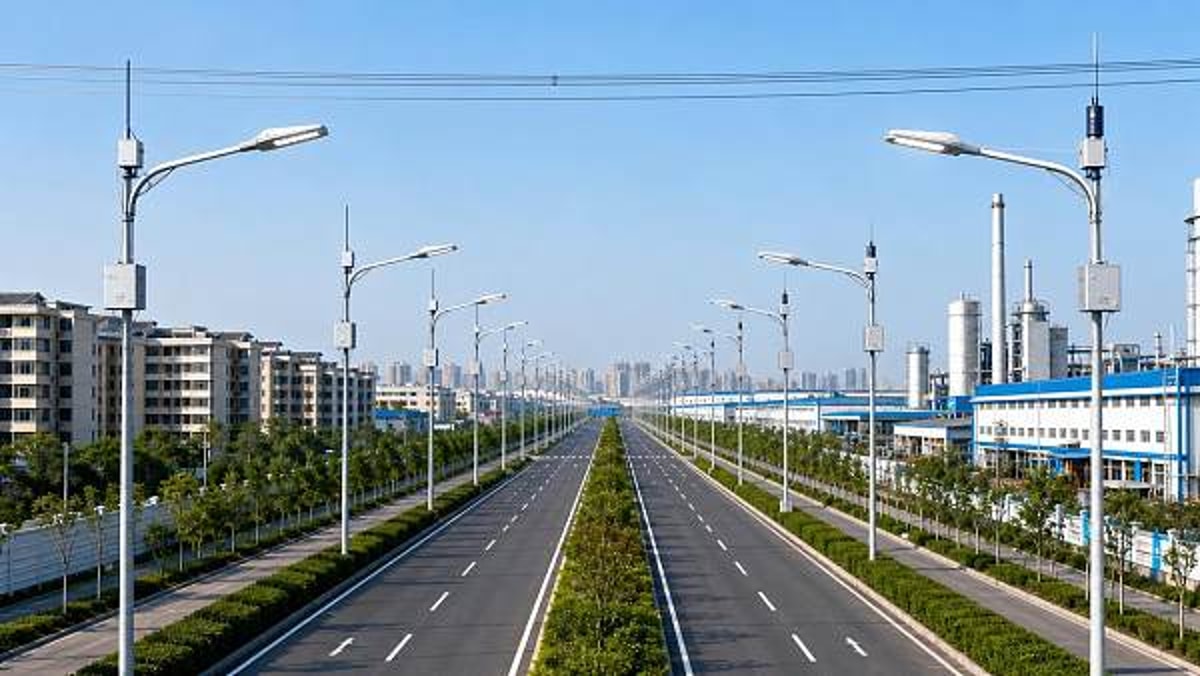
Smart street lighting projects often promise energy savings, better visibility, and smarter city operations, yet many stall when control systems become too complex to manage in real-world conditions. For project managers and engineering leads, the challenge is not just choosing advanced technology, but ensuring it remains practical, scalable, and easy to deploy across diverse urban environments.
Why do Smart street lighting projects slow down after a promising start?
The short answer is that technical ambition often outruns operational reality. Many Smart street lighting initiatives begin with a strong business case: lower energy consumption, reduced maintenance costs, adaptive dimming, and better city data. On paper, these benefits are compelling. In practice, progress slows when the control architecture becomes difficult to configure, integrate, and maintain across hundreds or thousands of luminaires.
Project managers usually face pressure from multiple stakeholders at once. Municipal owners want measurable savings. Engineering teams want reliability. IT departments care about cybersecurity and interoperability. Procurement teams compare lifecycle costs instead of just equipment prices. When a control platform requires specialized programming, fragmented gateways, proprietary protocols, or frequent manual intervention, deployment risk rises quickly.
Another reason Smart street lighting projects stall is that pilots are often designed under controlled conditions, while full rollouts happen in mixed urban environments. A downtown district with stable power, strong network coverage, and modern poles is very different from suburban roads, industrial areas, or older neighborhoods. A control system that performs well in one zone may become expensive or difficult to support when scaled citywide.
For engineering leads, the lesson is clear: the smartest system is not always the one with the longest feature list. It is the one that can be commissioned quickly, monitored easily, maintained locally, and expanded without creating a new layer of complexity every time a district is added.
What usually makes Smart street lighting controls feel overcomplicated?
Overcomplication rarely comes from one component alone. It usually comes from the combination of too many control layers, unclear ownership, and poor alignment between hardware and software decisions. In many Smart street lighting programs, the controls are treated as an upgrade accessory rather than the system backbone. That creates friction later.
Common signs of overcomplication include:
- Too many protocols or gateways that require custom integration
- A platform interface that only specialist vendors can operate efficiently
- Separate dashboards for energy, faults, scheduling, and asset inventory
- Heavy dependence on cloud configuration for simple field changes
- Control logic that is difficult to document or transfer between teams
- Commissioning workflows that slow installation crews in the field
The problem is not digital control itself. Smart street lighting clearly benefits from centralized visibility and adaptive operation. The problem begins when a system demands enterprise-level IT resources for tasks that should remain simple, such as scheduling dimming profiles, replacing failed nodes, or onboarding a new roadway section.
An overengineered solution may also weaken accountability. If the electrical contractor blames the software provider, the software provider blames the network layer, and the city operator cannot isolate the issue, even minor defects can trigger schedule delays. This is where many projects lose momentum, not because the concept is wrong, but because the control design did not match field realities.
How can project managers tell whether a Smart street lighting system is practical before rollout?
A practical Smart street lighting system should be evaluated with delivery and operations in mind, not just performance claims. Project managers should move beyond product demonstrations and ask how the controls behave during installation, handover, and long-term maintenance. A system is practical when ordinary project workflows can support it without excessive retraining or vendor dependence.
A useful early test is to ask whether the control platform can support phased deployment. Most city and infrastructure programs are not built all at once. Budgets are staged, districts are prioritized differently, and site constraints change over time. If the Smart street lighting controls cannot handle partial activation, mixed device inventories, or future expansion without major redesign, then scalability may be more theoretical than real.
Another practical question is who can operate the system after commissioning. If daily use requires the original integrator for routine adjustments, the owner may face long-term operational bottlenecks. The best control strategies are transparent enough that internal maintenance teams, facility operators, or appointed service partners can manage them with documented procedures.
Which deployment scenarios are most vulnerable to control complexity?
Not every Smart street lighting project faces the same risk profile. Complexity becomes more damaging in environments where installation conditions, stakeholder expectations, and service obligations are already demanding. For example, retrofit projects tend to be more fragile than greenfield developments because existing poles, cabling, and asset records may be inconsistent.
Multi-zone projects are another high-risk case. A city may want one Smart street lighting program to cover arterial roads, residential streets, tunnels, public squares, and industrial corridors. Each area may require different dimming schedules, sensing priorities, and maintenance response levels. If the control platform handles variation poorly, configuration becomes hard to standardize and errors multiply during expansion.
Projects with many decision-makers are also susceptible. Public works departments, utility operators, transport agencies, finance teams, and elected bodies often influence requirements. In these settings, a simpler Smart street lighting control strategy usually performs better because it supports transparent reporting and faster approvals. When stakeholders cannot easily understand how the system works, confidence drops, and project decisions stall.
Large international procurement programs face an additional challenge: supply chain consistency. Components may come from different manufacturers, and service support may vary by region. For B2B buyers and project leaders relying on global market intelligence, this is where trusted industry information becomes valuable. Understanding vendor capability, interoperability maturity, and regional execution history can reduce the risk of selecting a technically impressive but operationally fragile system.
What are the most common mistakes when specifying Smart street lighting controls?
One of the biggest mistakes is treating features as proof of value. More sensors, more dashboards, and more automation rules do not automatically produce a better Smart street lighting outcome. If those features are not tied to measurable operational goals, they become maintenance burdens rather than performance drivers.
Another common mistake is underestimating commissioning. Specifications often focus heavily on luminaire performance, communication type, and software functions, while giving too little attention to site acceptance workflows. Yet commissioning is where complexity becomes visible. How are devices identified? How are group profiles assigned? How are failures detected and corrected before handover? If these questions are not defined early, schedule slippage becomes likely.
Project teams also make mistakes when they assume interoperability is guaranteed simply because a vendor references open standards. In Smart street lighting, standards matter, but implementation quality matters just as much. Two systems may claim compatibility and still require significant customization to function smoothly together. Engineering leaders should ask for evidence from comparable deployments, not just protocol names in product literature.
A final error is failing to define the minimum viable control set. Many projects would benefit from agreeing on a core operating model first: reliable switching, dimming schedules, fault alerts, asset mapping, and straightforward reporting. Advanced functions can then be layered in if they support a clear use case. This phased approach often helps Smart street lighting programs move faster because it protects the project from unnecessary early-stage complexity.
How should engineering teams balance innovation, cost, and long-term maintainability?
The right balance starts by treating Smart street lighting as infrastructure, not as a short-term technology showcase. Infrastructure decisions should remain dependable over many years, across changing budgets, staff turnover, software updates, and supplier shifts. That means maintainability should be weighted alongside innovation and capital expenditure from the beginning.
A useful framework is to divide decision criteria into three layers. First is essential performance: illumination quality, energy reduction, uptime, and public safety. Second is delivery efficiency: installation speed, integration effort, and commissioning burden. Third is operational resilience: ease of maintenance, spare parts availability, software support, and reporting continuity. If a Smart street lighting option scores high on innovation but weakly on delivery or resilience, it may create hidden costs that overwhelm the original savings case.
Cost comparisons should also move beyond hardware price. A lower-cost controller that requires longer installation time, more network troubleshooting, and recurring vendor intervention may be more expensive over the project lifecycle. For project managers, the real question is not only “What does this system cost to buy?” but also “What does it cost to commission, operate, update, and support at scale?”
This is where high-quality B2B intelligence supports better decision-making. In global sourcing and infrastructure planning, teams need more than brochures. They need comparative information, deployment references, and market visibility that reveal which suppliers can execute consistently. Platforms that aggregate industrial data, trade developments, and supplier insights help procurement and engineering teams reduce uncertainty before contracts are finalized.
What should be confirmed before procurement, pilot expansion, or full-scale implementation?
Before moving forward with Smart street lighting procurement or expansion, teams should confirm a small set of high-impact questions. These questions help prevent a technically attractive proposal from becoming a delivery bottleneck later.
- What is the minimum control functionality required on day one, and what can be phased later?
- How long does typical field commissioning take per lighting point or per zone?
- Which integrations are mandatory, and which are optional?
- What happens if communications are unstable or temporarily unavailable?
- Who owns system administration after handover?
- How are software updates, cybersecurity patches, and device replacements managed?
- Is there evidence of similar Smart street lighting deployments operating successfully at comparable scale?
These checks are especially important for project management teams responsible for schedule certainty and contractor coordination. A well-scoped Smart street lighting program should make execution clearer, not harder. If the vendor response to these questions is vague, overly technical, or dependent on future customization, that is often a sign the controls may become a constraint.
For organizations evaluating suppliers across regions, reliable trade and industry intelligence can sharpen these discussions. GTIIN and TradeVantage support global buyers, exporters, and infrastructure stakeholders with market analysis, supplier visibility, and sector updates that strengthen due diligence. In complex projects, better information is not a luxury; it is part of risk control.
What is the practical takeaway for project managers responsible for Smart street lighting?
The main takeaway is simple: successful Smart street lighting depends less on how many features the controls offer and more on how effectively those controls support real deployment conditions. Systems that are easy to install, clear to operate, resilient in mixed environments, and manageable by local teams are far more likely to move from pilot to scale.
Project managers and engineering leads should frame decisions around practical outcomes: faster commissioning, lower lifecycle burden, cleaner interoperability, and stronger operational ownership. That approach protects budgets, reduces implementation risk, and makes it easier to prove the long-term value of Smart street lighting to stakeholders.
If you need to confirm a specific solution path, technical direction, deployment timeline, supplier capability, or sourcing strategy, start by discussing the exact control scope, integration requirements, commissioning workflow, maintenance ownership, and expansion plan. Those questions will reveal far more than a feature checklist and will help determine whether a Smart street lighting project is truly ready to scale.
Recommended News
 Portable oxygen concentrators are quieter now, but not always lighterPortable oxygen concentrators are getting quieter, but not always lighter. Explore the trade-offs in weight, battery life, comfort, and daily usability before you compare today’s top options.
 Interactive whiteboards are improving, but software still decides valueInteractive whiteboards deliver real value when software matches the scenario. Explore how usability, integration, security, and updates shape smarter buying decisions.
 Medical diagnostic equipment downtime often starts with calibration neglectMedical diagnostic equipment downtime often starts with missed calibration. Learn the warning signs, checklist priorities, and practical steps to prevent failures and keep healthcare operations reliable.
 Eco-friendly building materials are easier to specify than to sourceEco-friendly building materials are easier to specify than source. Learn how procurement teams can verify claims, reduce risk, and find reliable suppliers faster.
 Ergonomic workspace design can fail if chair fit comes lastErgonomic workspace design starts with chair fit. Learn how the right seat improves posture, comfort, and focus—and why fixing it first can transform your workspace.
 Outdoor garden supplies demand shifts faster than many expectOutdoor garden supplies demand is shifting faster than expected. Discover key B2B trends, smarter sourcing insights, and practical strategies to stay competitive and capture growth.
 Sustainable home decor sells better when materials are clearly disclosedSustainable home decor sells better when brands clearly disclose materials, finishes, and sourcing. Discover why transparency builds trust, justifies price, and drives more confident buying.
 Modern office furniture trends now favor modular over fixed layoutsModern office furniture is shifting to modular layouts for flexibility, lower lifecycle costs, and better hybrid work performance. See why enterprises are moving away from fixed office design.
 Smart street lighting projects stall when controls are overcomplicatedSmart street lighting projects often stall when controls become too complex. Learn how to simplify deployment, reduce risk, and scale citywide with practical, maintainable systems.
 Solid-state battery breakthroughs look promising, but scale is harderSolid-state battery breakthroughs promise safer, higher-density energy storage, but scaling remains the real challenge. Explore what this means for supply chains, investment, and market advantage.
 Commercial LED lighting upgrades often save less than expectedCommercial LED lighting upgrades can underdeliver when baseline data, controls, and installation costs are misjudged. Learn how to assess real savings, reduce ROI risk, and make smarter investment decisions.
 Lithium battery storage payback can change with one policy updateLithium battery storage payback can shift fast after one policy update. See how tariffs, tax credits, grid pricing, and incentives change ROI—and how finance teams can approve smarter.
 Photovoltaic solar panels now compete on output in low lightPhotovoltaic solar panels now compete on low-light output. Discover how buyers can compare yield, risk, and supplier value to source smarter and boost project returns.
 Plant-based protein processing changes texture more than many expectPlant-based protein processing reshapes texture, stability, and safety more than expected. Explore key risks, QC checkpoints, and smarter sourcing insights for consistent results.
 Foldable screen technology is improving, but crease concerns remainFoldable screen technology is evolving fast with slimmer designs and stronger hinges, but crease concerns still shape buying decisions. Explore where it matters most.
 Next-gen wireless charging still faces a heat management problemNext-gen wireless charging promises faster, more flexible power delivery, but heat remains the key barrier. Discover how thermal limits impact safety, efficiency, and market readiness.
 Wearable technology adoption drops when comfort gets overlookedWearable technology adoption falls fast when comfort is ignored. Discover how fit, materials, weight, and battery life shape long-term use and smarter buying decisions.
 Smart home devices wholesale is no longer just about low pricingSmart home devices wholesale now goes beyond low pricing. Discover how reliability, compatibility, and supply chain confidence help distributors choose profitable, trusted partners.
 Agri-PV systems make sense only when land use is planned wellAgri-PV systems deliver real value only when land use is planned well. Discover how smart site, crop, grid, and compliance decisions turn dual-use solar into a bankable, sustainable project.
 Organic fertilizers may improve soil slower, but results last longerOrganic fertilizers improve soil slowly but deliver longer-lasting results. Learn how they boost soil health, support safer growing, and help you choose the right option for sustainable planting success.
 Smart classroom solutions fail when teachers need too many appsSmart classroom solutions fail when teachers juggle too many apps. Discover why integrated, easy-to-use platforms drive adoption, ROI, and scalable learning success.


















Popular Tags
Global Trade Insights & Industry
Our mission is to empower global exporters and importers with data-driven insights that foster strategic growth.
Search News
Popular Tags
Industry Overview
The global commercial kitchen equipment market is projected to reach $112 billion by 2027. Driven by urbanization, the rise of e-commerce food delivery, and strict hygiene regulations.