

Portable oxygen concentrators are quieter now, but not always lighter
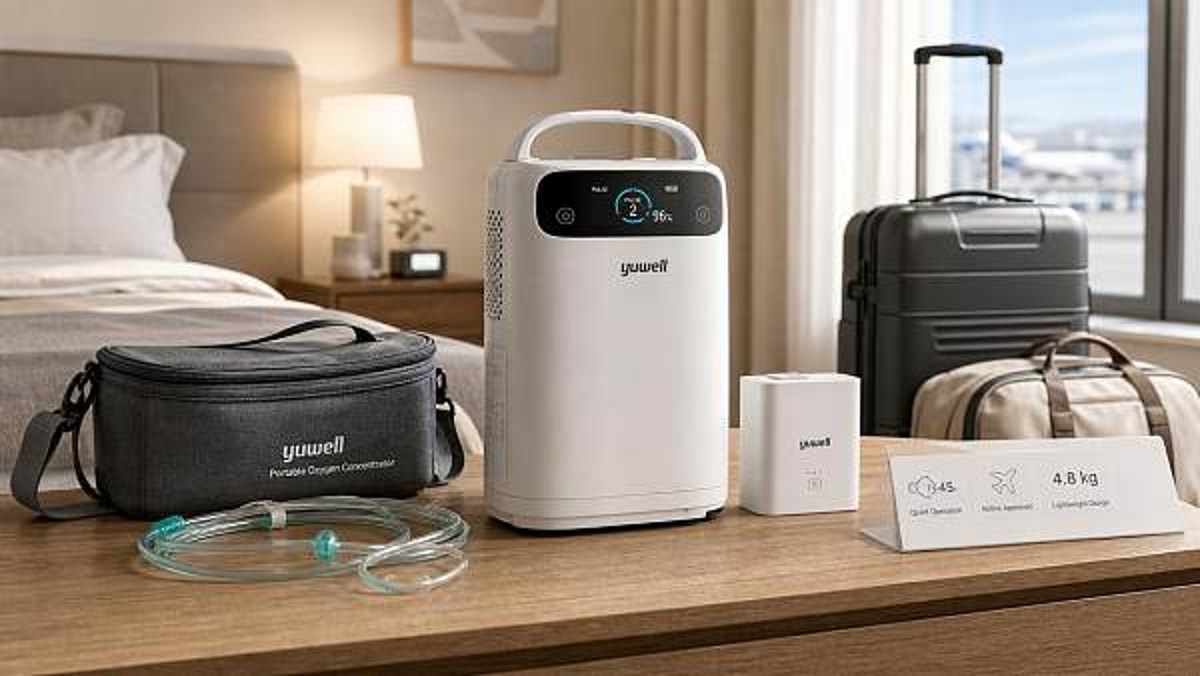
Portable oxygen concentrators have become noticeably quieter, improving comfort for users at home and on the move. Yet lower noise does not always mean less weight, and that trade-off matters for buyers comparing performance, portability, and daily usability. For information researchers, understanding how design, battery life, and mobility intersect is essential to evaluating today’s evolving oxygen therapy market.
A clear market shift is underway in portable oxygen concentrators
The most visible change in portable oxygen concentrators is no longer simply miniaturization. In recent product cycles, the conversation has shifted toward quieter operation, better user comfort, and more adaptable daily use. This matters because the market is moving beyond early-stage product comparisons based only on flow settings and battery runtime. Buyers, distributors, care providers, and market observers are now weighing how a device fits into real life: on flights, in cars, during sleep, at social events, and across long treatment days.
For information researchers, this shift signals a more mature category. Earlier demand often centered on whether portable oxygen concentrators could replace bulky stationary systems for more active patients. Today, the question is more refined: which compromises are acceptable, and for whom? A quieter machine may improve sleep quality, reduce self-consciousness in public, and ease caregiver burden. However, if that lower-noise design requires a larger housing, more acoustic insulation, or a bigger battery, the result may be a device that is easier to hear less, but harder to carry longer.
That is why the phrase “quieter but not always lighter” captures an important industry direction. It reflects not a failure of innovation, but a sign that engineering priorities are diversifying. The market is responding to a broader set of user expectations, and portability is being redefined in practical rather than purely technical terms.
Why quieter designs are gaining priority now
Several forces are pushing manufacturers of portable oxygen concentrators to reduce noise. First, the user profile is changing. More people want oxygen therapy solutions that blend into normal routines rather than signal illness in every environment. Discreet use has become a stronger purchase factor, especially among mobile users who work, travel, or spend extended time outside the home.
Second, product evaluation is becoming more experience-driven. As healthcare equipment increasingly competes on usability, acoustic comfort has become part of perceived quality. A machine with acceptable oxygen delivery but irritating sound may lose preference to a quieter alternative, even if the quieter unit is not the smallest option. Third, retail and online comparison channels make side-by-side judgments easier. Noise claims, decibel discussions, and real-user feedback now shape demand much more directly than in the past.
Another driver is the hybrid nature of use. Many portable oxygen concentrators are no longer purchased only for outdoor mobility. They may be used across multiple settings in one day, including bedrooms, offices, waiting rooms, and transport hubs. In such environments, sound becomes a persistent quality issue rather than a minor technical detail.
Key drivers behind the latest product direction
Why lighter weight is not automatically following lower noise
The common assumption is that newer portable oxygen concentrators should be better in every way at once: smaller, quieter, lighter, and longer-lasting. In reality, engineering trade-offs remain central. Lower noise can require changes that add mass or volume. Sound-dampening materials, revised compressor layouts, stronger casing structures, and thermal management components may all increase weight or reduce the room available for battery optimization.
Battery expectations add another layer. Users who want a quiet device often also expect long operation away from wall power. But longer runtime usually means a larger battery or optional battery packs, which directly affects carrying weight. This is especially relevant for pulse-dose devices used during active routines, where portability depends not only on the base unit but on the total load a person carries for a full day.
In other words, portable oxygen concentrators are being shaped by a balance among acoustics, energy storage, airflow performance, durability, and regulatory design requirements. The market trend is not toward one universal “best” format. It is toward more segmented optimization, where each device reflects a different decision about what matters most.
The market is moving from one-size-fits-all claims to use-case segmentation
One of the strongest signals in the portable oxygen concentrators market is the decline of broad marketing claims. Buyers are becoming more aware that a device ideal for air travel may not be ideal for extended walking, overnight rest, or high-frequency daily commuting. As a result, segmentation is increasing across both product development and sales communication.
This shift affects how information researchers should assess the category. Comparing only headline specifications can produce a misleading picture. A device that appears competitive on paper may perform differently depending on whether the priority is shoulder carry comfort, low operating noise in a quiet room, battery swap convenience, or compliance with airline travel expectations. The result is a more layered decision environment, where context matters as much as specification.
How product priorities are diverging
Who is most affected by this change
The shift in portable oxygen concentrators affects more than end users. Manufacturers must decide where to invest engineering effort. Distributors need more nuanced sales education because simple “lighter is better” messaging no longer matches market reality. Healthcare providers and respiratory therapists may need to guide selection based on lifestyle patterns, not just device category. Cross-border sellers and B2B platforms also face a more sophisticated content challenge: product descriptions must address practical use scenarios with greater clarity.
For the target audience of information researchers, this is particularly important. The category can no longer be evaluated as a static equipment class. It should be tracked as an evolving market where comfort, energy design, travel expectations, and user psychology all influence purchasing direction. That makes qualitative comparison more valuable than generic specification aggregation.
Impact by stakeholder group
Signals worth tracking in the next phase
Looking ahead, several signals can help researchers judge where portable oxygen concentrators are headed. One is the language brands use in product launches. If messaging increasingly highlights quiet operation, comfort during extended wear, and low-profile public use, that suggests acoustic design is becoming a mainstream rather than premium differentiator. Another is battery architecture. Removable battery systems, modular power options, and more realistic runtime disclosures can reveal how brands are handling the weight-versus-endurance challenge.
A third signal is channel behavior. If distributors and platforms provide more scenario-based comparison tools instead of simple specification lists, it indicates that the market recognizes segmentation as a commercial necessity. A fourth is regulatory and travel-related communication. Clearer guidance around transport compatibility and user safety can influence buying confidence, especially for globally mobile users.
Researchers should also observe how user reviews describe fatigue, discretion, and overnight comfort. These are not minor comments. They often reveal where product engineering succeeds or falls short more clearly than promotional language does.
What businesses and researchers should focus on now
The practical takeaway is that portable oxygen concentrators should be assessed through a decision framework, not a single ranking logic. Businesses evaluating product lines, sourcing partnerships, or content strategy should focus on fit between device characteristics and user routines. The most useful questions are not only “How quiet is it?” or “How much does it weigh?” but “Quiet for what environment?” and “Light enough for what duration and carrying style?”
For B2B information platforms, exporters, and importers, there is also a clear content opportunity. High-authority product and market coverage should explain the trade-off structure in plain language. Doing so improves search relevance, builds trust, and helps qualified buyers reach better conclusions. In a market where trust signals and informed comparison shape visibility, clarity becomes a competitive asset.
A practical judgment framework
The larger direction: portability is being redefined by usability
The broader trend in portable oxygen concentrators is not simply a race to make everything smaller. It is a shift toward usability-centered design, where comfort, social acceptability, and sustained daily practicality matter as much as engineering compactness. In that context, quieter models represent meaningful progress, even when they do not always reduce weight. The market is signaling that portability is no longer measured by dimensions alone. It is measured by how well a device supports consistent use in real environments.
For information researchers, that means the most valuable analysis will connect product changes with user behavior, channel strategy, and evolving demand expectations. If businesses want to judge how this trend affects their own portfolio, sourcing plan, or content visibility, they should confirm four points: which user scenarios matter most, which trade-offs are acceptable, how product claims compare with real-world feedback, and where quieter portable oxygen concentrators are gaining stronger preference despite unchanged or higher carry weight.
Those questions will do more than improve product comparison. They will help reveal where the next wave of market advantage is likely to emerge.
Recommended News
 Portable oxygen concentrators are quieter now, but not always lighterPortable oxygen concentrators are getting quieter, but not always lighter. Explore the trade-offs in weight, battery life, comfort, and daily usability before you compare today’s top options.
 Interactive whiteboards are improving, but software still decides valueInteractive whiteboards deliver real value when software matches the scenario. Explore how usability, integration, security, and updates shape smarter buying decisions.
 Medical diagnostic equipment downtime often starts with calibration neglectMedical diagnostic equipment downtime often starts with missed calibration. Learn the warning signs, checklist priorities, and practical steps to prevent failures and keep healthcare operations reliable.
 Eco-friendly building materials are easier to specify than to sourceEco-friendly building materials are easier to specify than source. Learn how procurement teams can verify claims, reduce risk, and find reliable suppliers faster.
 Ergonomic workspace design can fail if chair fit comes lastErgonomic workspace design starts with chair fit. Learn how the right seat improves posture, comfort, and focus—and why fixing it first can transform your workspace.
 Outdoor garden supplies demand shifts faster than many expectOutdoor garden supplies demand is shifting faster than expected. Discover key B2B trends, smarter sourcing insights, and practical strategies to stay competitive and capture growth.
 Sustainable home decor sells better when materials are clearly disclosedSustainable home decor sells better when brands clearly disclose materials, finishes, and sourcing. Discover why transparency builds trust, justifies price, and drives more confident buying.
 Modern office furniture trends now favor modular over fixed layoutsModern office furniture is shifting to modular layouts for flexibility, lower lifecycle costs, and better hybrid work performance. See why enterprises are moving away from fixed office design.
 Smart street lighting projects stall when controls are overcomplicatedSmart street lighting projects often stall when controls become too complex. Learn how to simplify deployment, reduce risk, and scale citywide with practical, maintainable systems.
 Solid-state battery breakthroughs look promising, but scale is harderSolid-state battery breakthroughs promise safer, higher-density energy storage, but scaling remains the real challenge. Explore what this means for supply chains, investment, and market advantage.
 Commercial LED lighting upgrades often save less than expectedCommercial LED lighting upgrades can underdeliver when baseline data, controls, and installation costs are misjudged. Learn how to assess real savings, reduce ROI risk, and make smarter investment decisions.
 Lithium battery storage payback can change with one policy updateLithium battery storage payback can shift fast after one policy update. See how tariffs, tax credits, grid pricing, and incentives change ROI—and how finance teams can approve smarter.
 Photovoltaic solar panels now compete on output in low lightPhotovoltaic solar panels now compete on low-light output. Discover how buyers can compare yield, risk, and supplier value to source smarter and boost project returns.
 Plant-based protein processing changes texture more than many expectPlant-based protein processing reshapes texture, stability, and safety more than expected. Explore key risks, QC checkpoints, and smarter sourcing insights for consistent results.
 Foldable screen technology is improving, but crease concerns remainFoldable screen technology is evolving fast with slimmer designs and stronger hinges, but crease concerns still shape buying decisions. Explore where it matters most.
 Next-gen wireless charging still faces a heat management problemNext-gen wireless charging promises faster, more flexible power delivery, but heat remains the key barrier. Discover how thermal limits impact safety, efficiency, and market readiness.
 Wearable technology adoption drops when comfort gets overlookedWearable technology adoption falls fast when comfort is ignored. Discover how fit, materials, weight, and battery life shape long-term use and smarter buying decisions.
 Smart home devices wholesale is no longer just about low pricingSmart home devices wholesale now goes beyond low pricing. Discover how reliability, compatibility, and supply chain confidence help distributors choose profitable, trusted partners.
 Agri-PV systems make sense only when land use is planned wellAgri-PV systems deliver real value only when land use is planned well. Discover how smart site, crop, grid, and compliance decisions turn dual-use solar into a bankable, sustainable project.
 Organic fertilizers may improve soil slower, but results last longerOrganic fertilizers improve soil slowly but deliver longer-lasting results. Learn how they boost soil health, support safer growing, and help you choose the right option for sustainable planting success.
 Smart classroom solutions fail when teachers need too many appsSmart classroom solutions fail when teachers juggle too many apps. Discover why integrated, easy-to-use platforms drive adoption, ROI, and scalable learning success.








Popular Tags
Global Trade Insights & Industry
Our mission is to empower global exporters and importers with data-driven insights that foster strategic growth.
Search News
Popular Tags
Industry Overview
The global commercial kitchen equipment market is projected to reach $112 billion by 2027. Driven by urbanization, the rise of e-commerce food delivery, and strict hygiene regulations.