

Modern office furniture trends now favor modular over fixed layouts
Modern office furniture is rapidly shifting toward modular solutions as businesses seek greater flexibility, cost efficiency, and space optimization. For enterprise decision-makers, this trend reflects more than design preference—it signals a strategic response to hybrid work, evolving team structures, and the need for agile workplaces that support productivity, collaboration, and long-term operational resilience.
A clear market signal: fixed layouts are losing ground
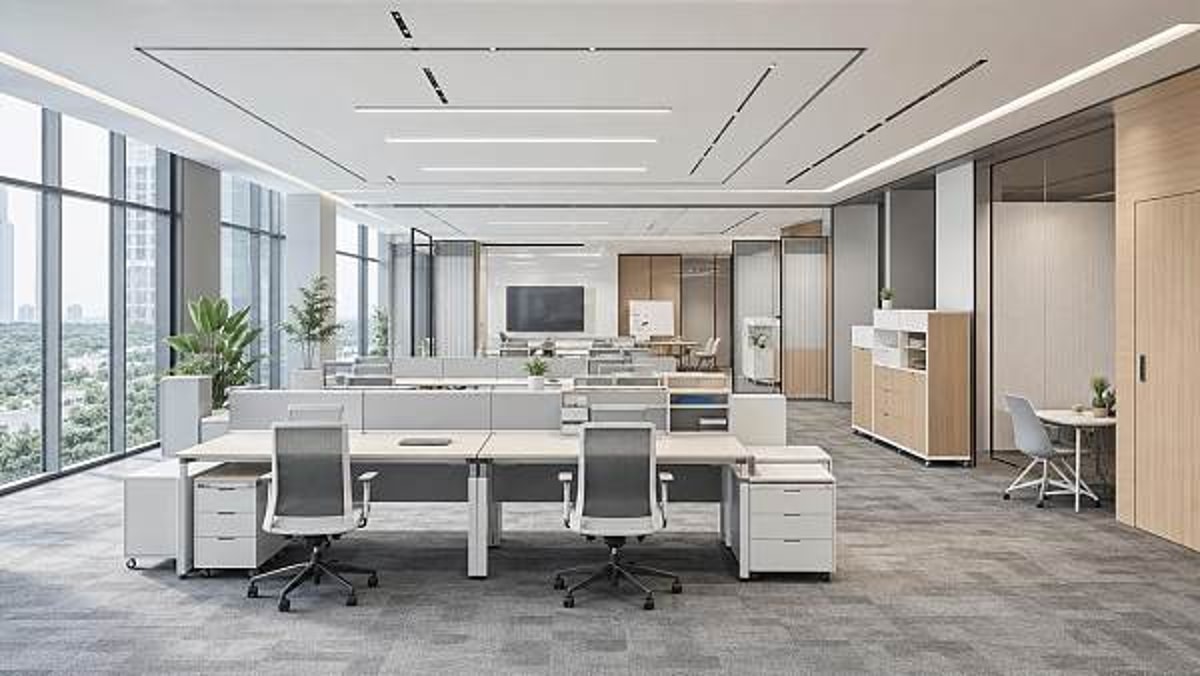
Across the broader business environment, Modern office furniture is no longer evaluated only by appearance, prestige, or durability. The key shift is that buyers now want furniture systems that can adapt as fast as their organizations do. Traditional fixed layouts—built around static departments, assigned desks, and long replacement cycles—fit a workplace model that is steadily weakening. In its place, companies are adopting modular workstations, movable storage, reconfigurable meeting zones, and flexible collaborative settings.
This change is visible in both mature and fast-growing markets. Enterprises are downsizing headquarters, opening satellite offices, redesigning regional hubs, and converting underused floor space into multi-purpose environments. As a result, office planning is moving away from one-time fit-outs toward continuous adjustment. That favors Modern office furniture systems that can be added to, reduced, relocated, or repurposed without major disruption.
For decision-makers, the trend matters because furniture now sits closer to workforce strategy, cost control, and brand positioning. A fixed office can quickly become a stranded asset when headcount changes, teams reorganize, or hybrid attendance patterns shift. A modular office, by contrast, creates options. In uncertain business conditions, options have real value.
Why modular solutions are rising now
Several forces are accelerating the move toward modular Modern office furniture. The first is hybrid work. When office attendance changes by day, team, or season, a rigid desk map becomes inefficient. Businesses need layouts that can support touchdown work, quiet focus, short collaboration sessions, and client-facing meetings in the same footprint.
The second force is organizational volatility. Mergers, project-based staffing, global expansion, and cross-functional squads all increase layout uncertainty. Furniture that can be reconfigured quickly reduces the friction of change. Instead of treating redesign as a capital event every few years, companies can manage it as an operating capability.
The third is cost discipline. Modular systems often require more thoughtful planning upfront, but they can lower long-term churn costs. Reusing panels, desk frames, seating clusters, and mobile dividers can reduce the need for repeated full replacements. This matters especially for organizations balancing employee experience with tighter real estate budgets.
A fourth driver is sustainability. Procurement teams increasingly look beyond purchase price to lifecycle performance. Modern office furniture that supports reuse, repair, reconfiguration, and phased procurement aligns more closely with circularity goals and ESG reporting expectations. Even where formal regulation is limited, internal governance standards are becoming stricter.
Key drivers behind the shift
The trend is changing how offices are planned and purchased
One of the most important signals is that furniture procurement is becoming less isolated from workplace planning. In the past, Modern office furniture might have been selected near the end of a fit-out project. Now it is increasingly discussed earlier, alongside occupancy strategy, collaboration needs, acoustic performance, employee wellness, and digital infrastructure.
This changes the buying criteria. Enterprises are paying more attention to compatibility across product lines, replacement lead times, installation flexibility, warranty terms, and the ease of reconfiguration by internal facilities teams. Products that look attractive but lock the business into rigid use patterns are losing appeal. In many cases, buyers prefer systems with standardized components, scalable accessories, and neutral design language that can move across departments or sites.
The result is not the disappearance of fixed elements altogether. Executive spaces, compliance-sensitive functions, and certain client-facing areas may still require more permanent solutions. But even there, the planning mindset is changing. The question is no longer simply, “What furniture fills this space?” It is increasingly, “What configuration gives us the most flexibility over the next three to five years?”
Who feels the impact most strongly
The shift toward modular Modern office furniture affects more than designers or procurement officers. It reshapes decisions across operations, finance, HR, and commercial teams. Each stakeholder sees a different risk and opportunity profile.
What this means for suppliers, exporters, and global trade participants
For companies operating in international trade, the rise of modular Modern office furniture is also a market structure signal. Demand is moving toward systems thinking rather than single-item transactions. Buyers increasingly ask whether components can be shipped efficiently, assembled quickly, expanded later, and integrated with local installation requirements. That opens opportunities for manufacturers and exporters that can present complete, adaptable product ecosystems rather than isolated SKUs.
This is particularly relevant for B2B information platforms and industry intelligence services. Procurement decisions now rely on faster access to supplier comparisons, material trends, logistics timing, and cross-market signals. Businesses evaluating office transitions often want to know not only what is available, but how broader workplace demand is evolving by region, sector, and enterprise size. Reliable visibility into these signals helps buyers avoid overcommitting to outdated formats.
For suppliers, the sales narrative must also evolve. Product catalogs should explain use-case flexibility, lifecycle value, and configuration pathways. In a market where Modern office furniture decisions are increasingly strategic, vendors that only compete on unit price may struggle to differentiate themselves.
Signals decision-makers should watch over the next phase
Not every office needs a full modular reset, and not every trend signal should trigger immediate spending. The more useful approach is to watch a set of practical indicators. First, monitor actual workplace utilization rather than policy assumptions. If collaborative zones are crowded while assigned desks sit empty, that is a direct signal that fixed layouts are misaligned with real use.
Second, track the frequency of internal change requests. If teams regularly ask for seat reassignments, privacy adjustments, temporary project spaces, or new meeting formats, the office is already telling you it needs more flexibility. Third, assess how often furniture assets are abandoned during restructures or relocations. High disposal or replacement rates usually indicate poor adaptability.
Fourth, evaluate supplier resilience. In a modular environment, long-term compatibility matters. Decision-makers should ask whether future orders will match current systems, whether parts can be replenished consistently, and whether after-sales support is strong across markets. These are not secondary issues; they affect the durability of the entire workplace strategy.
A practical decision framework
How enterprises can respond without overreacting
A common mistake is to treat modular Modern office furniture as a style trend and rush into a full redesign. A better approach is phased adaptation. Start with areas where layout mismatch is most visible: project rooms, shared work points, touchdown areas, and medium-size collaboration spaces. These usually produce the fastest evidence of whether flexibility is creating better utilization and employee satisfaction.
Enterprises should also align furniture strategy with business scenarios. If expansion is likely, prioritize systems that scale. If consolidation is more likely, prioritize portability and reusability across sites. If talent attraction is the main concern, focus on creating a mix of focus, meeting, and social zones that feel intentional rather than improvised.
Another important step is to improve internal governance around office changes. Facilities, finance, HR, and procurement should share a basic framework for evaluating requests. Without cross-functional alignment, companies can end up with fragmented purchases that undermine the very benefits modular systems are meant to provide.
Why this trend deserves board-level attention
Modern office furniture may appear tactical, but the underlying shift is strategic. It reflects how companies think about resilience, workforce behavior, and capital efficiency. In a business climate defined by uncertain growth, changing labor expectations, and continuous restructuring, physical space can no longer be planned as if demand were stable and predictable.
That is why modular layouts are gaining momentum over fixed ones. They do not eliminate uncertainty; they make it easier to operate through uncertainty. For enterprise decision-makers, that distinction is critical. The value of the office increasingly lies not in permanence, but in adaptability.
Final judgment and next questions to ask
The rise of modular Modern office furniture is best understood as part of a wider shift in business operations: faster change, tighter budgets, more fluid teams, and a stronger need for measurable workplace performance. Fixed layouts are not disappearing entirely, but they are losing their default status. The real trend is that flexibility is becoming a core procurement criterion rather than an optional feature.
If an enterprise wants to judge how this trend affects its own business, it should confirm a few practical points: how often office usage patterns change, which spaces are underperforming, whether current furniture can be reused during restructuring, how suppliers support long-term compatibility, and what level of flexibility the organization will realistically need over the next three years. Those questions will do more to guide sound decisions than any short-term design trend. In the current market, the strongest office strategy is the one that can change without starting over.
Recommended News
 Portable oxygen concentrators are quieter now, but not always lighterPortable oxygen concentrators are getting quieter, but not always lighter. Explore the trade-offs in weight, battery life, comfort, and daily usability before you compare today’s top options.
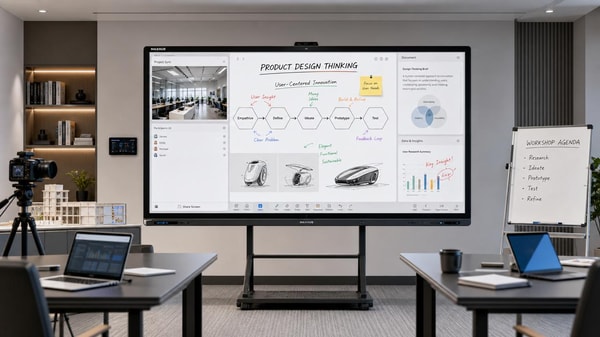
 Interactive whiteboards are improving, but software still decides valueInteractive whiteboards deliver real value when software matches the scenario. Explore how usability, integration, security, and updates shape smarter buying decisions.
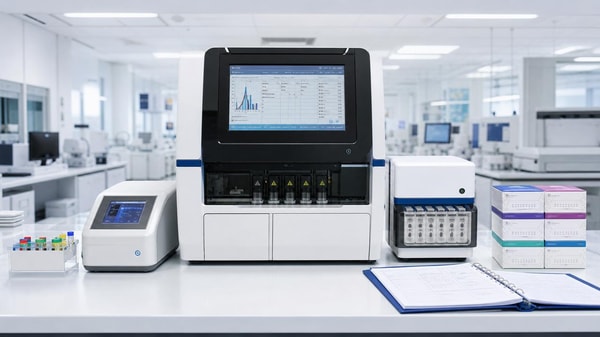
 Medical diagnostic equipment downtime often starts with calibration neglectMedical diagnostic equipment downtime often starts with missed calibration. Learn the warning signs, checklist priorities, and practical steps to prevent failures and keep healthcare operations reliable.
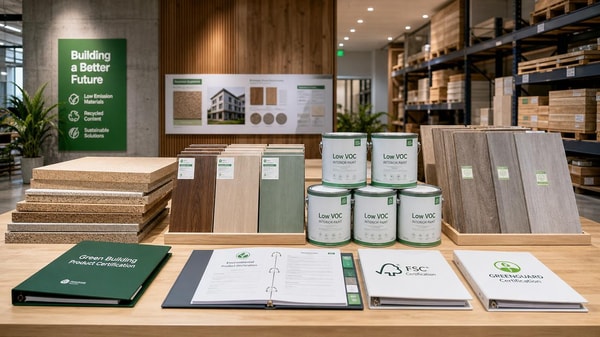
 Eco-friendly building materials are easier to specify than to sourceEco-friendly building materials are easier to specify than source. Learn how procurement teams can verify claims, reduce risk, and find reliable suppliers faster.
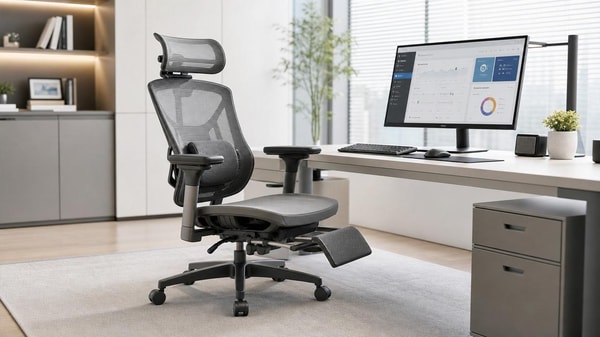
 Ergonomic workspace design can fail if chair fit comes lastErgonomic workspace design starts with chair fit. Learn how the right seat improves posture, comfort, and focus—and why fixing it first can transform your workspace.
 Outdoor garden supplies demand shifts faster than many expectOutdoor garden supplies demand is shifting faster than expected. Discover key B2B trends, smarter sourcing insights, and practical strategies to stay competitive and capture growth.
 Sustainable home decor sells better when materials are clearly disclosedSustainable home decor sells better when brands clearly disclose materials, finishes, and sourcing. Discover why transparency builds trust, justifies price, and drives more confident buying.
 Modern office furniture trends now favor modular over fixed layoutsModern office furniture is shifting to modular layouts for flexibility, lower lifecycle costs, and better hybrid work performance. See why enterprises are moving away from fixed office design.
 Smart street lighting projects stall when controls are overcomplicatedSmart street lighting projects often stall when controls become too complex. Learn how to simplify deployment, reduce risk, and scale citywide with practical, maintainable systems.
 Solid-state battery breakthroughs look promising, but scale is harderSolid-state battery breakthroughs promise safer, higher-density energy storage, but scaling remains the real challenge. Explore what this means for supply chains, investment, and market advantage.
 Commercial LED lighting upgrades often save less than expectedCommercial LED lighting upgrades can underdeliver when baseline data, controls, and installation costs are misjudged. Learn how to assess real savings, reduce ROI risk, and make smarter investment decisions.
 Lithium battery storage payback can change with one policy updateLithium battery storage payback can shift fast after one policy update. See how tariffs, tax credits, grid pricing, and incentives change ROI—and how finance teams can approve smarter.
 Photovoltaic solar panels now compete on output in low lightPhotovoltaic solar panels now compete on low-light output. Discover how buyers can compare yield, risk, and supplier value to source smarter and boost project returns.
 Plant-based protein processing changes texture more than many expectPlant-based protein processing reshapes texture, stability, and safety more than expected. Explore key risks, QC checkpoints, and smarter sourcing insights for consistent results.
 Foldable screen technology is improving, but crease concerns remainFoldable screen technology is evolving fast with slimmer designs and stronger hinges, but crease concerns still shape buying decisions. Explore where it matters most.
 Next-gen wireless charging still faces a heat management problemNext-gen wireless charging promises faster, more flexible power delivery, but heat remains the key barrier. Discover how thermal limits impact safety, efficiency, and market readiness.
 Wearable technology adoption drops when comfort gets overlookedWearable technology adoption falls fast when comfort is ignored. Discover how fit, materials, weight, and battery life shape long-term use and smarter buying decisions.
 Smart home devices wholesale is no longer just about low pricingSmart home devices wholesale now goes beyond low pricing. Discover how reliability, compatibility, and supply chain confidence help distributors choose profitable, trusted partners.
 Agri-PV systems make sense only when land use is planned wellAgri-PV systems deliver real value only when land use is planned well. Discover how smart site, crop, grid, and compliance decisions turn dual-use solar into a bankable, sustainable project.
 Organic fertilizers may improve soil slower, but results last longerOrganic fertilizers improve soil slowly but deliver longer-lasting results. Learn how they boost soil health, support safer growing, and help you choose the right option for sustainable planting success.
 Smart classroom solutions fail when teachers need too many appsSmart classroom solutions fail when teachers juggle too many apps. Discover why integrated, easy-to-use platforms drive adoption, ROI, and scalable learning success.











Popular Tags
Global Trade Insights & Industry
Our mission is to empower global exporters and importers with data-driven insights that foster strategic growth.
Search News
Popular Tags
Industry Overview
The global commercial kitchen equipment market is projected to reach $112 billion by 2027. Driven by urbanization, the rise of e-commerce food delivery, and strict hygiene regulations.