

Textile home fabrics buyers now ask more about wash durability
As sourcing priorities evolve, buyers of textile home fabrics are asking tougher questions about wash durability, consistency, and long-term value. For procurement teams, distributors, and market researchers tracking textile home accessories and broader production line optimization trends, durability is no longer a minor product detail—it is a purchasing benchmark that shapes supplier evaluation, brand trust, and repeat order potential.
The short answer is clear: yes, wash durability has moved from a secondary technical detail to a front-line buying criterion in textile home fabrics. Buyers are no longer satisfied with a fabric that looks good at shipment. They want evidence that it will maintain color, hand feel, dimensional stability, and structural integrity after repeated laundering. For suppliers, this shift affects product development, quality control, documentation, and even sales positioning. For buyers, it changes how suppliers should be screened, how risk should be priced, and how long-term value should be calculated.
Why wash durability is becoming a key purchasing benchmark
In many home textile categories, the real product test happens after delivery. Bedding, cushion covers, table linens, throws, and other textile home fabrics are used repeatedly and washed often. That means performance in use matters more than showroom appearance.
Several market forces are driving this change:
- Higher end-user expectations: Consumers expect fabrics to keep their color, shape, and softness through repeated wash cycles.
- Brand protection pressure: Importers, retailers, and distributors face complaints, returns, and reputational damage when products fade, shrink, pill, or distort too quickly.
- Closer margin management: Buyers are under pressure to reduce hidden quality costs, not just secure lower FOB prices.
- Growth of private label and contract supply: Buyers using their own brand names need stronger quality consistency from manufacturing partners.
- More mature sourcing practices: Procurement teams increasingly compare lifecycle value instead of relying only on sample approval and initial appearance.
In practical terms, wash durability has become a proxy for supplier capability. A fabric that performs well after washing usually reflects better raw material control, more stable dyeing and finishing processes, and stronger production discipline overall.
What buyers are really asking when they ask about wash durability
When a buyer asks whether a textile home fabric is wash durable, the real question is usually broader than laundry performance alone. They are often evaluating total supply reliability.
Behind that one question, buyers may be trying to assess:
- Will the fabric maintain acceptable appearance after multiple washes?
- Will the color bleed, fade, or transfer?
- Will the dimensions remain stable within tolerance?
- Will the texture become rough, flat, or uneven?
- Will stitching, seams, coatings, prints, or finishes degrade early?
- Can the supplier deliver the same performance consistently across production lots?
- Will end-customer complaints increase after market launch?
For sourcing teams, this means wash durability should not be treated as a single yes-or-no specification. It should be broken into measurable performance indicators and verified at both sample and bulk stages.
Which durability issues matter most in textile home fabrics
Different product categories have different risk profiles, but the main durability concerns in home fabrics are relatively consistent across the market.
Color fastness to washing
This is often the first issue buyers examine. Poor wash fastness can lead to fading, shade change, or staining of adjacent fabrics. For printed, dyed, or dark-colored home textiles, this is especially important.
Dimensional stability and shrinkage
Even a visually attractive fabric can become commercially problematic if it shrinks beyond acceptable tolerance. For fitted or sized products such as bed linens, covers, or curtains, dimensional change directly affects usability and return rates.
Surface appearance retention
Buyers increasingly want fabrics that retain softness, smoothness, and visual appeal after washing. Pilling, fuzzing, abrasion marks, or surface flattening can quickly reduce perceived product value.
Seam and construction integrity
Durability is not only about the base fabric. Wash cycles can expose weak sewing, poor thread quality, or unstable fabric construction. For finished products, buyers should consider the total product response to laundering.
Performance of finishes and functional treatments
Softeners, wrinkle resistance, water repellency, antimicrobial treatment, and other finishes may lose effectiveness after repeated washing. Buyers should ask not just whether a treatment exists, but how long it lasts in real use.
How procurement teams should evaluate wash durability more effectively
Many sourcing mistakes happen because durability is discussed in general terms rather than tested through structured evaluation. A better procurement approach combines technical verification, commercial context, and supplier process review.
Procurement teams should focus on the following steps:
Define the expected wash-use scenario
Not all home fabrics need the same performance level. A decorative cushion cover and a frequently washed hotel bedding item require different standards. Buyers should define expected wash frequency, washing temperature, detergent exposure, drying conditions, and target market usage before comparing offers.
Request specific test data, not vague claims
Terms such as “good wash resistance” or “durable quality” are not enough. Buyers should ask for actual lab results, test methods used, rating scales, and the tested sample description.
Compare lab performance with bulk production risk
A supplier may show strong development samples but still struggle with bulk consistency. Buyers should ask how the supplier controls raw material variation, dye lot management, finishing parameters, and production repeatability.
Review tolerance standards clearly
Acceptable shrinkage, color change, and appearance loss should be defined in advance. This reduces disputes and prevents suppliers and buyers from working with different quality assumptions.
Use pre-shipment or third-party verification when necessary
For higher-risk orders, private label programs, or new supplier relationships, independent testing can reduce uncertainty and support better decision-making.
Questions buyers should ask suppliers before placing orders
For procurement professionals and business evaluators, the right questions often reveal more than the initial sample. Strong suppliers can usually answer clearly, with data and process logic.
- What wash durability standards do you test against for this product?
- How many wash cycles has this fabric been evaluated for?
- What are the results for color fastness, shrinkage, and surface appearance?
- Are the test results based on the same composition, construction, dye method, and finish as the quoted product?
- How do you control lot-to-lot consistency in production?
- What changes in performance should be expected after repeated laundering?
- Can you share third-party test reports or buyer references for similar applications?
- What quality claims are you willing to include in the specification or contract?
These questions help buyers distinguish between suppliers who understand end-use performance and those who mainly compete on presentation or price.
Why wash durability is closely tied to long-term value, not just quality
For many buyers, the commercial impact of wash durability is larger than the technical issue itself. A lower-cost fabric may look attractive at quotation stage, but poor post-wash performance can create downstream costs that erase any initial savings.
Long-term value is affected by:
- Lower return and complaint rates
- Improved customer satisfaction and repeat business
- Reduced need for markdowns or replacement stock
- Stronger brand trust for private label programs
- More stable distributor and retailer relationships
For distributors and agents, this matters especially because wash-related complaints often surface after products have already moved through multiple sales channels. At that point, the cost of quality failure is amplified by logistics, claims handling, channel disruption, and loss of confidence.
What this trend means for suppliers and exporters
Suppliers serving global textile home fabrics buyers should view this trend as both a warning and an opportunity. The warning is that visual appeal and price competitiveness alone are becoming less persuasive. The opportunity is that suppliers who can document durability and consistency can strengthen their position in more demanding, higher-trust buyer relationships.
To stay competitive, suppliers should consider:
- Improving internal testing and documentation processes
- Aligning product development with real-use washing expectations
- Standardizing production controls for repeatability
- Training sales teams to explain durability performance in business terms
- Using durability data as part of value-based selling, not just compliance support
In international trade, trust signals are increasingly important. Verified durability performance can function as one of those signals, helping exporters stand out in crowded sourcing environments.
How market researchers and sourcing analysts should interpret the shift
For information researchers and commercial analysts, stronger buyer attention to wash durability signals a broader sourcing evolution. It reflects a move away from transaction-first procurement toward risk-managed, performance-based supplier selection.
This trend may indicate:
- Growing buyer sophistication in home textile sourcing
- Rising demand for evidence-backed product claims
- More emphasis on total cost of ownership in sourcing decisions
- Increased pressure on suppliers to prove consistency, not just capability
- A stronger link between product engineering and commercial competitiveness
For sector watchers, this also connects to wider production line optimization trends. Suppliers that improve dyeing stability, finishing control, and quality traceability are often better positioned not only on durability, but also on efficiency, waste reduction, and repeat-order reliability.
Final takeaway for buyers evaluating textile home fabrics
Buyers now ask more about wash durability because it directly affects customer satisfaction, risk exposure, and overall product value. In today’s textile home fabrics market, durability is no longer a technical afterthought. It is a commercial filter.
The most effective buyers will not simply ask whether a fabric is washable or durable. They will define the use case, request measurable data, verify consistency, and compare suppliers based on long-term performance value rather than quotation price alone.
For procurement teams, distributors, and business evaluators, the key insight is straightforward: if a supplier cannot explain and support wash durability with confidence, that may signal a deeper reliability issue. In a market where repeat business depends on performance after purchase, wash durability has become one of the clearest indicators of sourcing quality.
Recommended News
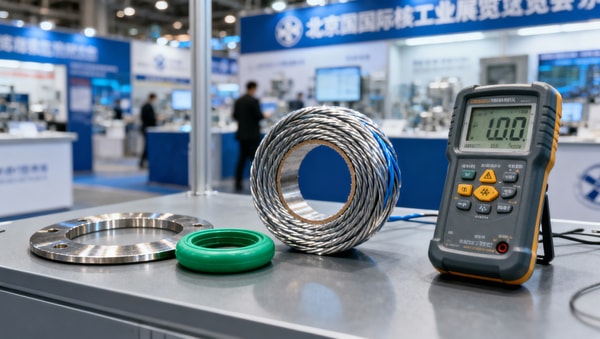
 China-France Nuclear Cooperation Advances at Beijing ExpoChina-France nuclear cooperation advances: mutual recognition for nuclear-grade seals, cables & radiation monitors boosts export readiness for suppliers targeting EU and BRI projects.
 Vietnam’s 4 Provinces Seek AI Tourism Tech in NanningAI tourism tech in demand: Vietnam’s 4 provinces seek AI-guided terminals, multilingual interpretation, AI-CCTV & smart ticketing in Nanning—key opportunity for B2G exporters.
 Q1 2026 China Power Market Trading Up 25.6%: Smart Meters, Storage Export Demand RisesSmart meters, energy storage exports surge as China’s Q1 2026 power market trading jumps 25.6% — key signal for global manufacturers & channel partners.
 China First Country with 5M+ Active Invention PatentsChina first country with 5M+ active invention patents—key for buyers in AI, solar, lithium battery & energy storage. Discover IP implications for sourcing, compliance & supplier vetting.
 Shenneng Etorkeqi Green Ammonia Project: Deionized Water Station OperationalShenneng Etorkeqi Green Ammonia Project’s deionized water station is now operational—ISO 8502-3 compliant, fully integrated, and a key milestone for global green hydrogen developers and exporters.
 China Launches 'Model-Data Resonance' Initiative for AI+Manufacturing InteroperabilityModel-Data Resonance initiative boosts AI+manufacturing interoperability—learn how GB/T XXXX–2026 aligns with VDI 2182 & ISA-95 for smoother global factory deployments.
 China’s First Embodied AI Robot Insurance Launched in GuangxiChina’s first embodied AI robot insurance launched in Guangxi—key for robotics exporters, AI hardware makers & global compliance teams. CE-recognized, EU/UK/AU-ready.
 IMDG Code 41-24 Enforced: UN3480 Lithium Battery Labeling Now MandatoryIMDG Code 41-24 is now mandatory: UN3480 lithium battery labeling, documentation & packaging rules are enforced globally as of 28 April 2026 — avoid port rejections!
 State Grid’s $680M Embodied AI Procurement Signals Export OpportunityEmbodied AI, IEC 61850 & IEC 62443: State Grid’s $680M procurement unlocks export opportunities for compliant industrial robots and smart vision systems in emerging markets.
 IMDG Code 41-24 Enforces UN3480 Class 9 Labeling for Lithium Battery Sea FreightIMDG Code 41-24 mandates UN3480 lithium battery sea freight to display durable Class 9 labels from April 27, 2026—avoid delays & port rejections.
 ESS Key Component Prices Drop ~80%: Quality & Compliance RiseESS key component prices dropped ~80%—but quality & compliance demands surged. Discover how UL 9540A, AS/NZS 5139, and certified BMS/inverters now define market access.
 Mexico NOM-019-SCFI-2026 Effective July 2026: EMC Certification Mandatory for Auto ElectronicsMexico NOM-019-SCFI-2026 mandates EMC certification for auto electronics from July 2026 — ensure compliance now to avoid supply chain disruption & customs delays.
 Red Sea Rerouting Normalized, ECA Surcharge Hits $1,850/TEURed Sea rerouting normalized: ECA surcharge hits $1,850/TEU — 47% of total freight cost. Impacting hand tools, building materials & furniture exporters to Europe. Act now.
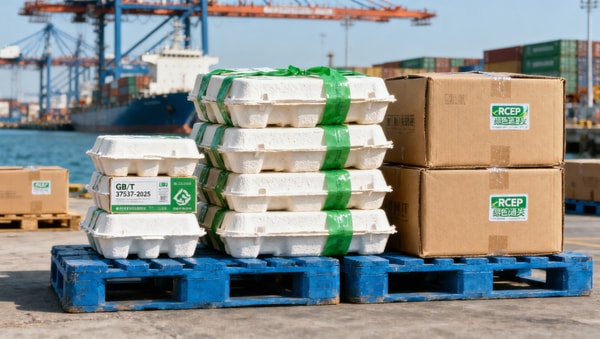
 RCEP Green Packaging Mutual Recognition Takes EffectRCEP Green Packaging Mutual Recognition is live—GB/T 37537-2025–certified packaging now enjoys fast-track clearance in Australia, NZ, Japan & Korea. Save time, cut costs, and boost export efficiency.
 Vietnam Suspends SASO Mutual Recognition for Chinese Irrigation EquipmentVietnam suspends SASO mutual recognition for Chinese irrigation equipment—drip tapes, PE fittings, auto valves now require VINAQ-IR certification. Act now to avoid delays & customs hold.
 Pool equipment maintenance warning signs before a breakdownPool equipment maintenance warning signs before a breakdown: spot early pump, filter, and control issues, improve pool equipment installation decisions, and reduce downtime with smarter sourcing insights.
 Patios and decks materials that age badly in humid climatesPatios and decks materials that age badly in humid climates: learn which patios and decks materials fail fast, how patios and decks construction choices affect durability, and how to source smarter.
 Textile home fabrics buyers now ask more about wash durabilityTextile home fabrics buyers now prioritize wash durability, consistency, and long-term value. Explore sourcing insights, production line optimization, and smarter textile home accessories decisions.
 What recurring waste says about production line efficiencyProduction line efficiency starts with recurring waste. Discover how production line optimization and production line automation reveal supplier risk, cut hidden costs, and improve sourcing decisions across textiles, jewelry, and agrochemicals.
 Agrochemicals export rules causing delays in new marketsAgrochemicals export delays explained with agrochemicals industry analysis and agrochemicals market trends—learn compliance risks, supplier selection tips, and smarter market entry strategies.
 Fashion tech applications brands are testing in physical storesFashion tech applications and fashion tech startups are transforming physical stores with smarter fitting, data-led production line optimization, and scalable retail innovation—explore key trends now.


















Popular Tags
Global Trade Insights & Industry
Our mission is to empower global exporters and importers with data-driven insights that foster strategic growth.
Search News
Popular Tags
Industry Overview
The global commercial kitchen equipment market is projected to reach $112 billion by 2027. Driven by urbanization, the rise of e-commerce food delivery, and strict hygiene regulations.