

Agrochemicals export rules causing delays in new markets
As agrochemicals export rules tighten across emerging destinations, delays are reshaping sourcing decisions and market entry plans. This overview combines agrochemicals industry analysis with the latest agrochemicals market trends to help researchers, buyers, and distributors assess compliance risks, trade timing, and competitive opportunities in new markets.
For most buyers, distributors, and market-entry teams, the key question is not whether regulations are becoming stricter—it is how much those rules will slow shipments, increase landed costs, and affect supplier selection. The short answer is that delays in new agrochemicals markets are increasingly driven by registration timelines, labeling and packaging mismatches, customs documentation gaps, and local compliance reviews that many exporters underestimate. Companies that treat export compliance as a commercial planning issue, not just a legal formality, are better positioned to protect supply continuity and capture early-mover opportunities.
Why agrochemicals export rules are causing more delays in new markets
In many developing and newly opened destinations, regulators are tightening oversight of crop protection products, fertilizers with active chemical inputs, adjuvants, and related agricultural formulations. This shift is being driven by several factors: pressure to align with international safety frameworks, rising concern over residue and environmental impact, and a stronger effort by local authorities to screen imported products before market entry.
For exporters and importers, the practical impact is clear. Agrochemical shipments are no longer assessed only on standard trade documentation. They are increasingly reviewed through a more complex compliance lens that may include:
- Product registration approval before import clearance
- Verification of active ingredients and concentration limits
- Country-specific safety data sheet requirements
- Labeling in local language and format
- Hazard classification consistency across documents and packaging
- Import permit validation tied to local distributors or licensed entities
- Testing, sampling, or dossier review by destination authorities
In new markets, uncertainty is often greater because procedures may exist on paper but be unevenly enforced in practice. A shipment may be technically compliant yet still delayed if customs officers, agriculture ministries, or chemical regulators interpret requirements differently. This is one of the most important realities in current agrochemicals market trends: execution risk in emerging destinations is becoming just as important as formal regulation.
What buyers and distributors should worry about first
For procurement teams and channel partners, the biggest risk is not simply a late shipment. It is the chain reaction that follows. Delays can disrupt seasonal demand windows, reduce confidence in a supplier, trigger higher warehousing and demurrage costs, and weaken a distributor’s position versus competitors with already approved products.
The most critical concerns usually fall into five areas:
1. Timing risk around planting and application cycles
Agrochemicals are highly time-sensitive products. Missing a treatment window can reduce the commercial value of the shipment even if the cargo eventually clears. Buyers entering a new market need to map regulatory lead times against local crop cycles, not just shipping schedules.
2. Hidden compliance gaps between supplier claims and local rules
A product that is registered or routinely exported elsewhere may still fail local requirements. Formulation details, restricted substances, pack sizes, or even claims on the label can trigger delays.
3. Dependence on local import partners
In many countries, import clearance depends on a licensed local entity, specific permit holder, or in-market registration sponsor. If the local partner lacks regulatory capability, the foreign supplier may face bottlenecks despite having strong manufacturing credentials.
4. Cost escalation beyond freight
Delays often create additional costs in port storage, documentation revisions, relabeling, retesting, and legal or consulting support. These costs can materially change sourcing economics.
5. Reputational and commercial risk
For distributors and agents, repeated shipment delays can damage trust with retailers, cooperatives, and farm customers. In new markets, reliability is often a stronger differentiator than price alone.
Where delays typically happen in the agrochemicals export process
Understanding where the process breaks down helps readers make better sourcing and market-entry decisions. In practice, most delays occur at one of the following stages:
Product registration and dossier review
Many new markets require pre-import registration or approval linked to product composition, toxicology data, efficacy evidence, and manufacturing origin. Exporters who assume a commercial invoice and shipping documents are enough often face immediate rejection or lengthy review.
Pre-shipment documentation checks
Common issues include inconsistent HS codes, incomplete certificates, mismatched product names across documents, and outdated safety data sheets. Minor documentation errors can trigger major delays for regulated chemical goods.
Packaging and labeling review
Even when the product itself is acceptable, labels can become a bottleneck if they do not reflect local language, dosage instructions, hazard statements, batch traceability, or mandatory registration numbers.
Border inspection and customs hold
Customs and agricultural authorities may require physical inspection, sample testing, or cross-checking with domestic restricted substance lists. New markets often lack streamlined clearance channels, which increases waiting times.
Post-arrival release and distribution approval
Some countries allow entry into port but delay market release until final administrative checks are complete. This distinction matters for distributors planning immediate onward sales.
From an agrochemicals industry analysis perspective, delays are rarely caused by one issue alone. They are usually the result of weak coordination between exporter, importer, freight forwarder, customs broker, and local regulatory contact.
How to assess whether a target market is commercially worth the compliance burden
Not every new market justifies the cost and time needed to meet stricter agrochemicals export rules. For buyers, business evaluators, and channel development teams, the right question is whether expected demand and margin potential outweigh regulatory friction.
A useful evaluation framework includes:
- Market size: Is demand large enough to support recurring shipments rather than one-off trial volumes?
- Registration duration: Will approval take weeks, months, or longer than one crop cycle?
- Product fit: Does the product align with local agronomic needs, crop mix, and resistance patterns?
- Competitive intensity: Are incumbent brands already registered and entrenched?
- Channel readiness: Does the local importer or distributor have regulatory and technical capability?
- Price resilience: Can the market absorb additional compliance and delay-related costs?
- Policy stability: Are rules improving toward transparency, or shifting unpredictably?
If a destination scores weakly on several of these points, it may still be strategically interesting, but it should not be approached with standard supply assumptions. Instead, it may require a phased entry plan, smaller pilot volumes, or cooperation with a stronger in-market regulatory partner.
What good suppliers are doing differently to reduce delay risk
In the current agrochemicals market, stronger exporters are separating themselves not just through product range or pricing, but through compliance readiness. This is increasingly important for procurement teams comparing offers from multiple origins.
Reliable suppliers tend to do several things well:
- Maintain market-specific regulatory documentation rather than generic export files
- Pre-check label, packaging, and SDS compliance for each destination
- Coordinate early with local importers on permit ownership and registration status
- Build realistic lead times into contracts and shipment planning
- Offer traceability and batch-level documentation quickly when requested
- Use compliance specialists or local consultants before first shipment
For buyers and distributors, these capabilities should be treated as supplier selection criteria. A lower quoted price can quickly lose value if the supplier has weak control over export compliance in regulated chemical categories.
How procurement and business evaluation teams can make better decisions
If your role involves sourcing, supplier qualification, or market evaluation, the most practical response is to build compliance risk into commercial decision-making early. Do not leave it until after purchase orders are issued or containers are booked.
Useful actions include:
Request country-specific compliance evidence
Ask suppliers whether the product is already registered, conditionally allowed, or still pending in the target market. Request proof, not just verbal confirmation.
Review the full landed-risk picture
Compare suppliers not only by FOB or CIF price, but by expected delay probability, required adaptation cost, and local clearance complexity.
Check local partner capability
A distributor with poor regulatory follow-through can become the weak link. Assess whether your local partner has experience with agrochemicals import approvals, technical file submission, and customs coordination.
Align shipment timing with market reality
Build a schedule that includes registration, permit processing, possible inspection, and contingency time before seasonal sales windows.
Segment products by regulatory sensitivity
Not all products face equal scrutiny. Herbicides, insecticides, fungicides, and specialty formulations may face very different review intensity depending on the market. Prioritize lower-friction products if speed matters.
Competitive opportunities hidden behind the delays
Although tighter agrochemicals export rules create barriers, they also create competitive openings. Markets with higher compliance thresholds often reward serious players and filter out opportunistic exporters. For capable manufacturers, importers, and distributors, this can improve long-term market structure.
Opportunities may include:
- Gaining first-mover advantage where competitors are slow to complete registration
- Winning distributor trust through more dependable delivery planning
- Positioning compliant products as lower-risk alternatives
- Using regulatory readiness as a differentiator in channel negotiations
- Building stronger local partnerships around technical support and stewardship
This is one reason agrochemicals industry analysis should not focus only on obstacles. Delays do raise costs and complexity, but they also reshape who can compete effectively in new markets.
Key signals that a new agrochemicals market may be high-risk
Before committing resources, watch for warning signs that often indicate prolonged delays or uncertain entry conditions:
- Frequent rule changes without clear transition periods
- Conflicting guidance from customs, agriculture, and chemical authorities
- Lack of published registration timelines
- Heavy dependence on manual approvals rather than digital systems
- Unclear standards for accepting foreign test data or certificates
- Reports of repeated port holds for similar products
- Overreliance on informal local “fixers” to move documentation
When several of these signals appear together, procurement and market-entry teams should assume longer lead times, higher compliance overhead, and a greater need for local verification.
Conclusion
Agrochemicals export rules are causing delays in new markets because compliance expectations are expanding faster than many supply chains are adapting. For buyers, distributors, and business evaluators, the most important takeaway is that these delays are now a strategic sourcing issue, not a secondary administrative detail.
The best decisions come from asking practical questions early: Is the product truly cleared for this market? How capable is the local regulatory partner? What is the real time-to-market after approvals, inspections, and labeling adjustments? And does the commercial upside justify the compliance burden?
In today’s agrochemicals market trends, the winners will be the companies that combine market opportunity analysis with disciplined execution on regulatory readiness. That approach reduces delay risk, improves supplier selection, and creates a more realistic path into promising but tightly regulated new markets.
Recommended News
 China-France Nuclear Cooperation Advances at Beijing ExpoChina-France nuclear cooperation advances: mutual recognition for nuclear-grade seals, cables & radiation monitors boosts export readiness for suppliers targeting EU and BRI projects.
 Vietnam’s 4 Provinces Seek AI Tourism Tech in NanningAI tourism tech in demand: Vietnam’s 4 provinces seek AI-guided terminals, multilingual interpretation, AI-CCTV & smart ticketing in Nanning—key opportunity for B2G exporters.
 Q1 2026 China Power Market Trading Up 25.6%: Smart Meters, Storage Export Demand RisesSmart meters, energy storage exports surge as China’s Q1 2026 power market trading jumps 25.6% — key signal for global manufacturers & channel partners.
 China First Country with 5M+ Active Invention PatentsChina first country with 5M+ active invention patents—key for buyers in AI, solar, lithium battery & energy storage. Discover IP implications for sourcing, compliance & supplier vetting.
 Shenneng Etorkeqi Green Ammonia Project: Deionized Water Station OperationalShenneng Etorkeqi Green Ammonia Project’s deionized water station is now operational—ISO 8502-3 compliant, fully integrated, and a key milestone for global green hydrogen developers and exporters.
 China Launches 'Model-Data Resonance' Initiative for AI+Manufacturing InteroperabilityModel-Data Resonance initiative boosts AI+manufacturing interoperability—learn how GB/T XXXX–2026 aligns with VDI 2182 & ISA-95 for smoother global factory deployments.
 China’s First Embodied AI Robot Insurance Launched in GuangxiChina’s first embodied AI robot insurance launched in Guangxi—key for robotics exporters, AI hardware makers & global compliance teams. CE-recognized, EU/UK/AU-ready.
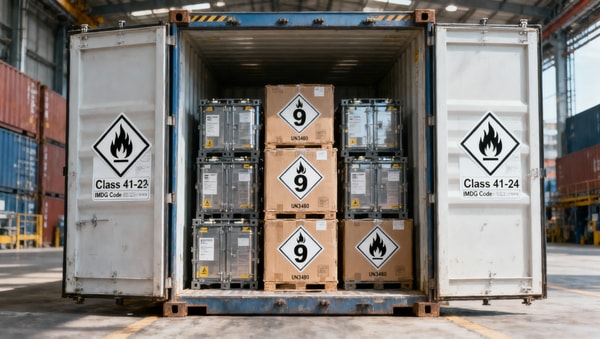
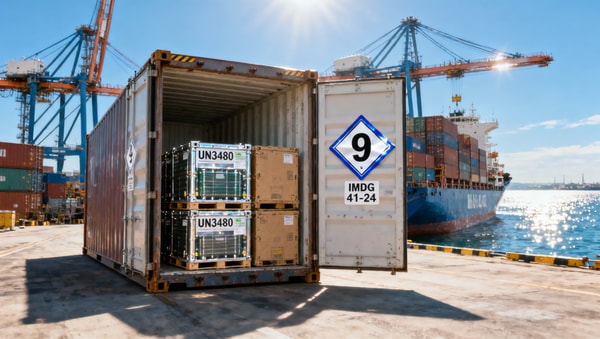
 IMDG Code 41-24 Enforced: UN3480 Lithium Battery Labeling Now MandatoryIMDG Code 41-24 is now mandatory: UN3480 lithium battery labeling, documentation & packaging rules are enforced globally as of 28 April 2026 — avoid port rejections!
 State Grid’s $680M Embodied AI Procurement Signals Export OpportunityEmbodied AI, IEC 61850 & IEC 62443: State Grid’s $680M procurement unlocks export opportunities for compliant industrial robots and smart vision systems in emerging markets.
 IMDG Code 41-24 Enforces UN3480 Class 9 Labeling for Lithium Battery Sea FreightIMDG Code 41-24 mandates UN3480 lithium battery sea freight to display durable Class 9 labels from April 27, 2026—avoid delays & port rejections.
 ESS Key Component Prices Drop ~80%: Quality & Compliance RiseESS key component prices dropped ~80%—but quality & compliance demands surged. Discover how UL 9540A, AS/NZS 5139, and certified BMS/inverters now define market access.
 Mexico NOM-019-SCFI-2026 Effective July 2026: EMC Certification Mandatory for Auto ElectronicsMexico NOM-019-SCFI-2026 mandates EMC certification for auto electronics from July 2026 — ensure compliance now to avoid supply chain disruption & customs delays.
 Red Sea Rerouting Normalized, ECA Surcharge Hits $1,850/TEURed Sea rerouting normalized: ECA surcharge hits $1,850/TEU — 47% of total freight cost. Impacting hand tools, building materials & furniture exporters to Europe. Act now.
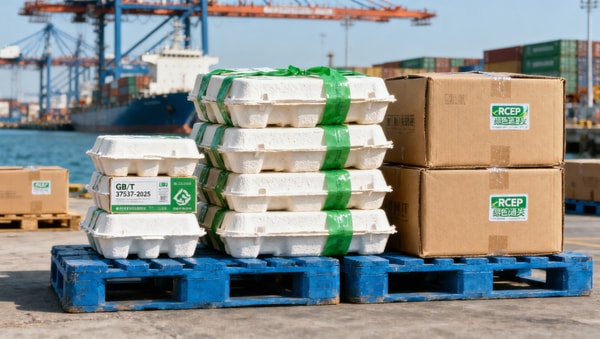
 RCEP Green Packaging Mutual Recognition Takes EffectRCEP Green Packaging Mutual Recognition is live—GB/T 37537-2025–certified packaging now enjoys fast-track clearance in Australia, NZ, Japan & Korea. Save time, cut costs, and boost export efficiency.
 Vietnam Suspends SASO Mutual Recognition for Chinese Irrigation EquipmentVietnam suspends SASO mutual recognition for Chinese irrigation equipment—drip tapes, PE fittings, auto valves now require VINAQ-IR certification. Act now to avoid delays & customs hold.
 Pool equipment maintenance warning signs before a breakdownPool equipment maintenance warning signs before a breakdown: spot early pump, filter, and control issues, improve pool equipment installation decisions, and reduce downtime with smarter sourcing insights.
 Patios and decks materials that age badly in humid climatesPatios and decks materials that age badly in humid climates: learn which patios and decks materials fail fast, how patios and decks construction choices affect durability, and how to source smarter.
 Textile home fabrics buyers now ask more about wash durabilityTextile home fabrics buyers now prioritize wash durability, consistency, and long-term value. Explore sourcing insights, production line optimization, and smarter textile home accessories decisions.
 What recurring waste says about production line efficiencyProduction line efficiency starts with recurring waste. Discover how production line optimization and production line automation reveal supplier risk, cut hidden costs, and improve sourcing decisions across textiles, jewelry, and agrochemicals.
 Agrochemicals export rules causing delays in new marketsAgrochemicals export delays explained with agrochemicals industry analysis and agrochemicals market trends—learn compliance risks, supplier selection tips, and smarter market entry strategies.
 Fashion tech applications brands are testing in physical storesFashion tech applications and fashion tech startups are transforming physical stores with smarter fitting, data-led production line optimization, and scalable retail innovation—explore key trends now.


















Popular Tags
Global Trade Insights & Industry
Our mission is to empower global exporters and importers with data-driven insights that foster strategic growth.
Search News
Popular Tags
Industry Overview
The global commercial kitchen equipment market is projected to reach $112 billion by 2027. Driven by urbanization, the rise of e-commerce food delivery, and strict hygiene regulations.