

Fashion tech applications brands are testing in physical stores
From smart mirrors to AI-driven fitting rooms, fashion tech applications are reshaping how brands test retail innovation in physical stores. For information researchers, buyers, and business evaluators, this overview connects fashion tech startups with broader lessons in production line optimization, production line automation, and changing consumer expectations—offering practical insight into where in-store technology, sourcing strategy, and commercial value are converging.
For B2B readers, the key question is no longer whether fashion technology belongs in stores, but which applications can move from pilot to scalable deployment within 3 to 12 months. Physical retail remains a critical proving ground because it reveals real shopper behavior, staff workflow friction, and the operational cost of integrating hardware, software, and service support across multiple locations.
This matters well beyond apparel retail. Importers, distributors, and sourcing teams increasingly evaluate in-store fashion tech through the same lens used for industrial systems: integration readiness, maintenance cycles, data capture accuracy, supplier stability, and return on floor space. As stores become test environments for connected devices, they also become demand signals for upstream manufacturers, component suppliers, and solution partners across the global supply chain.
Why physical stores remain the main testing ground for fashion tech
Digital commerce changed how fashion is discovered, but physical stores still provide the richest environment for testing retail technology. A store combines product touch, fit validation, real-time staff assistance, and impulse decision-making within a single visit that often lasts 15 to 45 minutes. That short window gives brands immediate feedback on whether a technology improves conversion, reduces returns, or simply creates novelty without commercial value.
For business evaluators, in-store pilots are attractive because they expose hidden operating costs early. A smart fitting room may look effective in a flagship store, but the decision becomes more complex when rolled out across 20, 50, or 200 locations. Questions arise around device uptime, software updates, replacement parts, staff training time, and the availability of regional technical support within 24 to 72 hours.
Fashion brands are also using stores as low-risk laboratories before reshaping larger supply chain decisions. If body-scanning kiosks improve fit confidence and reduce exchange rates, the impact extends upstream to size planning, SKU rationalization, and replenishment models. That is where fashion tech starts to overlap with production line optimization and demand forecasting, especially for suppliers serving seasonal collections with 8- to 16-week lead times.
What buyers and sourcing teams are really measuring
Most pilots are assessed against 4 practical dimensions rather than abstract innovation goals. First is customer engagement: dwell time, interaction rate, and assisted conversion. Second is operational reliability: failure frequency, calibration needs, and queue impact. Third is data usability: whether insights can be connected to merchandising, staffing, or CRM systems. Fourth is commercial scalability: unit cost, installation complexity, and the payback horizon.
The table below summarizes common reasons brands keep testing fashion tech in stores instead of relying only on e-commerce data.
The main conclusion is that physical stores are not only showrooms for new fashion tech applications. They are controlled commercial environments where brands can pressure-test hardware resilience, software interoperability, and user adoption before making broader sourcing, inventory, or automation decisions.
Which fashion tech applications brands are testing most actively
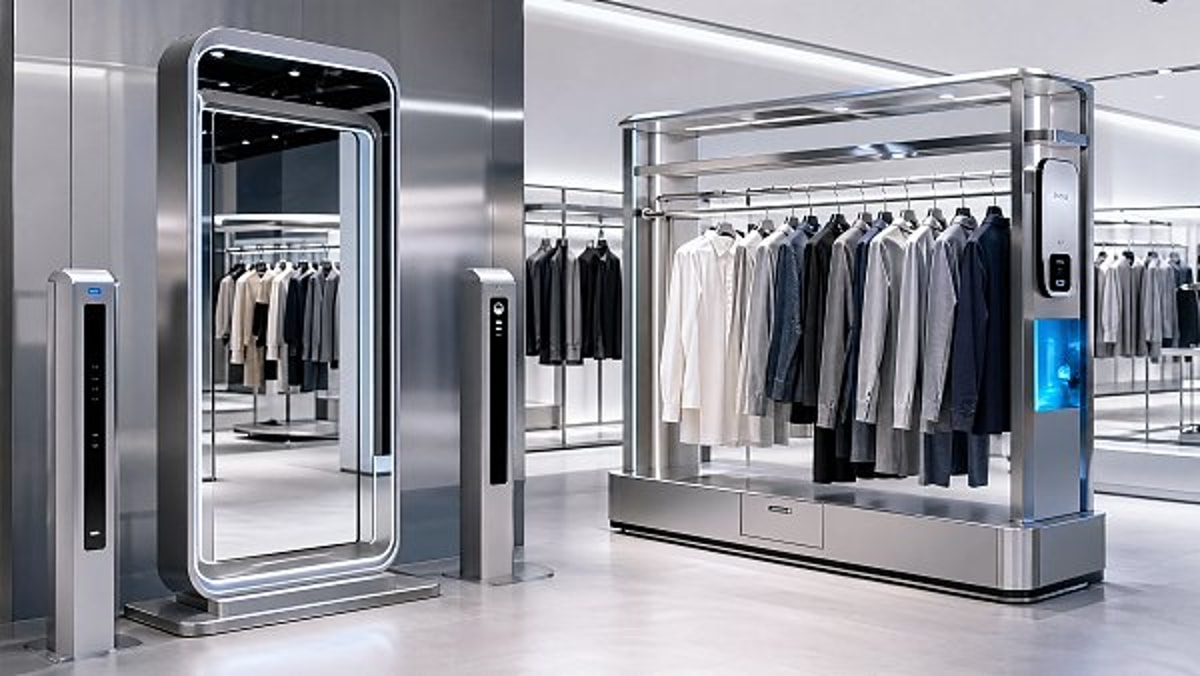
The current testing wave is centered on applications that remove friction from selection, fitting, and checkout. Smart mirrors remain one of the most visible examples. They can recommend complementary items, show alternative colors, and connect shoppers to store associates without leaving the fitting area. In practical terms, brands value them when they reduce lost sales from out-of-stock sizes or shorten decision time by a few minutes per customer.
AI-driven fitting rooms go a step further by combining sensors, RFID, cameras, or inventory links to identify which garments a customer brings in and what assistance may be needed. Some systems are tested primarily for upselling, while others are designed to generate fit data that later informs assortment planning. The difference is important for procurement teams because the underlying hardware stack, privacy requirements, and software subscription model can vary significantly.
Virtual try-on tools are also gaining attention, especially for eyewear, footwear, beauty-fashion crossovers, and accessories. Their advantage is a lower product handling burden and a faster setup than full body-scanning installations. However, accuracy thresholds matter. If digital overlay quality drifts too far from real fit or color perception, the tool may drive engagement while failing to improve conversion or reduce returns.
Applications with the clearest commercial use cases
The list below reflects the applications most often discussed in sourcing and retail technology evaluations:
- Smart mirrors for product discovery, styling suggestions, and associate assistance.
- AI fitting rooms linked to RFID or inventory systems for size requests and basket expansion.
- Body scanning booths for made-to-measure, fit profiling, and future demand modeling.
- Computer vision shelf or rack analytics for heat mapping and merchandising optimization.
- Mobile self-checkout or assisted checkout devices to reduce queue times during peak hours.
How these tools differ from a sourcing perspective
Not all fashion tech applications create value in the same way. Some generate immediate store-level benefits, while others provide strategic data that influences product development, replenishment, and production planning. Procurement teams should separate customer-facing impact from back-end impact before shortlisting vendors.
The comparison below can help buyers map application type to operational objective.
The strongest pattern is that brands are prioritizing technologies that turn physical stores into data collection points, not just interactive spaces. For distributors and commercial partners, that means productized retail tech offerings should be evaluated not only for in-store appeal, but also for how they integrate with sourcing, planning, and after-sales support models.
What these pilots reveal about production line optimization and automation
Fashion tech applications in stores are increasingly feeding back into factory and sourcing decisions. When a brand learns that specific cuts, lengths, or size bands repeatedly trigger fitting room assistance requests, that information can shape future production runs. Over 2 to 4 seasons, the cumulative effect may be fewer low-rotation SKUs, more accurate pack ratios, and better alignment between manufacturing volume and actual customer preference.
This feedback loop matters for suppliers pursuing production line optimization. A more reliable understanding of fit demand can support tighter material planning, reduced changeover frequency, and lower rework rates. In apparel production, even a modest improvement in style-level predictability can affect cutting efficiency, marker utilization, and labor scheduling. For factories operating on narrow lead time windows, better demand signals are often more valuable than broad trend reports.
Production line automation also benefits when store-generated data becomes structured and actionable. If a retailer identifies that 3 size variants account for most successful purchases in a category, the manufacturer may simplify workflow design around fewer high-volume configurations. Conversely, if body scanning reveals wider fit diversity, automation strategy may shift toward modular production, digital pattern adjustment, or smaller batch flexibility instead of pure high-speed repetition.
Operational signals that matter upstream
The most useful signals from in-store fashion tech tend to fall into 5 categories:
- Fit friction by category, such as denim, formalwear, footwear, or outerwear.
- High-frequency size exchanges, which may indicate grading or labeling issues.
- Request-to-purchase ratios inside fitting rooms, useful for conversion mapping.
- Cross-sell patterns, which help planners bundle assortments more effectively.
- Seasonal differences in trial behavior, which influence production timing and replenishment risk.
Where buyers should be cautious
Not every pilot generates decision-grade production insight. If the store sample is too small, if data collection standards vary by staff shift, or if the technology is used mainly as a marketing attraction, the results may not support manufacturing changes. Buyers should also check whether the output format can be exported into ERP, PLM, or inventory tools without manual rework.
A practical benchmark is to require at least 8 to 12 weeks of data, segmented by category and store format, before using pilot results to influence MOQ, line balancing, or automation investment. That reduces the risk of reacting to short-lived novelty effects rather than durable consumer behavior.
How procurement teams should evaluate vendors, costs, and rollout risk
Vendor selection in fashion tech should be approached like any other mixed hardware-software procurement project. The visible device is only one layer. Buyers also need to assess software licensing, implementation support, API readiness, data governance, spare parts availability, and local maintenance capacity. A low initial quote may become expensive if each new store requires custom integration or if firmware updates can only be handled by a single overseas team.
A common mistake is evaluating only customer-facing features while underweighting store operations. For example, a smart mirror that needs daily recalibration or a fitting room sensor system that fails during high traffic hours can erode store staff confidence within 2 to 3 weeks. Once associates stop trusting the tool, customer adoption drops sharply, even if the technology performs well in controlled demos.
Buyers, distributors, and commercial evaluators should therefore use a structured procurement checklist. The goal is not simply to find the most advanced system, but to identify solutions that can survive real retail conditions such as peak traffic, inconsistent lighting, limited floor space, and frequent assortment changes.
Core evaluation criteria for vendor screening
The table below outlines a practical screening framework that can be used during RFI or pilot review.
These criteria help compare vendors on execution, not just innovation claims. In many cases, the best commercial choice is a system with slightly fewer features but faster deployment, clearer support terms, and stronger interoperability with retail and supply chain systems.
Procurement red flags
- No clear service-level commitment for repairs, replacement units, or software issue escalation.
- Pilot reporting that emphasizes impressions or social engagement but lacks operational metrics.
- Closed systems that make future integration with POS, RFID, ERP, or CRM difficult.
- Hardware sourced through unstable supply channels with uncertain 6- to 12-month availability.
For distributors and trade-oriented companies, vendor resilience is especially important. A solution can win attention at retail launch but still fail commercially if component replenishment, localization, or after-sales coverage cannot support cross-border deployment.
Implementation trends, common mistakes, and next-step opportunities
The near-term direction of fashion tech in physical stores is becoming clearer. Brands are moving away from isolated “wow factor” devices and toward connected systems that produce measurable operational output. Over the next 12 to 24 months, the most durable implementations are likely to be those that link customer interaction data with inventory visibility, store labor planning, and product development decisions.
Another trend is modular deployment. Instead of redesigning an entire store around a single platform, many brands now test 1 or 2 high-impact applications per location, then scale selectively based on category fit. This reduces capex exposure and gives procurement teams room to compare technologies across region, store size, and customer profile before standardizing contracts.
At the same time, implementation failures often stem from predictable issues: weak staff onboarding, poor KPI design, fragmented ownership between retail and IT teams, and unrealistic assumptions about customer adoption. If a technology requires multiple extra steps or interrupts the shopping flow, even advanced systems will struggle to maintain sustained usage beyond the novelty phase.
Practical rollout sequence
- Define the primary objective: higher conversion, lower returns, faster service, or better fit data.
- Select 3 to 5 KPIs tied to operational and commercial outcomes, not only engagement.
- Run a pilot in 3–10 stores with different traffic and layout conditions.
- Review results after 6–12 weeks and compare against baseline performance.
- Scale only when service support, data integration, and store training are repeatable.
FAQ: questions B2B readers often ask
How long does a typical in-store fashion tech pilot take?
Most pilots need 6 to 12 weeks to capture initial adoption, stability issues, and measurable behavior change. Shorter tests may identify usability problems, but they rarely provide enough evidence for procurement or supply chain adjustments.
Which applications are best suited for multi-store expansion?
Solutions with light installation requirements, stable software updates, and limited calibration needs usually scale faster. Smart mirrors and inventory-linked fitting room tools often expand more easily than complex body-scanning setups, especially when store footprints vary.
What should importers and distributors focus on first?
They should prioritize component supply continuity, replacement lead time, localization support, and integration demand. A system that performs well in one market may need different compliance, language, or support arrangements in another.
Can these technologies influence upstream manufacturing decisions?
Yes, but only when store data is consistent enough to reveal repeatable fit, size, and assortment patterns. Once that threshold is met, the data can support decisions on grading, batch planning, replenishment, and selective automation.
Fashion tech applications are no longer peripheral experiments in physical stores. They are becoming decision tools that affect retail operations, sourcing models, and production strategy at the same time. For information researchers, buyers, distributors, and business evaluators, the best opportunities lie in solutions that combine customer-facing value with reliable data, practical service support, and scalable integration across the supply chain.
GTIIN and TradeVantage track these shifts through a global B2B lens, helping enterprises connect retail innovation with commercial feasibility, supplier readiness, and market visibility. To explore more industry intelligence, compare solution pathways, or discuss brand exposure opportunities in international trade channels, contact us today to get tailored insights and learn more solutions.
Recommended News
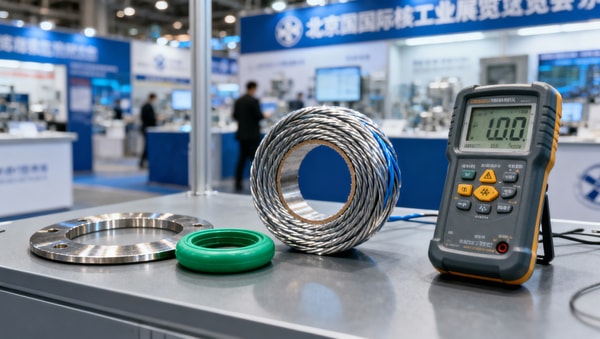
 China-France Nuclear Cooperation Advances at Beijing ExpoChina-France nuclear cooperation advances: mutual recognition for nuclear-grade seals, cables & radiation monitors boosts export readiness for suppliers targeting EU and BRI projects.
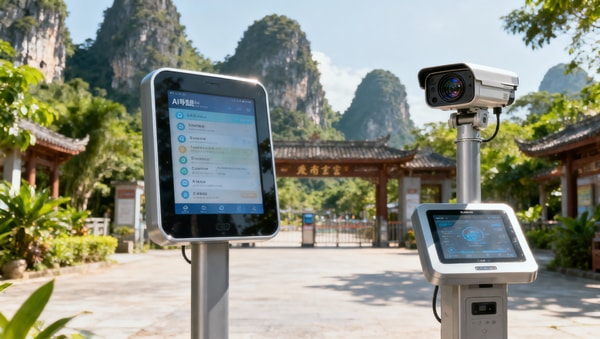
 Vietnam’s 4 Provinces Seek AI Tourism Tech in NanningAI tourism tech in demand: Vietnam’s 4 provinces seek AI-guided terminals, multilingual interpretation, AI-CCTV & smart ticketing in Nanning—key opportunity for B2G exporters.
 Q1 2026 China Power Market Trading Up 25.6%: Smart Meters, Storage Export Demand RisesSmart meters, energy storage exports surge as China’s Q1 2026 power market trading jumps 25.6% — key signal for global manufacturers & channel partners.
 China First Country with 5M+ Active Invention PatentsChina first country with 5M+ active invention patents—key for buyers in AI, solar, lithium battery & energy storage. Discover IP implications for sourcing, compliance & supplier vetting.
 Shenneng Etorkeqi Green Ammonia Project: Deionized Water Station OperationalShenneng Etorkeqi Green Ammonia Project’s deionized water station is now operational—ISO 8502-3 compliant, fully integrated, and a key milestone for global green hydrogen developers and exporters.
 China Launches 'Model-Data Resonance' Initiative for AI+Manufacturing InteroperabilityModel-Data Resonance initiative boosts AI+manufacturing interoperability—learn how GB/T XXXX–2026 aligns with VDI 2182 & ISA-95 for smoother global factory deployments.
 China’s First Embodied AI Robot Insurance Launched in GuangxiChina’s first embodied AI robot insurance launched in Guangxi—key for robotics exporters, AI hardware makers & global compliance teams. CE-recognized, EU/UK/AU-ready.
 IMDG Code 41-24 Enforced: UN3480 Lithium Battery Labeling Now MandatoryIMDG Code 41-24 is now mandatory: UN3480 lithium battery labeling, documentation & packaging rules are enforced globally as of 28 April 2026 — avoid port rejections!
 State Grid’s $680M Embodied AI Procurement Signals Export OpportunityEmbodied AI, IEC 61850 & IEC 62443: State Grid’s $680M procurement unlocks export opportunities for compliant industrial robots and smart vision systems in emerging markets.
 IMDG Code 41-24 Enforces UN3480 Class 9 Labeling for Lithium Battery Sea FreightIMDG Code 41-24 mandates UN3480 lithium battery sea freight to display durable Class 9 labels from April 27, 2026—avoid delays & port rejections.
 ESS Key Component Prices Drop ~80%: Quality & Compliance RiseESS key component prices dropped ~80%—but quality & compliance demands surged. Discover how UL 9540A, AS/NZS 5139, and certified BMS/inverters now define market access.
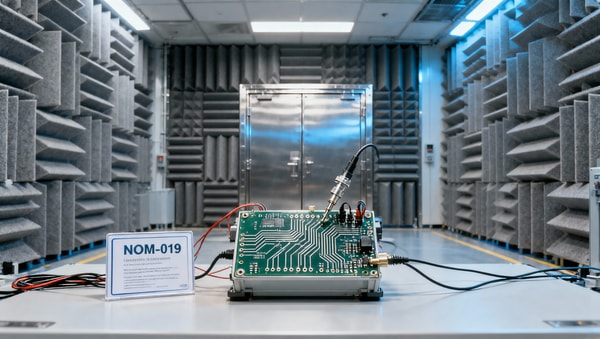
 Mexico NOM-019-SCFI-2026 Effective July 2026: EMC Certification Mandatory for Auto ElectronicsMexico NOM-019-SCFI-2026 mandates EMC certification for auto electronics from July 2026 — ensure compliance now to avoid supply chain disruption & customs delays.
 Red Sea Rerouting Normalized, ECA Surcharge Hits $1,850/TEURed Sea rerouting normalized: ECA surcharge hits $1,850/TEU — 47% of total freight cost. Impacting hand tools, building materials & furniture exporters to Europe. Act now.
 RCEP Green Packaging Mutual Recognition Takes EffectRCEP Green Packaging Mutual Recognition is live—GB/T 37537-2025–certified packaging now enjoys fast-track clearance in Australia, NZ, Japan & Korea. Save time, cut costs, and boost export efficiency.
 Vietnam Suspends SASO Mutual Recognition for Chinese Irrigation EquipmentVietnam suspends SASO mutual recognition for Chinese irrigation equipment—drip tapes, PE fittings, auto valves now require VINAQ-IR certification. Act now to avoid delays & customs hold.
 Pool equipment maintenance warning signs before a breakdownPool equipment maintenance warning signs before a breakdown: spot early pump, filter, and control issues, improve pool equipment installation decisions, and reduce downtime with smarter sourcing insights.
 Patios and decks materials that age badly in humid climatesPatios and decks materials that age badly in humid climates: learn which patios and decks materials fail fast, how patios and decks construction choices affect durability, and how to source smarter.
 Textile home fabrics buyers now ask more about wash durabilityTextile home fabrics buyers now prioritize wash durability, consistency, and long-term value. Explore sourcing insights, production line optimization, and smarter textile home accessories decisions.
 What recurring waste says about production line efficiencyProduction line efficiency starts with recurring waste. Discover how production line optimization and production line automation reveal supplier risk, cut hidden costs, and improve sourcing decisions across textiles, jewelry, and agrochemicals.
 Agrochemicals export rules causing delays in new marketsAgrochemicals export delays explained with agrochemicals industry analysis and agrochemicals market trends—learn compliance risks, supplier selection tips, and smarter market entry strategies.
 Fashion tech applications brands are testing in physical storesFashion tech applications and fashion tech startups are transforming physical stores with smarter fitting, data-led production line optimization, and scalable retail innovation—explore key trends now.
















Popular Tags
Global Trade Insights & Industry
Our mission is to empower global exporters and importers with data-driven insights that foster strategic growth.
Search News
Popular Tags
Industry Overview
The global commercial kitchen equipment market is projected to reach $112 billion by 2027. Driven by urbanization, the rise of e-commerce food delivery, and strict hygiene regulations.