

What recurring waste says about production line efficiency
Recurring waste is more than a cost issue—it is a measurable signal of hidden bottlenecks, weak production line efficiency, and missed growth opportunities. For buyers, analysts, and distributors tracking production line optimization and production line automation across sectors from jewelry manufacturing process to textile home fabrics and agrochemicals industry analysis, understanding these patterns helps turn operational data into smarter sourcing, benchmarking, and strategic decisions.
In cross-sector manufacturing, recurring waste rarely appears as an isolated defect. It usually shows up in repeatable forms such as material overuse, rework, packaging loss, line stoppage, off-spec output, or excess changeover scrap. When the same waste pattern appears daily, weekly, or at every batch shift, it becomes a practical indicator that the production system is underperforming.
For sourcing teams and market researchers, this matters because supplier competitiveness is no longer judged by unit price alone. A factory with stable output, lower scrap rates, shorter cycle times, and predictable maintenance intervals can often offer better lead-time reliability, stronger margin protection, and lower total landed cost over 6–12 months.
For B2B platforms focused on industrial intelligence, recurring waste also provides a useful lens for comparing factories across regions and sectors. Whether the product is fine jewelry, woven home textiles, agricultural chemicals, consumer components, or industrial packaging, repeated waste patterns reveal how disciplined a producer is in process control, automation adoption, and continuous improvement.
Why recurring waste is a direct signal of production line efficiency
Production line efficiency is typically discussed through output per hour, labor utilization, downtime, and yield. Yet recurring waste adds another layer of visibility because it captures the losses that standard output reports may hide. A line may hit 85% of its planned volume while still losing 3%–8% of raw material every shift through trimming errors, setup scrap, leakage, overfilling, or poor machine calibration.
In practical terms, recurring waste indicates that the line is repeating the same inefficiency instead of learning from it. If a textile finishing line generates fabric edge waste at every roll change, or a dosing line in the agrochemicals sector repeatedly overfills containers by 1%–2%, the issue is no longer random variation. It is a process capability issue tied to settings, operator control, equipment wear, or inconsistent input quality.
Buyers should pay attention because repeated waste often affects three commercial outcomes at once: cost, delivery, and consistency. A supplier that loses 5% of material each run may compensate by raising prices, extending lead times, or accepting wider quality tolerances. Over a 3-month sourcing cycle, that can create measurable risk for distributors and agents managing inventory commitments across multiple markets.
Recurring waste is also a useful benchmark in production line automation reviews. Automated lines do not eliminate waste by default, but they make waste easier to track. Once sensors, counters, and reject logs are connected, a plant can compare line performance by hour, SKU, operator team, or machine status. This turns waste from a vague complaint into a decision-grade metric.
Common waste categories that reveal line weakness
Across industries, recurring waste usually falls into a short list of operational categories. Each one points to a different weakness in production line efficiency and helps procurement teams ask better questions during supplier review.
- Material scrap: repeated cutting loss, overmixing, overtrimming, spillage, or broken components.
- Rework waste: units that must be reprocessed, relabeled, refinished, or repacked before shipment.
- Time waste: line stoppages lasting 5–20 minutes multiple times per shift due to jams, resets, or tool change delays.
- Energy and utility waste: excessive compressed air use, overheating, over-drying, or repeated wash cycles.
- Inventory waste: excess WIP, waiting batches, or spoiled semi-finished goods from poor line balancing.
When these forms of waste recur at a fixed point in the workflow, the production line is signaling where efficiency improvement will have the fastest payback.
What recurring waste looks like across sectors
Recurring waste appears differently depending on the process design, material sensitivity, and product tolerance of each sector. That is why cross-industry comparison is valuable. A buyer evaluating jewelry components should not use the exact same loss thresholds as a buyer evaluating bulk agrochemical packaging, but both can still assess whether waste is systematic or manageable.
In jewelry manufacturing process environments, common recurring waste includes polishing loss, metal dust recovery gaps, miscasting, stone-setting damage, and repeated rework on finishing. Because precious metals have high material value, even a 0.5%–1.5% repeat loss can significantly affect margin and quotation accuracy. Small waste percentages matter more when input costs are concentrated.
In textile home fabrics, recurring waste often appears as uneven dyeing, width variation, cutting loss, loom stoppage, or shade mismatch between batches. Waste rates may range more broadly, often from 2% to 6% depending on fabric type, pattern complexity, and finishing method. Here, the key issue is not only raw material loss, but also delivery disruption caused by rework and batch rejection.
In agrochemicals industry analysis, waste may emerge as powder residue, inaccurate filling, packaging leakage, unstable granulation, or off-spec blending. Because these lines are tightly linked to safety, labeling, and compliance handling, recurring waste can create both efficiency loss and regulatory exposure. A 1% packaging failure rate may sound small, but at 50,000 units per month it becomes a major commercial concern.
Cross-sector examples of recurring waste indicators
The table below shows how repeated waste patterns can be interpreted in different manufacturing settings. It helps sourcing and assessment teams compare operational signals instead of relying only on sales presentations.
The key takeaway is that recurring waste should be interpreted in context. A low-value product line may tolerate broader loss bands, while precision or regulated products require tighter control. What matters most is whether the waste repeats at a stable frequency and whether the supplier can explain its root cause in operational terms.
Questions distributors and agents should ask
- Does the waste occur at startup, changeover, or steady-state production?
- Is the waste rate tracked per shift, per SKU, or per machine family?
- How long has the same pattern existed: 2 weeks, 3 months, or longer?
- Was the issue reduced through automation, preventive maintenance, or training?
- Does the supplier treat waste as a quality problem, a cost problem, or a planning problem?
How buyers can evaluate waste patterns during supplier assessment
A good supplier assessment does not require access to every internal metric, but it should verify whether recurring waste is visible, controlled, and improving. For procurement teams, this means asking for trend-based evidence instead of one-time claims. A plant that reports monthly scrap reduction from 4.8% to 3.6% over two quarters usually provides more confidence than a plant that simply says its line is “efficient.”
The most practical review starts with three checkpoints: yield stability, downtime pattern, and corrective action speed. If reject rates spike after each product change, or if the same machine causes stoppage 3–5 times per week, those recurring events should be treated as part of sourcing risk. They affect on-time delivery, emergency overtime, and inventory buffering decisions.
Commercial teams should also compare waste visibility by factory maturity. More advanced sites usually track line-level losses by hour, batch, or lot, and they can show whether waste comes from labor, machine setting, material variation, or process sequencing. Less mature sites may only report total monthly scrap, which is harder to use for forecasting or benchmarking.
For importers and distributors serving multiple territories, recurring waste should be linked to total cost of supply. Even if unit prices are 2% lower, poor production line efficiency may create hidden costs through split shipments, late-season stock gaps, replacement handling, or customer complaints. A broader sourcing decision should therefore look beyond factory gate pricing.
Supplier assessment framework for recurring waste
The table below outlines a practical decision structure for reviewing recurring waste during sourcing, qualification, or annual supplier performance evaluation.
This framework helps transform factory waste from an internal shop-floor issue into a procurement signal. It also creates a common language between quality teams, category managers, and business evaluation staff who may otherwise use different performance criteria.
A 5-step review approach
- Identify the top 3 recurring waste types by value or frequency.
- Locate the process point where each type repeats most often.
- Verify whether the supplier measures the issue by line, batch, and shift.
- Review the last 90–180 days of corrective actions and maintenance linkage.
- Estimate how the waste affects lead time, MOQ planning, and delivered consistency.
When applied consistently, this approach supports better supplier ranking and stronger negotiation on lead-time commitments, replenishment planning, and improvement targets.
Using production line automation to reduce recurring waste
Production line automation becomes most valuable when it targets repeat loss points rather than serving as a broad modernization label. In many factories, 20% of process steps generate 80% of measurable waste. That means even partial automation at inspection, feeding, dosing, cutting, or transfer stages can produce more impact than a full-line upgrade applied without diagnostic focus.
For example, automated weighing and filling systems can reduce repeat overfill events in packaging applications, while vision inspection can detect alignment or surface defects before a full batch moves to the next stage. In textile operations, tension monitoring and digital cut optimization can lower fabric loss during finishing and conversion. In precision sectors, sensor-based alerts can detect drift before scrap volumes rise above acceptable tolerance.
However, automation is not a shortcut if basic process discipline is weak. If input materials vary widely, work instructions are inconsistent, or maintenance is reactive, automation may simply generate faster waste. Buyers evaluating a supplier’s automation claims should therefore ask whether the line has standard setup windows, calibration routines, downtime logging, and operator accountability across at least 2–3 shifts.
A realistic automation plan often begins with data capture, then moves to control, then optimization. This sequence matters because the first gain may come from making losses visible. Once waste is visible in real time, plants can set thresholds such as reject rates above 2%, stoppages longer than 10 minutes, or fill deviation beyond tolerance, and intervene before losses accumulate.
Where automation usually delivers the fastest waste reduction
The most effective investments usually target repeatable pain points with clear measurement. The following areas often produce the fastest return in production line efficiency programs.
- Automated inspection: useful for catching cosmetic defects, label errors, dimensional drift, and sealing problems before downstream value is added.
- Material dosing and dispensing control: effective where overfill, underfill, or ratio inconsistency creates repeat losses.
- Digital maintenance alerts: reduces unplanned stoppages when equipment wear follows predictable intervals such as every 200–500 operating hours.
- Batch and changeover guidance: helps standardize setup and reduce startup scrap during SKU switching.
- Line balancing dashboards: useful where one station creates recurring queues, waiting inventory, or rushed rework.
Typical implementation sequence
A practical rollout often follows 4 stages over 8–24 weeks: baseline waste mapping, pilot intervention, operator training, and KPI verification. This staged approach is especially relevant for suppliers serving export markets, where output continuity matters as much as technical improvement.
For distributors and business evaluators, the presence of this implementation discipline can be more important than the size of the automation budget. It shows that production line optimization is being managed systematically rather than promoted only as a marketing claim.
Strategic implications for sourcing, benchmarking, and trade intelligence
Recurring waste has strategic value because it connects factory operations to market-facing decisions. For buyers, it helps estimate whether a supplier can support long-term contracts without hidden instability. For analysts, it offers a way to benchmark capability across regions, categories, and production models. For distributors and agents, it helps predict which suppliers are most likely to maintain consistency during demand spikes or product diversification.
In global trade environments, the most resilient suppliers are often those that can explain their losses in operational terms and show improvement over time. A producer with 2 stable lines, clear reject tracking, and quarterly waste reduction targets may outperform a lower-cost producer whose line losses fluctuate unpredictably between 3% and 9%. Consistency is commercially valuable because it improves planning accuracy throughout the supply chain.
This is where industry intelligence platforms become useful. By tracking manufacturing trends, sector-specific production changes, and plant capability signals across 50+ sectors, B2B decision-makers can compare suppliers with more context. Waste patterns are easier to interpret when linked to raw material volatility, regional labor conditions, machinery upgrades, and changing buyer specifications in export markets.
For foreign trade enterprises, visibility also matters online. Suppliers that can demonstrate disciplined production line efficiency, structured improvement processes, and reliable operational metrics are better positioned to build trust with global importers. Strong operational signals support stronger commercial narratives, whether in RFQ responses, capability pages, distributor onboarding, or market-facing content.
FAQ: common questions about recurring waste and sourcing decisions
How much recurring waste should trigger concern?
There is no universal threshold, because acceptable loss differs by material value and process complexity. Still, repeated waste above 2%–3% in stable packaging or assembly lines, or unresolved rework patterns lasting more than 30–60 days, should prompt deeper review. In high-value precision sectors, lower thresholds may already be significant.
Can a low-price supplier still be a good choice if waste is high?
Possibly, but only if the buyer understands the total cost impact. High recurring waste can increase replenishment delays, replacement handling, and specification drift. Over a 6–12 month buying cycle, those hidden costs may offset the initial unit price advantage.
What documents or evidence should buyers request?
Useful evidence includes reject trend logs, downtime records, batch yield summaries, corrective action reports, maintenance schedules, and line changeover procedures. Even 3 months of consistent records can reveal whether production line optimization is active or only claimed.
Is automation always the best answer?
No. Automation works best when the root cause is repetitive, measurable, and controllable. If waste comes mainly from unstable incoming material or poor planning discipline, process standardization may deliver faster gains than equipment investment.
Recurring waste tells a deeper story than scrap value alone. It reveals whether a factory can control process variation, sustain output quality, and improve production line efficiency over time. For information researchers, procurement teams, business evaluators, and channel partners, these signals can sharpen supplier comparison and reduce decision risk across diverse industrial sectors.
With the right market intelligence and operational perspective, recurring waste becomes a practical benchmark for smarter sourcing, stronger supplier selection, and more reliable growth planning. If you want deeper sector insights, supplier visibility, or tailored trade intelligence that supports strategic decisions, contact GTIIN and TradeVantage to explore more solutions, request customized analysis, or learn more about industry-specific opportunities.
Recommended News
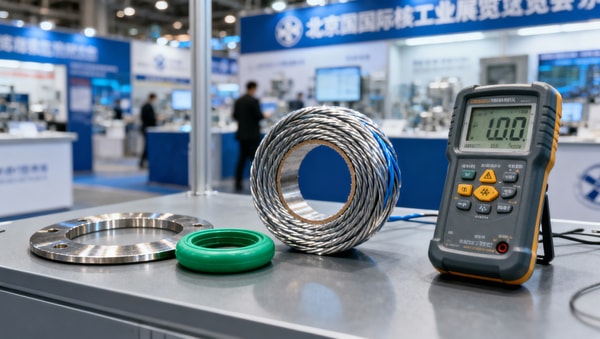
 China-France Nuclear Cooperation Advances at Beijing ExpoChina-France nuclear cooperation advances: mutual recognition for nuclear-grade seals, cables & radiation monitors boosts export readiness for suppliers targeting EU and BRI projects.
 Vietnam’s 4 Provinces Seek AI Tourism Tech in NanningAI tourism tech in demand: Vietnam’s 4 provinces seek AI-guided terminals, multilingual interpretation, AI-CCTV & smart ticketing in Nanning—key opportunity for B2G exporters.
 Q1 2026 China Power Market Trading Up 25.6%: Smart Meters, Storage Export Demand RisesSmart meters, energy storage exports surge as China’s Q1 2026 power market trading jumps 25.6% — key signal for global manufacturers & channel partners.
 China First Country with 5M+ Active Invention PatentsChina first country with 5M+ active invention patents—key for buyers in AI, solar, lithium battery & energy storage. Discover IP implications for sourcing, compliance & supplier vetting.
 Shenneng Etorkeqi Green Ammonia Project: Deionized Water Station OperationalShenneng Etorkeqi Green Ammonia Project’s deionized water station is now operational—ISO 8502-3 compliant, fully integrated, and a key milestone for global green hydrogen developers and exporters.
 China Launches 'Model-Data Resonance' Initiative for AI+Manufacturing InteroperabilityModel-Data Resonance initiative boosts AI+manufacturing interoperability—learn how GB/T XXXX–2026 aligns with VDI 2182 & ISA-95 for smoother global factory deployments.
 China’s First Embodied AI Robot Insurance Launched in GuangxiChina’s first embodied AI robot insurance launched in Guangxi—key for robotics exporters, AI hardware makers & global compliance teams. CE-recognized, EU/UK/AU-ready.
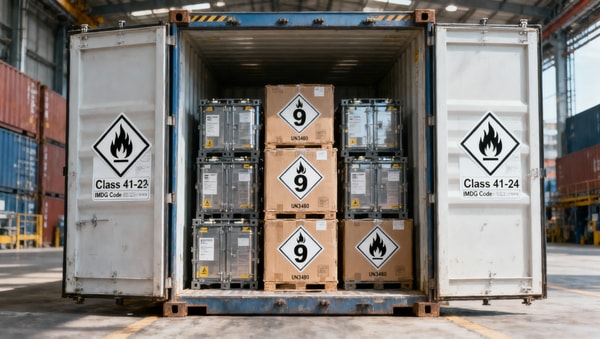
 IMDG Code 41-24 Enforced: UN3480 Lithium Battery Labeling Now MandatoryIMDG Code 41-24 is now mandatory: UN3480 lithium battery labeling, documentation & packaging rules are enforced globally as of 28 April 2026 — avoid port rejections!
 State Grid’s $680M Embodied AI Procurement Signals Export OpportunityEmbodied AI, IEC 61850 & IEC 62443: State Grid’s $680M procurement unlocks export opportunities for compliant industrial robots and smart vision systems in emerging markets.
 IMDG Code 41-24 Enforces UN3480 Class 9 Labeling for Lithium Battery Sea FreightIMDG Code 41-24 mandates UN3480 lithium battery sea freight to display durable Class 9 labels from April 27, 2026—avoid delays & port rejections.
 ESS Key Component Prices Drop ~80%: Quality & Compliance RiseESS key component prices dropped ~80%—but quality & compliance demands surged. Discover how UL 9540A, AS/NZS 5139, and certified BMS/inverters now define market access.
 Mexico NOM-019-SCFI-2026 Effective July 2026: EMC Certification Mandatory for Auto ElectronicsMexico NOM-019-SCFI-2026 mandates EMC certification for auto electronics from July 2026 — ensure compliance now to avoid supply chain disruption & customs delays.
 Red Sea Rerouting Normalized, ECA Surcharge Hits $1,850/TEURed Sea rerouting normalized: ECA surcharge hits $1,850/TEU — 47% of total freight cost. Impacting hand tools, building materials & furniture exporters to Europe. Act now.
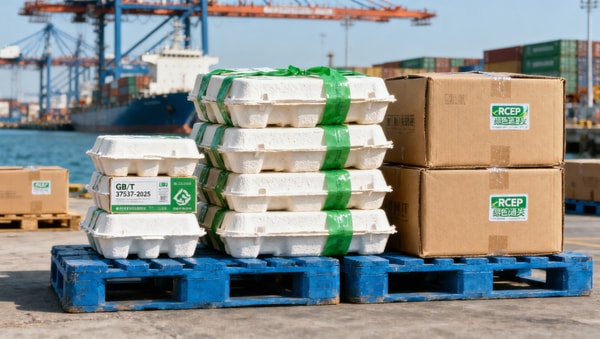
 RCEP Green Packaging Mutual Recognition Takes EffectRCEP Green Packaging Mutual Recognition is live—GB/T 37537-2025–certified packaging now enjoys fast-track clearance in Australia, NZ, Japan & Korea. Save time, cut costs, and boost export efficiency.
 Vietnam Suspends SASO Mutual Recognition for Chinese Irrigation EquipmentVietnam suspends SASO mutual recognition for Chinese irrigation equipment—drip tapes, PE fittings, auto valves now require VINAQ-IR certification. Act now to avoid delays & customs hold.
 Pool equipment maintenance warning signs before a breakdownPool equipment maintenance warning signs before a breakdown: spot early pump, filter, and control issues, improve pool equipment installation decisions, and reduce downtime with smarter sourcing insights.
 Patios and decks materials that age badly in humid climatesPatios and decks materials that age badly in humid climates: learn which patios and decks materials fail fast, how patios and decks construction choices affect durability, and how to source smarter.
 Textile home fabrics buyers now ask more about wash durabilityTextile home fabrics buyers now prioritize wash durability, consistency, and long-term value. Explore sourcing insights, production line optimization, and smarter textile home accessories decisions.
 What recurring waste says about production line efficiencyProduction line efficiency starts with recurring waste. Discover how production line optimization and production line automation reveal supplier risk, cut hidden costs, and improve sourcing decisions across textiles, jewelry, and agrochemicals.
 Agrochemicals export rules causing delays in new marketsAgrochemicals export delays explained with agrochemicals industry analysis and agrochemicals market trends—learn compliance risks, supplier selection tips, and smarter market entry strategies.
 Fashion tech applications brands are testing in physical storesFashion tech applications and fashion tech startups are transforming physical stores with smarter fitting, data-led production line optimization, and scalable retail innovation—explore key trends now.


















Popular Tags
Global Trade Insights & Industry
Our mission is to empower global exporters and importers with data-driven insights that foster strategic growth.
Search News
Popular Tags
Industry Overview
The global commercial kitchen equipment market is projected to reach $112 billion by 2027. Driven by urbanization, the rise of e-commerce food delivery, and strict hygiene regulations.