

What makes one outdoor furniture supplier easier to scale with?
Choosing the right outdoor furniture supplier can directly affect how quickly your business grows, how well you protect margins, and how reliably your supply chain performs when demand increases. For procurement teams, distributors, and commercial evaluators, the easiest supplier to scale with is not simply the one with the lowest quote. It is the one that can support volume growth, maintain quality, adapt to changing product needs, and reduce operational friction over time. In practice, a scalable outdoor furniture supplier helps buyers move from occasional purchasing to repeatable, profitable expansion.
What buyers really mean when they ask whether a supplier is “easy to scale with”
When buyers search for an outdoor furniture supplier that is easier to scale with, they are usually not looking for a basic factory list. They want to know which supplier can continue supporting their business after the first order. That means the supplier must be capable of handling larger volumes, more SKUs, seasonal fluctuations, stricter compliance requirements, and faster replenishment without creating new risks.
For most importers, distributors, and sourcing managers, the real question is this: Can this supplier grow with my business without increasing cost unpredictably, reducing quality, or slowing delivery?
A supplier becomes easier to scale with when it offers five practical advantages:
- Stable production capacity that can expand with demand
- Consistent product quality across batches and seasons
- Flexible product development, packaging, and labeling support
- Clear communication and dependable order management
- A supply chain structure that reduces delays, defects, and hidden costs
These factors matter far more than marketing language. A supplier may look competitive on price, but if it struggles with lead times, material consistency, or documentation accuracy, scaling becomes expensive and risky.
Capacity matters, but usable capacity matters more
One of the biggest differences between an average outdoor furniture manufacturer and a scalable one is how it manages production capacity. Many suppliers claim they can handle large orders, but buyers need to verify whether that capacity is realistic, available, and sustainable.
Usable capacity means more than factory size. It includes labor stability, raw material access, machinery utilization, subcontracting control, and the ability to prioritize repeat customers during peak seasons. Outdoor furniture often involves metal frames, wicker, teak, aluminum, cushions, coatings, and packaging components. If even one input becomes unstable, fulfillment suffers.
When evaluating a supplier, buyers should look for evidence such as:
- Monthly output by product category
- Peak-season production planning
- Backup material sourcing options
- Lead time history, not just promised lead time
- Policies for urgent reorders or container consolidation
A scalable supplier should be able to explain not only how much it can make, but also how it protects delivery performance when order volume rises. That is a much stronger indicator of long-term value than a low initial quotation.
Consistency is what protects margin during growth
As order volume increases, quality inconsistency becomes one of the fastest ways to lose margin. Returns, customer complaints, replacement shipments, and damaged channel relationships can quickly outweigh any unit cost advantage.
For outdoor furniture, consistency is especially important because the products must perform under weather exposure, transport stress, and frequent use. A supplier that is easy to scale with should have quality systems that cover material inspection, frame strength, finishing, fabric durability, cushion density, packaging protection, and final pre-shipment checks.
Buyers should pay attention to whether the supplier can maintain the same standards across:
- Different production batches
- Different seasons of raw material sourcing
- Different product lines or collections
- Higher-volume orders
- Private label or custom packaging programs
This is where many buyers make better decisions by asking process questions instead of broad quality questions. Rather than asking, “Do you have quality control?” ask, “How do you inspect powder coating adhesion?” or “What is your process for preventing color variation in wicker or cushions?” Specific answers reveal operational maturity.
Flexible customization often determines whether scaling is possible
Many distributors and private-label buyers need more than standard catalog products. They may require custom colors, packaging changes, mixed containers, exclusive collections, regional compliance adjustments, or lower minimum order quantities for testing new product lines. A supplier that cannot adapt to these needs may limit growth even if its baseline products are acceptable.
The best outdoor furniture supplier for scaling usually offers structured flexibility. That means it can support customization without turning every request into a delay or cost problem. This includes:
- OEM and private labeling capabilities
- Modular product development for faster adaptation
- Reasonable sample timelines
- Packaging customization for retail, e-commerce, or wholesale channels
- Mixed-SKU container loading support
For buyers expanding into new markets or channels, this flexibility can be a major advantage. It allows them to test assortments, refine positioning, and respond to customer feedback without changing suppliers too early. In other words, flexibility reduces the friction of scaling.
Communication quality is a real supply chain asset
Many sourcing problems are not caused by manufacturing failure alone. They are caused by unclear communication, delayed updates, or weak coordination between sales teams, production planners, and logistics staff. A supplier can have a solid factory but still be difficult to scale with if communication breaks down when orders become more complex.
Reliable communication helps buyers forecast, adjust purchase plans, prevent errors, and handle exceptions faster. This is especially important for international trade, where documentation, shipping schedules, certifications, and payment terms must all align.
Signs of a supplier that is operationally easier to grow with include:
- Fast and accurate responses to commercial and technical questions
- Clear order confirmations and revision control
- Proactive notice of production or shipment risks
- Dedicated account management or export coordination
- Professional handling of claims, replacements, and after-sales support
For procurement teams and business evaluators, communication quality is not a soft factor. It is a measurable contributor to lower error rates, faster decision-making, and more stable supply chain management solutions.
Scalable suppliers reduce hidden cost, not just visible price
Price is always important, but serious buyers know that the cheapest supplier is not always the most profitable one. A supplier that is easier to scale with typically lowers the total cost of procurement by reducing hidden expenses across the order cycle.
These hidden costs often include:
- Production delays that disrupt inventory planning
- Higher defect rates and replacement costs
- Freight inefficiency due to poor packaging or loading
- Administrative time spent fixing order mistakes
- Lost sales due to stockouts or missed seasons
Outdoor furniture is strongly affected by seasonality, promotions, and retail timing. Missing a shipping window can damage not only one order, but an entire selling cycle. That is why scalable suppliers are valuable: they help protect timing, continuity, and market responsiveness.
When assessing supplier value, buyers should compare total landed impact, not just ex-factory pricing. In many cases, a supplier with slightly higher unit cost but better consistency and planning support will deliver stronger long-term commercial performance.
Compliance, documentation, and trade readiness become more important as you grow
A supplier that works for small orders may not be suitable for larger-scale international business. As volume grows, so does the need for accurate documentation, regulatory awareness, testing support, and export reliability.
Depending on the target market, buyers may need support with product testing, material declarations, packaging standards, labeling, fumigation, origin documents, or social compliance audits. A supplier that is already familiar with export requirements can save substantial time and reduce risk.
This matters especially for distributors, agents, and importers entering multiple markets. Trade-ready suppliers make scaling easier because they are better prepared for the operational demands of cross-border growth.
Useful indicators include:
- Experience with major export markets
- Ability to provide required certificates and reports
- Familiarity with retailer or importer compliance programs
- Documentation accuracy and timeliness
- Audit readiness and traceability systems
How to evaluate whether an outdoor furniture manufacturer can support long-term growth
For sourcing teams and commercial decision-makers, the best approach is to evaluate suppliers against scaling criteria before committing too heavily. A practical supplier assessment should go beyond product catalogs and trade show impressions.
Consider using the following framework:
- Capacity review: Confirm production capability by product type, season, and expansion potential.
- Quality verification: Review inspection processes, test standards, and defect handling procedures.
- Customization assessment: Test how efficiently the supplier manages OEM, packaging, and mixed-order requests.
- Operational communication check: Measure response speed, clarity, and cross-functional coordination.
- Cost analysis: Evaluate total procurement impact, not just quoted price.
- Trade compliance review: Confirm export readiness, documentation reliability, and market-specific support.
- Pilot order performance: Start with a controlled order and evaluate execution in real conditions.
This approach gives buyers a more realistic view of whether the supplier can become a strategic growth partner rather than just a transactional vendor.
Final takeaway: the easiest supplier to scale with is the one that reduces friction as your business grows
What makes one outdoor furniture supplier easier to scale with is not a single feature. It is the combination of dependable capacity, consistent quality, commercial flexibility, strong communication, and export readiness. For buyers, distributors, and business evaluators, these traits matter because growth puts pressure on every weak point in the supply chain.
If a supplier can support larger and more complex orders without creating instability, it becomes a true operational asset. That kind of outdoor furniture manufacturer helps businesses protect margin, improve fulfillment reliability, and expand with more confidence.
In a competitive market, the right supplier does more than ship products. It helps make growth repeatable.
Recommended News
 IMDG Code 41-24 Enforces UN3480 Class 9 Labeling for Lithium Battery Sea FreightIMDG Code 41-24 mandates UN3480 lithium battery sea freight to display durable Class 9 labels from April 27, 2026—avoid delays & port rejections.
 ESS Key Component Prices Drop ~80%: Quality & Compliance RiseESS key component prices dropped ~80%—but quality & compliance demands surged. Discover how UL 9540A, AS/NZS 5139, and certified BMS/inverters now define market access.
 Mexico NOM-019-SCFI-2026 Effective July 2026: EMC Certification Mandatory for Auto ElectronicsMexico NOM-019-SCFI-2026 mandates EMC certification for auto electronics from July 2026 — ensure compliance now to avoid supply chain disruption & customs delays.
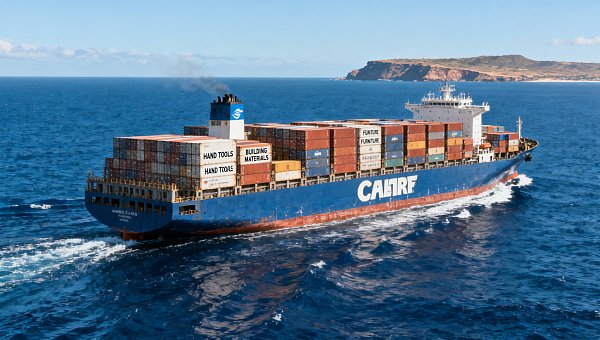
 Red Sea Rerouting Normalized, ECA Surcharge Hits $1,850/TEURed Sea rerouting normalized: ECA surcharge hits $1,850/TEU — 47% of total freight cost. Impacting hand tools, building materials & furniture exporters to Europe. Act now.
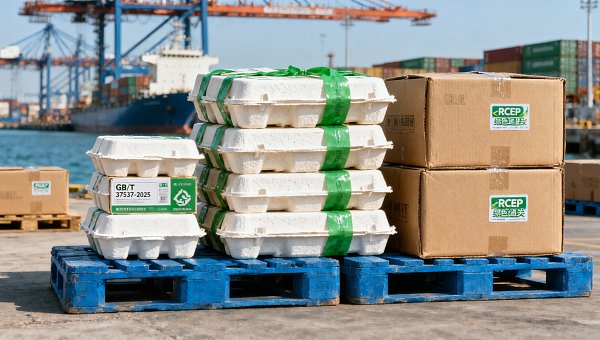
 RCEP Green Packaging Mutual Recognition Takes EffectRCEP Green Packaging Mutual Recognition is live—GB/T 37537-2025–certified packaging now enjoys fast-track clearance in Australia, NZ, Japan & Korea. Save time, cut costs, and boost export efficiency.
 Vietnam Suspends SASO Mutual Recognition for Chinese Irrigation EquipmentVietnam suspends SASO mutual recognition for Chinese irrigation equipment—drip tapes, PE fittings, auto valves now require VINAQ-IR certification. Act now to avoid delays & customs hold.
 Key Energy Storage Equipment Prices Drop ~80% in ChinaKey energy storage equipment prices in China dropped ~80% — PCS, BMS & liquid cooling units. Discover implications for compliance, margins & standards enforcement.
") China Releases Green Design Guidelines for Industrial Products (2026)China's 2026 Green Design Guidelines for industrial products—covering PV modules, lithium batteries & smart appliances—link eco-design to green factory certification and export tax rebates starting 2027.
China Releases Green Design Guidelines for Industrial Products (2026)China's 2026 Green Design Guidelines for industrial products—covering PV modules, lithium batteries & smart appliances—link eco-design to green factory certification and export tax rebates starting 2027. Mexico NOM-019-SCFI-2026 Effective: Automotive Electronics Require New EMC CertificationMexico NOM-019-SCFI-2026 is live: Automotive electronics (infotainment, ADAS, domain controllers) now require mandatory EMC certification by July 31, 2026 — act now to avoid customs delays.
 Red Sea Detour Premium Rises to $1,850/TEU Amid Port Congestion ReliefRed Sea Detour Premium hits $1,850/TEU — now 43% of FE–NE freight rates. Discover why this structural surcharge demands urgent supply chain action.
 TÜV Rheinland Updates PLd Certification: EMC Immunity Now Mandatory for Servo DrivesTÜV Rheinland now mandates EN IEC 61000-6-2:2024 EMC immunity testing for PLd certification of servo drives—act before May 26, 2026 to avoid EU market delays.
 RCEP Green Packaging Mutual Recognition Effective Apr 26, 2026RCEP Green Packaging Mutual Recognition takes effect Apr 26, 2026—unlock faster customs clearance & cost savings for eco-friendly packaging exporters to AU, NZ, JP, KR.
 FDA Final Rule: AI Diagnostic Devices Must Submit Bias Impact ReportsFDA mandates AI diagnostic devices submit third-party-verified bias impact reports—key for 510(k)/De Novo submissions. Act now to ensure compliance & market access.
 Vietnam Suspends SASO Mutual Recognition for Chinese Irrigation EquipmentVietnam suspends SASO mutual recognition for Chinese irrigation equipment—urgent QCVN certification now required for drip tapes, sprinklers, valves & smart controllers.
 SABER Phase II Launch: Building Hardware Must Submit Digital Type Test Reports & PIDSABER Phase II now requires digital type test reports & PID for building hardware — fasteners, door/window, bathroom fixtures. Avoid port rejection: ensure PID-bound compliance before shipment.
 IMDG Code 41-24 Enforced: UN3480 Lithium Batteries Require Class 9 LabelsUN3480 lithium batteries now require ISO 7225-compliant Class 9 labels under IMDG Code 41-24 — enforceable globally from 26 April 2026. Act now to avoid shipment delays!
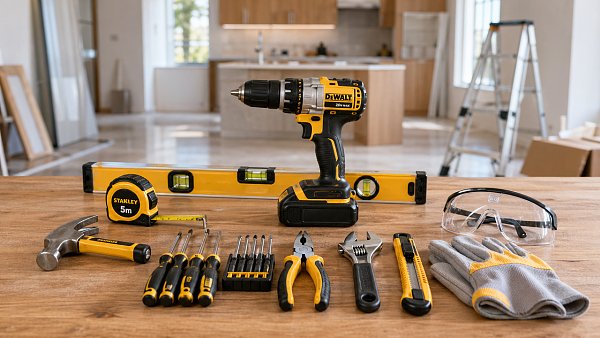
 Which Home Improvement Tools Do You Really Need First?Home improvement tools guide: discover the first essentials to buy, compare smart home automation devices and online trade platform sourcing tips, and make safer, smarter purchases.
 How to Compare an Online Trade Platform Before Signing Up?Compare an online trade platform with confidence—evaluate data quality, supplier trust, market insights, and search tools for smarter sourcing across cement price, MRI scanners cost, and more.
 Which Smart Home Automation Devices Are Easiest to Use?Smart home automation devices made simple: compare easy-to-use smart home automation devices, home improvement tools integration, and buyer tips from a business intelligence platform.
 Are Auto Detailing Services Worth the Cost?Auto detailing services: discover if the cost is justified, how pricing varies, and how a business intelligence platform helps buyers compare value, quality, and long-term ROI.
 What Makes Sustainable Fashion Brands Worth Buying?Sustainable fashion brands deliver transparency, quality, and lower risk. See how a business intelligence platform helps buyers verify value, avoid greenwashing, and source smarter.















Popular Tags
Global Trade Insights & Industry
Our mission is to empower global exporters and importers with data-driven insights that foster strategic growth.
Search News
Popular Tags
Industry Overview
The global commercial kitchen equipment market is projected to reach $112 billion by 2027. Driven by urbanization, the rise of e-commerce food delivery, and strict hygiene regulations.