

Why CNC Machining Cost Rises on Parts That Look Simple
A part may look easy to make, yet CNC machining cost often rises because hidden tolerances, tooling changes, setup time, and finishing requirements drive complexity. For buyers comparing a CNC machining manufacturer, a CNC machines manufacturer, or even a sheet metal supplier handling sheet metal forming and sheet metal welding, understanding these cost factors is essential for smarter sourcing and better margin control.
Many buyers assume that a visually simple part should be cheap. In practice, that assumption often leads to inaccurate budget estimates, supplier disputes, and delayed sourcing decisions. The real cost of CNC machining is usually not determined by how simple a part looks from the outside, but by how difficult it is to hold dimensions, access features, control material behavior, reduce cycle time, and maintain consistency across batches. For procurement teams, distributors, and business evaluators, the key question is not “Does the part look simple?” but “What hidden manufacturing conditions make this part expensive?”
Why a simple-looking part can still be expensive to machine
The biggest misconception in sourcing is equating visual simplicity with manufacturing simplicity. A part with flat surfaces and a clean outline may still demand multiple operations, special workholding, careful programming, or slow cutting parameters. That is why quotes from a CNC machining manufacturer can vary sharply even when the design seems straightforward.
Several hidden factors drive this gap:
- Tight tolerances that require slower machining and more inspection
- Deep pockets or hard-to-reach features that need specialized tools
- Thin walls that risk vibration or distortion
- Material hardness or instability that reduces tool life
- Secondary finishing such as deburring, anodizing, polishing, or coating
- Low-volume production where setup cost is spread over fewer units
In other words, machining cost rises when process risk rises. Even if a component looks easy on a drawing, the supplier may still face a high probability of rework, scrap, extended setup, or inspection burden.
Which cost drivers matter most to buyers and sourcing teams
For target readers such as information researchers, purchasing professionals, and commercial evaluators, the main concern is not just the quoted price. They want to know what drives the quote, whether the cost is reasonable, and how to compare suppliers fairly.
The most important cost drivers typically include:
1. Tolerance requirements
A part with standard tolerances may run quickly on common equipment. But once tolerances become tighter, the machine operator often must use slower feeds, perform extra measurement checks, and sometimes add finishing passes. This increases cycle time and labor cost.
From a sourcing perspective, unnecessary precision is one of the most common reasons for inflated pricing. If a dimension does not affect fit, sealing, alignment, or function, demanding an ultra-tight tolerance adds cost without adding value.
2. Setup complexity
Setup is often underestimated in RFQ reviews. A simple geometry may still require multiple fixture changes, orientation flips, or custom jaws. If a supplier must spend significant time preparing the machine before the first good part is produced, the quote will rise quickly, especially for small batches.
This is why low-volume prototypes or custom parts often appear expensive relative to their size.
3. Material choice
Not all materials machine the same way. Aluminum is generally faster and more forgiving than stainless steel, titanium, or hardened alloys. Engineering plastics can also create issues such as deformation, melting, or burr formation depending on the geometry and process window.
Buyers evaluating quotes should always ask whether the material is increasing tool wear, extending cycle time, or adding quality control requirements.
4. Surface finish and cosmetic standards
A functional part and a customer-facing visible part are priced differently. Cosmetic standards often require more controlled toolpaths, additional deburring, hand finishing, or post-processing. A part can be dimensionally simple yet visually demanding, which raises labor cost.
5. Inspection and traceability
Industries that require dimensional reports, first article inspection, batch traceability, or compliance documentation naturally carry more overhead. That overhead may not be obvious from the part shape, but it affects total delivered cost.
Hidden design details that frequently increase CNC machining cost
When purchasing teams review drawings, several design features should trigger closer cost scrutiny even if the overall part appears basic.
Deep cavities and small internal corners
These features often require long, narrow cutting tools. Such tools are more prone to deflection and vibration, forcing slower cutting speeds and more cautious programming. Small corner radii can also mean smaller tools, which increases machining time dramatically.
Thin walls and delicate sections
Thin walls may flex under cutting force, which can affect dimensional stability and surface quality. Suppliers may need multiple light passes or special fixtures to prevent movement. This adds time and process risk.
Multiple hole sizes and thread requirements
Holes seem simple, but cost rises when a part includes many diameters, thread sizes, tight positional tolerances, or deep drilled features. Every tool change adds time, and every additional tolerance adds verification work.
Part symmetry that is misleading in production
Some parts look symmetrical and easy to hold, but in real machining they may lack stable clamping surfaces. This can require soft jaws, custom fixtures, or extra setups. Buyers should not assume geometric neatness translates into easy fixturing.
Sharp edges and burr-sensitive features
Even simple profiles can become expensive when edge quality matters. Manual deburring is time-consuming, especially for small or high-mix orders. If the part is used in assembly, sealing, or visible applications, edge treatment may be a hidden cost center.
Why supplier capability changes the cost outcome
Two suppliers can quote the same part very differently because their manufacturing systems are different. A capable CNC machining manufacturer may reduce cost through better fixture design, more efficient CAM programming, in-process inspection, and stronger process control. A less capable supplier may price defensively to cover uncertainty.
This is where buyers should distinguish between:
- Machine ownership — whether the supplier or CNC machines manufacturer has the right equipment
- Process know-how — whether the team can optimize cycle time and setup strategy
- Quality consistency — whether the supplier can achieve tolerances without high scrap rates
- Engineering support — whether they can suggest design-for-manufacturing improvements
A lower unit price is not always lower total cost. If poor process capability leads to delays, rejected lots, communication overhead, or unstable quality, the apparent savings disappear quickly.
How CNC machining compares with sheet metal options for cost-sensitive parts
For some buyers, the real sourcing question is not just why CNC machining cost is high, but whether the part should be made another way. If a part is structurally simple, primarily made from flat stock, or requires enclosures, brackets, or housings, a sheet metal supplier may offer a better cost route through sheet metal forming or sheet metal welding.
In general:
- CNC machining is often better for tight tolerances, solid-block parts, precision features, and lower-volume complexity
- Sheet metal forming is often better for lighter structures, folded geometries, and cost-efficient repeat production
- Sheet metal welding is useful for assemblies that do not need to be carved from solid material
However, switching processes is only beneficial when the design intent allows it. A buyer who understands both machining and fabricated alternatives is in a much better position to challenge cost assumptions and negotiate intelligently.
Questions buyers should ask when a quote seems too high
If a “simple” part receives an unexpectedly high quote, buyers should avoid jumping straight to price pressure. A better approach is to ask targeted questions that reveal the true cost structure.
- Which dimensions or features are the main cost drivers?
- How many setups are required to machine this part?
- Are there any tolerance requirements that could be relaxed without affecting function?
- Is the selected material significantly increasing tool wear or cycle time?
- Can any features be redesigned for easier machining?
- Does the part require custom fixturing?
- How much of the quote comes from finishing, inspection, or documentation?
- Would a different process, such as sheet metal forming, be more economical?
These questions help procurement teams move from price comparison to value-based supplier evaluation. They also make it easier to separate justified cost from avoidable cost.
Practical ways to reduce CNC machining cost without hurting function
Cost reduction is often possible if the buyer and supplier review the design together early enough. In many cases, the best savings do not come from changing suppliers but from removing unnecessary manufacturing difficulty.
Simplify tolerances
Keep tight tolerances only where function truly depends on them. General dimensions can often use standard tolerances without affecting performance.
Increase internal radii where possible
Larger radii allow larger tools, which usually machine faster and more stably.
Reduce setups
If a feature forces the part to be repositioned multiple times, redesigning that feature may create immediate savings.
Choose more machinable materials
If the application allows, switching from a difficult alloy to a more machinable grade can lower both cycle time and tool cost.
Review finish requirements
Do not specify premium cosmetic finishes for non-visible or non-critical surfaces.
Match process to production volume
What works for prototype machining may not be the most economical approach for repeated orders. Buyers should revisit process choice as volume grows.
What smart sourcing teams should remember before approving a supplier
When evaluating a CNC machining manufacturer, buyers should look beyond the final number on the quote. A high quote may reflect real process complexity, while a low quote may hide underestimation, weak engineering review, or future quality risk.
The strongest sourcing decisions usually come from comparing suppliers on five dimensions:
- Technical understanding of the drawing
- Transparency about cost drivers
- Ability to recommend design improvements
- Quality assurance and inspection capability
- Fit between manufacturing method and actual application
For distributors, agents, and commercial evaluators, this broader view is especially important because downstream margin depends not just on purchase price, but on delivery reliability, claim rates, and customer satisfaction.
Conclusion
Parts that look simple often become expensive because CNC machining cost is driven by hidden production realities rather than visible shape alone. Tight tolerances, multiple setups, hard-to-machine materials, demanding finishes, inspection requirements, and fixturing challenges all raise cost even when the design appears basic.
For buyers and sourcing professionals, the best response is not to assume overpricing but to investigate what the quote is actually covering. By asking sharper questions, reviewing design intent, comparing process alternatives such as sheet metal forming or sheet metal welding, and selecting a capable CNC machining manufacturer, companies can control cost more effectively and make better procurement decisions.
The practical takeaway is simple: in precision manufacturing, “simple-looking” and “low-cost” are not the same thing. The more clearly you understand the hidden drivers behind the quote, the more confidently you can source for quality, speed, and margin.
Recommended News
 IMDG Code 41-24 Enforces UN3480 Class 9 Labeling for Lithium Battery Sea FreightIMDG Code 41-24 mandates UN3480 lithium battery sea freight to display durable Class 9 labels from April 27, 2026—avoid delays & port rejections.
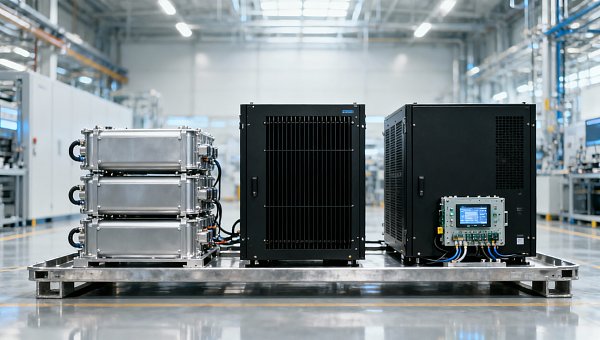
 ESS Key Component Prices Drop ~80%: Quality & Compliance RiseESS key component prices dropped ~80%—but quality & compliance demands surged. Discover how UL 9540A, AS/NZS 5139, and certified BMS/inverters now define market access.
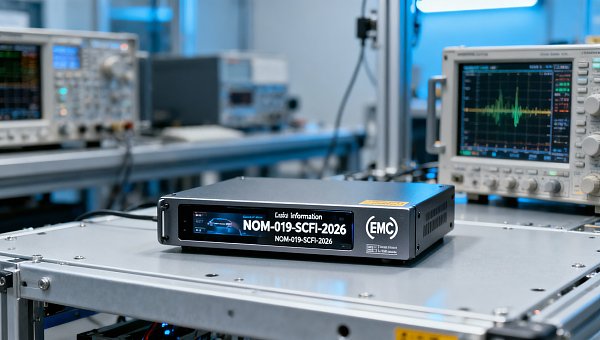
 Mexico NOM-019-SCFI-2026 Effective July 2026: EMC Certification Mandatory for Auto ElectronicsMexico NOM-019-SCFI-2026 mandates EMC certification for auto electronics from July 2026 — ensure compliance now to avoid supply chain disruption & customs delays.
 Red Sea Rerouting Normalized, ECA Surcharge Hits $1,850/TEURed Sea rerouting normalized: ECA surcharge hits $1,850/TEU — 47% of total freight cost. Impacting hand tools, building materials & furniture exporters to Europe. Act now.
 RCEP Green Packaging Mutual Recognition Takes EffectRCEP Green Packaging Mutual Recognition is live—GB/T 37537-2025–certified packaging now enjoys fast-track clearance in Australia, NZ, Japan & Korea. Save time, cut costs, and boost export efficiency.
 Vietnam Suspends SASO Mutual Recognition for Chinese Irrigation EquipmentVietnam suspends SASO mutual recognition for Chinese irrigation equipment—drip tapes, PE fittings, auto valves now require VINAQ-IR certification. Act now to avoid delays & customs hold.
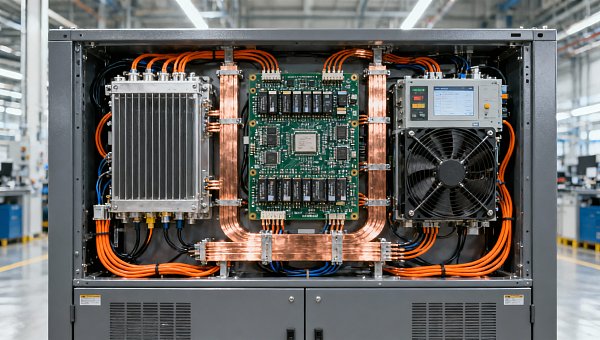
 Key Energy Storage Equipment Prices Drop ~80% in ChinaKey energy storage equipment prices in China dropped ~80% — PCS, BMS & liquid cooling units. Discover implications for compliance, margins & standards enforcement.
") China Releases Green Design Guidelines for Industrial Products (2026)China's 2026 Green Design Guidelines for industrial products—covering PV modules, lithium batteries & smart appliances—link eco-design to green factory certification and export tax rebates starting 2027.
China Releases Green Design Guidelines for Industrial Products (2026)China's 2026 Green Design Guidelines for industrial products—covering PV modules, lithium batteries & smart appliances—link eco-design to green factory certification and export tax rebates starting 2027. Mexico NOM-019-SCFI-2026 Effective: Automotive Electronics Require New EMC CertificationMexico NOM-019-SCFI-2026 is live: Automotive electronics (infotainment, ADAS, domain controllers) now require mandatory EMC certification by July 31, 2026 — act now to avoid customs delays.
 Red Sea Detour Premium Rises to $1,850/TEU Amid Port Congestion ReliefRed Sea Detour Premium hits $1,850/TEU — now 43% of FE–NE freight rates. Discover why this structural surcharge demands urgent supply chain action.
 TÜV Rheinland Updates PLd Certification: EMC Immunity Now Mandatory for Servo DrivesTÜV Rheinland now mandates EN IEC 61000-6-2:2024 EMC immunity testing for PLd certification of servo drives—act before May 26, 2026 to avoid EU market delays.
 RCEP Green Packaging Mutual Recognition Effective Apr 26, 2026RCEP Green Packaging Mutual Recognition takes effect Apr 26, 2026—unlock faster customs clearance & cost savings for eco-friendly packaging exporters to AU, NZ, JP, KR.
 FDA Final Rule: AI Diagnostic Devices Must Submit Bias Impact ReportsFDA mandates AI diagnostic devices submit third-party-verified bias impact reports—key for 510(k)/De Novo submissions. Act now to ensure compliance & market access.
 Vietnam Suspends SASO Mutual Recognition for Chinese Irrigation EquipmentVietnam suspends SASO mutual recognition for Chinese irrigation equipment—urgent QCVN certification now required for drip tapes, sprinklers, valves & smart controllers.
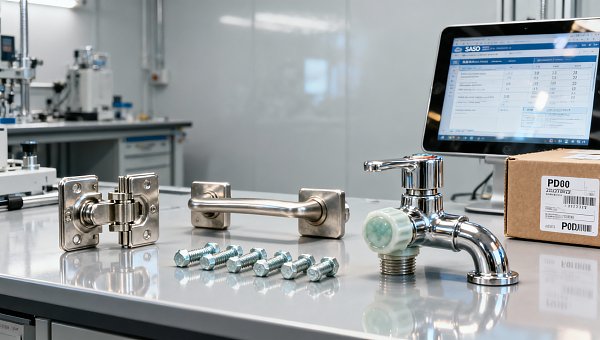
 SABER Phase II Launch: Building Hardware Must Submit Digital Type Test Reports & PIDSABER Phase II now requires digital type test reports & PID for building hardware — fasteners, door/window, bathroom fixtures. Avoid port rejection: ensure PID-bound compliance before shipment.
 IMDG Code 41-24 Enforced: UN3480 Lithium Batteries Require Class 9 LabelsUN3480 lithium batteries now require ISO 7225-compliant Class 9 labels under IMDG Code 41-24 — enforceable globally from 26 April 2026. Act now to avoid shipment delays!
 Which Home Improvement Tools Do You Really Need First?Home improvement tools guide: discover the first essentials to buy, compare smart home automation devices and online trade platform sourcing tips, and make safer, smarter purchases.
 How to Compare an Online Trade Platform Before Signing Up?Compare an online trade platform with confidence—evaluate data quality, supplier trust, market insights, and search tools for smarter sourcing across cement price, MRI scanners cost, and more.
 Which Smart Home Automation Devices Are Easiest to Use?Smart home automation devices made simple: compare easy-to-use smart home automation devices, home improvement tools integration, and buyer tips from a business intelligence platform.
 Are Auto Detailing Services Worth the Cost?Auto detailing services: discover if the cost is justified, how pricing varies, and how a business intelligence platform helps buyers compare value, quality, and long-term ROI.
 What Makes Sustainable Fashion Brands Worth Buying?Sustainable fashion brands deliver transparency, quality, and lower risk. See how a business intelligence platform helps buyers verify value, avoid greenwashing, and source smarter.
















Popular Tags
Global Trade Insights & Industry
Our mission is to empower global exporters and importers with data-driven insights that foster strategic growth.
Search News
Popular Tags
Industry Overview
The global commercial kitchen equipment market is projected to reach $112 billion by 2027. Driven by urbanization, the rise of e-commerce food delivery, and strict hygiene regulations.