

Vertical farming technology works best when energy costs stay low
Vertical farming technology offers a compelling path to resilient food production, but its financial viability depends heavily on stable, low energy costs. For financial decision-makers, the real question is not just innovation potential, but whether operating expenses can support scalable returns. Understanding this cost dynamic is essential when evaluating investment risk, long-term profitability, and the broader commercial promise of controlled-environment agriculture.
The market signal is changing: energy economics now define the next phase of growth
The discussion around Vertical farming technology has shifted. A few years ago, the dominant narrative centered on innovation, urban food security, premium produce, and the promise of year-round harvests. Today, the tone is more disciplined. Operators, investors, lenders, and strategic partners are no longer asking only whether controlled-environment agriculture can grow high-quality crops. They are asking under which energy conditions the model works reliably, and when it becomes structurally exposed.
This change matters because energy is not a secondary input in vertical farming. It is embedded in the core operating model through lighting, HVAC, climate control, water circulation, automation systems, and post-harvest handling. When electricity costs remain predictable and low, Vertical farming technology can support tighter crop planning, more stable margin forecasting, and better capital utilization. When energy prices rise sharply or fluctuate unpredictably, the economics can deteriorate faster than many conventional agribusiness models.
For finance approvers, this means the sector should be evaluated less like a broad sustainability story and more like an energy-sensitive industrial platform. The strongest opportunities are increasingly tied to location, utility structures, grid reliability, and the operator’s ability to lock in favorable cost positions over time.
Why this trend deserves attention beyond agriculture
Vertical farming technology sits at the intersection of food systems, energy markets, industrial automation, and supply chain resilience. That makes it relevant not only to growers, but also to property developers, logistics planners, retailers, exporters, industrial equipment suppliers, and financial institutions. As global supply chains face climate volatility, transportation risk, and shifting consumer demand for fresher local produce, vertical farming remains strategically attractive. Yet the operating foundation has become more selective.
The current market signal is not that the technology is failing. Rather, the signal is that business success depends more heavily on disciplined site selection, power strategy, and operating design than on technological novelty alone. This is a common transition in maturing sectors: early excitement gives way to sharper scrutiny of unit economics.
The key drivers behind the shift in outlook
Several forces are shaping the new view of Vertical farming technology. First, power prices in many markets have become more volatile due to geopolitical stress, fuel supply changes, and grid transition costs. Second, interest rates and financing conditions have made investors less tolerant of long payback periods supported only by future growth assumptions. Third, buyers in food distribution are increasingly price-sensitive, which limits the ability of producers to pass rising energy costs downstream.
At the same time, technology itself is improving. LED systems are more efficient, climate software is becoming more responsive, and sensor-driven controls are helping operators reduce waste. However, these gains improve the model only when they materially offset input cost pressure. In other words, better engineering helps, but it does not fully neutralize expensive power.
Where Vertical farming technology is most likely to work financially
The strongest environments for Vertical farming technology share a common profile. They combine low or stable electricity costs, dependable grid infrastructure, high-value local produce demand, and supply chains that reward freshness, consistency, and reduced transport distance. In these markets, indoor farming can compete not only on sustainability claims but also on service performance and waste reduction.
This is especially relevant in dense urban regions where land costs are high but logistics advantages are significant, and in areas where climate extremes make field production less predictable. However, even these favorable conditions do not guarantee strong returns. The cost structure must still align with crop selection, production cycles, and offtake agreements. Leafy greens and herbs remain more commercially realistic than energy-intensive fruiting crops in many cases, precisely because crop economics must match power economics.
For approval teams, the practical takeaway is simple: the viability of Vertical farming technology should be assessed market by market, not by broad category. Two facilities using similar systems can deliver very different financial outcomes if their energy environments differ.
Who feels the impact most as the economics tighten
The tightening focus on energy costs affects different stakeholders in different ways. Operators face direct pressure on daily margins. Investors face uncertainty around scale assumptions. Retail buyers face a balancing act between supply reliability and price competitiveness. Equipment suppliers must show measurable efficiency gains rather than generic innovation claims. Financial approvers, in particular, must evaluate whether management teams understand operational exposure at a granular level.
The next competitive advantage is not scale alone, but energy strategy
One of the clearest trends is that competitive advantage in Vertical farming technology is moving toward energy intelligence. Large production capacity is not enough if that capacity depends on expensive or unstable power. By contrast, a smaller but well-positioned facility with optimized energy procurement, efficient lighting design, strong environmental controls, and disciplined production planning may outperform a larger operation with weaker utility economics.
This shift also changes how expansion should be judged. Expansion is more credible when operators can demonstrate repeatable economics under local power conditions, not merely when they can replicate physical infrastructure. For finance teams, this means looking closely at whether scaling assumptions include utility variation by geography, seasonal load patterns, and realistic stress testing.
Important signals worth tracking over the next planning cycle
If your organization is reviewing investments, partnerships, or supplier relationships related to Vertical farming technology, several signals deserve ongoing monitoring. The first is the direction of commercial electricity contracts and whether operators can secure longer-term pricing visibility. The second is measurable progress in energy efficiency per kilogram of output, not just headline claims about automation. The third is crop portfolio discipline: businesses that remain focused on categories with faster turns and stronger local demand may manage risk better than those expanding into energy-heavier crops too early.
Another important signal is policy design. Incentives for renewable energy integration, demand response participation, local food resilience, or industrial efficiency can improve economics indirectly. Yet policy support should be treated as an enhancer, not the foundation of the investment case. Sound projects should still show resilience when subsidies are reduced, delayed, or changed.
How financial decision-makers should evaluate projects more carefully
For financial approvers, the review process for Vertical farming technology should become more operationally specific. Standard growth narratives are no longer sufficient. A stronger evaluation framework asks whether the project can remain healthy under multiple electricity price scenarios, whether management has a credible procurement strategy for power, and whether revenue assumptions reflect actual buyer behavior rather than premium branding alone.
It is also useful to separate technology promise from business execution. The technical capability to grow produce indoors is proven. The harder question is whether the commercial model can produce acceptable returns after energy, labor, maintenance, depreciation, and customer acquisition costs are fully reflected. This distinction helps avoid overvaluing concept strength while underestimating operating friction.
Why the long-term outlook remains credible, but more selective
Despite tighter scrutiny, the long-term case for Vertical farming technology remains credible. Water efficiency, localized supply, reduced weather exposure, and quality consistency are meaningful advantages in a world facing agricultural disruption. The difference is that markets are becoming more selective about where and how those advantages translate into profit. The future likely belongs to operators that combine agronomy expertise with industrial cost discipline, data-backed energy management, and realistic market positioning.
This is not unusual for an emerging sector moving toward maturity. As the market learns, the strongest models become clearer. In that sense, the current emphasis on energy cost is healthy. It filters out weak assumptions and pushes the industry toward more durable operating standards.
Practical judgment points before approving the next move
If your business is considering exposure to Vertical farming technology through investment, procurement, lending, partnership, or supplier strategy, the most useful next step is not to ask whether the sector is promising in general. The better question is whether a specific project can maintain healthy economics under real power conditions in its target market.
To make that judgment, confirm a few essential points: whether energy cost assumptions are conservative, whether crop choices fit the operating profile, whether there is dependable demand at the planned price point, and whether management can demonstrate resilience beyond ideal-case forecasts. For organizations that follow global industrial and trade developments, this is exactly the kind of transition worth watching closely. Vertical farming technology still offers strategic upside, but the winners are increasingly defined by energy discipline, not by vision alone.
Recommended News
 Portable oxygen concentrators are quieter now, but not always lighterPortable oxygen concentrators are getting quieter, but not always lighter. Explore the trade-offs in weight, battery life, comfort, and daily usability before you compare today’s top options.
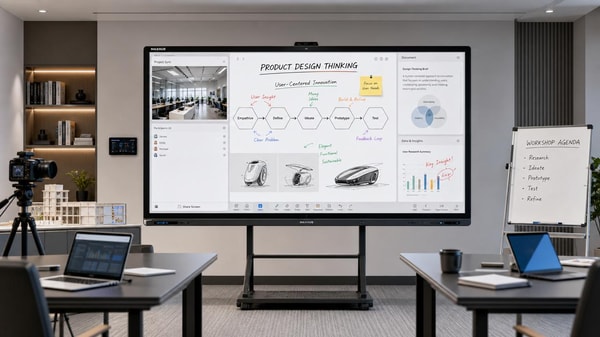
 Interactive whiteboards are improving, but software still decides valueInteractive whiteboards deliver real value when software matches the scenario. Explore how usability, integration, security, and updates shape smarter buying decisions.
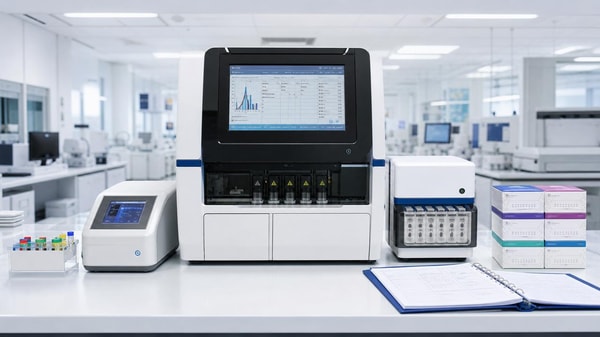
 Medical diagnostic equipment downtime often starts with calibration neglectMedical diagnostic equipment downtime often starts with missed calibration. Learn the warning signs, checklist priorities, and practical steps to prevent failures and keep healthcare operations reliable.
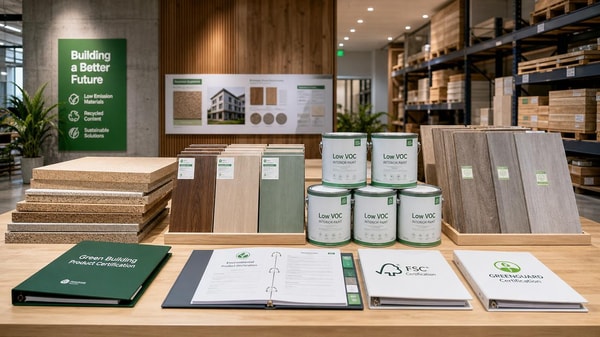
 Eco-friendly building materials are easier to specify than to sourceEco-friendly building materials are easier to specify than source. Learn how procurement teams can verify claims, reduce risk, and find reliable suppliers faster.
 Ergonomic workspace design can fail if chair fit comes lastErgonomic workspace design starts with chair fit. Learn how the right seat improves posture, comfort, and focus—and why fixing it first can transform your workspace.
 Outdoor garden supplies demand shifts faster than many expectOutdoor garden supplies demand is shifting faster than expected. Discover key B2B trends, smarter sourcing insights, and practical strategies to stay competitive and capture growth.
 Sustainable home decor sells better when materials are clearly disclosedSustainable home decor sells better when brands clearly disclose materials, finishes, and sourcing. Discover why transparency builds trust, justifies price, and drives more confident buying.
 Modern office furniture trends now favor modular over fixed layoutsModern office furniture is shifting to modular layouts for flexibility, lower lifecycle costs, and better hybrid work performance. See why enterprises are moving away from fixed office design.
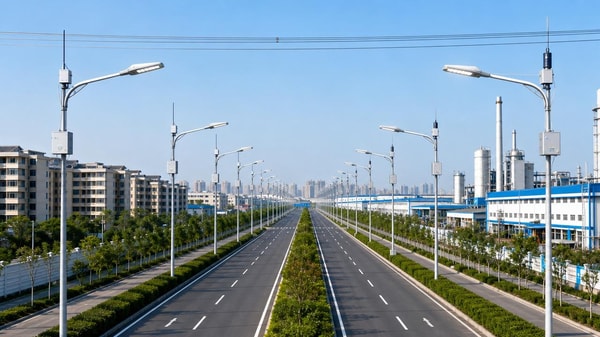
 Smart street lighting projects stall when controls are overcomplicatedSmart street lighting projects often stall when controls become too complex. Learn how to simplify deployment, reduce risk, and scale citywide with practical, maintainable systems.
 Solid-state battery breakthroughs look promising, but scale is harderSolid-state battery breakthroughs promise safer, higher-density energy storage, but scaling remains the real challenge. Explore what this means for supply chains, investment, and market advantage.
 Commercial LED lighting upgrades often save less than expectedCommercial LED lighting upgrades can underdeliver when baseline data, controls, and installation costs are misjudged. Learn how to assess real savings, reduce ROI risk, and make smarter investment decisions.
 Lithium battery storage payback can change with one policy updateLithium battery storage payback can shift fast after one policy update. See how tariffs, tax credits, grid pricing, and incentives change ROI—and how finance teams can approve smarter.
 Photovoltaic solar panels now compete on output in low lightPhotovoltaic solar panels now compete on low-light output. Discover how buyers can compare yield, risk, and supplier value to source smarter and boost project returns.
 Plant-based protein processing changes texture more than many expectPlant-based protein processing reshapes texture, stability, and safety more than expected. Explore key risks, QC checkpoints, and smarter sourcing insights for consistent results.
 Foldable screen technology is improving, but crease concerns remainFoldable screen technology is evolving fast with slimmer designs and stronger hinges, but crease concerns still shape buying decisions. Explore where it matters most.
 Next-gen wireless charging still faces a heat management problemNext-gen wireless charging promises faster, more flexible power delivery, but heat remains the key barrier. Discover how thermal limits impact safety, efficiency, and market readiness.
 Wearable technology adoption drops when comfort gets overlookedWearable technology adoption falls fast when comfort is ignored. Discover how fit, materials, weight, and battery life shape long-term use and smarter buying decisions.
 Smart home devices wholesale is no longer just about low pricingSmart home devices wholesale now goes beyond low pricing. Discover how reliability, compatibility, and supply chain confidence help distributors choose profitable, trusted partners.
 Agri-PV systems make sense only when land use is planned wellAgri-PV systems deliver real value only when land use is planned well. Discover how smart site, crop, grid, and compliance decisions turn dual-use solar into a bankable, sustainable project.
 Organic fertilizers may improve soil slower, but results last longerOrganic fertilizers improve soil slowly but deliver longer-lasting results. Learn how they boost soil health, support safer growing, and help you choose the right option for sustainable planting success.
 Smart classroom solutions fail when teachers need too many appsSmart classroom solutions fail when teachers juggle too many apps. Discover why integrated, easy-to-use platforms drive adoption, ROI, and scalable learning success.












Popular Tags
Global Trade Insights & Industry
Our mission is to empower global exporters and importers with data-driven insights that foster strategic growth.
Search News
Popular Tags
Industry Overview
The global commercial kitchen equipment market is projected to reach $112 billion by 2027. Driven by urbanization, the rise of e-commerce food delivery, and strict hygiene regulations.